
 English
  Polski
  Deutsch
  Nederlands
  Svenska
  Norsk
Norsk  Dansk
Dansk  Français
  Italiano
  Español
  Português
  Slovenčina
  Suomi
Suomi  Gaeilge
 Runner beans turn a corner of your garden into a green wall in just weeks
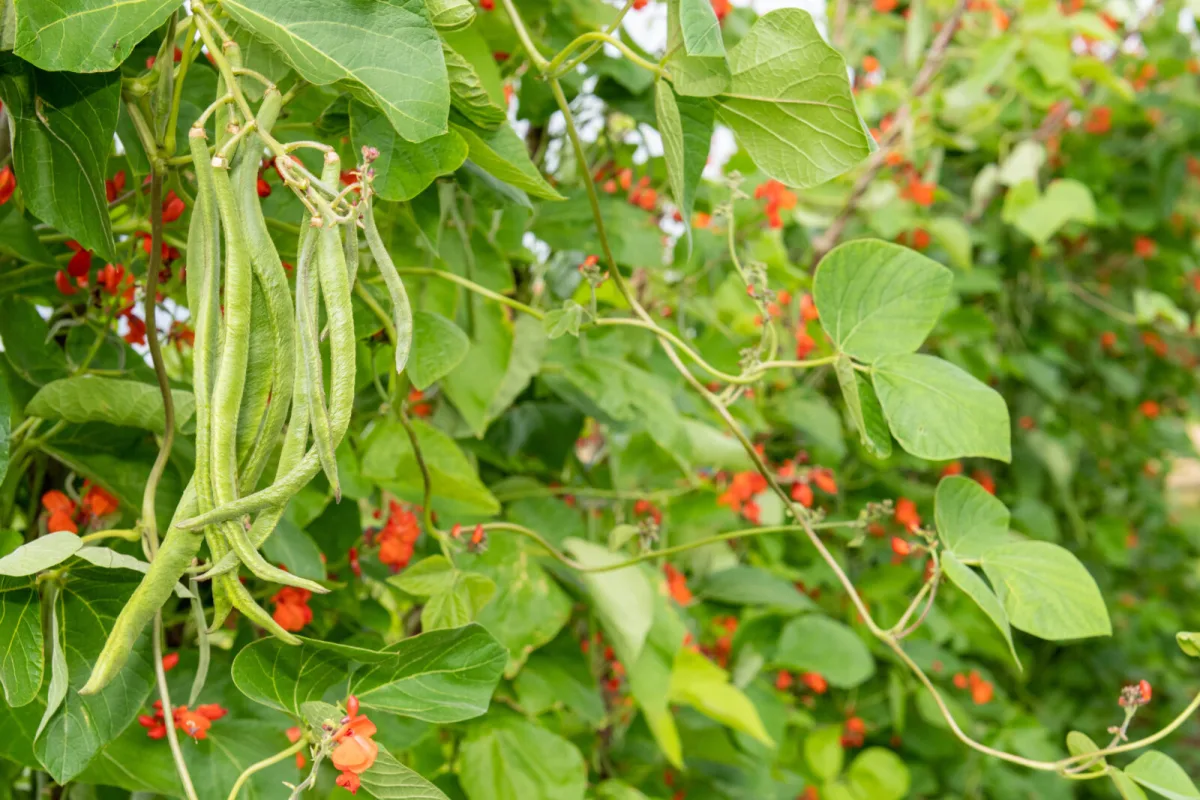
Runner bean, correctly known as runner bean (Phaseolus coccineus), is one of the climbing beans that can transform an ordinary corner of the garden into a dense green wall over the summer. First it rapidly builds a lush canopy of leaves, then come the showy flowers, most often red or white, and finally the long green pods. That gradual performance is exactly why many growers come back to this crop year after year.
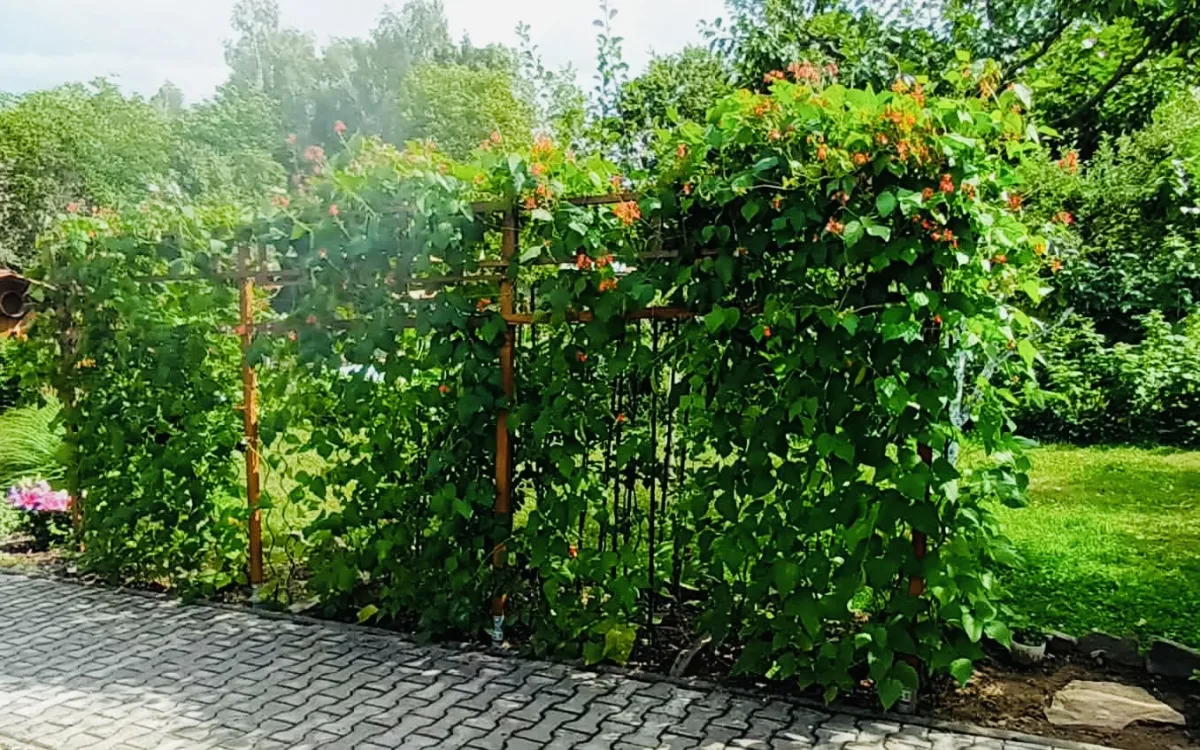
Beyond the harvest, runner beans also have real ornamental value. They can create a natural screen, shade a seating area and make any spot where you want to spend summer time feel more private and inviting. In the right place, they become not only a source of fresh veg, but also living decoration.
Choosing the right spot decides the result
Success starts with site selection. Runner beans appreciate warmth, light and shelter. Even a small garden or courtyard can offer a surprisingly suitable corner, for example by a wall, along a fence or near a garage, where warmth lingers and there’s still plenty of sun. Spots like these often also provide the vertical space climbing plants need.
Runner beans will happily twine around almost anything. Wire, a trellis, mesh, taut strings, bamboo canes or a sturdy metal panel fixed to a fence will do. The key is that the support can carry the weight of vigorous plants at peak season and remains stable in windy weather.
Varieties worth trying
Your choice of variety affects not only flavour and yield, but also the look of the plants. A classic is the earlier, red-flowering Scarlet Emperor, which is widely available. If you’d like something softer visually, there are also white-flowering options such as Moonlight or Snowstorm, which look elegant and suit vegetable beds designed with an ornamental feel.
If you want real impact, Black Knight is an interesting variety, with purple pods and deep red flowers. After cooking, the pod colour shifts into greenish-purple tones, making it an attractive choice in the kitchen too. A reliable route is also to pick tried-and-tested varieties recommended by gardeners, often selected for higher yields and steady growth.
Starting plants indoors and the right planting time
In our conditions, it pays to start runner beans indoors. A practical time is late April in a bright spot indoors, such as a sunny windowsill. Use individual pots made from plantable material, around 9 cm, so the roots aren’t unnecessarily disturbed when you transplant. A peat-free multi-purpose compost works well.
Place each seed in the middle of the pot about 5 cm deep and keep the compost evenly moist. Germination is usually quick, often within one to two weeks. Seedlings are sensitive to cold, though, so wait to plant out until there’s no risk of frost. Most often that means late May to early June. After planting, keep a close eye out for slugs and don’t skimp on watering, because young plants can stall very easily.
Growing in containers when there’s no room for a bed
Runner beans can also thrive in large containers, which is a big advantage for patios, balconies or small courtyards. The crucial point is to choose a pot that’s big and deep enough, ideally around 30 litres, so the root system has space and the compost doesn’t dry out so quickly in summer.
A mix of garden soil with a larger share of well-rotted compost or thoroughly decomposed manure works well in containers. This way you don’t have to rely only on expensive bagged composts, and you’ll also give the plants a longer-lasting reserve of nutrients. You can also add a small amount of a standard balanced, multi-nutrient fertiliser. If you want the simplest possible approach, there are also dwarf, bush-type varieties suitable for pots, such as Hestia, which are easier to manage and don’t take up as much vertical space.
Water, warmth and pollination are the main pillars of the crop
Beans love moisture from the very beginning. The best results come from regular watering and keeping the soil evenly moist, because fluctuations often cause stress and reduce pod set. Warmth suits them, but in sudden heat they may pollinate less well. On such days it helps to water thoroughly in the morning and, during prolonged hot spells, top up again in the evening so the plants don’t overheat unnecessarily.
The surrounding environment also has a big influence on pollination. If there are nearby plants that attract bees and other pollinators, the chances of a good set increase. A sheltered position without strong gusty winds also helps, because wind can dry out the flowers and make successful pollination harder.
Fast early-summer growth and what to expect
Once the weather settles in late May and early June, runner beans usually don’t hang about. They start climbing briskly, thicken up with leaves and soon produce the first flowers. With enough moisture and a solid structure, they can form a green wall in a short time that’s as practical as it is attractive.
A well-built support, planting out after the last frosts, consistent watering and helping pollinators are simple steps that make the biggest difference to the harvest. After that, all that’s left is to pick the pods regularly so the plant keeps flowering and setting more.
Source: Rhs, Fruiti on Seeds , Pestrazahrada.cz
Related articles
Drought tolerant exotic fruit trees suitable for Czech gardens
Fig, pomegranate and even some olives can cope with increasingly dry summers in parts of the Czech Republic—provided you pick hardier cultivars and give them a warm, sheltered spot. With the right siting and winter protection, these “holiday” trees can reward you with real harvests at home.
An August sowing of dill keeps fresh fronds coming until the first October frosts
Beds start to open up after early crops are harvested, and August is a perfect moment to sow dill again. With loose soil and steady moisture, you can keep harvesting tender, fragrant fronds through September and often well into October.
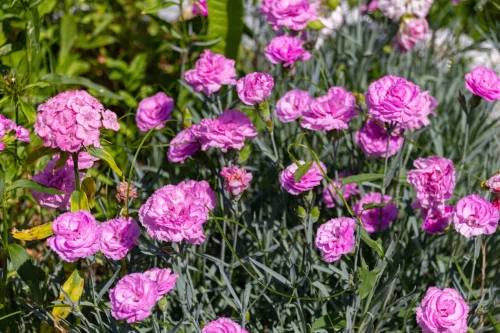
Carnations Back in the Spotlight, Easy Flowers for Vases and Gardens
Carnations are far more varied and long-lasting than their old-fashioned reputation suggests. With simple care, they’ll shine in a vase for weeks and thrive in beds, rock gardens, and containers.
Comments (0)
Be the first to comment.