
 English
  Polski
  Deutsch
  Nederlands
  Svenska
  Norsk
Norsk  Dansk
Dansk  Français
  Italiano
  Español
  Português
  Slovenčina
  Suomi
Suomi  Gaeilge
 Raspberry Canes at Risk What Causes Decline and How to Help
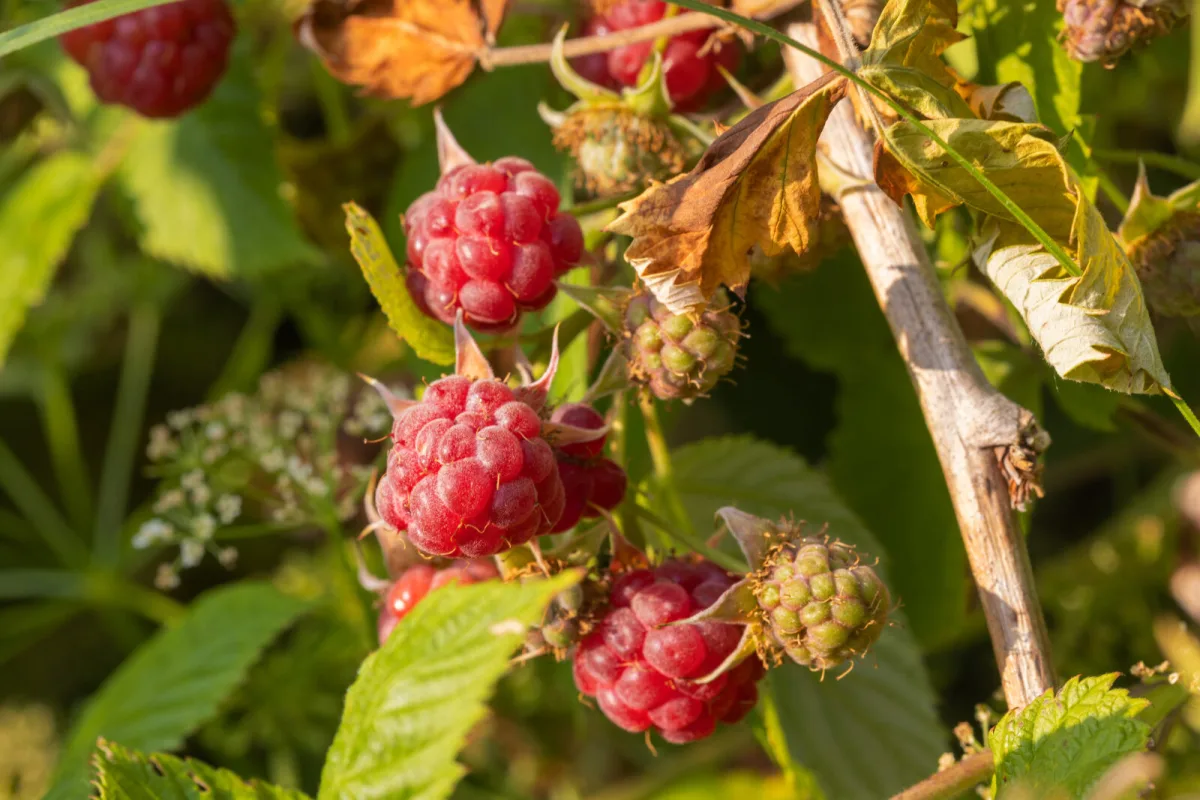
Raspberry is a favourite soft fruit, but it’s also susceptible to a range of diseases. These are most often fungal or viral in origin. While there is no reliable cure for viral diseases and infected plants usually need to be removed, the impact of fungal diseases can be greatly reduced with timely prevention and a well-chosen fungicide spray. The key is recognising symptoms early, because a neglected infection easily spreads through the whole row and in subsequent years can ruin both flowering and fruit set.
How to correctly identify diseases on canes and leaves
Diseases can affect both red and black raspberries, and often blackberries and their hybrids as well. Symptoms are usually most visible in late summer and early autumn on this year’s canes, before they begin to mature and turn brown. At this time, spots, bark cracking, or changes on leaves are easier to see on green shoots.
The difference between primocanes and floricanes
Primocanes are this year’s shoots, usually green, juicy and fast-growing. They tend to be the most vulnerable, because their tissues are easily infected and stay wet for a long time after rain. In autumn they gradually become woody, and the following spring they become floricanes, the two-year canes that flower and fruit.
If two-year canes fail to break in spring, it’s often mistaken for frost damage. With frost, typically only the part above the snow line dies back, and side shoots then grow from live buds below the snow level. With disease, however, the cane often dies right down to the ground or back to the point of infection and looks generally weakened.
What favours fungal diseases
Most harmful fungi thrive in moisture and spread via water splash. That’s why it’s essential to keep the planting open and airy, remove spent fruiting canes after harvest, and continuously remove young shoots with clear symptoms. When pruning, it pays to disinfect secateurs so infection isn’t carried from cane to cane.
Cane blight, also known as Didymella cane dieback
With this fungal disease, conspicuous purple blotches appear on canes, most often forming around buds on young shoots and gradually spreading along the cane. It doesn’t usually kill the plant, but it can significantly reduce yields because it damages buds and weakens canes for the following season.
Typical symptoms
By late summer, affected areas may crack and the bark begins to peel. At the same time, brown spots appear on leaves, often at the edges or along the main vein, and leaves may drop prematurely. In autumn, cane lesions often fade to a grey-silver colour, and sometimes tiny black dots are visible, linked to the pathogen overwintering.
What to do
The basics are to avoid overcrowding, because older, dense plantings tend to be affected most. Limit overfeeding with nitrogen, which pushes raspberries into lush but susceptible growth. At the first signs of spots, cut out and dispose of affected canes. In high-risk periods, a preventive and curative fungicide spray can be worthwhile, especially if the problem returns every year.
Raspberry bushy dwarf virus and why missing it is the worst outcome
Viral dwarfing can spread through pollen, and symptoms vary by cultivar, so it sometimes remains hidden. Cultivars with a long flowering period are often more sensitive, because they’re exposed to transmission risk for longer. Once the virus becomes established, it cannot be reliably cured with sprays.
How to recognise the virus
A typical sign is yellowing of the lower leaves, often starting from the veins. Sometimes temporary yellow rings or dashed patterns appear. The plant is usually shorter, with weaker canes and smaller fruit. A common symptom is crumbly berries, because development of the individual drupelets in the fruit is disrupted.
What to do when symptoms appear
With viral diseases, the standard approach is to remove infected bushes so they don’t become a source of infection. Tool hygiene and buying plants from trusted suppliers are important. It also helps to remove wild raspberries in the surrounding area, although this won’t guarantee full protection, because pollen can travel over longer distances.
Leptosphaeria cane dieback and its link to wounding
This fungal disease is among the most serious, because it can cause extensive dieback of shoots. It often enters tissues through wounds from pruning, harvesting, or other mechanical damage. It is also frequently linked to pest activity that damages canes and creates entry points for infection.
Symptoms you shouldn’t ignore
After flowering, sudden wilting and dieback of laterals and the tips of fruiting canes can appear. On the cane below the dieback point, dark brown to purple blotches develop, sometimes with oozing in wet conditions. Canes may take on a silvery cast, the base darkens, the bark cracks, and the wood becomes brittle so it snaps easily. On dying wood, tiny black dots typical of the fungus’s fruiting bodies can sometimes be seen.
Protection and pruning routine
The most important thing is to minimise injuries and prune only in dry weather. Keep the planting open and weed-free so it dries quickly after rain. If the disease appears, remove affected canes ideally in warm, dry conditions, cut as low as possible, and dispose of the material safely. In periods of high risk, fungicide protection can be used to limit spread onto new shoots.
Raspberry rust and when it becomes a real problem
Rust is striking at first glance, because it forms yellow, later orange, and finally black pustules on leaves. In a mild form it may not greatly affect yield, but severe infection can cause premature leaf drop, weakening the plant for the next season. It spreads mainly in wet weather, because infection requires leaf wetness.
How it develops through the season
In spring, yellow pustules appear on the upper side of leaves, often lower down on the plant. In summer, orange spore masses form on the underside, which are the main source of further spread. Towards the end of summer they turn into black pustules with overwintering spores, which persist on fallen leaves and on supports.
What helps
With a light incidence, it makes sense to pick off the first few affected leaves. With heavy infection, however, that intervention would more likely weaken the plant. It’s important to thoroughly clear and dispose of fallen leaves and not encourage damp conditions by overcrowding or overfeeding with nitrogen. Preventive fungicide protection is also useful, especially in years with frequent rainfall.
Raspberry anthracnose and why prevention is essential
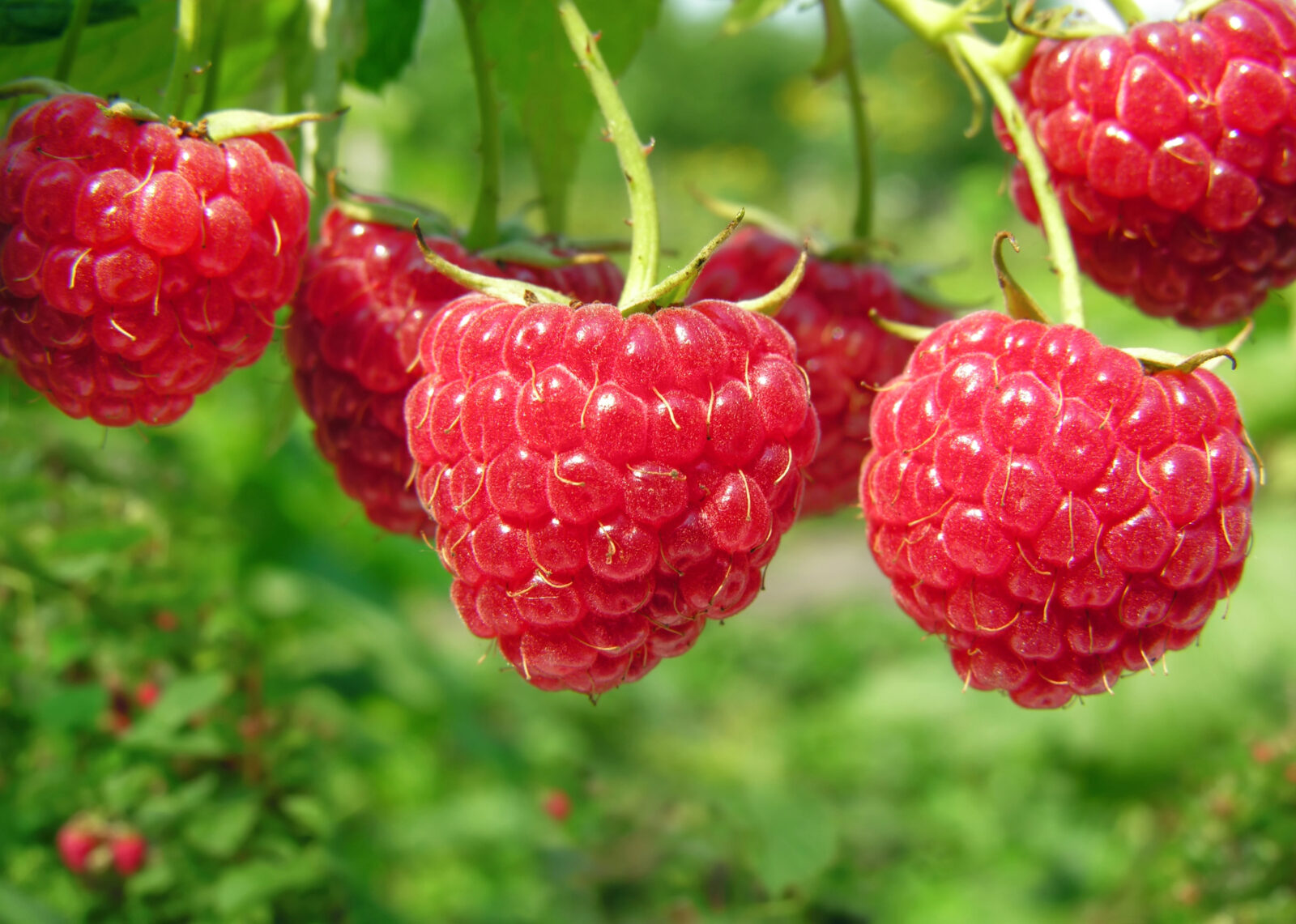
Anthracnose mainly attacks canes and can also spread to leaves, buds and fruit. It is more often a problem on black raspberries. Infection worsens in wet conditions because it spreads easily with rain. Once symptoms get fully underway, it can be difficult to manage, which is why early prevention is most valuable.
What infection looks like
In spring, reddish-purple oval spots form on young shoots. They gradually enlarge, sink into the tissue, turn grey in the centre, and the edges remain purple and slightly raised. Spots can merge into larger areas, and with heavy infection there is wilting, premature leaf drop, and reduced fruiting potential. In autumn, tiny black dots can sometimes be found on older lesions.
How to reduce the risk
Choose a sunny site with free-draining soil and water at the roots so water doesn’t splash onto leaves. Keep the row weed-free and avoid unnecessary thickening. Keep nitrogen feeding sensible, because soft, overgrown canes are more often affected. Cut out infected shoots with a margin below the symptomatic area and disinfect tools regularly.
The most effective shared strategy for most problems
With fungal diseases of raspberry, prevention is what matters most: an open, airy planting, regular pruning in dry weather, quick removal of infected canes, and careful clearing of leaf litter. With viral diseases, the key is healthy planting stock and timely removal of infected plants.
If you want a stable crop over the long term, focus on good cultivation practice. Don’t create persistently damp conditions, don’t water from above, don’t overfeed with nitrogen, and don’t leave old, spent fruiting canes standing through winter. If problems keep recurring, consider planting more resistant cultivars and, during high-risk periods, use general preventive fungicide sprays according to the label and suitability for soft fruit.
Source: Garden Focused, Plant Village, Pestrazahrada.cz

A lover of nature, gardens, and everything that moves, blooms, or grows. He literally grows everything, from herbs to rare species, and he enjoys caring for animals just as much. In his work, he connects modern technology with tried-and-tested grandmotherly methods and is happy when both paths lead to the same goal.
Related articles
Yellowing cucumber leaves have a clear cause and with the right response plants recover quickly
Cucumber leaves turn pale and yellow when the plant is under stress—most often from watering mistakes, nutrient imbalance, or sudden temperature swings. Spot the pattern early and you can restore growth and protect your harvest fast.
How to Get Browning Hydrangeas Back on Track Without Chemicals
Brown leaf edges or spots on hydrangeas usually point to a simple mismatch in light, watering, or airflow rather than a lost cause. Learn how to read the symptoms and restore your shrub quickly with gentle, practical fixes.
Turn Ground Cinnamon Into a Secret Weapon for Stronger, Tougher Plants
Ground cinnamon isn’t just for baking—it can help protect houseplants and garden plants from mould and fungal issues, support cuttings, and even act as quick first aid for minor wounds. Used lightly, it’s an affordable, gentle, natural add-on to good growing practice.
Comments (0)
Be the first to comment.