
 English
  Polski
  Deutsch
  Nederlands
  Svenska
  Norsk
Norsk  Dansk
Dansk  Français
  Italiano
  Español
  Português
  Slovenčina
  Suomi
Suomi  Gaeilge
 Summer Yellowing of Cucumber Leaves Reveals Care Mistakes and Missing Nutrients
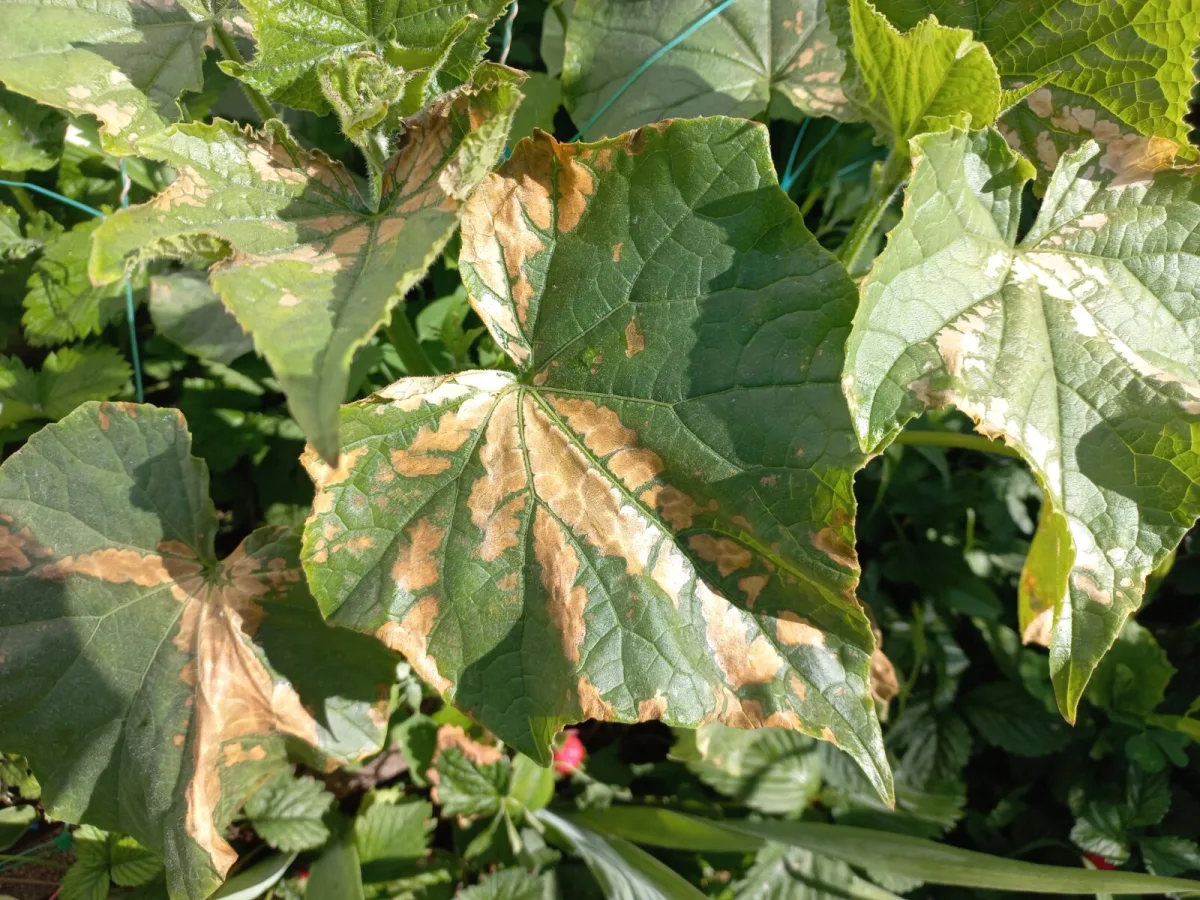
Yellowing cucumber leaves is one of the most common summer problems in beds and in the greenhouse. Many growers automatically blame heat or disease, but very often it comes down to feeding and growing conditions. Cucumbers react quickly, and the first warning almost always shows up on the leaves. The good news is that if you identify the cause early, plants can recover fairly fast, regain strength, and keep flowering and setting fruit.
The most common reasons cucumber leaves turn yellow
A change in leaf colour can be caused by a shortage of a nutrient, but also by incorrect watering or environmental stress. Most commonly you’ll see a lack of nitrogen, potassium, magnesium, or iron. Damage can also be caused by waterlogging or, conversely, prolonged drought, watering with cold water, sharp temperature swings, compacted soil with little air, and overly crowded plants. Each cause shows slightly different symptoms, and those clues are exactly how you can tell what the plant needs.
When the whole leaf turns yellow, nitrogen is often missing
If leaves fade to pale green and then yellow across the entire surface, the culprit is often a nitrogen deficiency. Nitrogen is essential for producing leafy growth, so when it’s lacking, cucumbers grow more slowly, have smaller leaves, and lose overall vigour.
A gentle feed using natural sources can help. A fermented nettle tea made from young nettles works well; once fermented, it’s diluted and used as a soil drench at the roots. An alternative is diluted farmyard manure or a good-quality organic fertiliser formulated for fruiting vegetables.
Yellow leaf edges and scorching point to potassium
If yellowing appears mainly along the leaf edges and those margins then turn brown and gradually dry out, it typically indicates a potassium deficiency. Potassium supports fruit formation and improves cucumber resilience to heat, drought, and some diseases, so a shortage often shows up during periods of greatest stress.
A practical home remedy is wood ash from clean, untreated wood. You can make a simple ash water extract, let it stand, then apply it to the root zone. It’s important not to overdo the dose and not to use ash where the soil is already alkaline.
Yellowing between veins often means a magnesium deficiency
When the leaf veins stay green but the tissue between them gradually yellows, magnesium is often the issue. Magnesium is essential for chlorophyll production, and without it photosynthesis doesn’t run properly, which shows up on leaves very quickly.
The quickest approach is to supply magnesium through the foliage, because the plant can take it up immediately. Use magnesium sulphate (Epsom salts) or a foliar fertiliser with a higher magnesium content, or a complete feed formulated specifically for cucumbers.
If the youngest leaves are yellowing, consider iron
If yellowing starts on the youngest leaves at the top, it’s often an iron deficiency. Iron is a micronutrient needed only in small amounts, but without it the plant can’t form chlorophyll properly, and new leaves emerge weak and pale.
An effective solution is a foliar spray with chelated iron, as this form is readily absorbed. After application, new growth usually colours up more healthily—provided the true cause is iron and not overwatering or compacted soil.
It’s not always nutrients—the problem may be watering and soil
Yellowing can also be caused by unsuitable water and watering routines. Cold water straight from a well can shock plants, as can a sudden cool spell after hot days. Frequent waterlogging deprives roots of oxygen, leading to rot, and then the plant can’t take up nutrients even when the soil contains plenty. On the other hand, long-term drought limits water and mineral uptake and the cucumber begins to conserve resources, which also shows in the leaves.
Soil structure matters too. Compacted ground with little air is hard on roots, as is planting too densely so air can’t circulate between plants. Under these conditions, stress easily combines with deficiencies and symptoms can overlap.
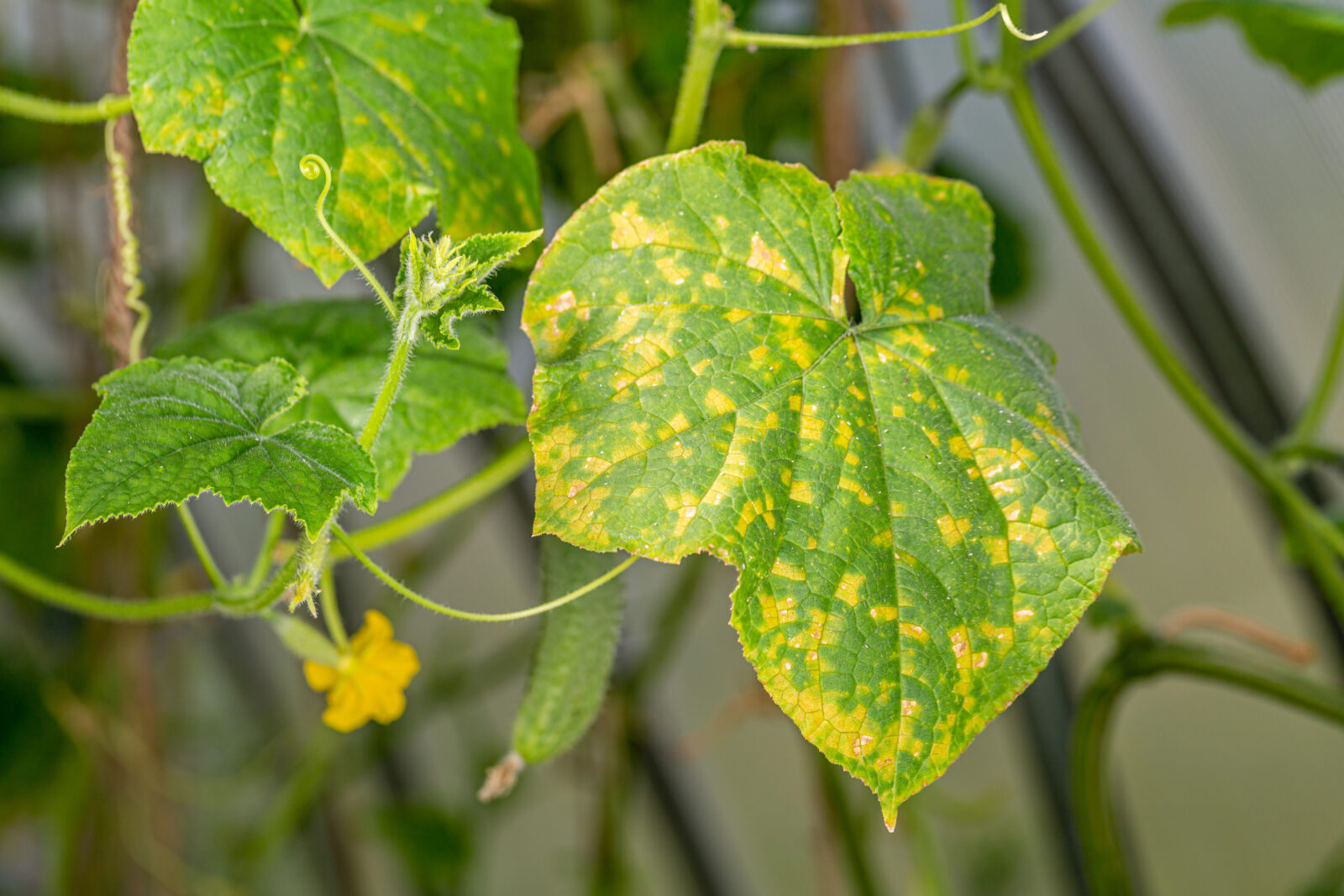
How to prevent leaf yellowing and keep cucumbers in good shape
Prevention is usually easier than rescue later on. Water with stored or rainwater, ideally at a similar temperature to the surroundings, and direct the water to the roots rather than the leaves. After watering, lightly loosen the soil surface so air can reach the roots. Feed little and often according to the growth stage, because cucumbers are hungry plants and their nutrient demand changes quickly through the season.
It also helps to keep the bed free of weeds, which steal water and nutrients, and not to overdo plant density. Good airflow reduces stress and helps foliage dry faster, which is also beneficial in terms of disease.
Regular checks decide the final harvest
Cucumbers can grow very quickly, and they respond just as fast to changes in their environment. It’s worth checking the crop several times a week. Leaf colour, vein patterning, the condition of the margins, and overall freshness often flag a problem before it shows up in fruit numbers and quality. The sooner you pinpoint the cause of yellowing and adjust your care, the better the chance the plants will stay healthy to the end of the season and reward you with a generous harvest.
Source: GrowVeg, To je nápad, Pestrazahrada.cz

A lover of nature, gardens, and everything that moves, blooms, or grows. He literally grows everything, from herbs to rare species, and he enjoys caring for animals just as much. In his work, he connects modern technology with tried-and-tested grandmotherly methods and is happy when both paths lead to the same goal.
Related articles
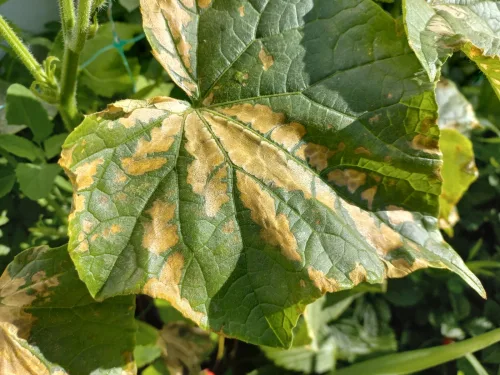
Yellowing cucumber leaves have a clear cause and with the right response plants recover quickly
Cucumber leaves turn pale and yellow when the plant is under stress—most often from watering mistakes, nutrient imbalance, or sudden temperature swings. Spot the pattern early and you can restore growth and protect your harvest fast.
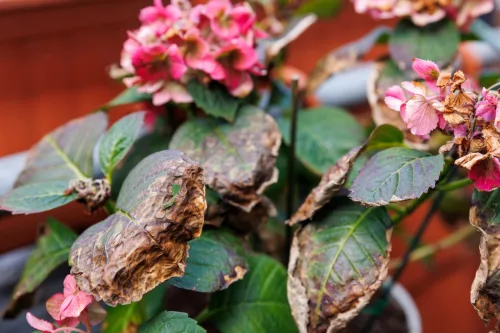
How to Get Browning Hydrangeas Back on Track Without Chemicals
Brown leaf edges or spots on hydrangeas usually point to a simple mismatch in light, watering, or airflow rather than a lost cause. Learn how to read the symptoms and restore your shrub quickly with gentle, practical fixes.
Turn Ground Cinnamon Into a Secret Weapon for Stronger, Tougher Plants
Ground cinnamon isn’t just for baking—it can help protect houseplants and garden plants from mould and fungal issues, support cuttings, and even act as quick first aid for minor wounds. Used lightly, it’s an affordable, gentle, natural add-on to good growing practice.
Comments (0)
Be the first to comment.