
 English
  Polski
  Deutsch
  Nederlands
  Svenska
  Norsk
Norsk  Dansk
Dansk  Français
  Italiano
  Español
  Português
  Slovenčina
  Suomi
Suomi  Gaeilge
 Radishes Grow Fast This Trick Keeps Them Crisp
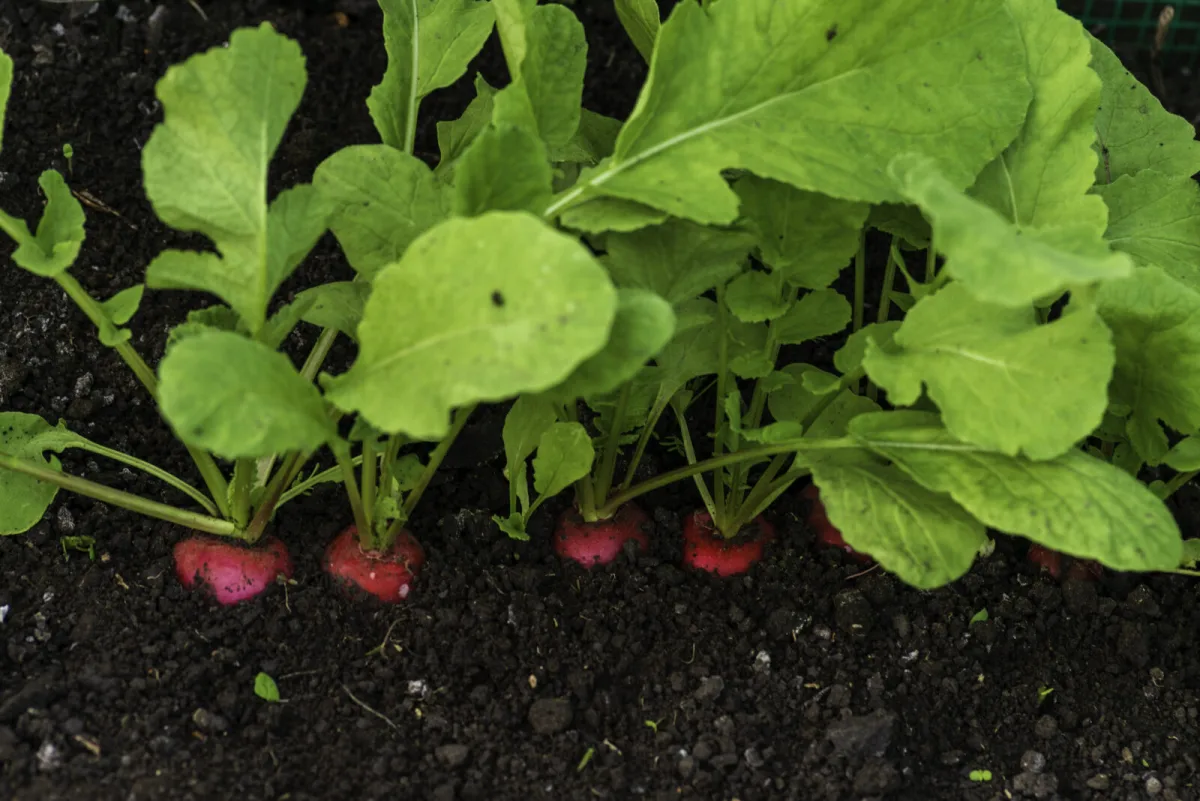
As soon as your vegetable beds start to fill up and spring moves into the warmer part of the season, it’s the perfect time to rely on crops that grow quickly and deliver results within a few weeks. Radishes are among the most rewarding vegetables, because from sowing to the first harvest it often takes only a short time. In practice, that means even if you’re short on space, you can tuck them between other crops and quickly pick a crisp harvest for salads or for bread and butter.
Radishes are classic spring and summer veg. You can repeat sowings little by little, so you get a steady harvest rather than everything maturing at once. They’re also a great choice for children and beginners, because the growth is easy to see and it’s genuinely motivating.
How different varieties taste and why it’s worth trying more than one
Radish roots can usually be harvested about 4 to 8 weeks after sowing, depending on the variety and conditions. Their flavour can vary quite a lot. Some are mild and slightly sweet; others are noticeably peppery and sharp. That’s why it pays to sow two or three different varieties and compare them at home in a taste test, even as a small family flavour trial.
Popular choices include varieties with round red roots, as well as elongated types with red-and-white colouring. White varieties are interesting too, and purple radishes look unusual on the plate and add striking contrast in a salad.
A curiosity from the botanical world
Radishes belong to the same plant group as several other well-known garden and kitchen crops. They’re part of the brassica family, which also includes cabbage, kale, turnips and swedes. You’ll notice this not only in similar growing requirements, but sometimes in shared pests as well.
Where radishes grow best
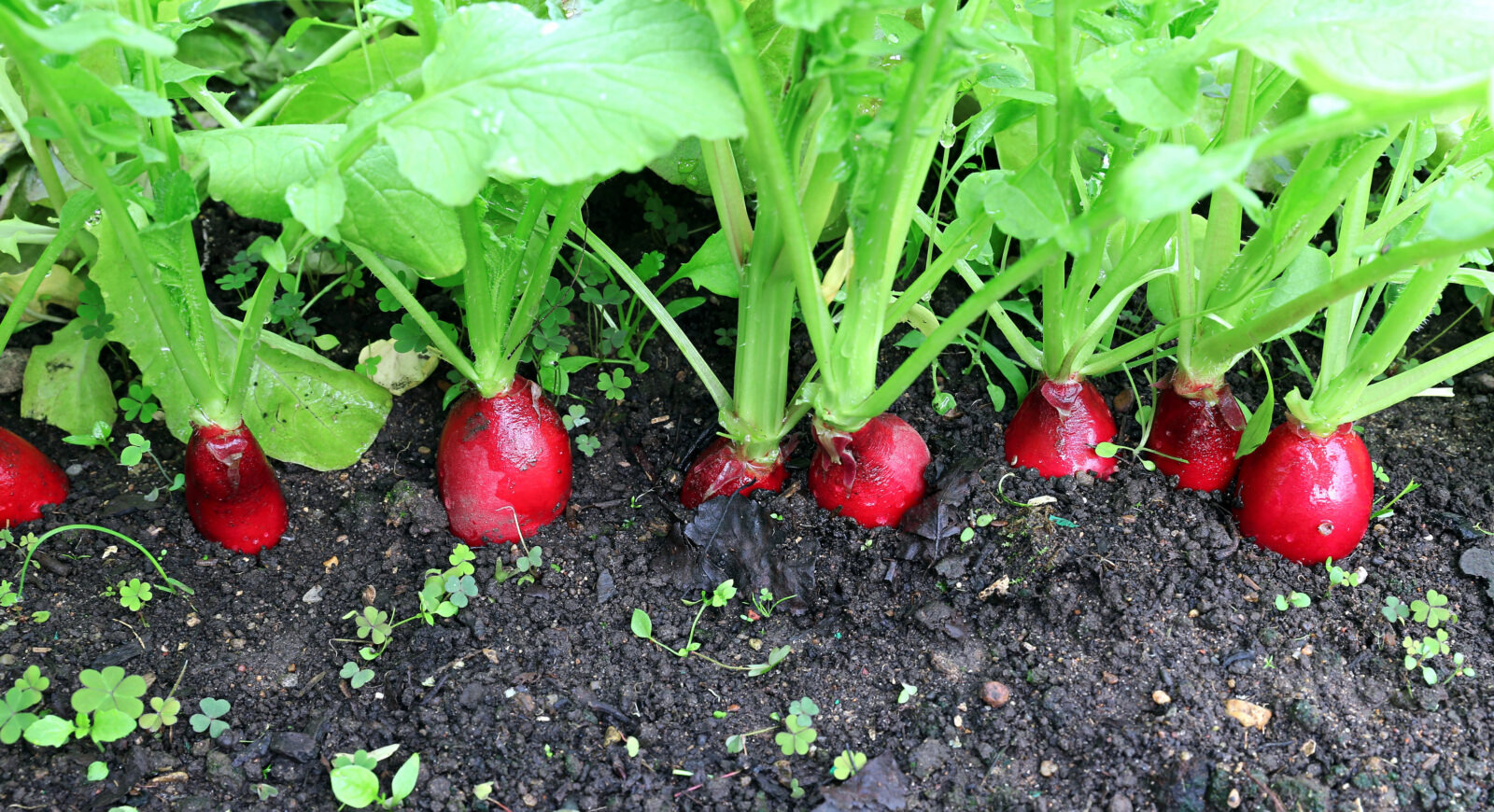
A sunny spot is best, where plants grow quickly and the roots develop properly. In summer, though, radishes will cope with light partial shade, which is especially helpful in extreme heat when the soil dries out fast. The key is consistent moisture so the roots stay tender and don’t split.
When to sow and how to plan the season
Seeds are usually sown outdoors directly into the bed from spring, and you can keep going in stages until August. Exact timings can vary by variety, so it’s practical to follow the information on the seed packet. If you want a continuous harvest, it’s worth sowing small amounts every few weeks so the crop is spread out.
What to get ready before sowing
You don’t need complicated equipment to grow radishes. A pair of gardening gloves, a packet of seeds, a small hand trowel for tidying the bed, a rake to level the surface, and a plant label with a pencil to mark the row so you don’t forget what you sowed where. Having everything to hand saves time and makes sowing more accurate.
Step-by-step sowing method
Radishes are sown directly where they will grow, because they don’t take well to transplanting. First, clear the chosen spot of weeds, ideally pulling them out with the roots. Then level the soil and break it down to a fine tilth so the seeds have good contact with the soil and germinate evenly.
Next, make shallow drills about 10 mm deep. Spacing between rows is usually around 15 cm, but it can vary by variety, so checking the packet helps again. If the soil is dry, water first and let it soak in so the seeds aren’t sitting in a puddle. Sow thinly, roughly 2 cm apart, cover with soil and firm lightly.
If seedlings come up too thickly, it’s a good idea to thin them. Thinning gives the remaining plants more space and light, which shows in the size and quality of the roots. Ongoing care is simple, but consistency pays off, especially with watering during dry spells.
Pest protection and moisture management
Radishes can attract a few familiar pests. Flea beetles can be troublesome, and so can slugs and snails, which are very keen on young plants. Protection is improved by covering the bed with horticultural fleece, which limits pest access and also helps maintain a steadier microclimate.
The most important thing for crisp radishes is regular watering and harvesting on time, before the roots get oversized and lose their tenderness.
Harvesting and how to use them in the kitchen
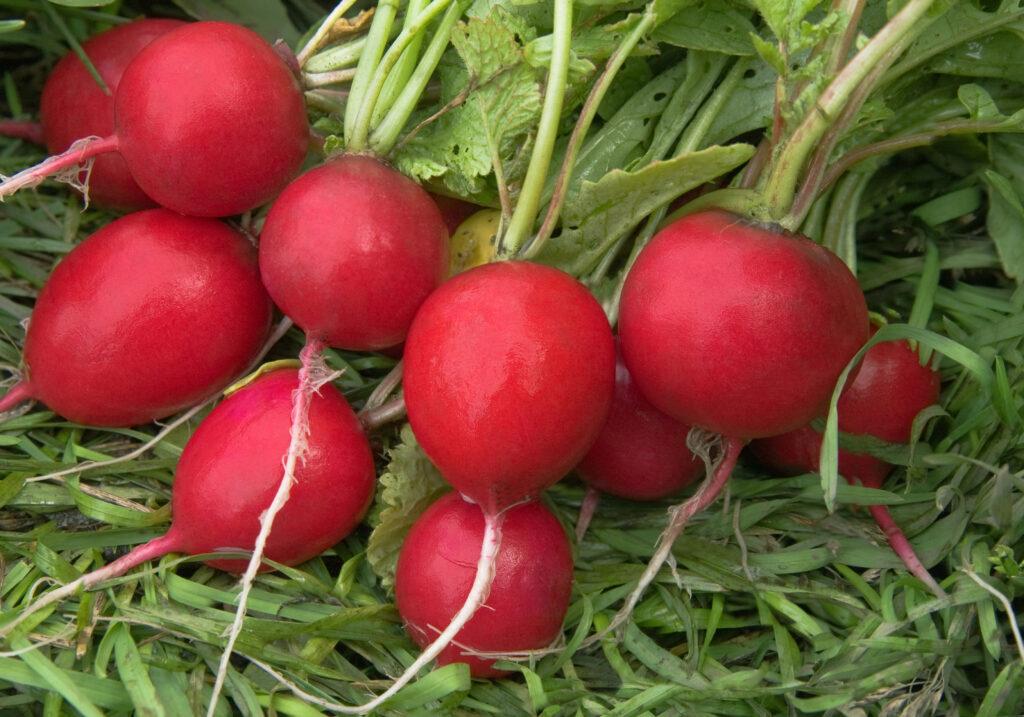
Harvest little and often as needed, ideally when the roots are well formed but still young. In the kitchen they’re most useful in salads, where their juiciness and crunch really shine. If you chose several varieties, you can also play with colours and levels of heat when serving. The result is a simple, fresh, punchy vegetable that definitely earns its place in the garden.
Source: Gardenary, RHS, Pestrazahrada.cz

A lover of nature, gardens, and everything that moves, blooms, or grows. He literally grows everything, from herbs to rare species, and he enjoys caring for animals just as much. In his work, he connects modern technology with tried-and-tested grandmotherly methods and is happy when both paths lead to the same goal.
Related articles
Next year you can harvest better if you don’t sow carrots where they won’t thrive
Carrot root fly can ruin carrots, parsley and celery from the inside out, often without obvious warning until harvest. Better site choice, rotation, later sowing and simple physical barriers can dramatically cut damage next season.

How to Propagate Roses from Cuttings at Home and Fill Your Garden with Blooms Almost for Free
Want more roses without paying for new plants? With a few healthy cuttings and a simple plastic-bottle mini greenhouse, you can root new bushes at home in just a few weeks.
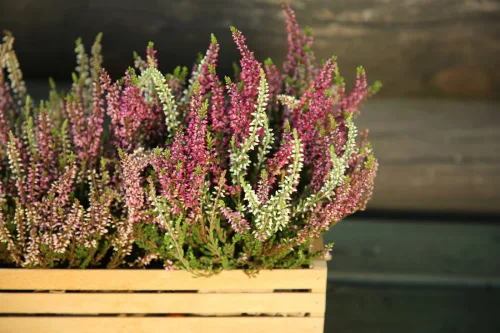
Heathers can cope where other plants won’t, but one soil detail decides everything
Heathers and heaths are tough evergreen shrubs that can flower across the seasons when you choose the right types. Success hinges on matching the plant to your soil pH and ensuring free drainage.
Comments (0)
Be the first to comment.