
 English
  Polski
  Deutsch
  Nederlands
  Svenska
  Norsk
Norsk  Dansk
Dansk  Français
  Italiano
  Español
  Português
  Slovenčina
  Suomi
Suomi  Gaeilge
 Peas for Every Garden The Reliable Route to Sweet Pods
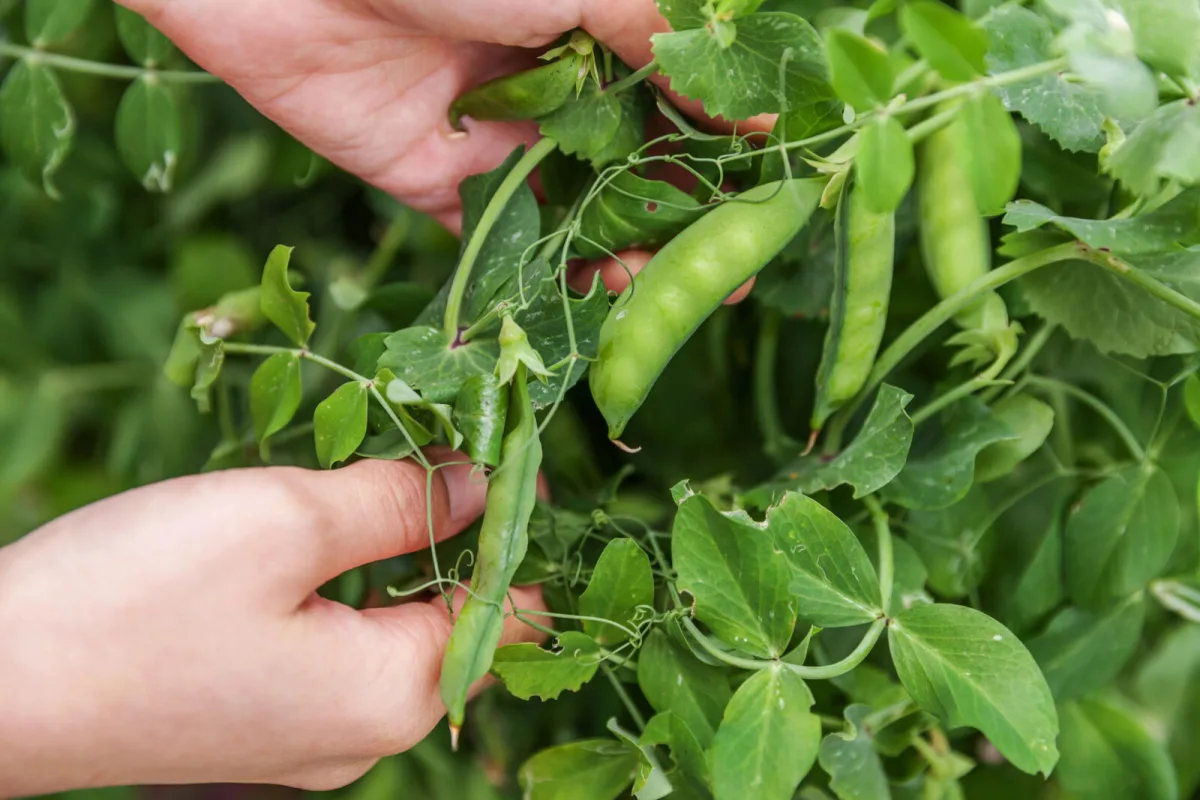
Peas are a dependable mainstay of spring vegetable beds. They’re loved for their gently sweet flavour, fast growth and wide range of uses in the kitchen. They’re also a legume rich in protein and fibre, so they’re good for more than just your taste buds. The good news is they’re suitable even for complete beginners. Give them the right place, sow on time and provide basic care, and they’ll reward you with succulent pods full of crisp little peas.
Where to sow peas so they grow quickly and without problems
They do best in a sunny position with plenty of light for most of the day. A sheltered spot is ideal too, because strong wind can snap shoots and slow growth. It’s practical to sow them by a fence or wherever you can easily set up a support for the plants to climb. The soil should be on the lighter side, free-draining and rich in humus, typically a sandy loam. Heavy, compacted and permanently wet soils are a problem, because roots suffer and plants may become weak or even rot.
When is the best time to sow
Peas are an early crop and usually cope with light spring frosts. Sow them early, most often from mid-March to mid-April, depending on how quickly the soil dries out and warms up. Timely sowing is crucial, because peas don’t like heat. If flowering and pod set coincide with higher temperatures, the plants form fewer pods and the harvest tends to be smaller.
How to sow seeds properly for even germination
Sow the seeds directly into the bed and give them enough depth, around 4 to 6 cm. Space them in the row about 4 to 5 cm apart, and keep roughly 30 to 40 cm between rows. This spacing lets plants breathe, grow well and also makes the bed easy to maintain. With taller varieties, count on needing support such as canes, wire mesh, netting or taut strings. Dwarf varieties can manage without support, but they often sprawl more and may take up more space in the bed.
Care during growth that determines pod size
After sowing, regular watering is important, especially during germination. Once peas start to flower and form pods, it pays to make sure the soil doesn’t dry out completely. Even though peas are fairly resilient, a good water supply usually shows in more pods and plumper, juicier peas. In the first weeks of growth, peas grow more slowly, so weeds can easily outpace them. Regular hoeing and weed removal helps the plants get ahead. Later, the crop will knit together and cope with competition better.
Feeding and soil, what peas really need
With peas, less is often more. Heavy feeding, especially with nitrogen, tends to do more harm than good. Thanks to a symbiosis with soil bacteria, the plant can supply itself with some of its own nitrogen. It’s far better to prepare the bed in advance and add organic matter such as compost, or well-rotted manure, ideally at least half a year before sowing. Peas also leave the soil in good condition, so other vegetables often follow them well and appreciate the nutrient-enriched bed.
Harvesting for sweet, tender peas
The first pods usually appear about two months after sowing, depending on the variety and the weather. For the best flavour, harvest when the pods are still soft and the peas inside are juicy and sweet. Regular picking has another benefit: it encourages the plant to produce more flowers and, in turn, more pods. If you want peas for drying or long-term storage, leave them to mature longer until the pods begin to yellow and the seeds inside harden and become more starchy.
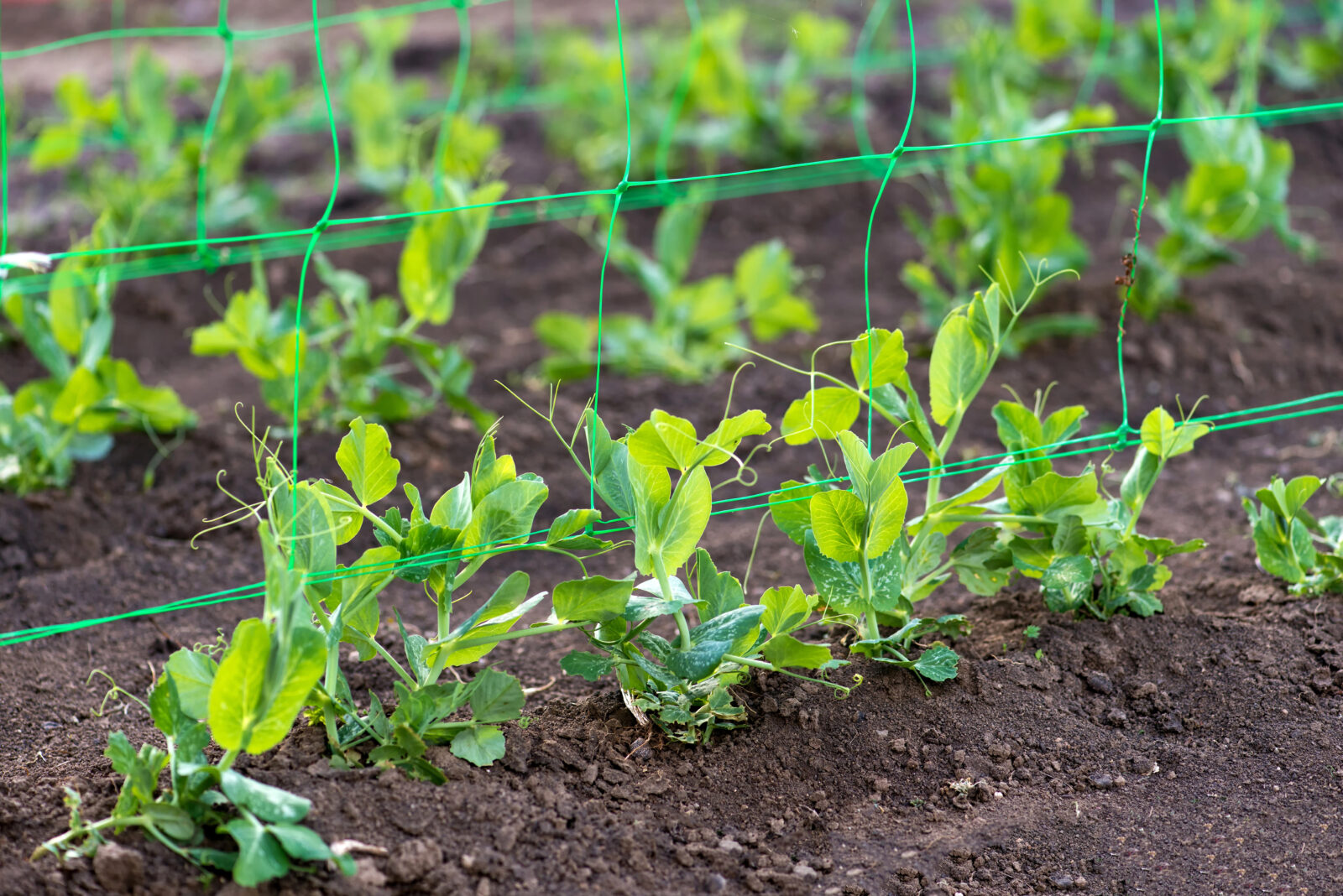
Succession sowing extends the harvest
If you want fresh pods over a longer period, don’t sow everything at once. A proven approach is to sow in stages at intervals of about 1 to 2 weeks. That way the harvest is spread out and you won’t have everything ripening at the same time. It’s also worth trying different types and varieties, because there are mangetout types you eat pod and all, as well as classic peas grown for larger seeds. Each choice brings a slightly different flavour and use in the kitchen.
Peas are an easy, rewarding crop, but they give their best to the gardener who sows them early, gives them sun and harvests regularly.
A sweet crop with minimal effort
Growing peas is enjoyable, quick, and it shows in the results. Choose a sunny spot, avoid waterlogged soil, keep the right spacing and watch watering during sensitive stages, and you’ll get a generous harvest. Fresh peas are perfect for soups and salads, or simply for snacking straight from the garden, when they’re at their tastiest.
Source: Almanac, GrowVeg, Pestrazahrada.cz

A lover of nature, gardens, and everything that moves, blooms, or grows. He literally grows everything, from herbs to rare species, and he enjoys caring for animals just as much. In his work, he connects modern technology with tried-and-tested grandmotherly methods and is happy when both paths lead to the same goal.
Related articles
The Christmas Amaryllis That Can Bloom for Years but Most People Throw It Away After Flowering
Hippeastrum is a spectacular winter-blooming bulb that, with the right care, will flower again year after year. Learn how to plant it correctly, look after it after flowering, and bring it into dormancy so it reliably reblooms.
How to Grow Winter Garlic for a Much Bigger Harvest
Autumn planting is the key to strong, healthy winter garlic, but the details make all the difference. With the right timing, bed choice, seed-clove treatment and a simple bicarbonate trick, you can noticeably boost yield.
A tree or shrub planted properly in autumn can outpace spring stock and improve fruiting
Many fruit trees and soft-fruit shrubs establish better when planted in autumn, because roots keep growing while the top is dormant. Done well, this head start means stronger spring growth, less watering, and a healthier first year.
Comments (0)
Be the first to comment.