
 English
  Polski
  Deutsch
  Nederlands
  Svenska
  Norsk
Norsk  Dansk
Dansk  Français
  Italiano
  Español
  Português
  Slovenčina
  Suomi
Suomi  Gaeilge
 Bergenia A Year Round Feature for Shade or Sun
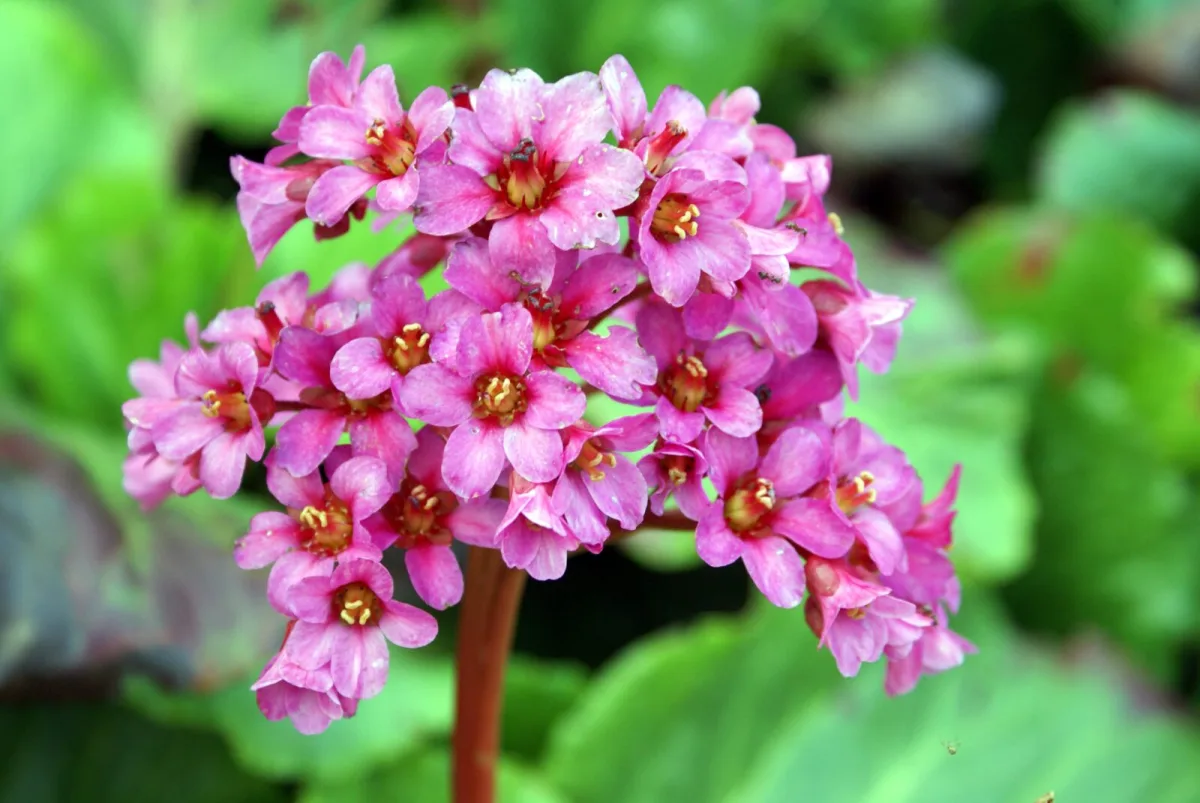
Bergenia is one of the most dependable perennials, able to keep a garden looking good almost without a break. For most of the year it stands out with large, sturdy leaves with strong texture, which stay on the plant even through winter. As soon as spring arrives, flowering stems rise above the basal rosette, carrying small bell-shaped blooms. In autumn the leaves often turn rich red, bronze or purple tones, so bergenia remains decorative even when other plants are already losing momentum.
The genus Bergenia comes from Asia and belongs to the saxifrage family. It is known for its leathery, rounded to heart-shaped leaves that form compact clumps. The plant spreads via thick, creeping rhizomes, so over time it can knit together into a continuous groundcover. Depending on the species and cultivar, it grows to roughly 30 to 60 cm tall and is very hardy, coping well with frosts, commonly far below freezing.
When it flowers and the colours it can offer
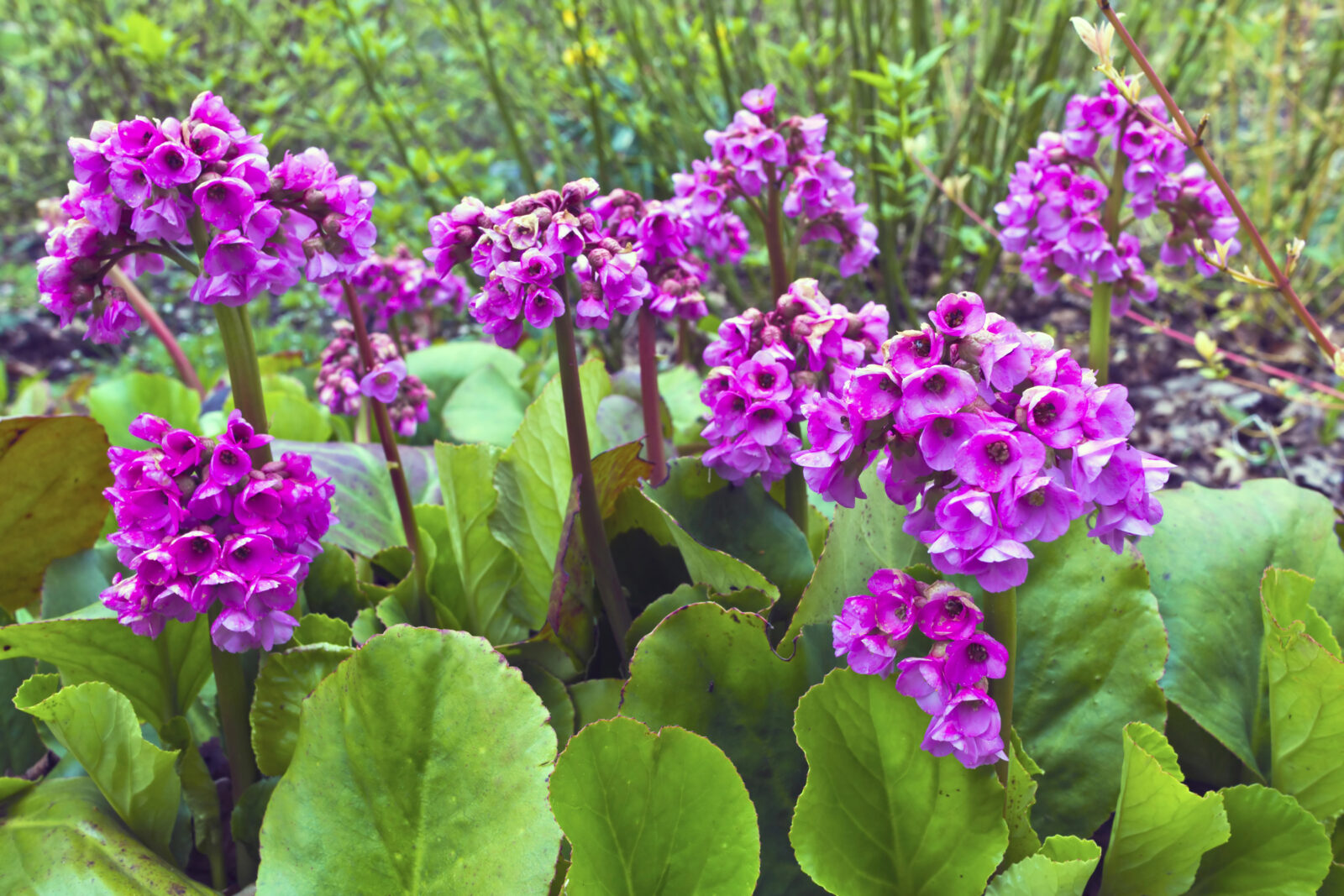
Bergenia flowering is one of the first standout events of the gardening season. In good conditions it starts in early spring and can continue into early summer. The flowers are held in dense clusters and rise on sturdy stems that carry few leaves. Colours range from white through soft pink to deep magenta-purple, making it easy to pair with spring bulbs and other perennials.
Site and soil determine how many flowers you get
A big advantage of bergenia is how well it adapts to different light levels. It usually produces the most flowers in sun or partial shade. In deep shade it will still grow, but flowering tends to be weaker and the stems can be longer and less robust. In places with harsh summer heat, it may not perform at its best and the foliage can take on a bronzed cast.
The best soil is evenly moist, humus-rich and well-drained. Constant waterlogging is risky because it encourages root and rhizome rot. On the other hand, bergenia will cope with drier spells, though in prolonged drought the leaf edges may start to brown and crisp. Interestingly, for heavier flowering it often needs only modest feeding, while in very rich soil it tends to put its energy mainly into foliage.
Watering, feeding and simple maintenance
In normally moist garden soil, care is minimal. It appreciates a more generous watering in late winter to early spring, while buds are forming, and during prolonged dry periods. To support vigour, a thin layer of compost in spring is usually enough. Go easy with fertilisers, because overfeeding can reduce flowering in favour of leaves.
Bergenia is long-lived and can grow in one place for more than ten years. It doesn’t like frequent moving, so choose the planting spot carefully. After flowering you can remove the spent flowerheads; in spring it is often useful to cut away old or damaged leaves and lightly loosen the soil around the clumps.
Propagation by division saves money and time
The simplest way to get new plants is to divide established clumps. This is most often done in spring or autumn, when the soil is still warm and the plant recovers well. Rhizomes can also be cut into smaller pieces and used as rhizome cuttings. This makes it easy to spread bergenia quickly to other parts of the garden, or to fill spots where other plantings struggle.
How to use it in the garden, under trees and in containers
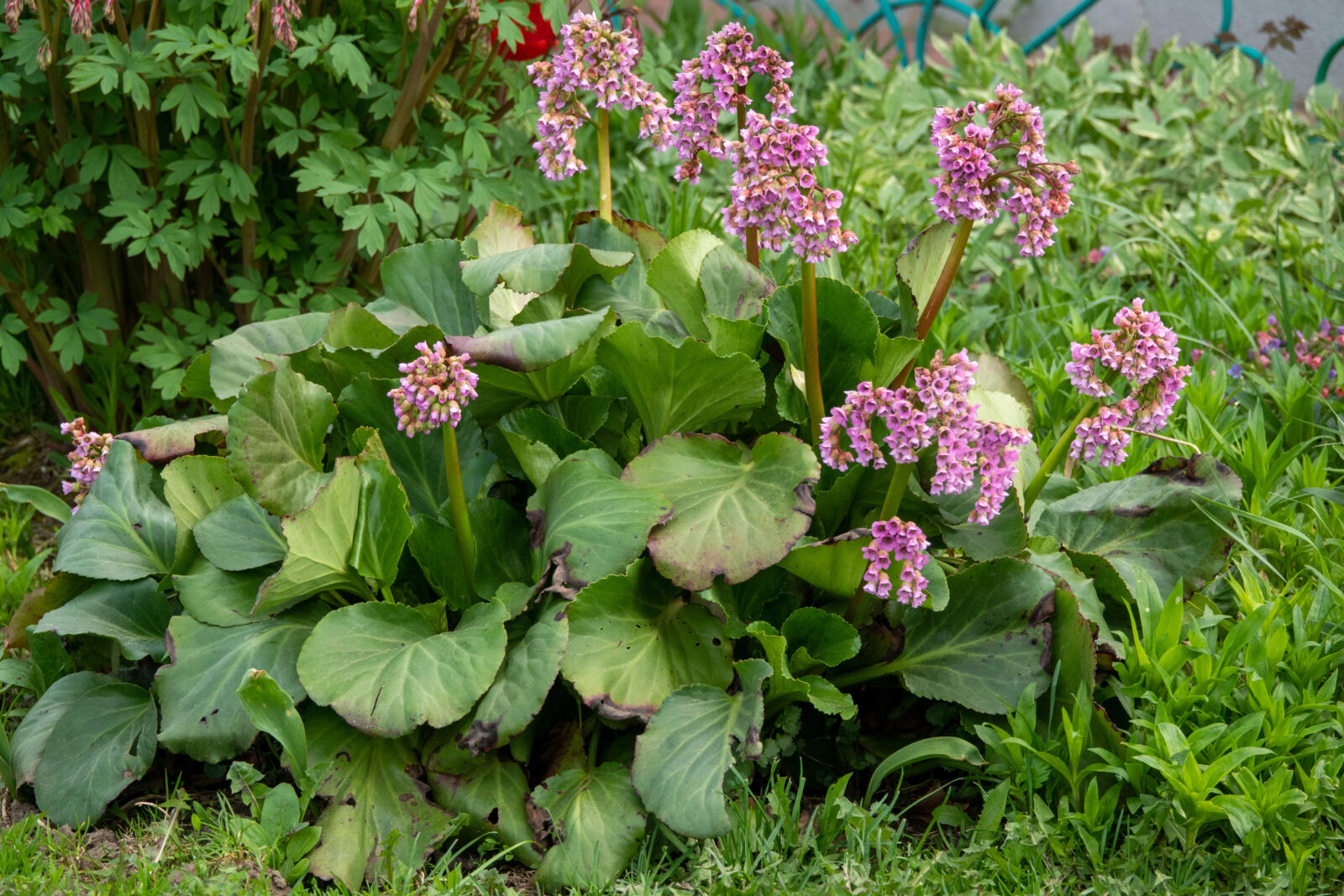
Its dense foliage and spreading habit make it an excellent groundcover perennial, especially under trees and shrubs or in areas where grass struggles. It also works well as an edging plant along paths, in mixed perennial borders, and at the front of plantings. Because it prefers soil with more even moisture, it is often planted near ponds or streams. It also suits containers on patios and balconies, where its evergreen leaves stay attractive outside the main season. The flowers and foliage are useful for cutting too, and last surprisingly well in a vase.
Species and cultivars worth considering
The genus bergenia includes around ten species, but gardens mainly grow a handful of the most rewarding ones. The most common is heartleaf bergenia, known for its large heart-shaped leaves and a wide range of cultivars with pink, red and white flowers. Another favourite is Bergenia crassifolia, with notably leathery leaves that can take on a bronzed tint in colder weather. Purple bergenia stands out because its leaves often turn fully purple in winter, complementing its darker flowers. There is also Bergenia ciliata, which can be more frost-sensitive, so it’s better suited to more sheltered positions.
If you’re looking for a shade-tolerant perennial that is frost-hardy, long-lived and decorative in every season, bergenia is one of the surest choices.
Source: BBC Gardener’s World, RHS, Garden Design, Pestrazahrada.cz

A lover of nature, gardens, and everything that moves, blooms, or grows. He literally grows everything, from herbs to rare species, and he enjoys caring for animals just as much. In his work, he connects modern technology with tried-and-tested grandmotherly methods and is happy when both paths lead to the same goal.
Related articles
The Christmas Amaryllis That Can Bloom for Years but Most People Throw It Away After Flowering
Hippeastrum is a spectacular winter-blooming bulb that, with the right care, will flower again year after year. Learn how to plant it correctly, look after it after flowering, and bring it into dormancy so it reliably reblooms.
How to Grow Winter Garlic for a Much Bigger Harvest
Autumn planting is the key to strong, healthy winter garlic, but the details make all the difference. With the right timing, bed choice, seed-clove treatment and a simple bicarbonate trick, you can noticeably boost yield.
A tree or shrub planted properly in autumn can outpace spring stock and improve fruiting
Many fruit trees and soft-fruit shrubs establish better when planted in autumn, because roots keep growing while the top is dormant. Done well, this head start means stronger spring growth, less watering, and a healthier first year.
Comments (0)
Be the first to comment.