
 English
  Polski
  Deutsch
  Nederlands
  Svenska
  Norsk
Norsk  Dansk
Dansk  Français
  Italiano
  Español
  Português
  Slovenčina
  Suomi
Suomi  Gaeilge
 Lilac as a Garden Feature Tips for Choosing a Variety and Planting It in the Right Spot
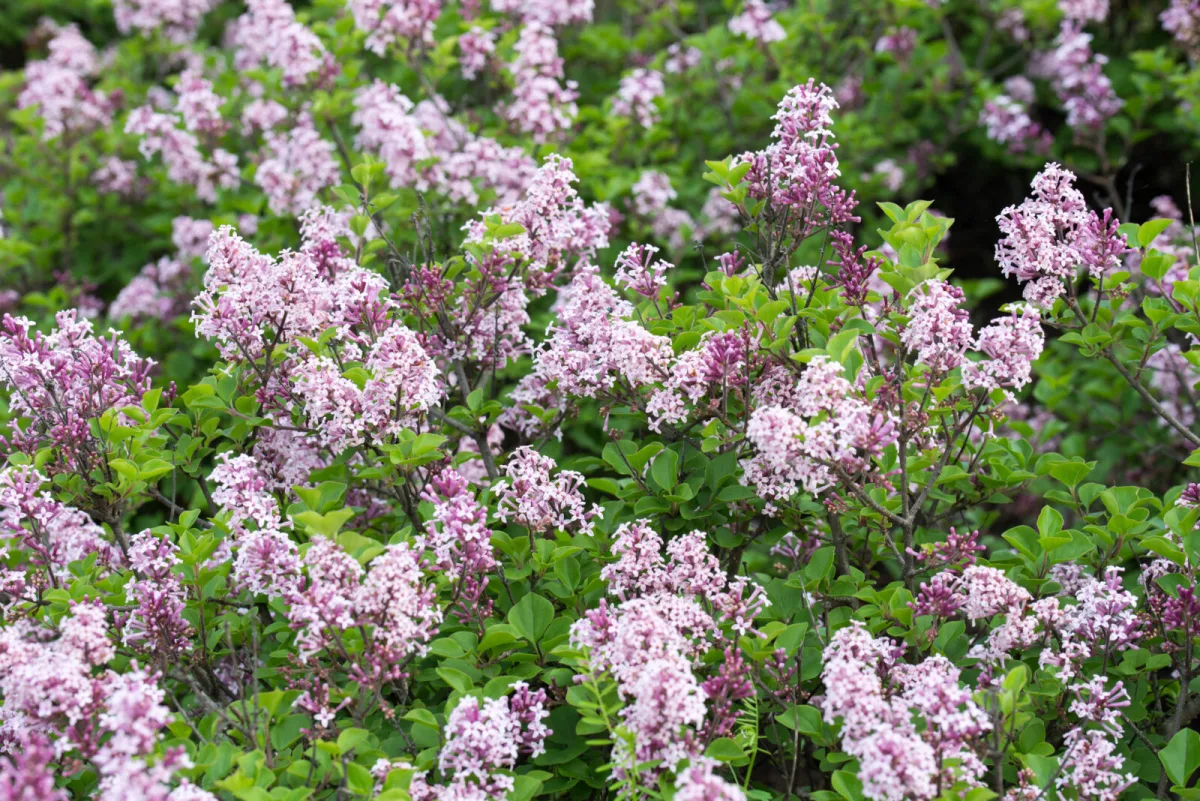
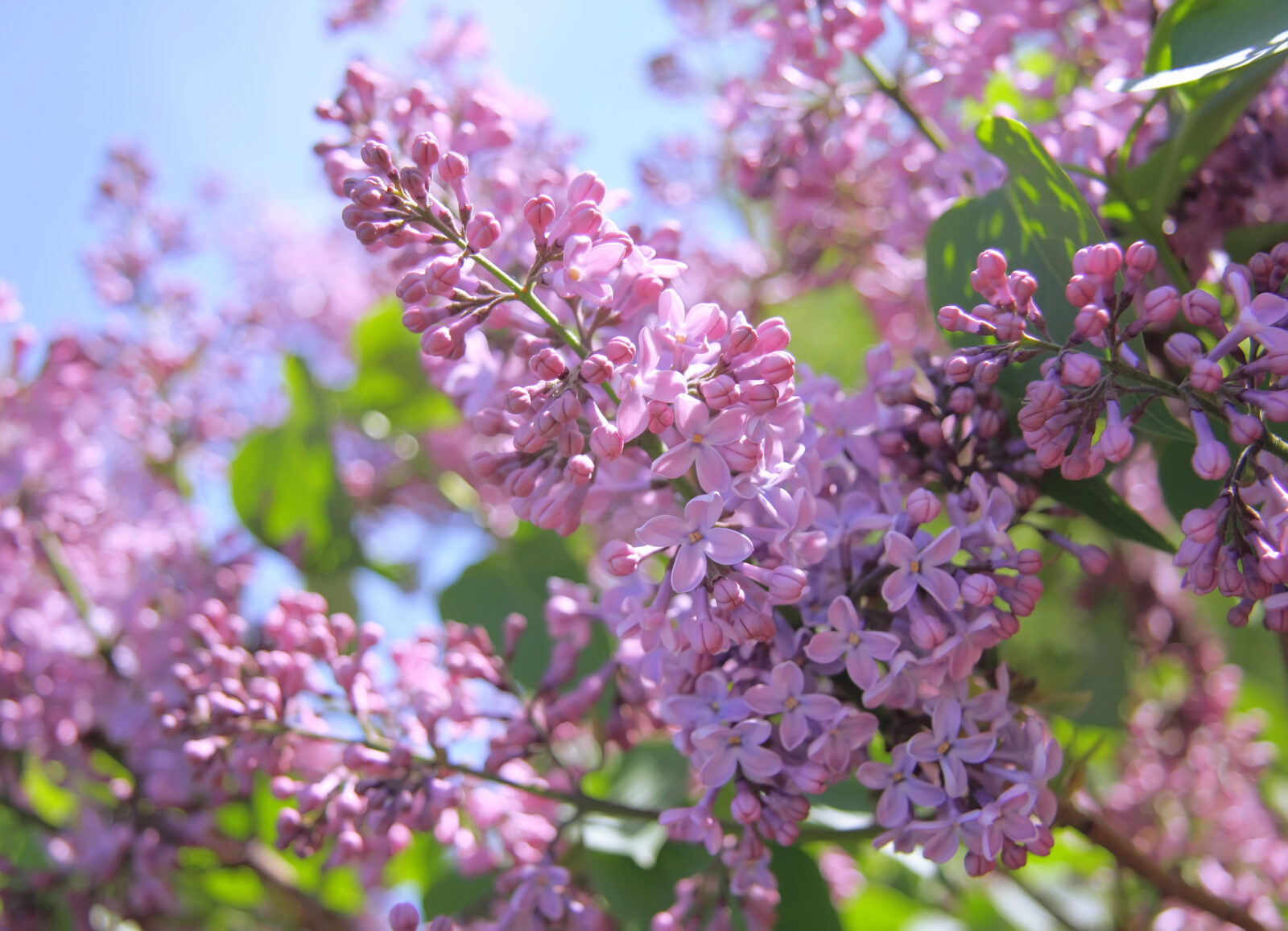
Lilac (Latin Syringa) is a deciduous shrub that’s impossible to miss in spring thanks to its abundant, strongly fragrant flower clusters. Its scent and sheer quantity of blooms make it one of the most rewarding ornamental shrubs for the garden, even for growers who don’t want to spend a lot of time on demanding care.
Lilac used to be an almost automatic choice for plantings around family homes as well as in public green spaces. Then it gave way for a while to other trends, but in recent years it has been making a strong comeback. New varieties with more striking flowers help, as do modern forms that behave more neatly and don’t spread into surrounding areas as aggressively as some older types.
Why lilac is becoming popular again
Today’s selection is more diverse than it used to be. There are more common lilac varieties with larger flowers, often double, sometimes even bicolour. An interesting option is also grafted standard forms trained on a stem, which can look like small trees. With these forms, another advantage is that they usually produce fewer root suckers, so they’re less likely to spread where you don’t want them.
Alongside the classic choice, other lilac species are also gaining ground, offering different growth habits, sizes, or better suitability for smaller gardens. Some types can even be grown in larger containers, widening the possibilities for patios and front gardens.
Where lilac looks best in the garden
Lilac suits small and large gardens alike, in town or in the countryside. It’s beautiful as a specimen shrub in the middle of a lawn, but also works well in a group with other ornamental shrubs. It’s often planted by fences, in front gardens, or in larger mixed borders, where it can create a romantic spring focal point.
Lilac is also very practical as a green screen. It tolerates pruning and shaping well, so it can be grown as a free-form or clipped hedge. For it to look natural and thrive long term, it’s important to allow for its eventual width and not crowd it from the start between other plants.
Site and soil determine success
It performs best in full sun, though it will tolerate light partial shade. It appreciates free-draining, deeper, fertile soil with moderate moisture. Soil with some lime content is ideal, while in more acidic soils growth tends to be weaker and flowering less reliable. Once well established, lilac can cope with drier periods, but in the first few years it’s worth keeping an eye on watering.
What lilac brings to the garden through the year
Its biggest display is from late April into May, sometimes through to early June depending on the species and variety. It also pleases in summer, when dense foliage provides welcome shade. Gardeners value it for reliability too, because in a suitable spot it flowers every year, usually without any special interventions.
Another benefit is toughness. Lilac handles frost, wind and full sun well, and it generally doesn’t suffer from serious diseases or pests. It also has good regenerative capacity, meaning minor mechanical damage is rarely a major issue if the plant has good overall conditions.
Flowers for the vase and a simple trick to keep them fresh longer
Lilac flower clusters are most often purple, pink or white and they attract pollinators. They’re also very popular for cutting. To help a bouquet stay fresh longer, remove any leaves that would sit in the water and gently crush the woody stem ends so they take up water more readily.
Planting and basic care without complications
Strong plants with an intact root ball can be planted for most of the growing season, but spring or autumn is best, when there is usually more moisture. With grafted large-flowered varieties, it’s recommended to plant about 10 cm deeper. After planting, don’t underestimate watering, so the plant roots quickly and establishes well.
It’s better to postpone the first major prune until the following season. Once established, lilac becomes almost a low-maintenance shrub. Still, there is one task that has a big impact on its vigour and flowering.
Removing spent blooms and pruning for light
The key is to remove faded flower clusters regularly, ideally back to the nearest branch junction. If you don’t, the shrub wastes energy on seed production and this can weaken flowering the following year. Long-term vitality is also helped by regular thinning, removing over-aged or poorly placed branches so the shrub has enough light inside.
Richer flowering is supported by spring feeding with a quality balanced compound fertiliser. In practice, many gardeners follow a simple routine: feed in spring and prune after flowering, so you don’t remove the buds for next year.
Five interesting lilac species for different gardens
Common lilac / Syringa vulgaris
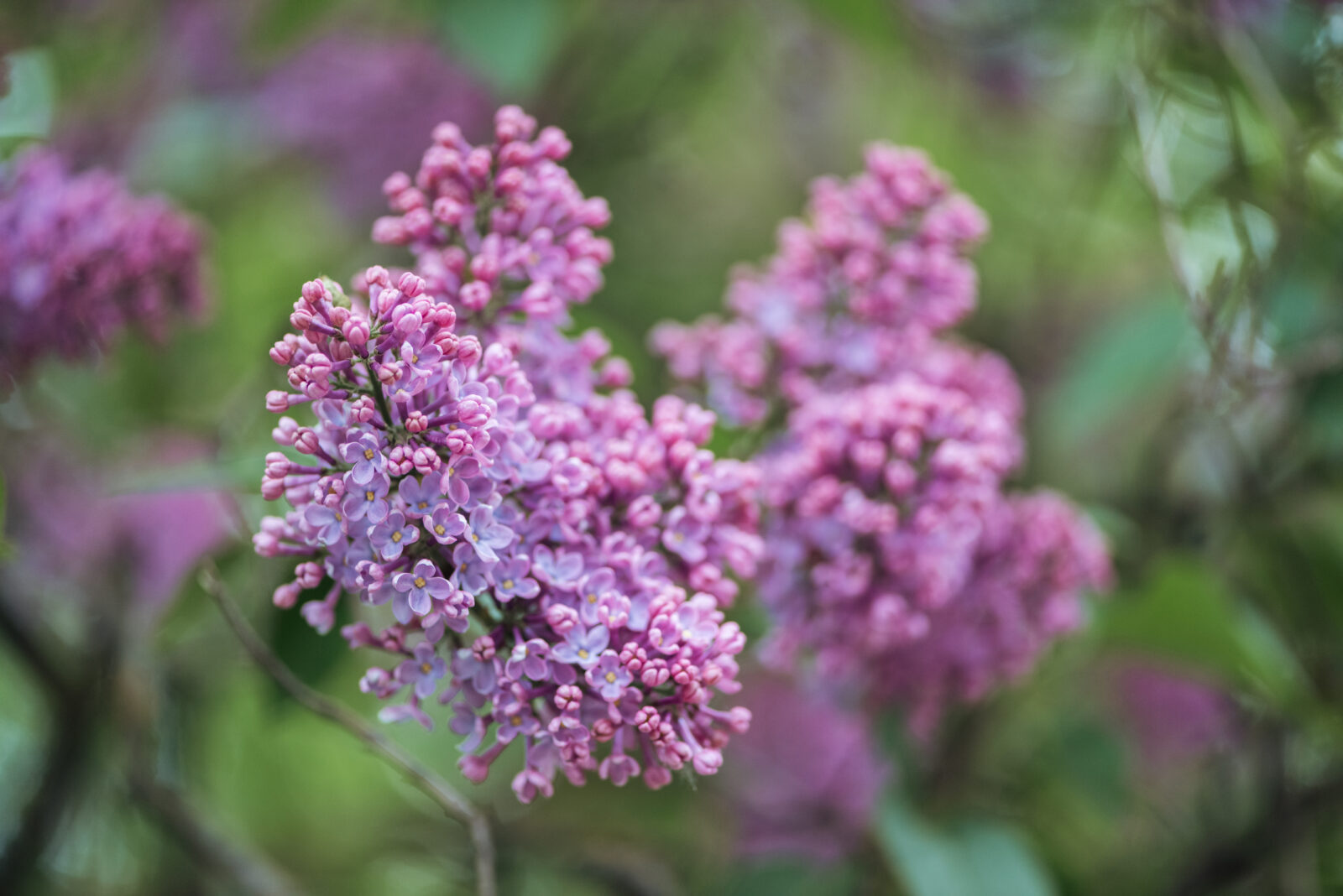
The best-known and most widely grown species, with many varieties that may have single or double flowers and are also excellent for cutting. It typically produces suckers, which can be an advantage for thickening a planting but sometimes a drawback. If you want more control over its growth, it’s worth choosing grafted varieties. It can be grown as a shrub or trained as a small tree and benefits from more regular pruning. Its approximate size is around 4 m tall and 2 m wide.
Chinese lilac / Syringa × chinensis
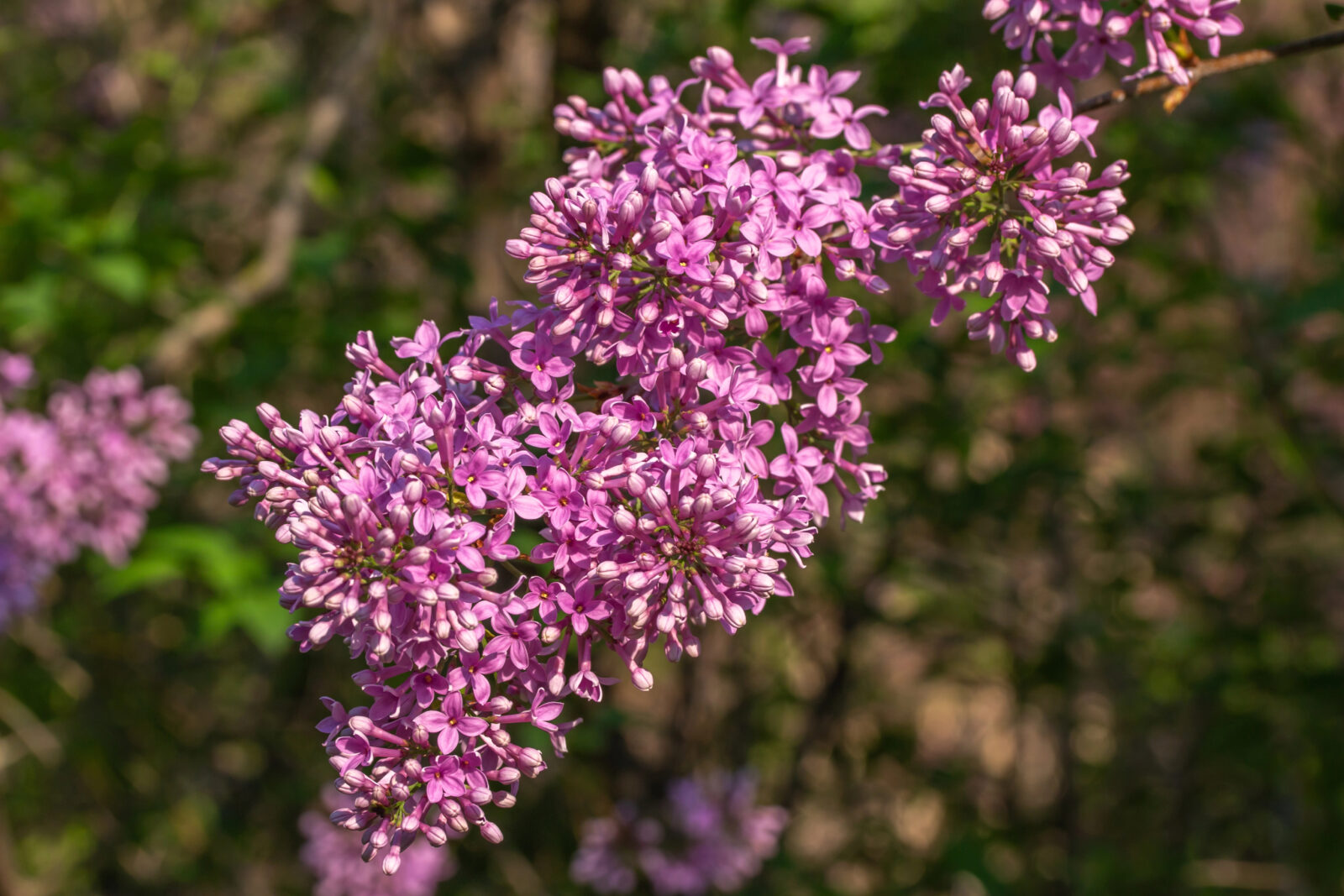
It has smaller flowers and leaves, grows densely and fairly quickly. A major plus is that it produces virtually no suckers, so it stays tidier and spreads less. It’s suitable as a shrub and works well on its own, in groups, and in hedges. It tolerates pruning extremely well, ideally carried out after flowering. It grows to about 4 m in both height and width.
Littleleaf lilac / Syringa microphylla
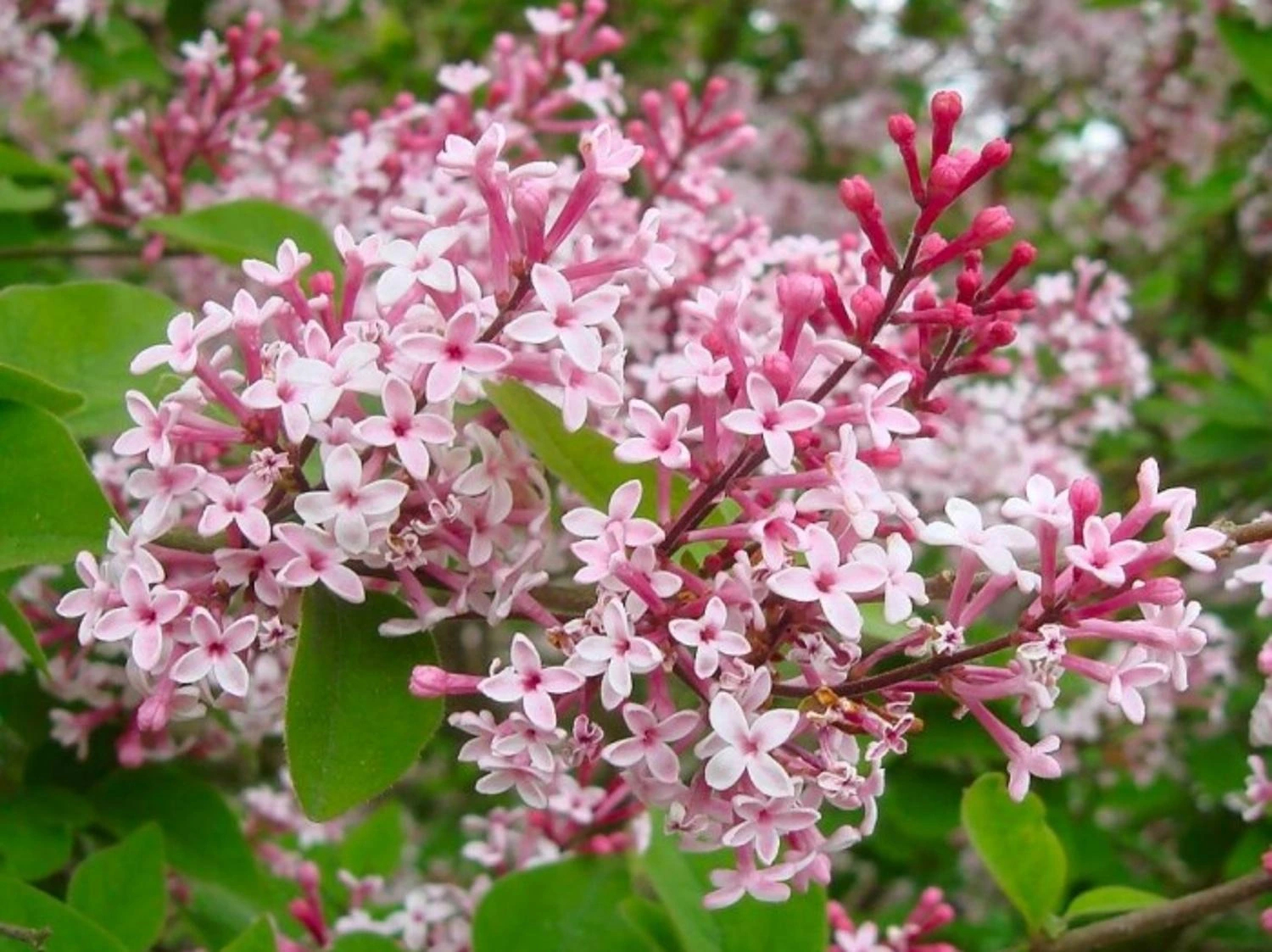
A lower, more compact species with dense foliage that also suits smaller gardens. It grows at a moderate pace and, while it can sucker, it’s usually not excessive. It fits well into mixed borders and, with a sufficiently large container, it can also be grown in a pot. The flower clusters are smaller, pinkish-purple and strongly scented. Typical size is about 1.5 to 2 m tall and 2.5 to 3 m wide.
Persian lilac / Syringa × persica

Less common, but a very interesting species with smaller leaves and delicate, fragrant, pale lilac upright flower clusters. Individual flowers can resemble hyacinths. A variety worth noting is Laciniata, with divided leaves and an airy look. It can be grown as a shrub or trained as a small tree, reaching roughly 1.5 to 2 m tall and around 1.5 m wide.
Hungarian lilac / Syringa josikaea
A hardy, fast-growing species that isn’t as common, so it can feel like a collector’s plant. It flowers with looser pink to purple, fragrant clusters. It will give its heaviest bloom in a sunny, warmer position. It’s better suited to larger gardens and free-growing hedges, where it has space to show its natural habit. It typically grows to around 3.5 m tall and about 2 m wide.
Source: Záhrada, Gardening Know How, Pestrazahrada.cz

A lover of nature, gardens, and everything that moves, blooms, or grows. He literally grows everything, from herbs to rare species, and he enjoys caring for animals just as much. In his work, he connects modern technology with tried-and-tested grandmotherly methods and is happy when both paths lead to the same goal.
Related articles
The Christmas Amaryllis That Can Bloom for Years but Most People Throw It Away After Flowering
Hippeastrum is a spectacular winter-blooming bulb that, with the right care, will flower again year after year. Learn how to plant it correctly, look after it after flowering, and bring it into dormancy so it reliably reblooms.
How to Grow Winter Garlic for a Much Bigger Harvest
Autumn planting is the key to strong, healthy winter garlic, but the details make all the difference. With the right timing, bed choice, seed-clove treatment and a simple bicarbonate trick, you can noticeably boost yield.

A tree or shrub planted properly in autumn can outpace spring stock and improve fruiting
Many fruit trees and soft-fruit shrubs establish better when planted in autumn, because roots keep growing while the top is dormant. Done well, this head start means stronger spring growth, less watering, and a healthier first year.
Comments (0)
Be the first to comment.