
 English
  Polski
  Deutsch
  Nederlands
  Svenska
  Norsk
Norsk  Dansk
Dansk  Français
  Italiano
  Español
  Português
  Slovenčina
  Suomi
Suomi  Gaeilge
 The Legendary Velké Pavlovice Apricot Named Heritage Variety of the Year for Its Outstanding Flavour
In the Czech Republic we have a weakness for comparing things and hunting for the very best, and that applies in gardens and fruit growing too. Alongside competitions for the finest preserves, sauerkraut or fruit spirits, for several years now the title Heritage Variety of the Year has also been awarded. It is announced by the Czech Union for Nature Conservation, with the aim of drawing attention to fruit trees that have held their place in the landscape and in gardens for generations. These are often varieties that, despite the rise of modern newcomers, have kept their reputation for reliability, distinctive flavour and good usefulness in the kitchen.
After the apple Česká pochoutka and the pear Solanka, the choice for 2026 fell on one of the best-known apricots of all. The title went to the Velkopavlovická apricot, a traditional Moravian regional variety that is still seen today as a classic of home orchards.
A living legend from Velké Pavlovice
The name gives away its origin. Velkopavlovická is closely tied to South Moravia and the Velké Pavlovice area, where apricots have thrived for centuries. In specialist sources the variety is described as early as 1931, but local experience and the region’s memory suggest it has been grown successfully here for at least two hundred years. Apricot growing around Velké Pavlovice also has roots going back to the 14th century, when local conditions and long-term selection gradually shaped a distinct local type of apricot.
A flavour benchmark by which others are judged
Velkopavlovická is famous not just for its name, but above all because its flavour and ripening time are taken as the reference point. In practice, that means many growers and experts categorise other apricot varieties as those that ripen earlier, later, or roughly at the same time as this Moravian classic. Its combination of sweetness, pronounced aroma and that unmistakably full apricot character is often described as the yardstick.
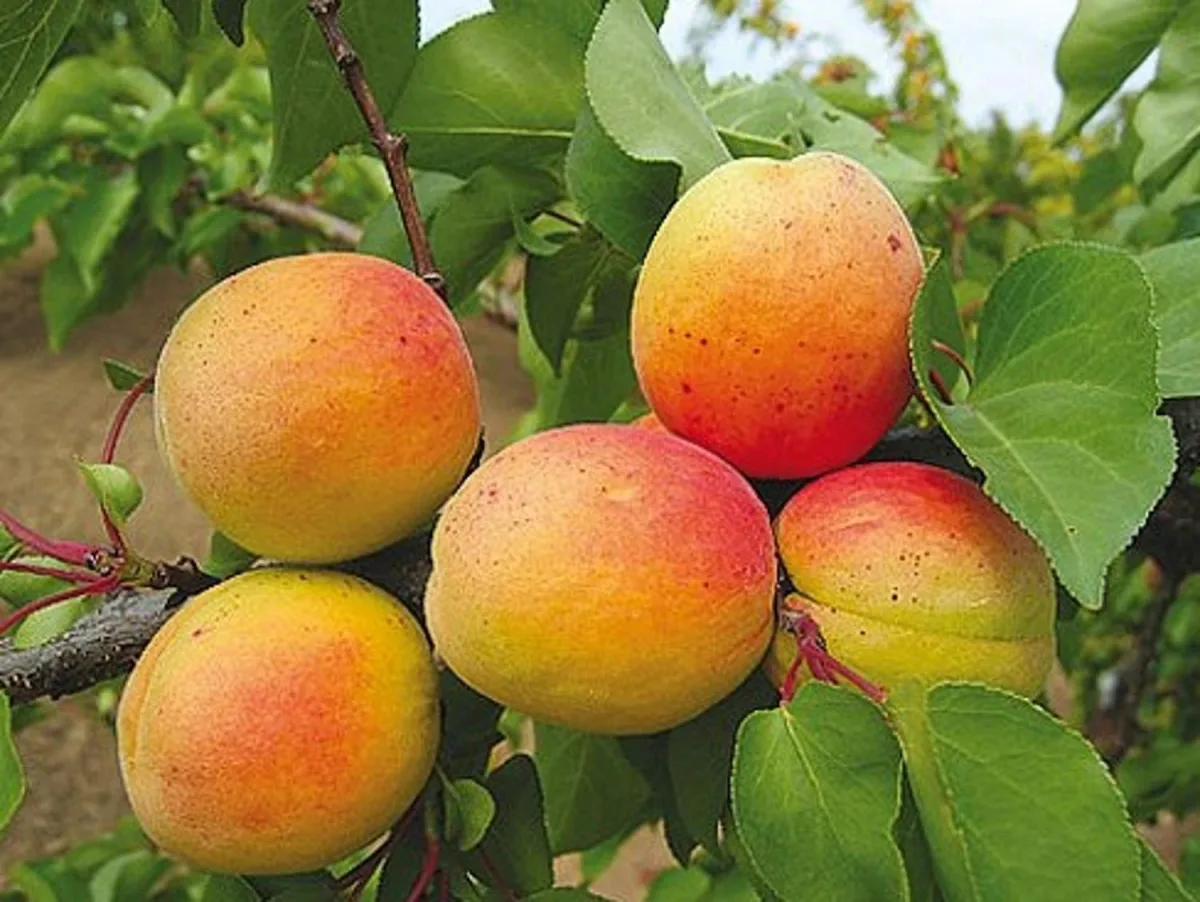
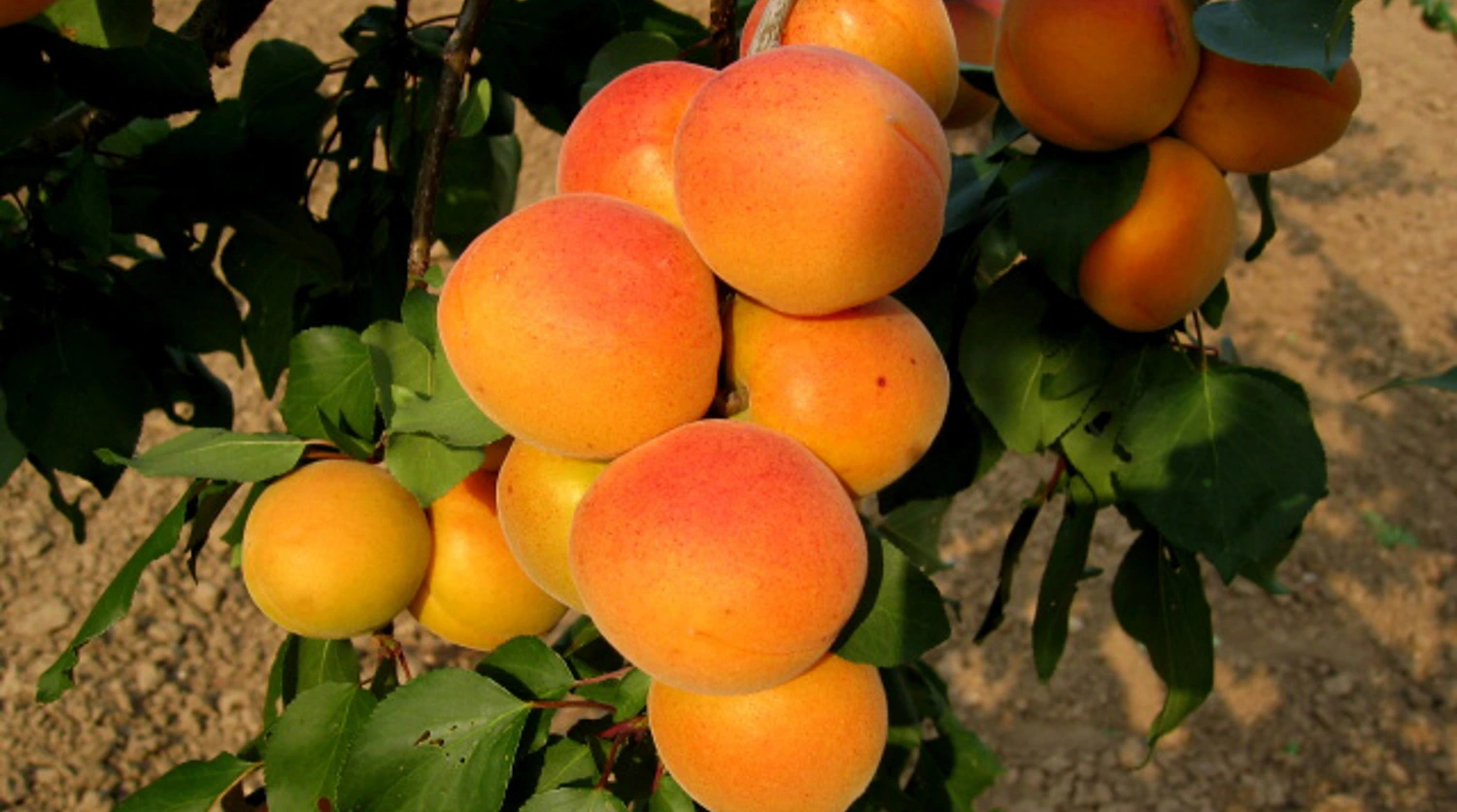
The fruits are typically medium to large, richly orange-yellow, and when properly ripe they look juicy and vividly coloured. In the kitchen the variety is highly versatile. It’s excellent for eating fresh, for summer bakes, for bottling, and for jams; it also dries well and freezes well. Its high sugar content is one reason it’s also used to make sought-after apricot brandy, and even the sweet kernel can be a pleasant bonus.
Cropping, growth and hardiness in practice
Velkopavlovická is classed as a mid-season and self-fertile apricot, so it usually doesn’t need a pollination partner. It comes into bearing relatively early, often within five years of planting. If spring weather doesn’t damage the flowers and tiny fruits with frost, crops are generally regular rather than wildly fluctuating. Ripening comes on gradually from about mid-July.
The trees grow vigorously and form a spreading, rather dense crown. When mature they can be very substantial, around eight metres tall with a spread that can approach ten metres. They are notably long-lived, especially when grafted onto a seedling rootstock, when they may live for several additional decades. The wood tolerates frost better than average, and historically it’s reported that many trees survived exceptionally severe winters. However, in susceptibility to brown rot it does not differ dramatically from other apricots, so it pays to keep an eye on plant health and remove infected parts promptly.
How to choose the right site and soil for successful growing
The key requirement is a warm, sunny position with plenty of light. It’s worth avoiding windy spots, where blossoms and branches can be more easily damaged and the tree copes worse with weather swings.
The variety prefers light to moderately light, rather drier soils with a reaction close to neutral pH. By contrast, heavy clay ground, prolonged waterlogging and compaction are common causes of trouble, because apricots do not tolerate standing water around the roots.
Altitude and growing outside the warmest areas
It performs best in lowland sites up to about 250 metres above sea level, where the growing season is steadier and the risk of late frosts tends to be lower. In Czech conditions, however, it can also be grown successfully at higher elevations, often up to around 350 metres, provided the site has enough warmth and the average annual temperature is about 8.5 °C.
At elevations around 400 to 450 metres it’s still possible, but it requires a much more careful choice of location. Sheltered corners facing west to south-west, enclosed courtyards and positions by heat-retaining walls help buffer temperature swings. In these situations, the choice of rootstock and the overall planting strategy also play a major role.
Pruning, training, and an interesting option for container growing
In terms of pruning, it isn’t an overly demanding apricot. It’s often trained as a half-standard with a more freely growing crown, or a more modern form is chosen with an open-centred, bowl-shaped canopy. The important thing is to keep the crown well lit so the wood ripens properly and the fruit gets enough sun.
Older horticultural literature also notes that, with the right care, Velkopavlovická can even tolerate growing in movable containers on patios or balconies. It isn’t the most common route, but it speaks to its adaptability—provided it has plenty of light, enough room for roots, and a steady watering routine.
Why growers keep coming back to it
Velkopavlovická holds a special place because it combines traditional character, bold flavour and broad culinary use. That’s exactly why the Heritage Variety of the Year 2026 title makes sense. If you’re looking for an apricot that has proved itself over the long term in Czech gardens and also delivers fruit by which other varieties are judged, you’re unlikely to go wrong with this Moravian classic.
Source: ČSOP, Ekolist, Wikipedia, Pestrazahrada.cz

A lover of nature, gardens, and everything that moves, blooms, or grows. He literally grows everything, from herbs to rare species, and he enjoys caring for animals just as much. In his work, he connects modern technology with tried-and-tested grandmotherly methods and is happy when both paths lead to the same goal.
Related articles
The Christmas Amaryllis That Can Bloom for Years but Most People Throw It Away After Flowering
Hippeastrum is a spectacular winter-blooming bulb that, with the right care, will flower again year after year. Learn how to plant it correctly, look after it after flowering, and bring it into dormancy so it reliably reblooms.
How to Grow Winter Garlic for a Much Bigger Harvest
Autumn planting is the key to strong, healthy winter garlic, but the details make all the difference. With the right timing, bed choice, seed-clove treatment and a simple bicarbonate trick, you can noticeably boost yield.
A tree or shrub planted properly in autumn can outpace spring stock and improve fruiting
Many fruit trees and soft-fruit shrubs establish better when planted in autumn, because roots keep growing while the top is dormant. Done well, this head start means stronger spring growth, less watering, and a healthier first year.
Comments (0)
Be the first to comment.