
 English
  Polski
  Deutsch
  Nederlands
  Svenska
  Norsk
Norsk  Dansk
Dansk  Français
  Italiano
  Español
  Português
  Slovenčina
  Suomi
Suomi  Gaeilge
 How to Store Carrots for Winter and Why the First Step After Harvest Matters
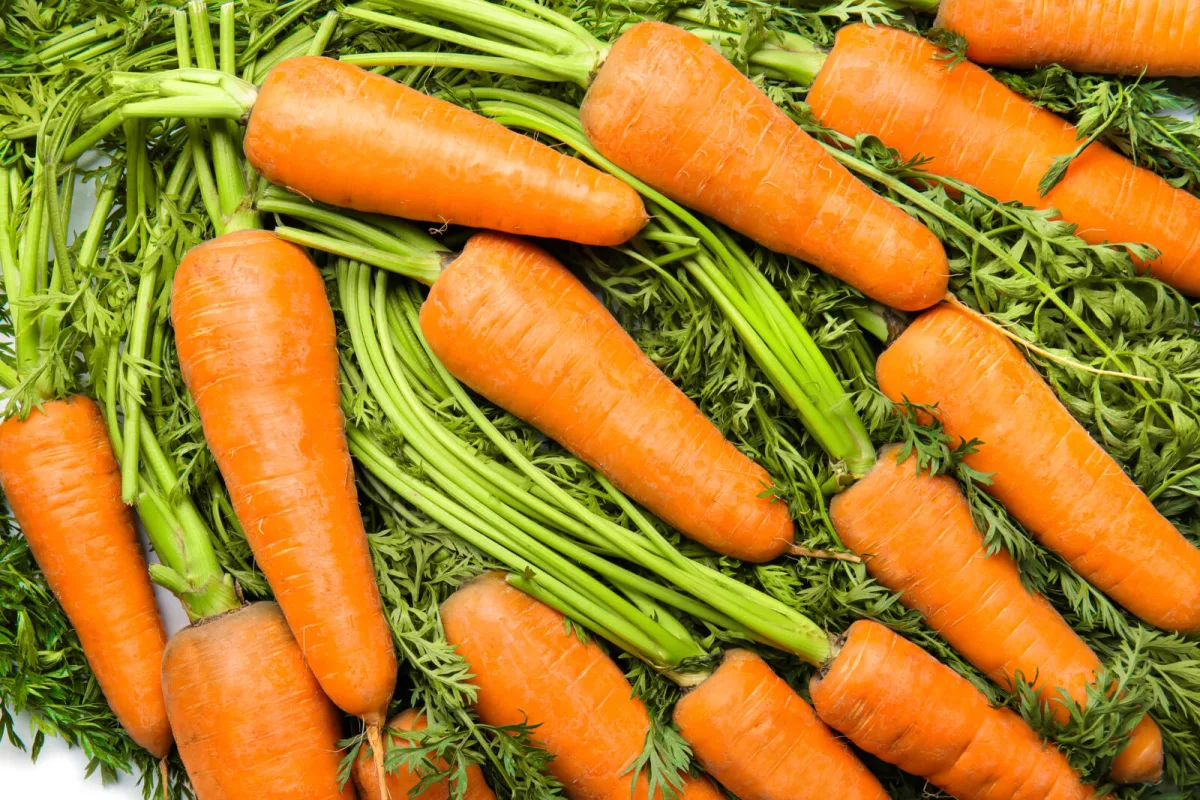
Carrots can stay fresh through much of the winter, but only if you don’t cut corners straight after harvest. It’s not enough to pull the roots from the ground and tip them into a crate without checking. Even a single rotting or damaged carrot can gradually spoil the ones around it and unnecessarily shorten the life of the whole stash. If you’ve had a good crop, it pays to think not only about space in the cellar, but also sorting, careful handling and the right way to store them.
Careful sorting is the most important step
For long-term storage, choose only firm, healthy, fully mature roots. Discard carrots with cracks, deeper grooves, bruises, pest damage or any hint of rot. Smaller, snapped or otherwise compromised roots are best used first. When it comes to storage, it doesn’t pay to take risks, because problems often spread from one root to the next.
Remove the tops because they needlessly dry the root
Always remove the green tops before storing. Even after harvest they continue to draw moisture from the root, so carrots wilt and soften faster. Cut them back so only a small stub remains, but don’t cut unnecessarily deep into the flesh. The fewer wounds, the lower the risk of later spoilage.
Don’t wash and don’t leave them in the sun
If the carrots are headed for the cellar, washing usually isn’t necessary. It’s enough to gently knock off or brush away excess soil and let the surface dry briefly. What matters is drying in cool shade, not in direct sun and not in warmth. Overheating after harvest can shorten storage life and encourage water loss.
Storing in slightly damp sand
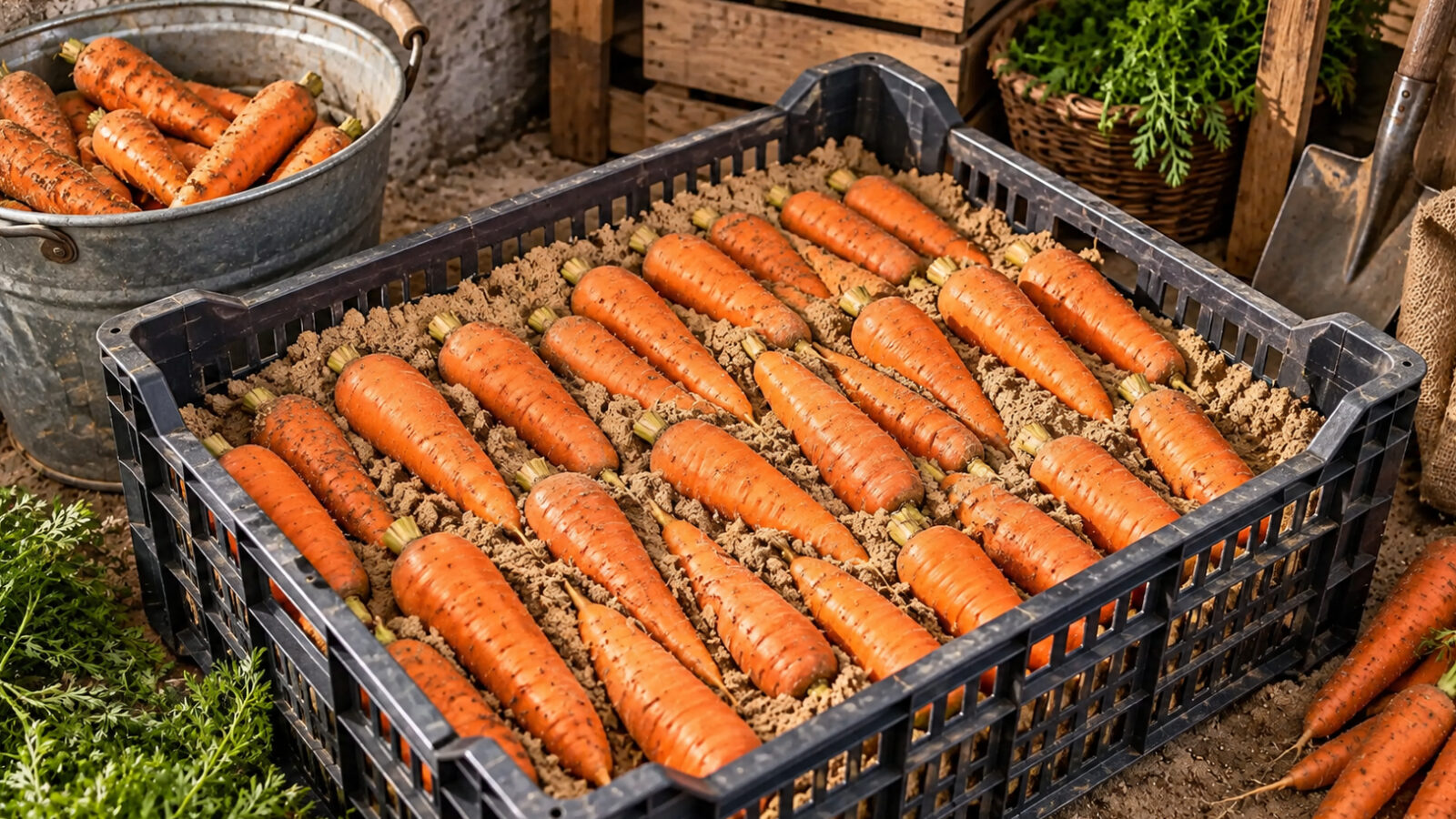
For larger quantities of carrots, sand is one of the most practical solutions. Prepare a clean crate and pour a few centimetres of sand into the bottom, only lightly moistened. Lay the roots on this layer so they don’t touch if possible. Then cover them completely with another layer of sand and keep layering until the container is full.
Sand helps maintain more stable humidity around the roots, so carrots lose less water and stay crisp for longer. It also separates the roots, limiting the spread of any rot. The key is not to overdo the water; the sand must not be wet. Waterlogging increases the risk of mould and softening.
Storing in sawdust if you want lighter crates
You can use sawdust in a similar way, but it must be clean, dry and untreated. Put a layer of sawdust in the bottom, arrange the carrots, then cover them thoroughly with another layer. You can build several layers this way.
The main advantage of sawdust is its lower weight. With a big harvest, crates filled with sand can be heavy to carry, whereas sawdust makes handling much easier. Here too, the material should not be damp, and certainly not soaked with water.
A smaller supply can be managed in the fridge
If you only have a few bunches, you can do without a cellar. Sort the carrots again, trim off the tops and store them in bags with holes to allow at least a little air exchange. The vegetable drawer is best.
The most common issue in the fridge is excess moisture and condensation. If water collects in the bag and the roots sit in it, they can spoil faster. It’s therefore a good idea to check the packaging regularly and remove any water that has built up.
What conditions the cellar should have
Carrots like a low temperature of around 0 to 2 °C along with higher humidity. Cool conditions slow ageing, and higher humidity prevents excessive drying, keeping roots firm. If the cellar is too warm or too dry, carrots will gradually wilt, soften and lose flavour and juiciness.
Sensible ventilation matters too. The goal isn’t a wet environment, but stable conditions without heavy condensation and without stale air that encourages mould.
Don’t store carrots next to apples and pears
Pay attention to what’s stored nearby in the cellar. Apples and pears release ethylene, which can affect the quality and flavour of some vegetables, including carrots. Ideally, keep carrots separate from fruit, or at least at a greater distance.
What most often ruins carrots and how to prevent it
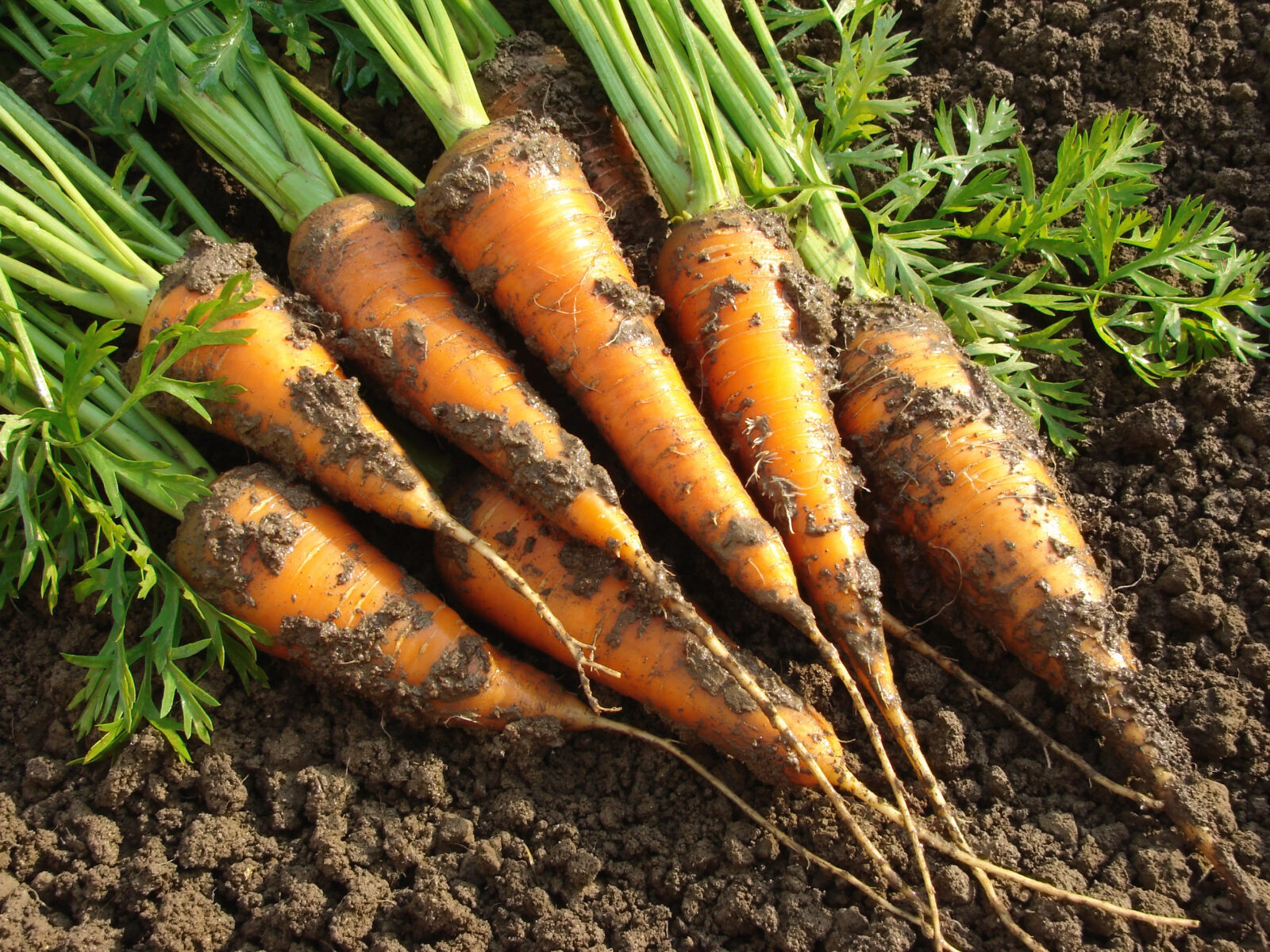
The biggest mistake is mixing cracked, bruised, cut or already slightly rotting carrots in with sound roots. One bad root can become an infection source for everything around it. Over winter, check your stores occasionally. As soon as you find a soft, mouldy or suspicious carrot, remove it immediately and check any that were touching it.
Unnecessary damage during handling, washing before storage and keeping them in an environment that’s too wet are equally harmful. Long keeping quality is often determined not only by the chosen packing material, but above all by selecting clean, healthy roots and maintaining calm, cool conditions.
Which method works best
If you have a larger harvest and a cellar with the right temperature, a crate of slightly damp sand works extremely well. The roots are separated, humidity stays more stable, and in proper cool conditions they keep firm and juicy for a long time. The most important thing, however, is to start with good preparation: sort out sound roots, remove the tops, let the carrots dry briefly in the shade, and only then store them in an environment that is cool, humid and not waterlogged.
Source: Gardening Know How, RHS, To je nápad, Pestrazahrada.cz

A lover of nature, gardens, and everything that moves, blooms, or grows. He literally grows everything, from herbs to rare species, and he enjoys caring for animals just as much. In his work, he connects modern technology with tried-and-tested grandmotherly methods and is happy when both paths lead to the same goal.
Related articles
What to Do Before Frosts So Tuberous Plants and Bulbs Make It Through Winter
Tender tuberous plants and bulbous flowers often need help to survive winter. Learn when to lift and store them and when a thick mulch layer in situ is enough.
Common Mistakes When Harvesting and Storing Pears and How to Keep Them Fresh Longer
Pears need harvesting slightly under-ripe and then ripened off the tree to develop their best flavour and texture. Learn how to pick, ripen and store them correctly so they last well into winter.
Simply Bringing Balcony Plants Indoors Isn’t Enough
Many popular balcony plants aren’t true annuals—they just can’t cope with frost. Overwinter them properly and they’ll restart stronger, flower earlier, and look fuller than newly bought plants.
Comments (0)
Be the first to comment.