
 English
  Polski
  Deutsch
  Nederlands
  Svenska
  Norsk
Norsk  Dansk
Dansk  Français
  Italiano
  Español
  Português
  Slovenčina
  Suomi
Suomi  Gaeilge
 How to Boost Your Tomato Harvest in July with the Right Pruning
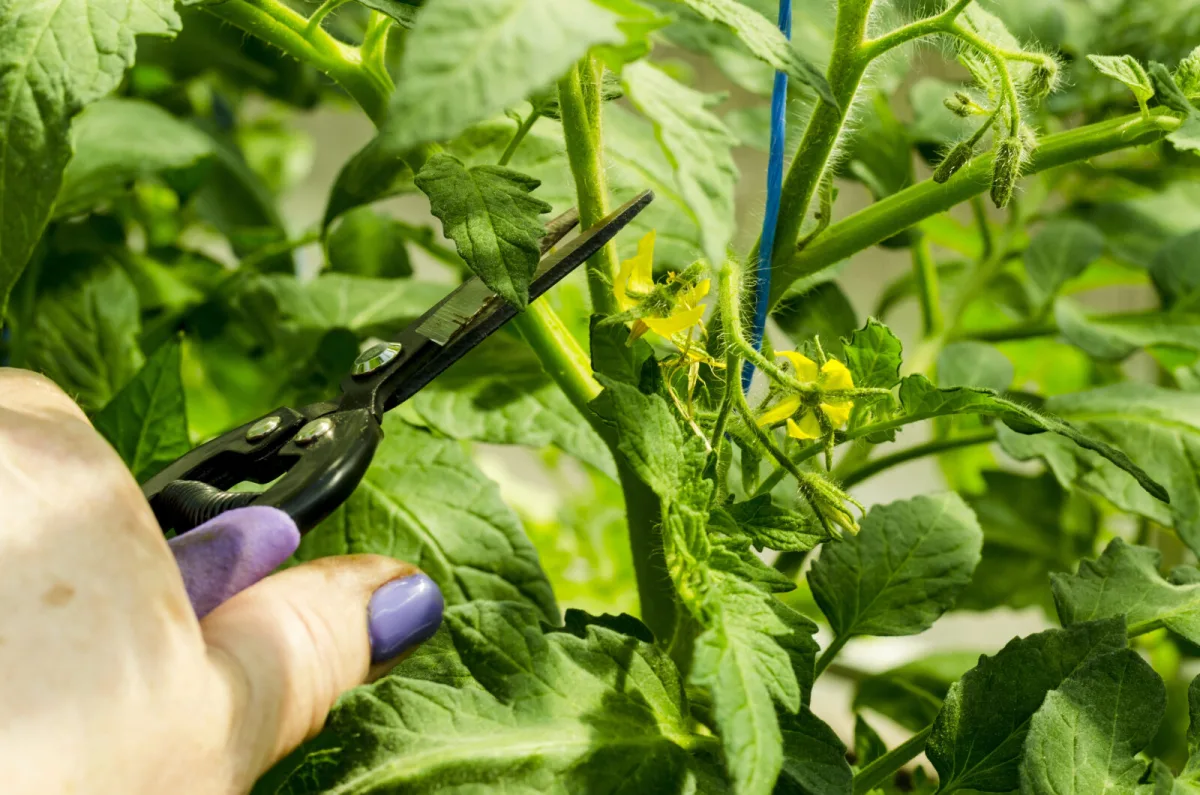
Tomatoes are among the most widely grown crops in gardens and on balconies. But if you want the plants to set as many fruits as possible and ripen them without trouble, watering and feeding alone won’t do. Regular pruning also plays a key role, and it’s especially worth doing in July, when plants grow quickly, become dense, and use up a lot of nutrients.
Without intervention, some of the plant’s energy is diverted into growth that doesn’t help the harvest. Typically, that means excess side shoots and large, old leaves. These not only take nutrients from the plant, but they also shade the fruits and reduce airflow, which can increase the risk of disease.
What needlessly weakens the plant and why to remove it
The biggest issue is usually the secondary shoots that appear in the leaf axils. If you let them grow unchecked, the tomato produces too much leafy growth. The result may look good at first glance because the plant is vigorous, but the fruits often develop more slowly and can be smaller. Old lower leaves have a similar effect: they don’t contribute much anymore, yet they still consume water and nutrients.
Another risk comes from leaves or shoots that are weak, damaged, or showing signs of disease. If you don’t remove them in time, they can become an entry point for infections, and the problem can then spread to other parts of the plant.
Main benefits of pruning during the season
Correct pinching out and leaf removal bring several practical advantages. The plant gets more even access to sunlight, so the fruits colour up better and ripen faster. Air circulation inside the plant also improves, reducing humidity between leaves and lowering the likelihood of blight and other fungal diseases.
Pruning also lets you shape the plant to suit the space you have. With tall, indeterminate varieties, you’ll appreciate being able to train the tomato more neatly on its support and keep it in good condition throughout the season.
When to start and how to proceed step by step
The first pruning makes sense when the plant reaches roughly 20 cm in height. That’s the point when it’s strong enough, but still easy to guide. In July, continue pruning regularly depending on how quickly the tomato is growing.
Start at the bottom and work upwards. First remove the older leaves near the ground, which are most affected by moisture and often touch the soil. These parts are more prone to blight. Use sharp secateurs so the cuts are clean and the plant isn’t unnecessarily torn.
Ongoing removal of weak and diseased parts
As the tomato grows, keep cutting or pinching out any leaves and shoots that are clearly weakened, yellowing, or damaged. This is sensible for two reasons. Such parts take nutrients away from healthy shoots and fruits, and they can also be a source of disease spreading through the rest of the plant.
Non-flowering side shoots and unnecessary secondary growth
Shoots that don’t produce flowers, along with small secondary shoots, are best removed because in practice they usually just thicken the plant. If you leave them, the plant puts energy into leaves instead of setting and ripening fruit. Keeping an open, well-structured plant supports a more reliable harvest.
What to do if tomatoes are growing uncontrollably tall
With some varieties, plants can shoot upwards vigorously and keep producing new levels of leaves. If growth is already at the expense of fruit, or the plant has outgrown its support, you can pinch out the growing tip. This redirects energy into ripening the tomatoes already set and limits unnecessary vegetative growth.
It’s also practical to remove the very lowest branches, especially if they touch the ground. Besides reducing the risk of blight, this improves airflow around the stem and lowers humidity in the most sensitive part of the plant.
Treating pruning wounds and a simple cinnamon trick
After pruning, you can lightly dust the wounds with cinnamon. It has natural disinfectant properties, may help cuts seal more quickly, and can also help limit the spread of any diseases. It’s also important to prune in dry weather, or at least when the leaves aren’t wet, to reduce the risk of infection.
Regular July pruning helps direct nutrients into the fruits, improves sun exposure, and keeps the plant airy, which usually results in a larger, better-quality harvest.
Source: Tree Hunger, RHS, Gardening Know How, Pestrazahrada.cz

A lover of nature, gardens, and everything that moves, blooms, or grows. He literally grows everything, from herbs to rare species, and he enjoys caring for animals just as much. In his work, he connects modern technology with tried-and-tested grandmotherly methods and is happy when both paths lead to the same goal.
Related articles

How to Keep Your Pool Sparkling Clean Without Unnecessary Effort or Stress
Keeping pool water crystal clear doesn’t have to be hard work. With a simple daily-and-weekly routine, you’ll prevent cloudiness, algae and breakdowns before they start.
A Simple Trick for a Bigger Pepper Harvest and Faster Ripening
Regular watering and feeding aren’t always enough for a heavy pepper crop. Pinching out the growing tips redirects the plant’s energy into branching, flowering, and ripening fruit faster.

Fireflies are disappearing from the landscape, learn how to create a safe garden home
Warm summer nights are even more magical when fireflies start flashing at dusk—but their numbers are falling. With a few simple changes to mowing, planting, lighting and chemical use, your garden can become a safe refuge again.
Comments (0)
Be the first to comment.