
 English
  Polski
  Deutsch
  Nederlands
  Svenska
  Norsk
Norsk  Dansk
Dansk  Français
  Italiano
  Español
  Português
  Slovenčina
  Suomi
Suomi  Gaeilge
 Globe Thistle Brightens Sunny Borders, Attracts Bees and Looks Great in a Vase
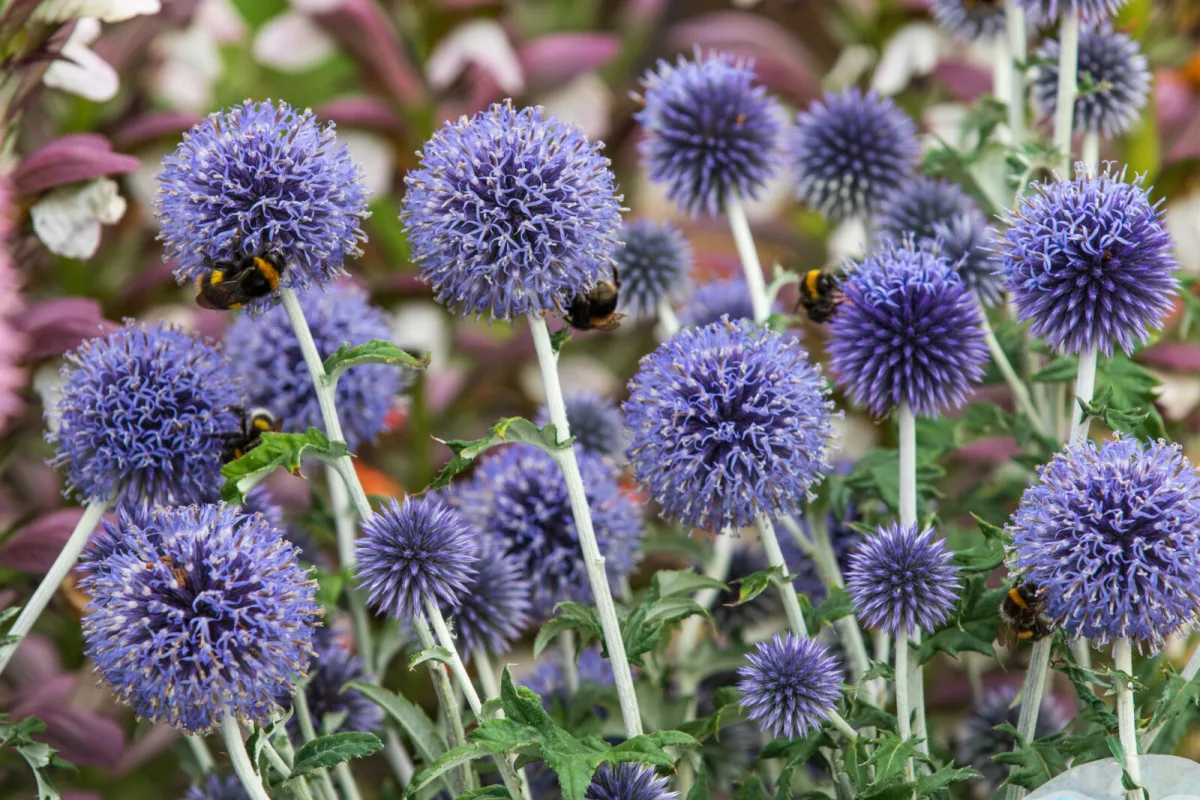
Globe thistle, botanically Echinops, is an unmistakable perennial with spherical flower heads in steel-blue shades, sometimes even white. It looks impressive yet is wonderfully low-maintenance, making it ideal for spots where plants that need regular watering struggle. Once it is well established, it copes with drought very reliably and looks sturdy and resilient in the garden even in the height of summer.
The best-known species is small globe thistle Echinops ritro, which has won over fans of naturalistic planting as well as those who prefer bolder, more modern compositions. It shines in a cottage garden, a nature-inspired border, and even in urban planting with clean lines. It is also valuable for eco-minded growers, because pollinators actively seek out its flowers.
Where globe thistle looks best and what to pair it with
Globe thistle works beautifully in mixed perennial borders, where over time it forms a more substantial clump and rises above the surrounding greenery. Planting plans usually allow for several plants per square metre so it doesn’t look isolated, while still having room to grow. It pairs perfectly with summer perennials that have similar needs and flower at the same time, such as coneflowers, agastache, yarrows or vervain.
It also looks very striking combined with ornamental grasses. The contrast between the bold structure of globe thistle and the fine blades of grasses can visually lighten the border. It fits well into gravel gardens and drought-tolerant plantings, and it suits spaces by fences or front gardens too, where its round heads become a strong focal accent.
Keep in mind that the leaves are slightly spiny. For that reason, globe thistle isn’t ideal for places where children often play or where people regularly pass very close to the plants.
Flower heads, foliage and winter interest
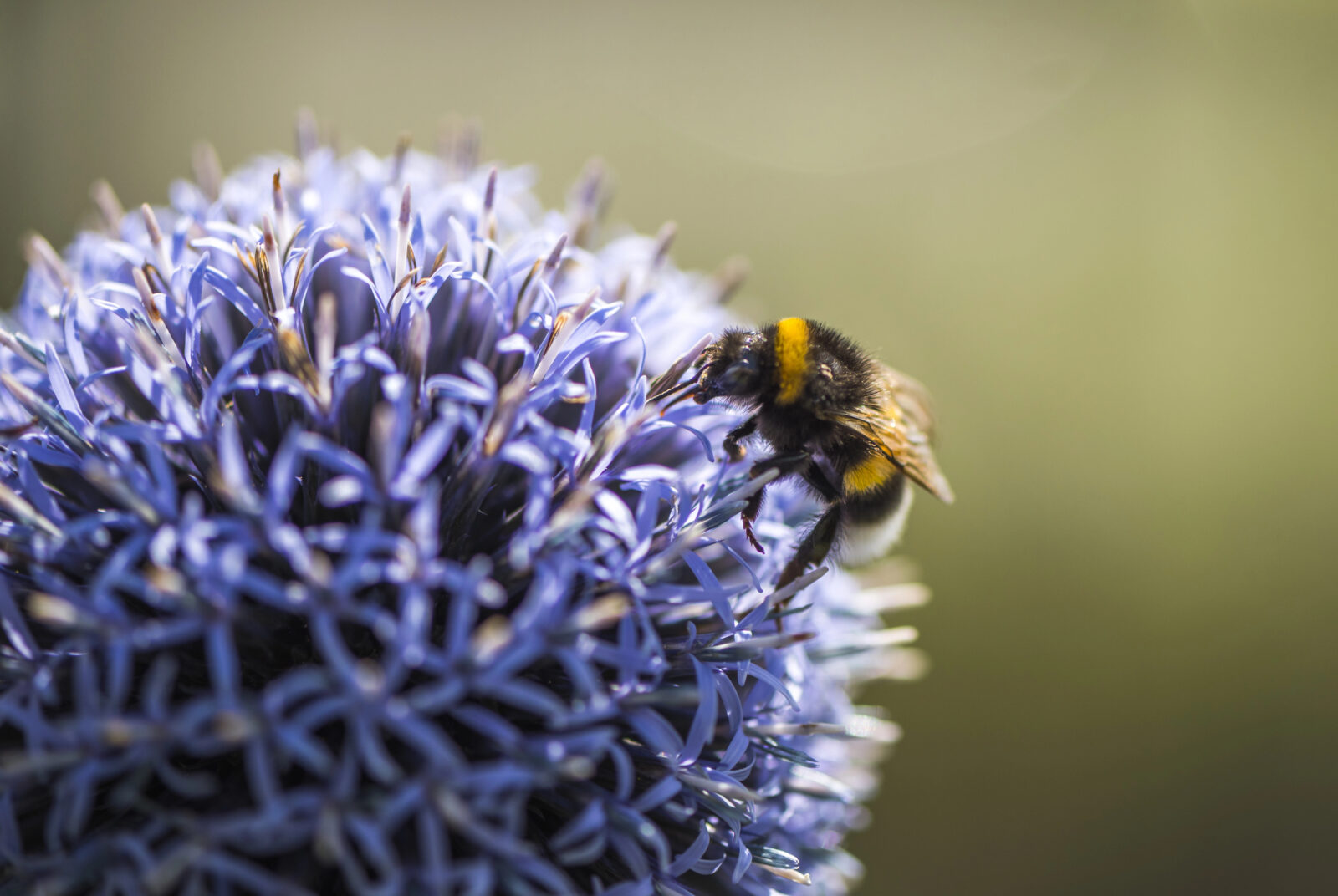
The greatest ornament of globe thistle is undoubtedly its spherical flower heads, which appear in summer. Among perennials, there aren’t many plants that offer such a distinctive shape along with such a clean colour. The attractively cut leaves add to the effect too, although they are exactly where a bit of caution is needed because of the fine spines.
Individual species and cultivars can differ in head size and the number of flower heads produced. For example, Banat globe thistle Echinops bannaticus and its cultivar Blue Glow typically produce more flowers, though the heads are usually a little smaller in diameter than those of small globe thistle.
Another advantage is that even after the above-ground growth dries, the clump stays decorative for a long time. It can become a natural winter feature, enhanced by the gradually breaking-down, greyish seed heads. That is exactly why it’s not worth cutting the plant back before winter.
For the vase and for drying
Globe thistle flowers are long-lasting, so they are excellent for cutting into summer bouquets. They keep well in a vase and add a strong architectural element to arrangements. Globe thistle can also be used for drying, but timing the harvest correctly matters.
If you want to dry the flower heads, pick them before they open fully, at the stage of richly coloured buds. Drying works best in an airy, shady place, where the flowers will retain their colour and shape. Fully open flower heads are great for the vase, but once dried they may fall apart.
Ideal position and soil
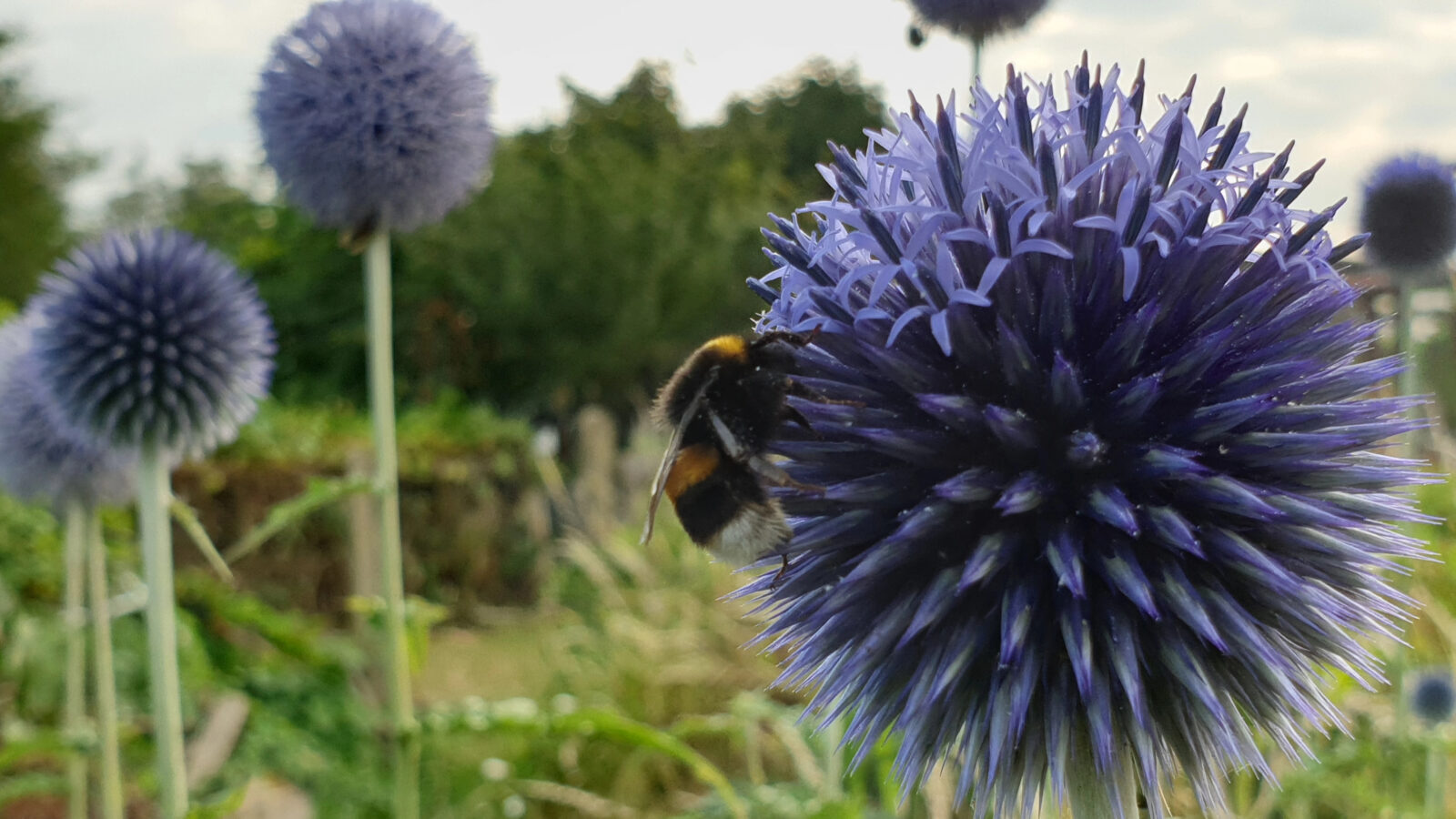
Globe thistle likes a sunny, fairly sheltered spot with ordinary garden soil, provided it is free-draining. Once established, it handles drought easily and doesn’t mind poorer sandy or stony soils, which makes it an excellent choice for gardens with limited watering.
It won’t do well in shade or in soils that stay damp for long periods or become waterlogged. A position right next to heavily irrigated lawns is also unsuitable, where the root system would be kept too wet.
Year-round care and easy propagation
Caring for globe thistle is very straightforward. In spring, simply remove the entire dry clump; it’s better to postpone cutting back until after winter so the plant can continue to decorate the garden through the cold season. At the start of the season, adding compost is beneficial; during the year it usually doesn’t need any further feeding.
In a suitable spot, globe thistle is not typically troubled by diseases or pests. If you want to propagate it, the quickest method is to divide clumps after flowering or in early spring as the plant starts into growth again.
Source: Gardening Know How, The Spruce, Záhrada, Pestrazahrada.cz

A lover of nature, gardens, and everything that moves, blooms, or grows. He literally grows everything, from herbs to rare species, and he enjoys caring for animals just as much. In his work, he connects modern technology with tried-and-tested grandmotherly methods and is happy when both paths lead to the same goal.
Related articles
The Christmas Amaryllis That Can Bloom for Years but Most People Throw It Away After Flowering
Hippeastrum is a spectacular winter-blooming bulb that, with the right care, will flower again year after year. Learn how to plant it correctly, look after it after flowering, and bring it into dormancy so it reliably reblooms.
How to Grow Winter Garlic for a Much Bigger Harvest
Autumn planting is the key to strong, healthy winter garlic, but the details make all the difference. With the right timing, bed choice, seed-clove treatment and a simple bicarbonate trick, you can noticeably boost yield.
A tree or shrub planted properly in autumn can outpace spring stock and improve fruiting
Many fruit trees and soft-fruit shrubs establish better when planted in autumn, because roots keep growing while the top is dormant. Done well, this head start means stronger spring growth, less watering, and a healthier first year.
Comments (0)
Be the first to comment.