
 English
  Polski
  Deutsch
  Nederlands
  Svenska
  Norsk
Norsk  Dansk
Dansk  Français
  Italiano
  Español
  Português
  Slovenčina
  Suomi
Suomi  Gaeilge
 Fertilising Tomatoes Wisely When to Feed for a Heavy Crop
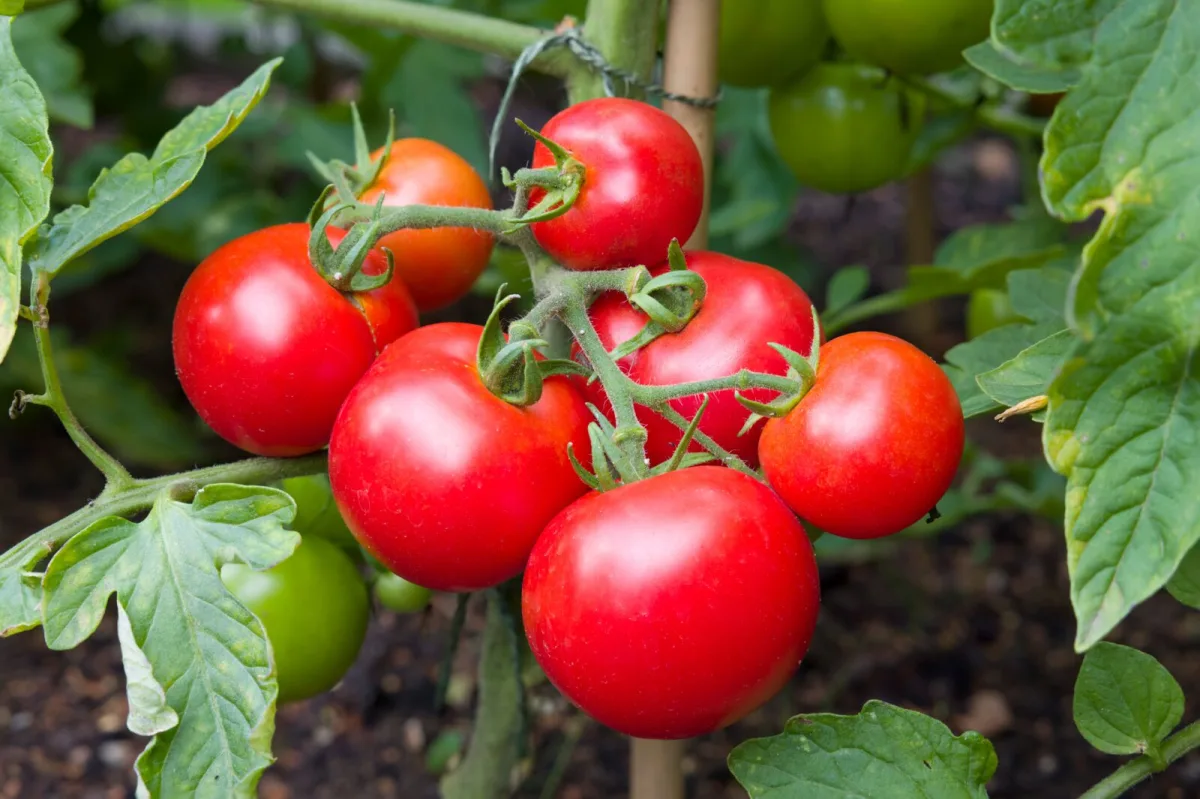
Tomatoes are among the most rewarding fruiting vegetables, but they also have high nutrient demands. For a plant to build a strong root system, healthy foliage, plenty of flowers and then good-quality fruit, it needs a balanced supply of the main NPK elements along with additional nutrients such as calcium and magnesium. If any element is missing, it shows quickly: weaker growth, flower drop, poor fruit set, or physiological disorders—most commonly blossom-end rot caused by calcium being unavailable to the plant.
Soil reaction matters too. Tomatoes usually do best at a pH of roughly 6.2 to 6.8. Even with regular feeding, plants can struggle if the soil is too acidic or too alkaline, because nutrients become harder for the roots to take up.
When it makes sense to feed tomatoes
Tomatoes generally thrive when nutrition is timed to a few key stages. One nutrient balance suits the start of growth, another works best before flowering, and a different one is useful when the first fruits are swelling. There’s also a major difference between growing in the ground and in containers. In a bed, the plant can often reach deeper, while in a pot it’s limited to a small volume of compost and nutrients are depleted—and washed out by watering—much faster.
A practical rule: the smaller the container and the freer-draining the compost, the more regular—and more cautious—your feeding should be. In containers it’s common to add nutrients even twice a month, but always according to the fertiliser used and the plant’s condition.
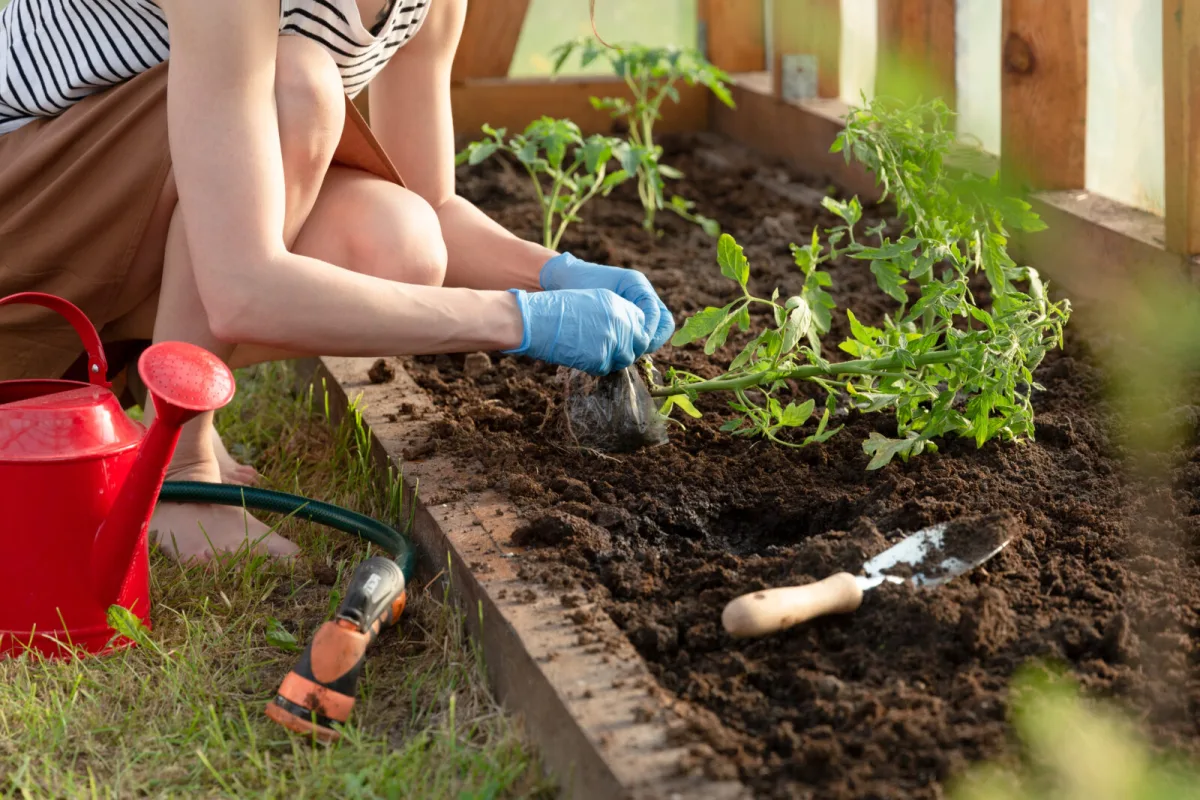
Organic nutrition for tomatoes
Organic fertilisers often work more gently while also improving soil life. That doesn’t mean you can’t overdo them. Even natural products can damage young plants if applied incorrectly, or lead to overly lush growth at the expense of fruit.
Compost and well-rotted manure as the foundation
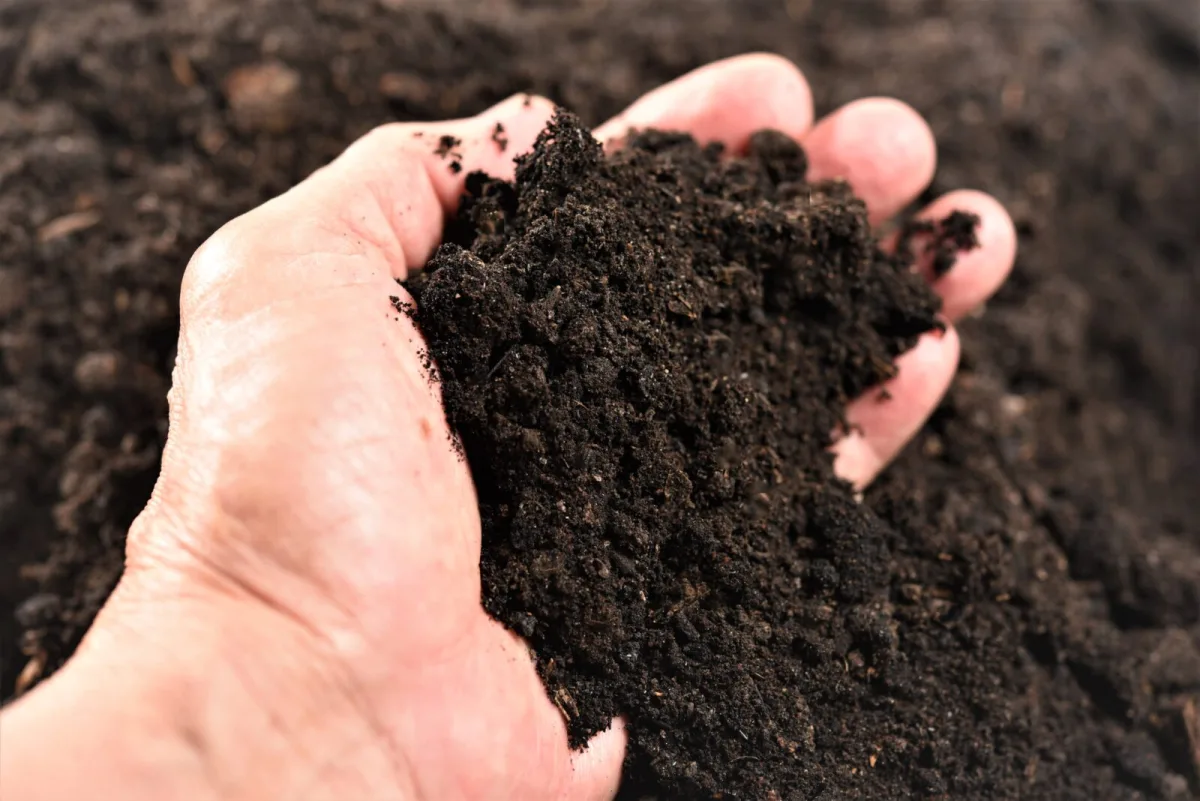
In practice, compost is one of the most reliable ways to give tomatoes good starting conditions. Well-rotted manure or compost is best worked into the soil before planting, or used as a top-up around plants during the season. Fresh manure isn’t suitable for tomatoes, because the high nitrogen content and active decomposition can scorch roots and growth above ground.
Fish emulsion, blood meal and bone meal
Fish emulsion is used as a liquid, nitrogen-rich feed with trace elements. It’s useful during vigorous growth, but the concentration needs watching—especially for seedlings. Blood meal supplies nitrogen gradually; bone meal is valued for phosphorus, which supports roots, flowering and fruit formation. Both meals release more slowly, so their effect shows with a delay, but they last longer.
Synthetic fertilisers and what NPK means
Mineral fertilisers can correct nutrient shortages quickly. The label usually shows an NPK ratio—nitrogen, phosphorus and potassium. Nitrogen drives leaf and shoot growth, phosphorus is linked to roots, flowering and early fruit development, and potassium helps with ripening, water regulation and overall crop quality.
A balanced fertiliser, for example 10-10-10, is a universal choice—especially if you don’t know your soil condition. Products with a higher share of phosphorus are often recommended before flowering and to support fruit set. It’s worth reading labels for secondary elements too. Tomatoes often benefit from calcium and magnesium, as these nutrients strongly influence stable growth and fruit health.
Watch out for salt build-up: repeated applications of mineral fertilisers can cause salts to accumulate in the soil. This shows up as poorer water uptake, leaf curl and an overall slowdown. In containers the risk is higher because excess has nowhere to “escape”.
The most important feeding times during the season
It pays to prepare the soil before transplanting seedlings. Working in compost or well-rotted manure provides a longer-lasting base and helps create a stable environment for roots. At planting, a starter feed with a higher nitrogen content is sometimes used to speed up leafy growth, but with tomatoes it’s better to keep nitrogen under control so plants don’t turn into “leafy bushes” with little fruit set.
Another key moment comes roughly two weeks before you expect flowering. At that point it often helps to add a higher-phosphorus feed, or choose a balanced mix with lower nitrogen. Once the first small fruits appear, the focus shifts to maintaining balance: the plant is growing, flowering and fruiting at the same time, so it’s best to top up nutrients regularly in smaller doses.
Tomatoes in pots play by different rules
Container growing is convenient, but more demanding nutritionally. The potting mix is exhausted faster and watering leaches nutrients. In practice, the best results come from regular feeding with watering using fertilisers made for fruiting crops or balanced general-purpose mixes. If you use a controlled-release granular fertiliser, watch growth and, if needed, only fine-tune with a light liquid feed. In pots, overfeeding often shows up as very dark green, brittle leaves, fruit splitting, and greater susceptibility to disease.
Common mistakes and how to avoid them
The most common mistake is too much nitrogen at the time the plant should be flowering and fruiting. The result is usually lush greenery, but fewer flowers and delayed ripening. The second typical mistake is irregular watering, which complicates calcium uptake and increases the risk of blossom-end rot. A third problem is ignoring soil pH. Without a sensible pH range, even a good fertiliser is only partly effective.
It’s worth observing your plants. Paler leaves and weaker growth can suggest a nitrogen deficiency, purple tones on foliage are often linked with a lack of phosphorus, and browning along the edges of older leaves may be related to potassium. Diagnosis isn’t always clear-cut, but an early response with a gentle dose of balanced nutrition often helps stabilise the situation without unnecessary extremes.
How to support flavour and harvest quality
Tomato flavour is influenced by the variety, sun, water and nutrition. Too much nitrogen and water late in the season can lead to watery fruit. Adequate potassium, on the other hand, supports colour and ripening. It’s also important not to underestimate calcium and magnesium. Magnesium is tied to chlorophyll production and the plant’s ability to manage energy; calcium affects tissue strength and fruit resilience.
If you want consistently reliable results with tomatoes, the best approach is a combination: improving the soil each year with compost, sensible fertiliser doses matched to the growth stage, and regular, even watering. You’ll get plants that not only crop more heavily, but also produce tomatoes with better texture, aroma and taste.
Source: The Spruce, Planters Place , Pestrazahrada.cz
Related articles
Next year you can harvest better if you don’t sow carrots where they won’t thrive
Carrot root fly can ruin carrots, parsley and celery from the inside out, often without obvious warning until harvest. Better site choice, rotation, later sowing and simple physical barriers can dramatically cut damage next season.

How to Propagate Roses from Cuttings at Home and Fill Your Garden with Blooms Almost for Free
Want more roses without paying for new plants? With a few healthy cuttings and a simple plastic-bottle mini greenhouse, you can root new bushes at home in just a few weeks.
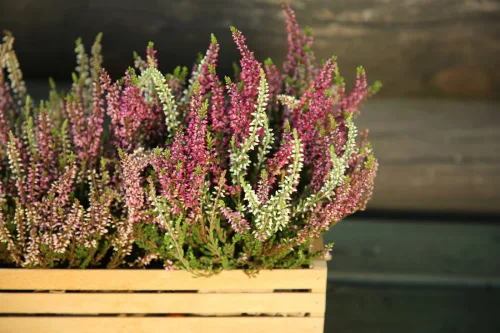
Heathers can cope where other plants won’t, but one soil detail decides everything
Heathers and heaths are tough evergreen shrubs that can flower across the seasons when you choose the right types. Success hinges on matching the plant to your soil pH and ensuring free drainage.
Comments (0)
Be the first to comment.