
 English
  Polski
  Deutsch
  Nederlands
  Svenska
  Norsk
Norsk  Dansk
Dansk  Français
  Italiano
  Español
  Português
  Slovenčina
  Suomi
Suomi  Gaeilge
 Dahlias bloom from summer to autumn but there’s one thing you must never do
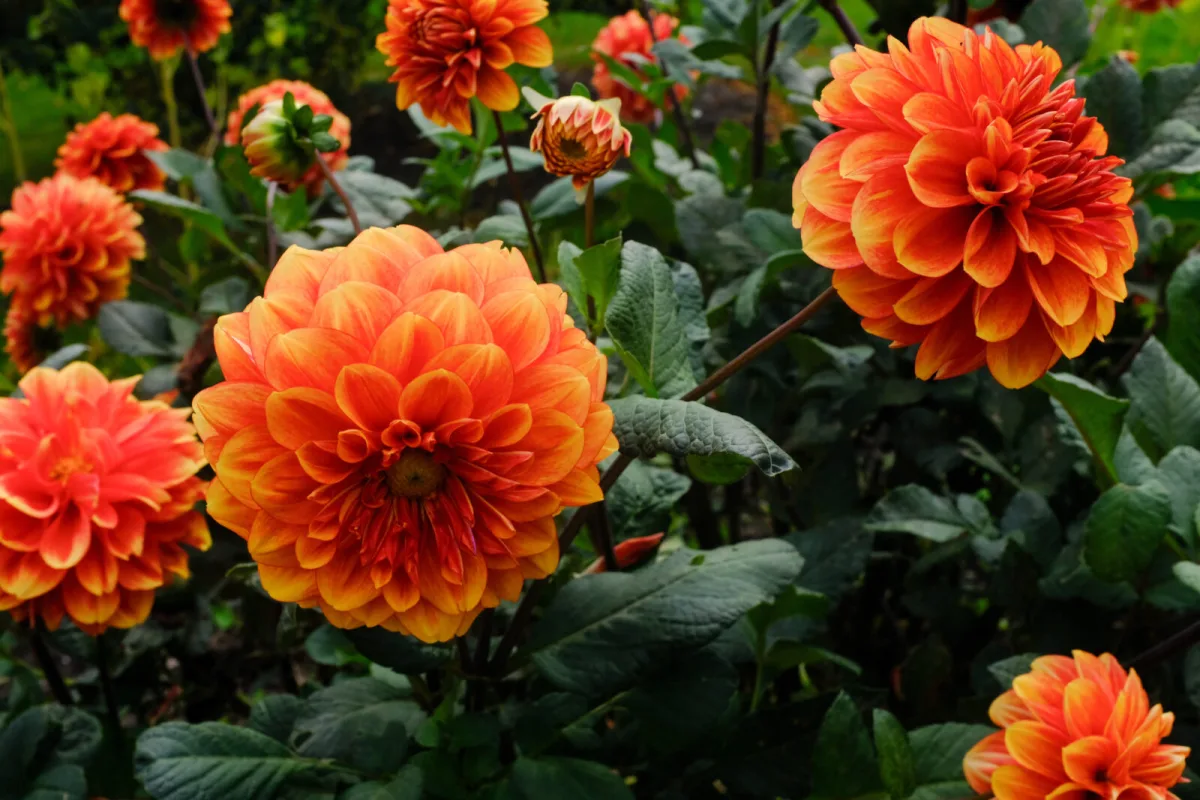
Dahlias are among the most rewarding tuberous plants, able to shine in the garden from summer right through to late autumn. Native to Mexico, they won’t survive winter outdoors in the ground in our climate without protection, yet they’ve become favourites thanks to their long flowering season, vivid colours and huge variety. With the right care, they’ll repay you with dozens of blooms and healthy tubers you can successfully store for the next season.
A diversity of varieties and flower forms
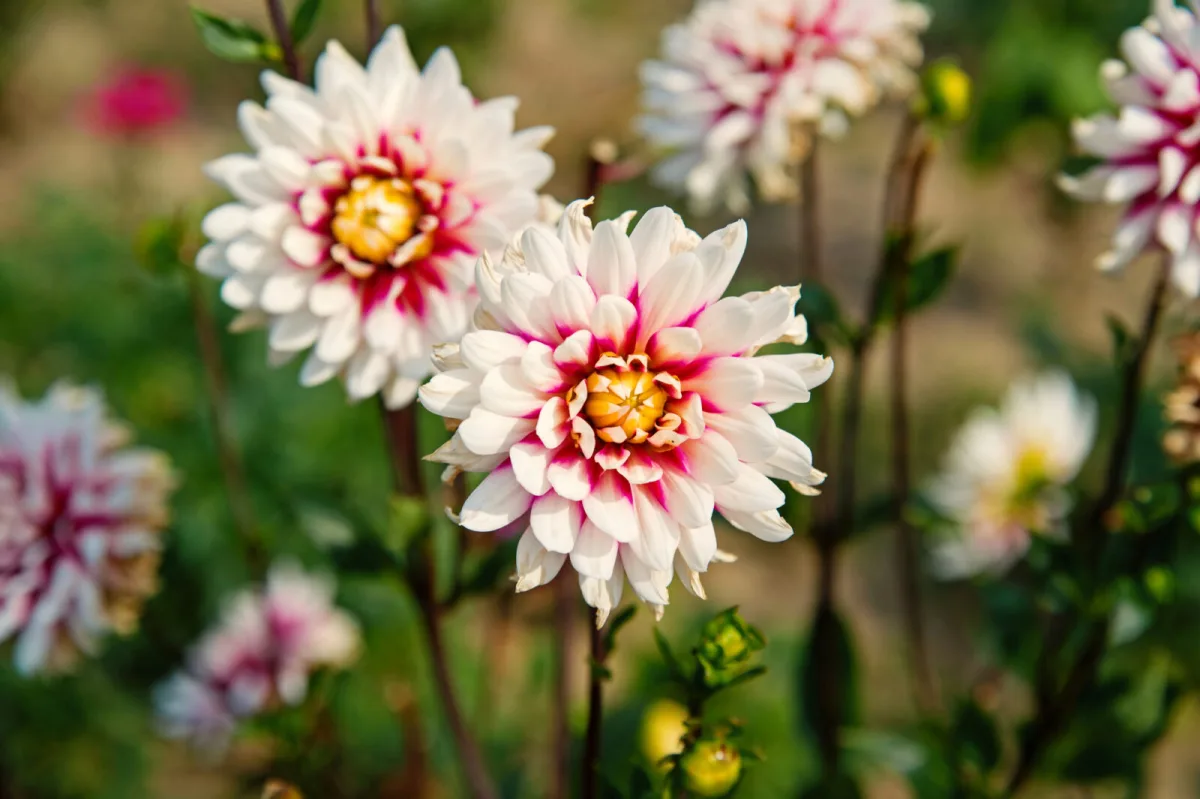
The genus Dahlia includes dozens of botanical species and an enormous number of cultivated varieties. The colour range is almost limitless, from snow-white through yellow, orange and red to deep purple, often in bi-colour or striped combinations. The only true rarity is a genuinely rich blue.
They also vary in height. Dwarf types suit containers or the front of borders, while tall varieties make striking focal points and are excellent as cut flowers. Blooms can be small or very large, depending on the variety easily over 20 cm across. In terms of flower form, dahlias are grouped into several classes, such as pompon, cactus, peony-flowered or anemone-flowered, so almost every grower can find the right type for different garden styles.
Site and soil make all the difference
Sun is the most important factor. Dahlias need a bright spot, ideally one with at least six hours of direct sun a day. A position sheltered from strong wind also helps, because tall stems with heavy blooms can snap.
Soil should be fertile, loamy and free-draining. Dahlias dislike waterlogging, as the tubers can rot easily. If you have heavy clay soil, work in compost, peat and a small amount of sand to improve structure and drainage.
The right planting time and step-by-step method
Don’t rush planting the tubers. Plant only after the risk of spring frost has passed, usually during May, when the soil has warmed to around 15 °C. Planting too early into cold ground often results in slow growth, a higher risk of rotting, and cold damage to young shoots.
Prepare a hole about 10 to 15 cm deep. It’s helpful to add a small layer of compost at the bottom, but make sure the tuber isn’t sitting directly in concentrated feed. Place the tuber with the neck facing up and cover with soil; at first, about 5 cm is enough. Space plants according to the variety: smaller types can be closer together, while vigorous dahlias need more room for light and airflow to reduce problems with mildew.
Watering, feeding and support through the season
Dahlias are quite thirsty while growing and flowering. In hot weather they need regular, thorough watering, but it’s always best to water at the base rather than over the foliage. Wet leaves and flowers increase the risk of fungal disease, especially when evenings cool and the plants stay damp for a long time.
Taller varieties are best tied in. Support in the form of canes or sturdy stakes greatly reduces the risk of stems breaking in wind or after heavy rain. Tie in as the plant grows, and do it gently so the stems aren’t constricted.
Nutrition has a big impact on flowering. Early in the season, a feed with a higher nitrogen content helps build leafy growth. Once the plant starts forming buds, it’s better to switch to a higher-potash fertiliser to encourage flowering and ripen the growth. It’s also important to deadhead regularly, because the plant then doesn’t waste energy producing seed and will flower for longer.
Pinching out for more blooms
If you want a bushier plant and more flowers, you can pinch out young plants at around 30 cm tall. This encourages branching. With some varieties, you can also gently manage the number of side shoots so the plant doesn’t produce too many weak stems and the flowers stay high quality.
What to do with dahlias in autumn
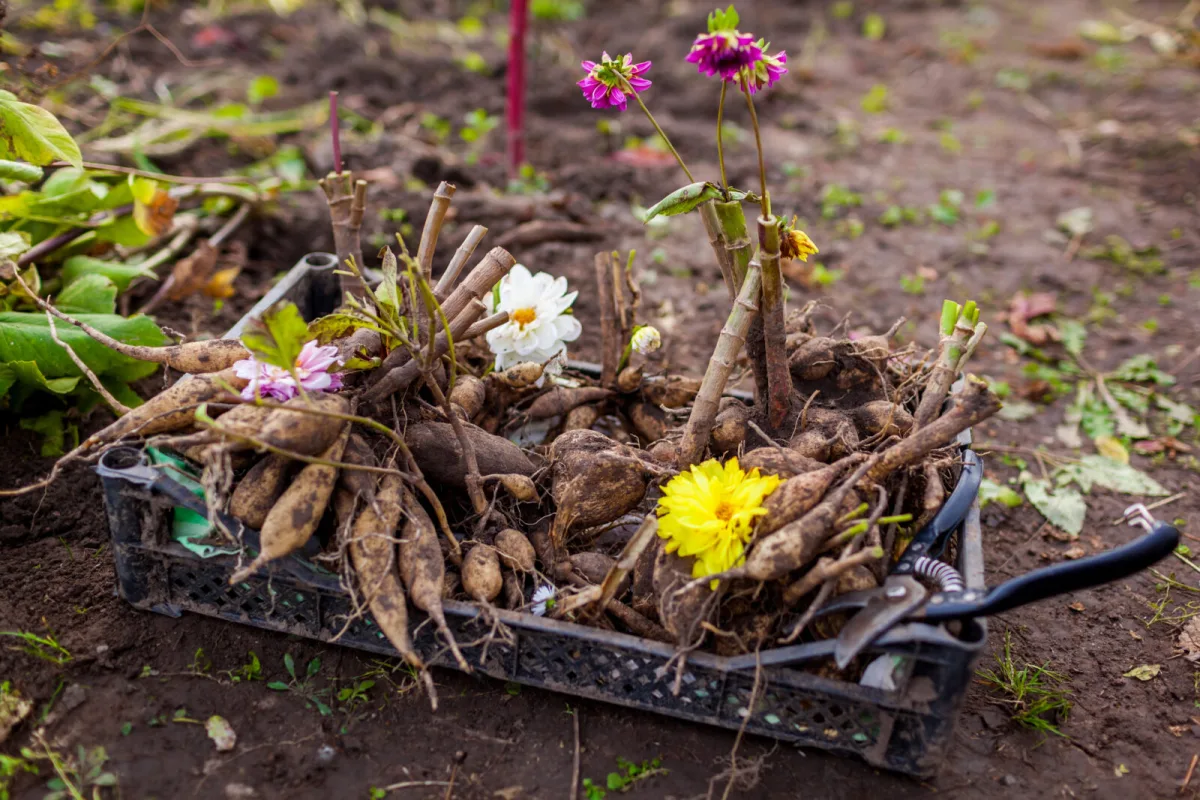
Once the first frosts have blackened the foliage, it’s time to deal with the tubers. Lifting too early isn’t ideal, because the tubers may not be fully mature and won’t store as well. Typically, you first cut the stems back to a few centimetres above the soil, then carefully lift the tubers, ideally with a garden fork so you don’t damage the crown. The crown is the sensitive part that determines whether the tuber will be able to sprout in spring.
Overwintering tubers at home safely and without losses
After lifting, brush off the soil and let the tubers dry briefly in an airy place protected from rain and direct sun. Then store them in a crate or cardboard box and pack around them with a material that helps prevent drying out, typically peat, sawdust, wood shavings or vermiculite. It’s important not to seal tubers in airtight plastic, as they can sweat and go mouldy.
The ideal storage is dry, frost-free and cool; a range of about 5 to 8 °C is often recommended. Too much warmth causes shrivelling and premature sprouting, while too much cold increases the risk of freezing and subsequent rot. During winter, check the tubers from time to time. If any are soft and rotting, remove the affected part so the problem doesn’t spread. If the tubers are noticeably wrinkling, the storage conditions are too dry and it helps to slightly moisten the packing material.
When and how to divide tubers
You can divide clumps in autumn after lifting, or wait until spring. Many growers find spring easier, because it’s clearer where the growth eyes are. Each viable division must have an eye, otherwise it won’t produce a new plant. Let cut surfaces dry overnight so they can callus. Use a sharp knife and clean your tools as you go to avoid spreading disease between clumps.
Leave dahlias in the ground, or always lift them
In our conditions, the safest approach is to lift tubers for winter storage. Dahlias are sensitive both to hard frost and prolonged wet, because their tubers are more like potatoes than tough, durable bulbs. In warmer areas with mild winters, some people try leaving them in the ground, but it’s a gamble on the weather. If you choose this approach, once the tops die back, cut the stems low and insulate the area well, for example with dry leaves or straw. With dahlias grown in containers or raised beds, the risk of freezing is even higher because cold hits from the sides too, so it’s safer to move pots into a frost-free place or lift and store the tubers.
Dahlias in borders and in a vase
Dahlias combine easily with annuals and perennials and can tie the garden together from late summer into autumn. They suit plants with similar light needs that enjoy sun, such as coneflowers, rudbeckias, catmint or asters. They look wonderful in cottage-style plantings as well as modern borders, where they can create bold colour accents along paths or behind lower-growing plants.
A major advantage is their value as cut flowers. When you cut blooms regularly and also remove faded heads, the plant usually sets more buds and the flowering period extends. With correct planting, feeding and winter storage, dahlias become a reliable garden highlight year after year.
Source: Swan Island Dahlias, The Spruce , Pestrazahrada.cz
Related articles
Autumn strawberry care takes an hour and you will be rewarded with plants laden with fruit with just three steps
After fruiting, strawberries benefit from a few timely autumn jobs that help them winter well and bounce back strongly in spring. A simple trim, the right feed, and a protective mulch can mean bigger, tastier berries next season.
Christmas cactus will bloom again even after years if you avoid one common mistake
A Christmas cactus can look perfectly healthy yet refuse to flower for years. With the right light, temperature, watering, and a gentle boost, it can set buds again and bloom reliably.
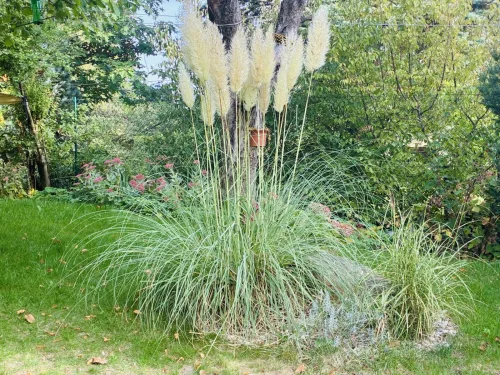
Take care with pruners on ornamental grasses Some are best cut back in autumn others in spring
Ornamental grasses bring movement and structure, but not all of them should be left standing until spring. For several warm-season and self-seeding types, an autumn cut-back keeps borders tidier and helps limit spread.
Comments (0)
Be the first to comment.