
 English
 Polski
 Deutsch
 Nederlands
 Svenska
 Norsk
 Dansk
 Français
 Italiano
 Español
 Português
 Slovenčina
 Suomi
 Gaeilge
Cutting Down Thuja Has Rules Even on Your Own Property
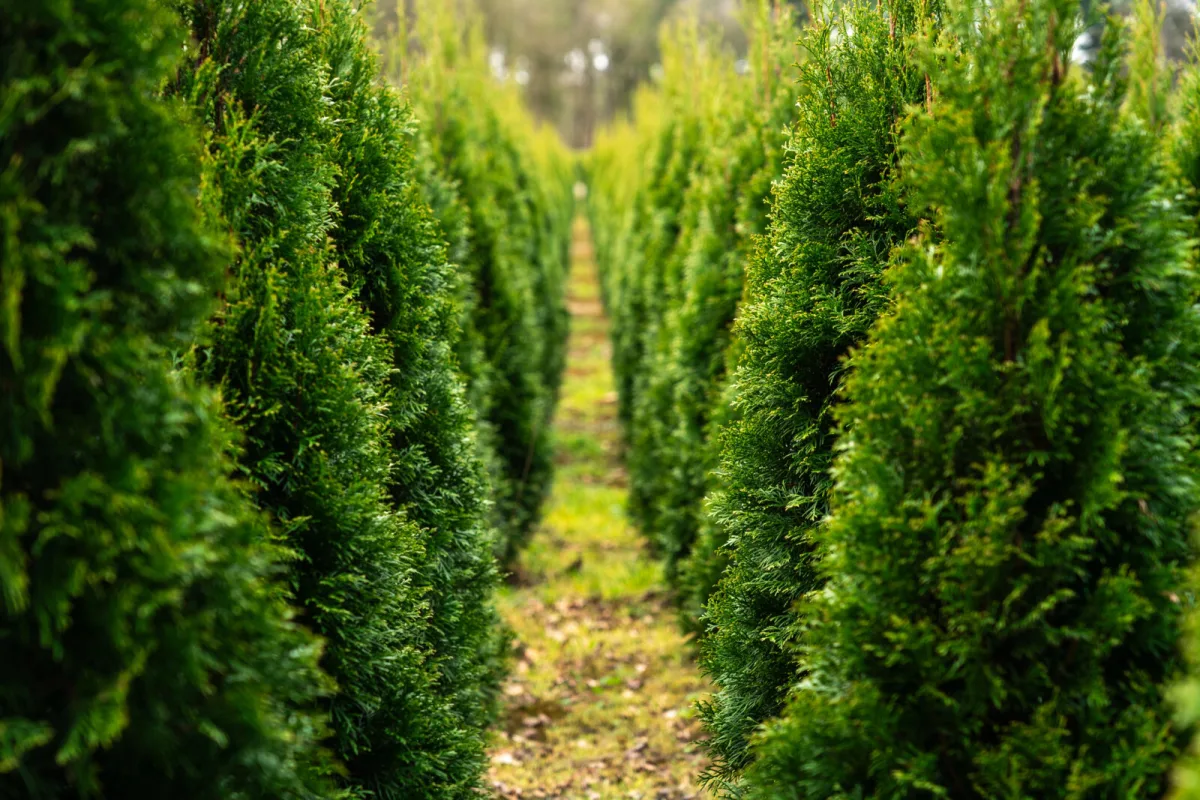
Autumn is the ideal moment for many gardeners to finally tackle an overgrown, ageing hedge. Thuja that everyone planted twenty years ago often start to dry out, turn brown from the bottom, or simply outgrow any manageable height. But before you pick up the saw, make sure you don’t need permission to fell them. The idea that you can do whatever you like on your own land doesn’t apply to woody plants, and a mistake can be costly.
Under the law, thuja are woody plants like any other
Felling woody plants growing outside forests is governed by the Nature and Landscape Protection Act No. 114/1992 Coll., with details set out in Decree No. 189/2013 Coll. on the protection of woody plants. The basic rule is straightforward: you need a permit from the nature protection authority, most often the municipal office in the place where the plant grows. The decree then lists exceptions where permission is not required.
For thuja, the key point is that the law treats them the same as other trees and shrubs. It doesn’t matter that you see them as an ornamental hedge. Even a thuja that self-seeded is still a woody plant, because under the law it doesn’t matter how the plant came to be on the site.
When you can fell thuja without a permit
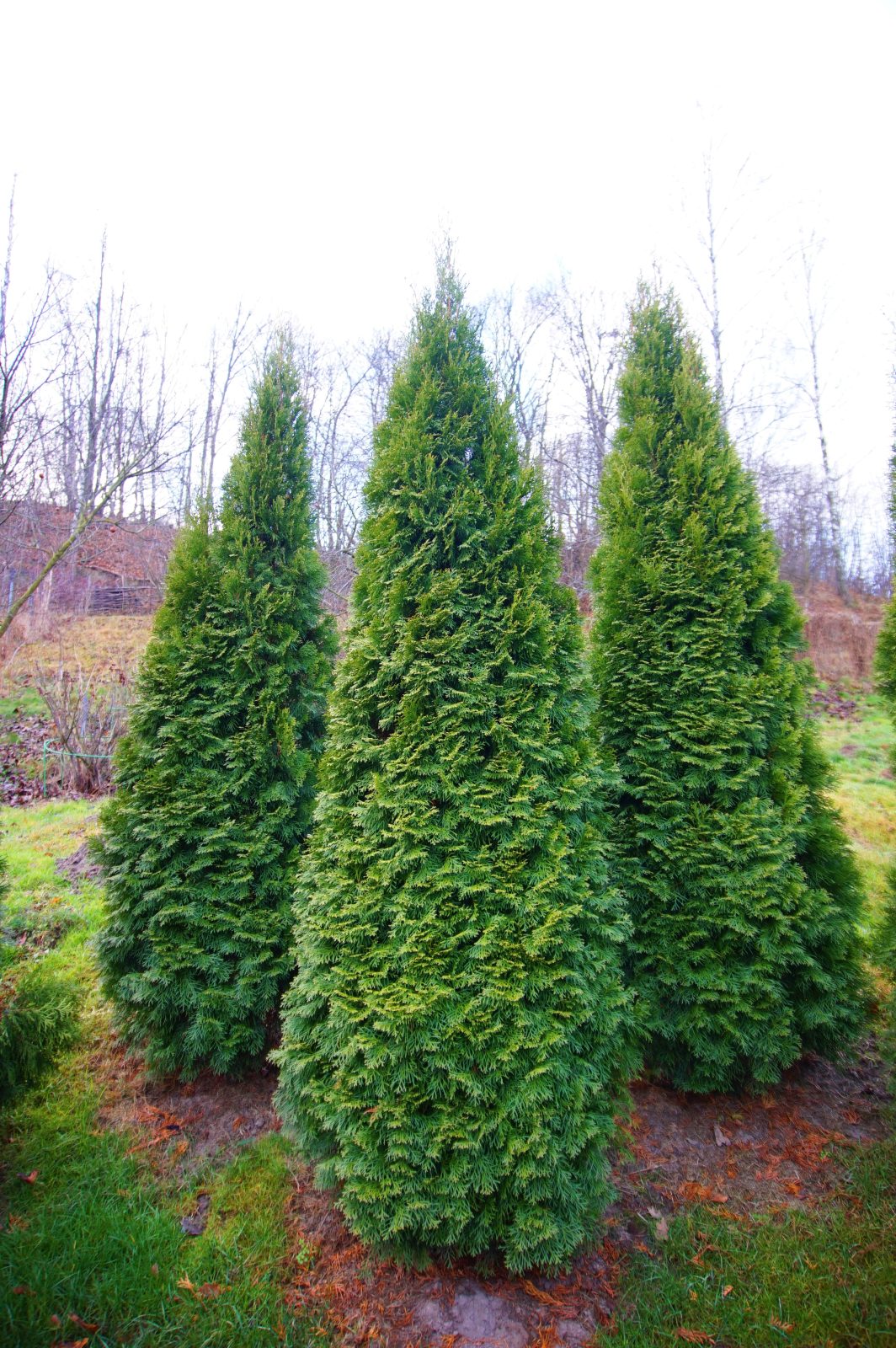
A single tree: a thuja growing on its own can be felled without a permit if the trunk circumference is under 80 cm. It is measured at a height of 130 cm above the ground. If the trunk branches below this height, the condition applies to each trunk separately. Older specimen thuja can easily exceed the 80 cm limit.
A hedge: in a typical thuja hedge, the plants touch and grow into one another. The decree describes such planting as a continuous stand of woody plants. You may remove it without a permit only if the total area of the stand being felled does not exceed 40 m². The “area” means the projection of the stand onto the ground, roughly the hedge length multiplied by its width. A long, wide hedge running along the entire garden can therefore exceed the limit even if individual thuja have slender stems.
The exception for fruit trees does not apply to thuja. Fruit trees may be felled without a permit on plots within built-up areas recorded in the land registry as garden, built-up area and courtyard, or other land. Thuja are not fruit trees, so the trunk-circumference and stand-area rules apply.
When you always need a permit
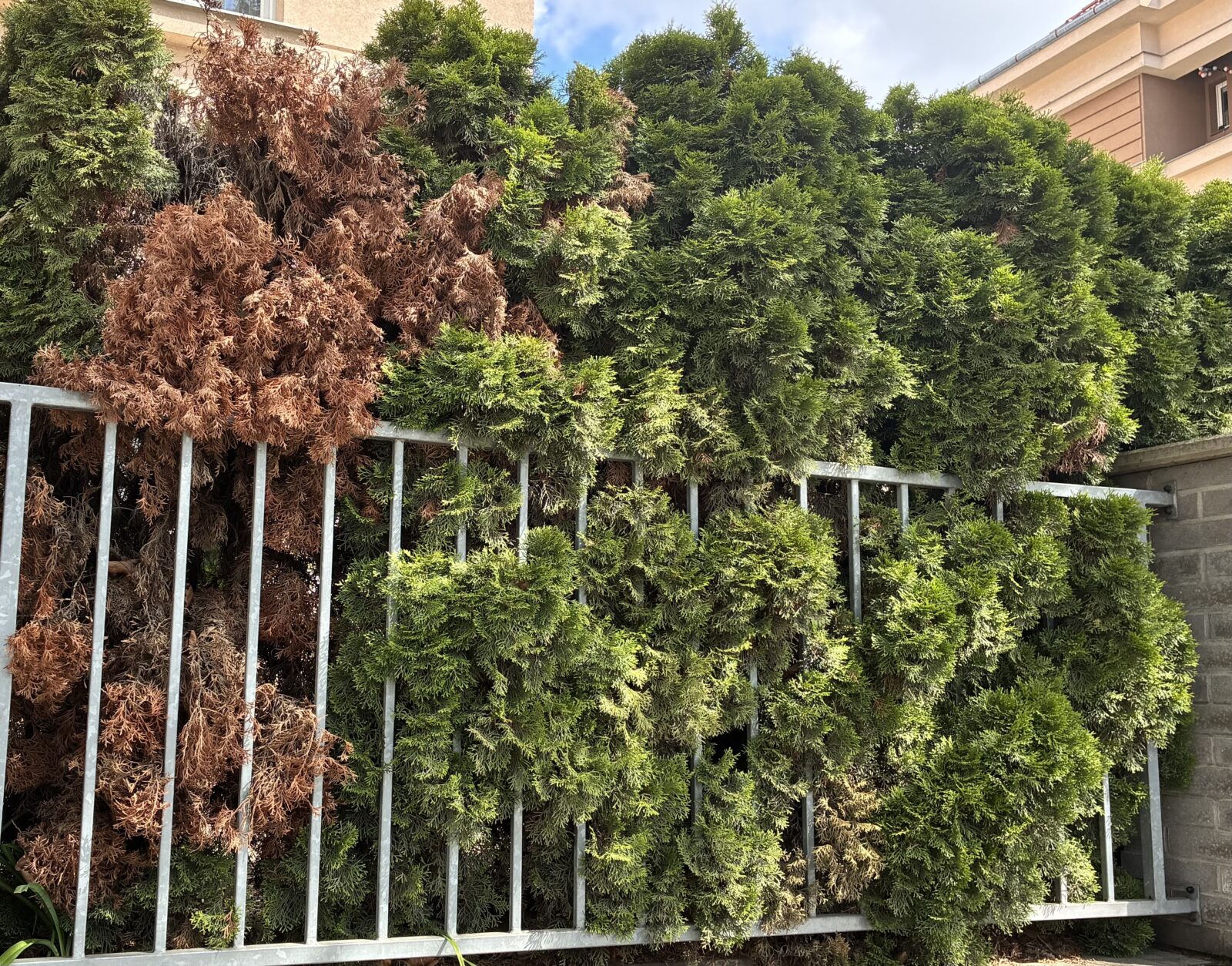
None of the exceptions apply if the thuja are part of an avenue of trees or a significant landscape element. An avenue is defined as a continuous row of at least ten trees. So if there is a row of mature thuja along a road or a property boundary, it’s worth consulting the local authority in advance. You also need a permit for any thuja with a trunk circumference over 80 cm and for a hedge exceeding the above-mentioned 40 m².
The exception is an emergency situation where the woody plant poses an immediate threat to life or health, or there is a risk of substantial damage. In that case you may fell it immediately, but you must notify the authority within 15 days of felling.
When is the best time to fell them
Felling based on a permit is, by law, usually carried out during the dormant season. This typically runs from late autumn to the end of March. The exact timing is often stated directly in the permit.
Even for thuja you can fell without a permit, we do not recommend doing the work in spring and summer. A dense thuja hedge is a favourite nesting site for birds, and the law prohibits disturbing them and destroying nests. If you were to destroy an occupied nest during the breeding season, you could face penalties even if the felling itself did not require permission. October to March is therefore the safest choice.
How much felling without permission can cost
Under nature protection law, an individual can be fined up to 20,000 CZK for felling or seriously damaging a single woody plant without a permit. If it concerns a group of woody plants, such as an entire hedge over the 40 m² limit, the fine can rise to 100,000 CZK. For sole traders and companies, the penalties are much higher, up to 1,000,000 CZK. The authority may also order replacement planting.
How to proceed for peace of mind
First, measure the trunk circumference of individual thuja and estimate the area of the hedge you want to remove. If you are within the limits and it is not an avenue, you can fell without a permit. If you’re not sure, contact your municipal office or the environmental department. Applying for a permit is free of charge. It is submitted by the landowner, or by a tenant with the owner’s consent, and it must include the required details under Decree No. 189/2013 Coll., such as the location, species, trunk circumference or stand area, and the reason.
If the felling is connected to a building project, for example an extension or a new fence, the permit is handled as part of the building approval process. The nature protection authority issues a binding opinion for it.
A few minutes with a tape measure and one phone call to the council office can save you tens of thousands of crowns. And in place of tired old thuja, you can plant a new hedge in autumn straight away, perhaps hornbeam or other native woody species that offer birds and insects far more than thuja ever will.
Source: Public Administration Portal, Decree 189/2013 Coll., MŽP, City of Chomutov, Pestrazahrada.cz

A lover of nature, gardens, and everything that moves, blooms, or grows. He literally grows everything, from herbs to rare species, and he enjoys caring for animals just as much. In his work, he connects modern technology with tried-and-tested grandmotherly methods and is happy when both paths lead to the same goal.
Related articles

Three Mistakes When Packing Cabbage into a Crock That Can Turn Your Winter Stores into Waste
Traditional crock-fermented sauerkraut keeps for months and stays wonderfully crisp—if you avoid a few common missteps. Here are the three mistakes that most often lead to soft, grey, foul-smelling cabbage and how to prevent them.
One Rat in the Garden Can Quickly Turn Into a Colony How to Prevent It Without Chemicals
A rat on your property is a warning sign that your garden is offering food and shelter. With a few practical, chemical-free changes, you can make the area far less attractive and stop a bigger infestation taking hold.
Garden robotics and automation save time but one thing surprises owners after purchase
Robotic mowers, smart irrigation and garden sensors can take over routine tasks and improve day-to-day plant care. The catch is that the real cost and upkeep often become clear only after you’ve bought in.
Comments (0)
Be the first to comment.