
 English
  Polski
  Deutsch
  Nederlands
  Svenska
  Norsk
Norsk  Dansk
Dansk  Français
  Italiano
  Español
  Português
  Slovenčina
  Suomi
Suomi  Gaeilge
 Bothered by Molehills in Your Garden Castor Oil Can Help but Only Under Certain Conditions
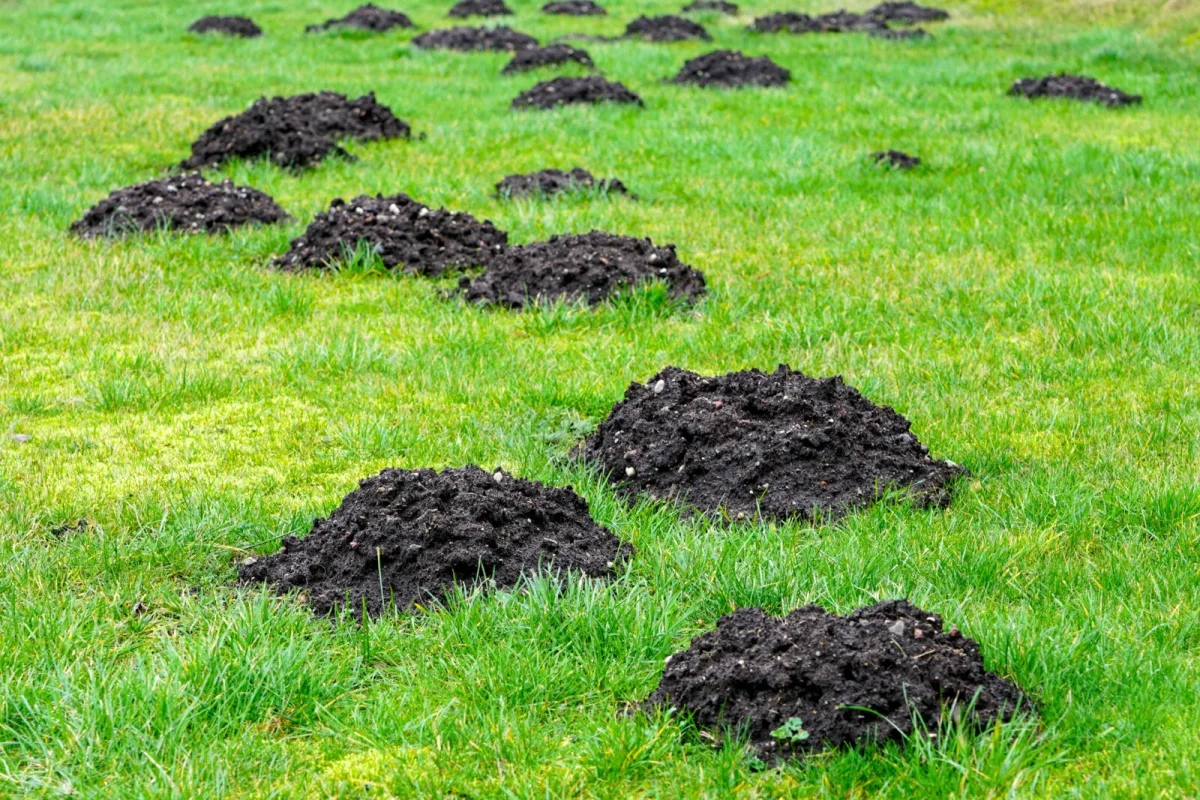
Most gardeners will, sooner or later, run into molehills in the lawn or in flower and veg beds. They’re a sign that a mole has settled in under the surface and built a network of tunnels. A mole typically doesn’t eat plants directly, because it feeds on soil insects and other invertebrates. Even so, its activity can make garden maintenance a nuisance, disturb the soil profile, and indirectly disrupt roots by creating voids around them and changing the soil structure.
Why moles move into gardens in the first place
Plenty of food in good-quality soil
A garden with living, humus-rich, slightly moist soil is an ideal hunting ground for a mole. In this kind of environment there are usually plenty of earthworms, insect larvae, and other soil-dwellers that make up its main diet. The better the soil functions biologically, the more attractive it can be to a mole.
Easy ground to dig
Moles prefer loose, friable soil, where tunnels can be created faster and with less effort. Irrigated lawns, bed edges, or areas near the compost heap often provide very favourable conditions for their activity.
Peace and quiet without vibrations
They particularly like parts of the garden where there’s little foot traffic, the mower doesn’t go, and there isn’t frequent movement from people or pets. The ground there is more stable, without constant vibrations, and the mole has a better chance of continuing its tunnel system undisturbed.
Fewer natural enemies
In areas where predators such as foxes, weasels, or birds of prey are scarce, moles can persist more easily. That can also be one reason they keep reappearing on certain properties.
Castor oil as a gentle deterrent myth or truth
Castor oil is often mentioned among gardeners as a mild, relatively gentle mole deterrent. It isn’t a poison, nor is it meant to injure the mole. The idea is more that conditions in the treated area change in a way the mole finds unpleasant, so it’s more likely to move on and look for a quieter spot elsewhere.
The effect is usually linked to two factors. The first is the stronger scent, which may discourage a mole from continuing to extend tunnels in that space. The second is a change in soil characteristics after application, which can make the ground less suitable for tunnelling. It’s important to expect that results are neither immediate nor guaranteed. Castor oil can help reduce activity or push a mole to a less exposed part of the garden, but it shouldn’t be seen as a foolproof way to get rid of a mole for good.
How to prepare and use a castor-oil solution
What you’ll need
For a homemade solution, you’ll use castor oil, a small amount of washing-up liquid to help it mix with water, and several litres of water. A sprayer or a watering can will do, depending on how you plan to get the solution into the soil.
Mixing and application
First, mix the castor oil with the washing-up liquid to create an emulsion that disperses more easily in water. Then stir the mixture thoroughly into the water. Apply the solution directly into the soil, ideally into opened runs or around freshly active molehills, where there’s a better chance the liquid will reach tunnels that are actually being used. After heavy rain, it’s a good idea to repeat the treatment, because water can significantly weaken the effect. Moles are most noticeable in spring and autumn, when it’s worth being more consistent.
Other eco-friendly steps that can support the effect
Strongly scented plants
In some gardens, it helps to combine deterrents with planting aromatic species. Commonly mentioned options include daffodils, garlic, chives, ornamental alliums, or marigolds. Their scent and compounds released into the soil can make conditions less pleasant for various underground creatures. It shouldn’t be taken as a guarantee, but rather as a supporting measure that sometimes produces better results than relying on a single method.
Take care if growing castor bean (Ricinus communis)
Some people also choose to grow castor bean (Ricinus communis), which is known for its strong aroma and toxic compounds. While it may seem repellent, it is also poisonous to people and animals. If you’re considering it, it only makes sense where children and pets cannot access the plant.
Before you intervene confirm it really is a mole
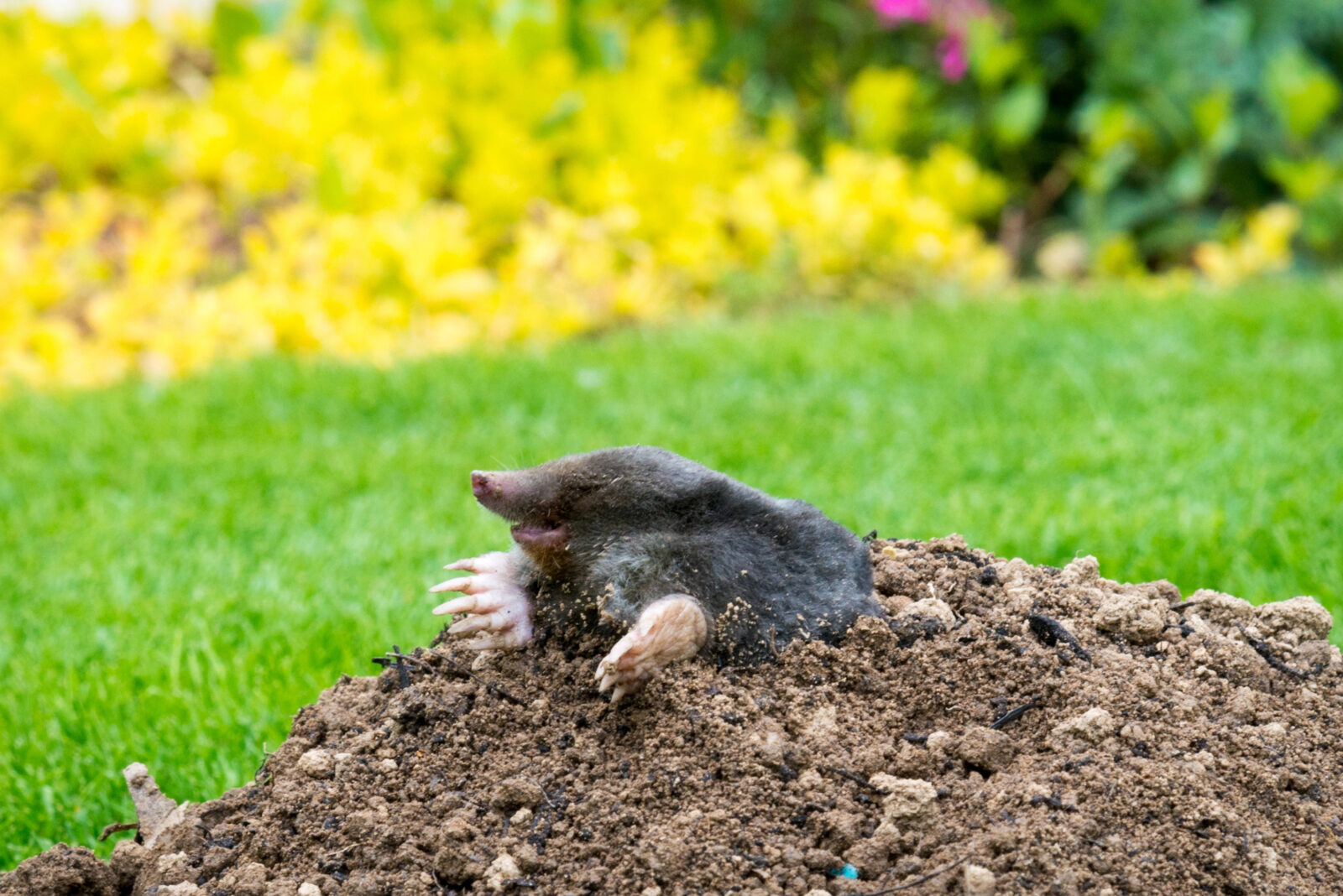
A common mistake is confusing a mole with a vole. A mole is an insect-eater and doesn’t destroy plant roots by gnawing them. Damage is mostly indirect, caused by its tunnelling and soil disturbance. A vole, on the other hand, is a herbivorous rodent that truly damages plants by feeding on them. Correctly identifying what’s causing the problem is essential, because methods that work on moles may not work on voles, and vice versa. If you’re not sure, it’s worth observing the type of damage and surface activity first, and only then choosing a specific approach.
Source: To je nápad, The Spruce, Gardening Know How, Pestrazahrada.cz

A lover of nature, gardens, and everything that moves, blooms, or grows. He literally grows everything, from herbs to rare species, and he enjoys caring for animals just as much. In his work, he connects modern technology with tried-and-tested grandmotherly methods and is happy when both paths lead to the same goal.
Related articles

How to Get Rid of Mice and Rats in the House, Loft and Garden Effectively
Mice and rats don’t leave quietly—scratching sounds, droppings and gnaw marks are clear warnings. A lasting solution comes down to three steps: block entry points, remove food sources, then use traps or professional control.

Two Mistakes When Harvesting Onions Can Cut Your Supply by Months
With good growing and the right handling, onions can turn into a near year-round pantry staple. These simple harvest and curing steps determine whether they keep for weeks or for months.

How to Get Rid of a Marten in the Attic or Car Without Breaking the Law
Stone martens can move into lofts, sheds and even car engine bays, causing noise, smell and costly damage. Learn how to drive them out and proof your property effectively while staying on the right side of the law.
Comments (0)
Be the first to comment.