
 English
  Polski
  Deutsch
  Nederlands
  Svenska
  Norsk
Norsk  Dansk
Dansk  Français
  Italiano
  Español
  Português
  Slovenčina
  Suomi
Suomi  Gaeilge
 Yarrow thrives in drought blooms for bees and butterflies and survives heatwaves
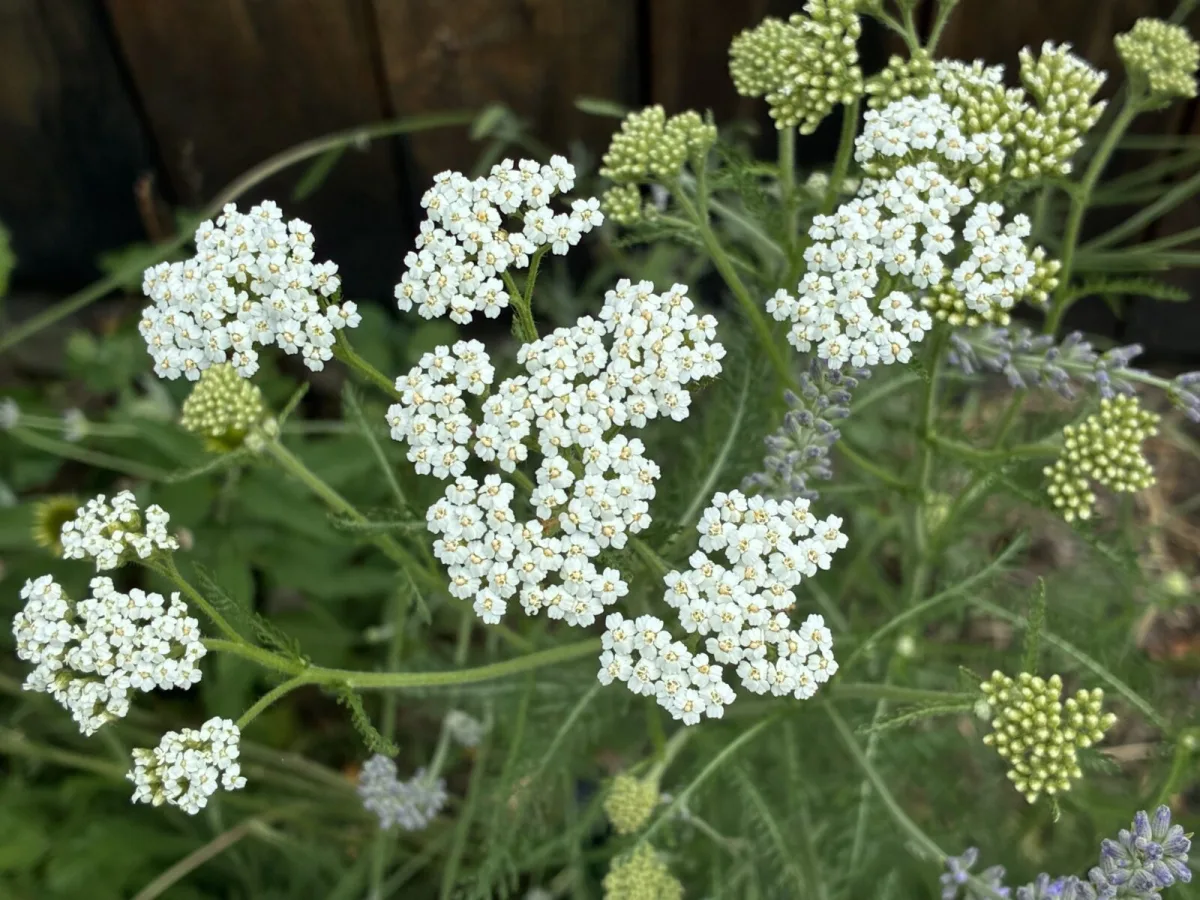
Common yarrow (Achillea millefolium) is one of the most popular perennials for cottage borders and naturalistic plantings. It brings long-lasting colour all summer and copes well in spots where other plants struggle. It forms flat-topped flower heads made up of tiny blooms that sit above finely cut, fern-like foliage. Flowers come in a range of shades, and butterflies and other pollinating insects often visit, so yarrow naturally brings the garden to life.
It is also a traditional herb with many uses in folk customs. From a growing point of view, though, what matters most is how undemanding it is. It suits sunny borders, dry strips along paths, containers, and water-wise plantings. Once established, it ranks among the most reliable drought-tolerant perennials and stays attractive for a long stretch of the season.
Planting yarrow step by step
Choosing a spot with plenty of sun is key. Yarrow thrives in full sun, ideally at least 6 to 8 hours a day. You can plant in spring after the last frosts, or in autumn, as long as it has at least 6 weeks to root in before the first harder frosts.
When planting, allow spacing of roughly 30 to 60 cm depending on the variety and vigour. Loosen the soil at the planting site and only lightly improve it with organic matter, mainly if you need to help drainage. Remove the plant from its pot and, if the roots are circling, gently tease them apart. Dig a hole slightly deeper and about twice as wide as the root ball. Set yarrow so the crown, where the roots meet the top growth, sits level with the surrounding soil. Backfill, firm lightly so no air pockets remain, and water thoroughly. For the first few weeks, water a bit more regularly until the plant is well established.
Soil, watering and feeding without common mistakes
Which soil is best
Yarrow is tolerant and will handle poorer soils, but it grows best in lean, free-draining ground. Overly rich soil can lead to lush leafy growth and floppy stems, which reduces the overall effect in the border. In heavy, poorly drained soil, the roots are at risk of rotting. In containers, it pays to use a good-quality multipurpose compost that holds its structure while still shedding excess water.
How much water yarrow needs
Once established, yarrow is notably drought-tolerant. Overwatering, on the other hand, can cause flopping, disease and even root rot. Water only when the soil is clearly dry. It will appreciate an occasional soak during long, hot, rainless spells, which helps it keep flowering and looking fresh.
Go easy on feeding
Yarrow usually needs little to no feeding. Excess nutrients encourage too much green growth and weaker stems. If you want to give it a gentle boost, a thin layer of compost around the clumps in spring is enough, without digging it deeply into the root zone.
Pruning and care for a compact shape and more flowers
Regular trimming helps keep the plant dense and neat. In early spring, remove last year’s dry stems before new growth starts. Through summer, snip off spent flower heads as you go; this often encourages more buds and extends the period when the border stays colourful.
After the main flush, from mid to late summer, you can cut yarrow back by about one third to one half. For many plants, this triggers fresh growth and a second, late-season bloom, which is ideal if you want colour right into autumn.
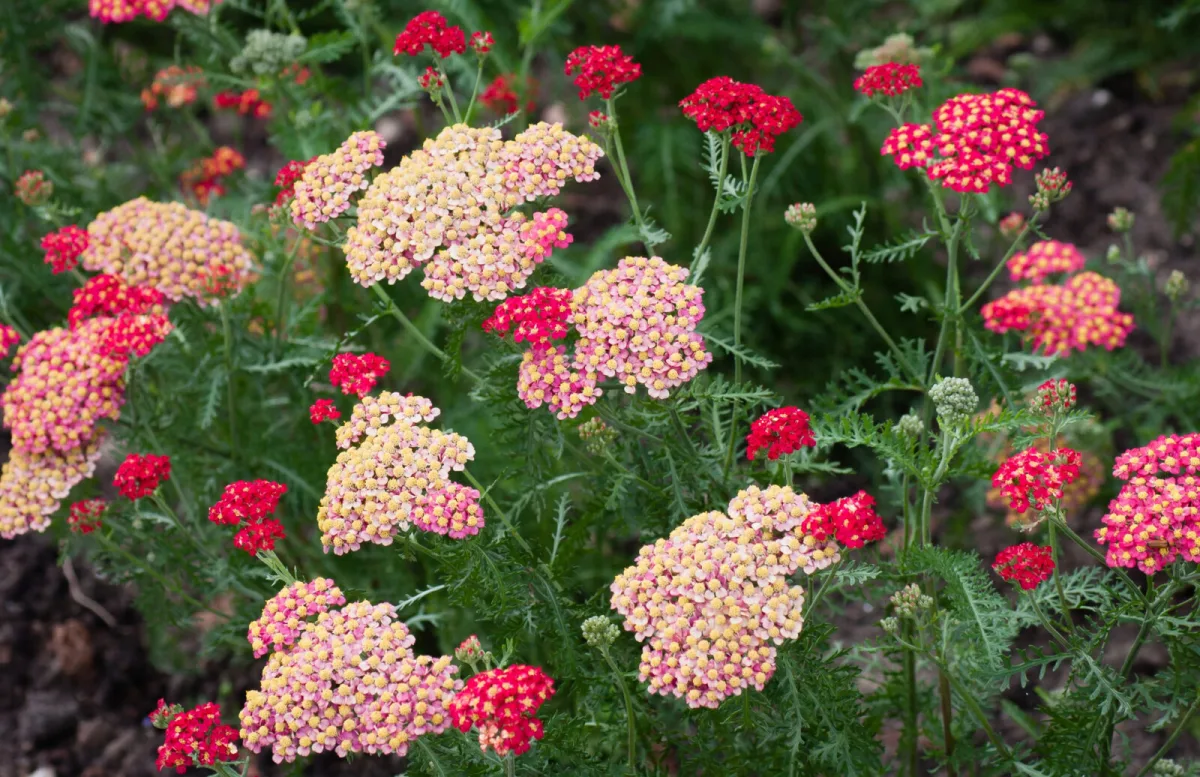
Varieties with sturdier stems and heavy flowering
When choosing, it’s worth going for modern varieties bred for stronger stems and a more compact habit. These plants are usually less prone to flopping and hold their shape better without staking. Popular choices include cultivars with long summer flowering in yellow, peach, white, pink and red. In the garden you can easily create tone-on-tone combinations or bold contrasts, such as yellow flowers with orange and red perennials for a hot summer palette, or white blooms for more formal beds where a clean, elegant look is the goal.
Yarrow also works well planted in larger drifts, where its flat flower heads create broad blocks of colour and a softly textured layer above the foliage. This is especially useful where you need to reliably fill sunny areas without committing to frequent watering.
Common questions about growing yarrow
Is yarrow a perennial that comes back every year
Yes, yarrow is a herbaceous perennial that reliably returns each season under normal conditions. It is known for its toughness and longevity in borders.
When to cut back yarrow
In spring, remove the old, dry growth from last year. After flowering in summer, you can cut the plant back if you want to encourage a second flush and keep a more compact shape.
Does yarrow spread sideways
It often forms upright clumps and, in good conditions, gradually expands, so it can fill harder-to-plant sunny spots. That is exactly why it suits mass planting too, where you need a larger quantity of tough, drought-tolerant perennials.
What to do after flowering
After flowering, cut yarrow back by roughly one third to one half. The plant usually resprouts, thickens up, and may bloom again later in the season, with the new flowers often looking fresher.
What not to pair yarrow with
Yarrow loves sun, leaner soil and restrained watering. That’s why it isn’t ideal next to plants that need partial shade, constant moisture and rich soil, because you would have to compromise on care. If you build a border around yarrow, stick with plants that share similar needs.
Ideas for using yarrow in the garden
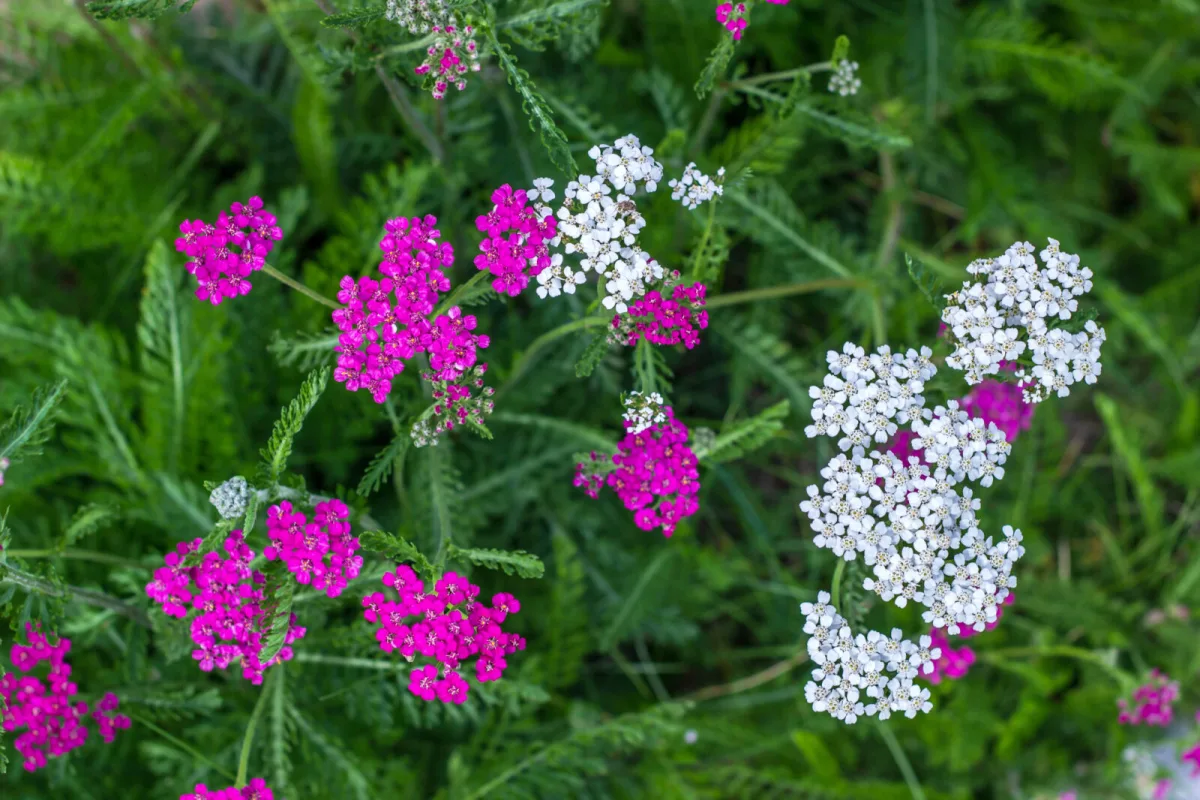
Yarrow is excellent for plantings where you want to support pollinators. It slots in beautifully with other species that attract butterflies and bees, while still tolerating a sunny site. In a romantic cottage border, it shines among long-flowering perennials, adding lightness and clear blocks of colour. For low-maintenance gardens, it is ideal combined with robust, drought-tolerant perennials and ornamental grasses, which together create a stable planting without constant attention.
It also performs very well in containers on a sunny terrace or balcony, either on its own or with other plants that tolerate a drier routine. It fits into low-input strips along paths and driveways, on slopes where it helps stabilise soil, and in plantings designed for greater resilience to drought and heat. Thanks to its toughness, it also suits meadow-style gardens and looser plantings, where it echoes the character of wildflowers and creates a natural feel.
Yarrow is an ideal choice if you want long summer flowering, minimal watering, and a plant that can handle a more challenging sunny position.
Source: Proven Winner, Almanac , Pestrazahrada.cz
Related articles
The More Often You Harvest, the Longer Plants Keep Cropping
With fruiting vegetables, frequent picking keeps plants flowering and producing for longer. A few crops, such as aubergines, are tastiest when harvested slightly earlier rather than fully mature.
Wasps Aren’t Just a Barbecue Menace They Can Ruin Your Garden Woodwork Too
Weathering isn’t always the main culprit behind damaged outdoor timber. Wasps can scrape fibres from boards and beams surprisingly fast, leaving grooves that soak up water and accelerate decay.
Why hydrangeas wilt in summer even when watered and how to save them fast
Hydrangeas can look limp in hot weather even if you’ve been watering faithfully. The key is to check what’s happening in the root zone, then adjust watering, shade and mulching so the plant can actually use the moisture available.
Comments (0)
Be the first to comment.