
 English
  Polski
  Deutsch
  Nederlands
  Svenska
  Norsk
Norsk  Dansk
Dansk  Français
  Italiano
  Español
  Português
  Slovenčina
  Suomi
Suomi  Gaeilge
 When to Cut a Hedge So It Stays Dense and Looks Smart All Year
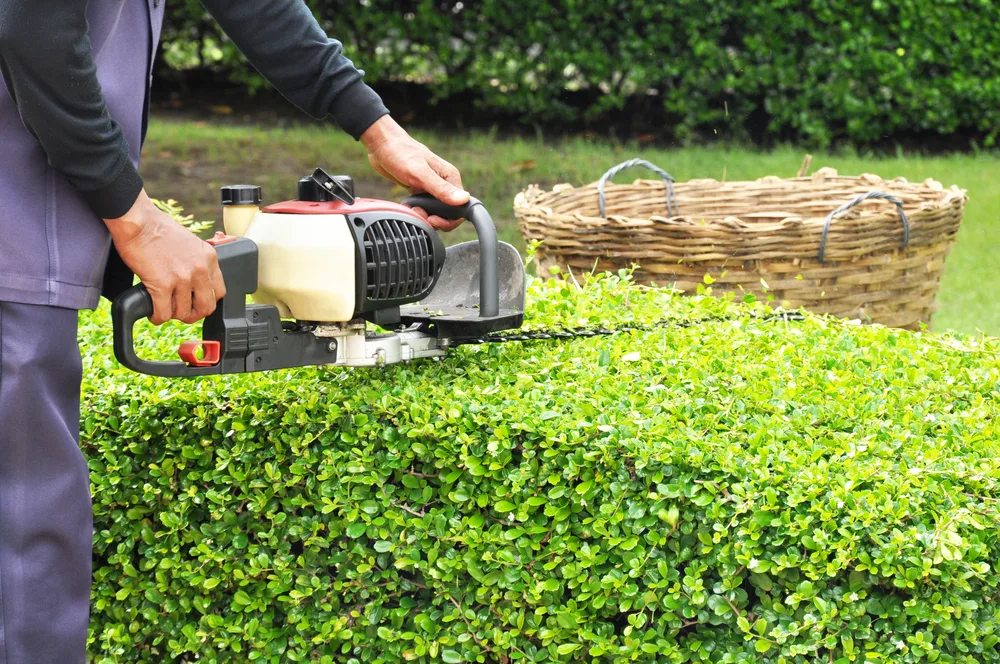
A newly planted hedge needs attention if it is to thicken properly, hold its shape and not outgrow the areas where it gets in the way. With young plantings, what’s often called formative pruning is used to build a strong, dense framework of branches. With older hedges, you move on to maintenance pruning, or regular trimming, which keeps the hedge looking tidy and within sensible dimensions.
A dense hedge has practical benefits too. It can help muffle noise and trap dust, improves privacy and screens unattractive views. On the other hand, it’s worth remembering that tightly clipped formal hedges demand more time and accuracy, while more relaxed, informal hedges are generally more forgiving to maintain.
Choosing tools and getting ready before trimming
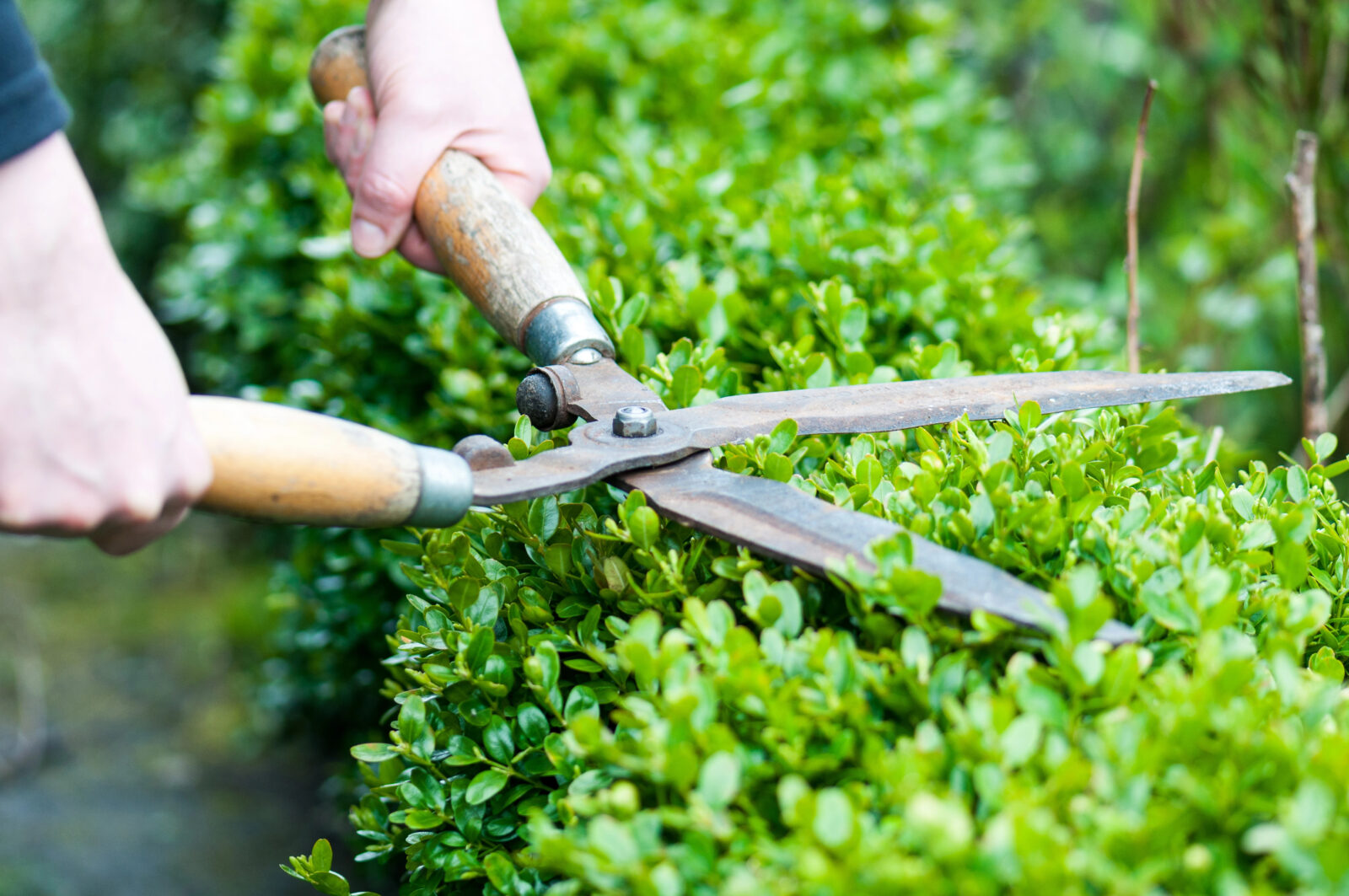
For shorter sections, hand hedge shears are often enough; for longer and taller hedges, a powered hedge trimmer is usually more comfortable. You’ll find corded electric, battery-powered and petrol versions. When choosing, pay close attention to weight, because long sessions with a heavy trimmer are tiring. Blade length and reach matter too, as does a telescopic shaft, the knife design, and the motor power in combination with tooth spacing, which determines how thick a shoot the tool can handle.
Battery hedge trimmers have improved dramatically in recent years. They offer relatively quiet running, good runtime, and remove the hassle of a cable or fuel. Whatever tool you use, it pays to check sharpness, lubrication and overall condition beforehand, because blunt blades tear leaves and unnecessarily weaken the plants.
On broad-leaved evergreens, such as cherry laurel, machine trimming can leave unsightly browning edges and leaf damage. If you have the time and care about appearance, it’s often better to shorten individual shoots with hand shears or loppers, so the cut is made into wood rather than straight through the leaf blade.
Working safely with a hedge trimmer
With powered or electric tools, safety is essential. Wear safety glasses and sturdy gloves, ideally also hard-wearing clothing with long sleeves. Before you start, clear the area of anything you could trip over. If you need to cut higher up, try not to work for long with the tool above shoulder height, and use stable steps, a work platform, or a tripod ladder that can be levelled well on uneven ground.
With electric hedge trimmers, it’s wise to use an RCD and avoid working in damp conditions. It helps to run the cable over your shoulder to reduce the risk of cutting through it by mistake. If you’re not confident the work at height is safe, it’s sensible to consider a professional service, because the risk of injury with tall hedges can be significant.
Formal and informal hedges need different approaches
Formal hedges and shaping for density
Formal hedges create crisp lines and precise boundaries. To keep them dense right down to ground level, it’s important to trim them to a slight taper, with the base wider than the top. This allows light to reach the lower parts so the hedge doesn’t end up thin at the bottom. The principle is especially important for long-term, regularly maintained hedges, which can otherwise gradually become bare from below.
It’s also practical not to let the hedge get too wide. Even vigorous species can be kept relatively narrow if they are trimmed regularly. With some shapes, the upper edge of the side faces is slightly chamfered so the sides blend neatly into the flat top and the hedge looks clean and sharp.
Informal hedges and a more natural look
An informal hedge works more as a softer garden edge, a screen, or a backdrop to planting. Usually, it’s enough to shorten overlong shoots back to the desired size and remove branches that spoil the outline. Hand shears or loppers give a more natural finish here and also reduce the risk of damaging large leaves on evergreen species.
If flowers or berries are the goal, timing is crucial. Many shrubs bloom on last year’s growth, and pruning at the wrong time can reduce flowering or stop it altogether. That’s why it’s often best to prune just once a year at a time that supports flowering for that particular species.
Formative pruning of a young hedge after planting
The first years after planting determine whether a hedge will be dense and evenly filled. Formative pruning encourages branching and helps create a network of shoots that fills the space you want the hedge to occupy. Timing differs depending on whether you’re dealing with deciduous or evergreen plants.
With deciduous hedges, the main upright shoots are usually shortened by about one third in the winter after planting and again the following winter. Make the cut just above a bud to encourage side shoots. Side growth that sticks out too far can also be reduced by roughly one third, helping the hedge keep a compact shape even when young.
With evergreen hedges, the main leader is often left uncut so the plant reaches height faster. In the first two years, you mainly shorten side shoots that are untidy or protruding, which encourages thickening. With conifers this is typically done in summer; with other evergreen species it’s more often done in spring.
When to trim a hedge by species and style
Once a hedge reaches a height and width you’re happy with, you switch to regular maintenance. This mainly means removing most of the soft new growth, usually growth that is less than a year old. Informal hedges often only need trimming once a year, while formal hedges are kept in shape with one to three cuts per season depending on vigour.
Commonly clipped formal evergreen hedges include box, privet, holly and cherry laurel, where trimming is typically focused within the growing season and, for some species, into late summer. Conifers are commonly trimmed in spring and summer; yew is often cut in summer and again in autumn, while arborvitae is usually tidied in spring and then again in early autumn.
Deciduous formal hedges such as beech or hornbeam are often trimmed once, usually from mid to late summer, to keep crisp lines. By contrast, flowering and looser hedges are guided mainly by their flowering time and fruiting. Some species are best pruned straight after flowering, others only after the fruit has ripened, and for selected shrubs old or weak branches are removed in spring so the plant has the strength to produce new shoots.
How to deal with an established, mature hedge
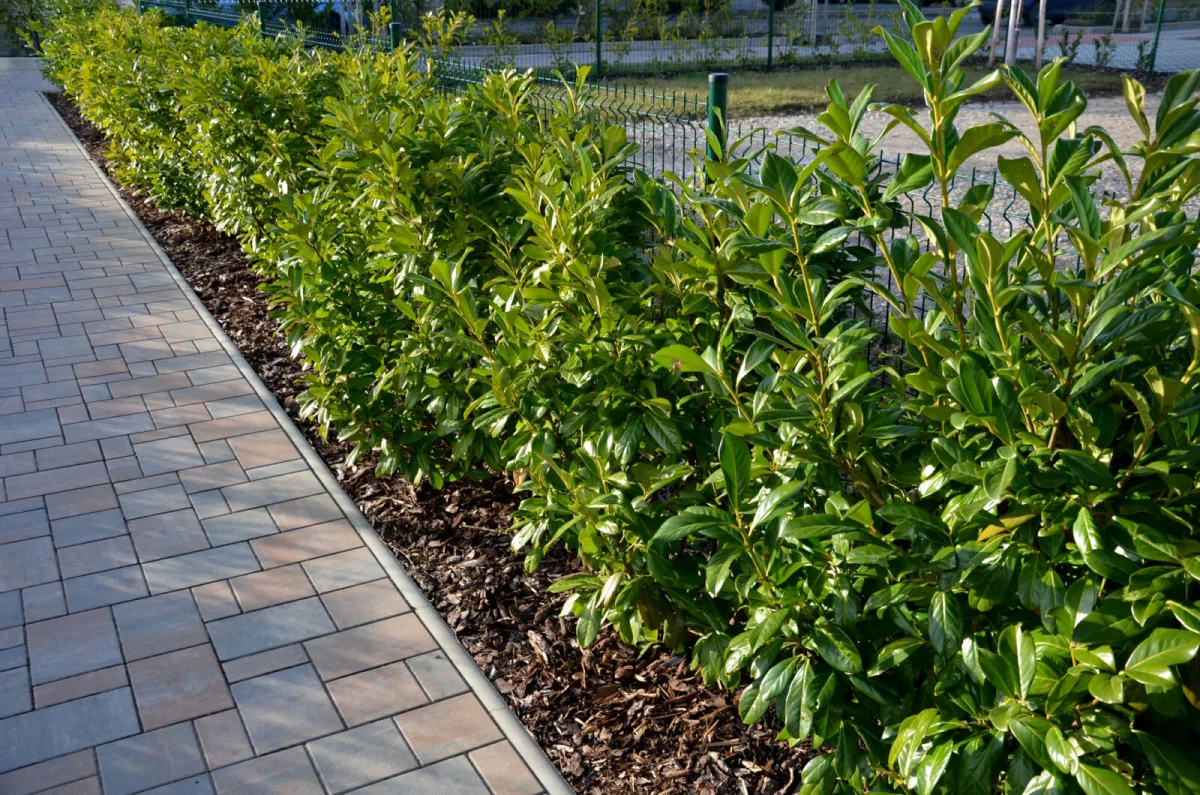
The basic pruning principle is similar for deciduous and evergreen hedges. What matters is evenness, clean cuts, and checking the outline from different angles as you go, so you don’t create waves and hollows. With formal hedges, it pays to maintain that slight taper towards the top, because light is what decides whether the hedge stays dense at the base. With informal hedges, the priority is a natural look and removing only what genuinely obstructs or disrupts the overall composition.
Most common problems and how to prevent them
Nesting birds and working considerately
Before trimming, always check whether birds are nesting in the hedge. Destroying or damaging an active nest is illegal in many countries and is also an unnecessary disturbance to wildlife. The typical nesting season runs roughly from March to August, but in practice it can extend beyond that, so it’s better to judge by what’s actually happening in the hedge rather than the calendar.
Overgrown hedges and hard reduction
Even a well-trimmed hedge tends to slowly bulk up and expand over the years. Along boundaries, this can lead to overhangs onto pavements or into neighbours’ space. Many deciduous shrubs tolerate renovation pruning and can re-sprout from older wood, so you can significantly narrow or lower the hedge. With most conifers, however, this is a problem because they often don’t break well from old wood. Yew is a notable exception and generally copes better with regeneration pruning. If you inherit a very overgrown conifer hedge, it can sometimes be more realistic to plan for replacement rather than an arduous, uncertain renovation.
Other issues when trimming and dealing with waste
With conifers, late cutting after the end of summer can increase the risk of bare patches that won’t fill in well. It’s safer to stick to earlier timings during the season. Some plants can irritate the skin during handling, typically when you come into contact with fresh trimmings, so it makes sense to protect forearms and neck with long sleeves.
Hedge trimming often produces a large amount of green waste. It’s practical to plan in advance where it will go. Some can be composted, some used as mulch once it has dried and been shredded, or taken away via green waste collection. Good organisation of both the cutting and the clearing up saves time and helps keep the garden safe and tidy during the job itself.
Source: Rhs, Gardeners World , Pestrazahrada.cz
Related articles
Picking Apples Without Mistakes Helps Keep Your Harvest Fresh and Rot-Free for Longer
How you handle apples at harvest has a huge impact on how long they keep. Gentle picking, careful sorting and the right storage conditions will help prevent rot and unnecessary losses.
A Lawn Without Bare Patches Depends on Two Things People Rarely Mention
Sowing a lawn from seed is affordable and flexible, but success hinges on careful soil preparation, the right seed mix, and patient aftercare. Follow proven timing and sowing techniques to get a dense, even sward without bare patches.
September Pruning Can Be Fatal for Shrubs Leave These Types Alone
Early autumn can tempt you to tidy shrubs with the secateurs, but September pruning can trigger soft new growth, weaken plants for winter, and cost you next spring’s flowers. For many shrubs, waiting until after flowering or until spring is the safer choice.
Comments (0)
Be the first to comment.