
 English
 Polski
 Deutsch
 Nederlands
 Svenska
 Norsk
 Dansk
 Français
 Italiano
 Español
 Português
 Slovenčina
 Suomi
 Gaeilge
When Other Plants Fade, Ornamental Cabbage Starts to Shine
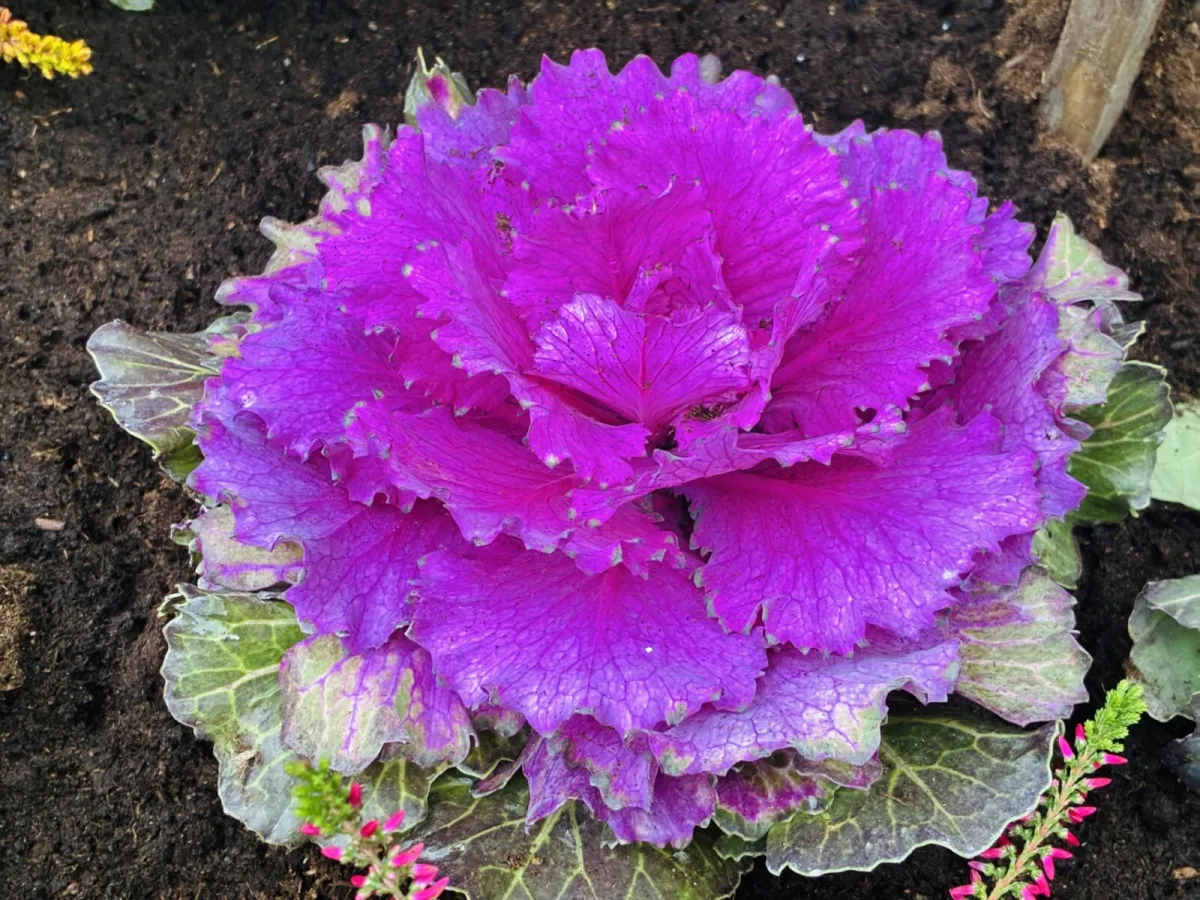
Ornamental cabbage and flowering kale are grown mainly for their colouring. They are not planted primarily for the kitchen, but for decorative leaves that form showy rosettes in shades of pink, purple, cream and white. At first glance they often resemble flowers, which is why they are popular in autumn and winter planting schemes. Botanically, they are forms of Brassica oleracea, the same species that includes many familiar vegetables.
Ornamental cabbage tends to have broader, smoother leaves, while flowering kale is recognised by more deeply cut or ruffled edges. Although they are technically edible, the flavour is usually distinctly bitter, so they are more often used purely as a finishing touch in arrangements. They make their biggest impact just when other annuals are losing steam and the garden needs a fresh burst of colour.
Plant character and the best time to grow
These plants are essentially biennials. In the first year they form a lush leaf rosette, and only in the second year would they flower and set seed. In garden practice, however, they are usually grown as short-term seasonal plants. They are most often planted in autumn or early spring so their colouring can stand out during the cooler part of the year.
Low temperatures are key to their final look. As the weather cools, leaf colours intensify and the plants take on their signature, show-quality appearance. In warm summer conditions they quickly lose form, may bolt into flower, and their ornamental value drops sharply.
What they need for healthy growth
Position and light
Ornamental cabbage and kale perform best in full sun. Plenty of light encourages compact growth and strong colouring. In warmer climates, though, it helps to give plants a little afternoon shade so they don’t suffer in excessive heat.
Soil
A fertile, humus-rich, well-drained loam is ideal. The compost should hold some moisture but must not stay waterlogged. Plants prefer a slightly acidic soil reaction, roughly in the range of pH 5.5 to 6.5.
Watering
Keep the soil evenly moist, not sodden. As soon as the top layer begins to dry, it’s time to water. In periods of regular rainfall, care is easy, but during longer dry spells you’ll need to add extra water. Overwatering is just as harmful as drought, as it encourages rot and disease.
Temperature and humidity
Full colouring develops only after exposure to cooler conditions, often even after a light frost. Plants can therefore remain attractive for much of the winter. If autumn stays too warm and days are still long, they may start to produce a flower stalk. At that point, their decorative period is over.
Prolonged rainy weather, violent storms or persistently damp conditions can damage the leaves and spoil their appearance. Humidity on its own is usually not an issue; it becomes a problem when combined with poor air movement. Then fungal diseases spread more easily.
Feeding and the right timing
Ornamental cabbage and kale should not be overfed during growth. It’s best to work in a balanced fertiliser at planting time and, in principle, stop there. Extra feeding can cause plants to become leggy, lose their firm shape, and develop less vivid leaf colour.
Popular varieties and how they differ
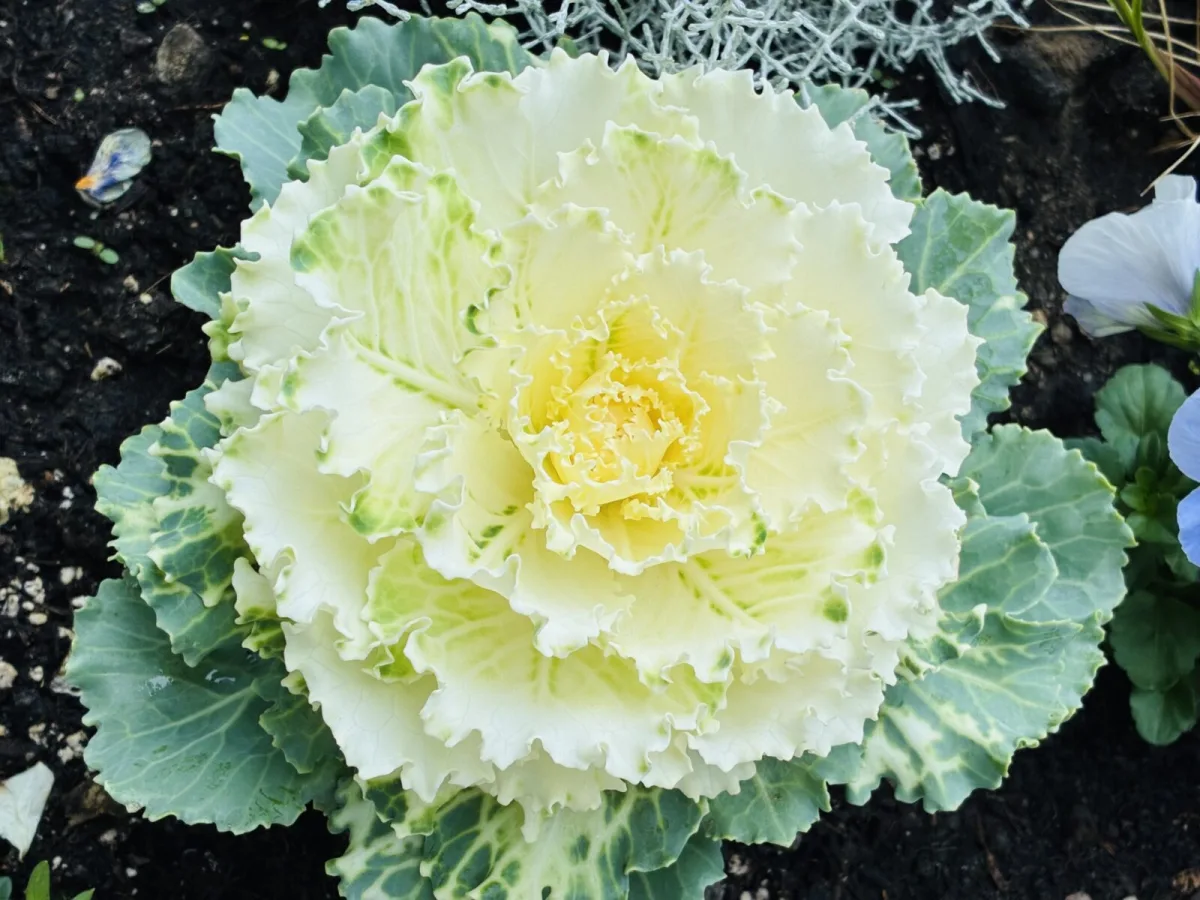
Plants are often sold simply as ornamental cabbage or flowering kale, so when choosing it pays to focus mainly on leaf colour and shape. Some types have strongly frilled edges, others are finely cut, while some have smoother, broader leaves.
Well-known cultivars include Chidori, with very curly leaves in purple, cream or deep magenta tones. Color Up grows more upright, combining green outer leaves with a white, pink or hot-pink centre. Osaka is known for large, smooth leaves and compact growth. Peacock looks airier and resembles edible kale thanks to its deeply cut leaves. The Pigeon series stands out for a flatter shape with a red or white centre.
Sowing and propagation from seed
If you want plants for spring planting, sow about eight weeks before the last expected frosts. For autumn impact, sow seeds around the beginning of July so young plants can be set out in the second half of August.
Sow seeds in small pots filled with seed compost. Cover them lightly, roughly to a depth of 0.5 cm. It’s important to maintain steady moisture and a temperature around 21 °C. Germination takes about 10 to 21 days. Once seedlings are strong enough and outdoor conditions are suitable, they can be transplanted into beds or containers.
If you let plants carry on into their second year, they will produce flower stalks and then set seed. The seed can be collected from dried flower heads and kept for the next season. A cool place helps with longer storage.
Growing in containers and overwintering
In pots, ornamental cabbage and kale look natural and are often even more effective than when scattered through a border. They complement seasonal arrangements much like pansies in spring or chrysanthemums in autumn. The container must have drainage holes and be filled with a good-quality all-purpose compost. Usually there’s no need to pot them on later, because after purchase they typically don’t outgrow their pot by much.
Overwintering is not usually treated as a long-term goal. In the second year the plants lose their compact look and head towards flowering. Even so, many gardeners leave them in place for much of the winter, as the leaf rosettes stay handsome until repeated hard frosts.
Pests, diseases and the most common problems
Because they belong to the brassica family, they suffer from similar issues to edible cabbages. They are often attacked by caterpillars, flea beetles, thrips, aphids or slugs. A jet of water, horticultural oils or products labelled for use on vegetables can help. Plants in containers tend to be attacked a little less than those in the ground.
Common diseases include leaf spots, bacterial and fungal infections, and other problems linked to waterlogging. The risk rises sharply in crowded plantings and during damp weather. Good air circulation is therefore one of the key preventative measures.
Holes in the leaves almost always point to pests that love feeding on brassicas. Black or yellow spots more often signal disease. A long, unsightly stalk means the plant has started to bolt into flower and its ornamental role is coming to an end.
How to keep plants looking their best for as long as possible
The best results come from planting for the cooler part of the year, giving plenty of light, maintaining even moisture and feeding sparingly. If you provide well-drained soil, avoid overwatering and keep an eye on pests in good time, you’ll be rewarded with intense colour and a compact shape. Ornamental cabbage and flowering kale can be among the most reliable decorations for the garden, terrace and front entrance at a time when most other plants are already past their peak.
Source: The Spruce, Homes and Gardens , Pestrazahrada.cz

A nurse by profession, she is passionate about healthy living, nature, and everything that benefits both people and the world around them. In her free time, she enjoys gardening, cooking, sewing, and caring for her family. In her articles, she loves combining professional expertise with practical experience from the garden and everyday life.
Related articles
When to Plant a Cherry Tree in Your Garden for Strong Roots and Heavy Crops
Cherry trees establish best when planted during dormancy, either in autumn after leaf fall or in early spring before bud break. The right timing depends as much on soil and weather conditions as it does on the type and quality of the young tree.
When to Plant a Butterfly Bush for Heavy Bloom and Better Winter Survival
Butterfly bush (Buddleja davidii) rewards you with months of flowers when it’s planted at the right time. Spring planting is usually the safest choice, giving the shrub time to root well before winter.
In Mid-November You Can Still Safely Plant Trees, Fruit Bushes and Roses
Mid-November can still be a good time for planting, provided the soil isn’t frozen and can be worked. With sensible aftercare and frost protection, woody plants, fruit trees and bushes, and even roses can settle in well before winter.
Comments (0)
Be the first to comment.