
 English
  Polski
  Deutsch
  Nederlands
  Svenska
  Norsk
Norsk  Dansk
Dansk  Français
  Italiano
  Español
  Português
  Slovenčina
  Suomi
Suomi  Gaeilge
 Watering Mistakes Can Cost You Half Your Cucumber Crop
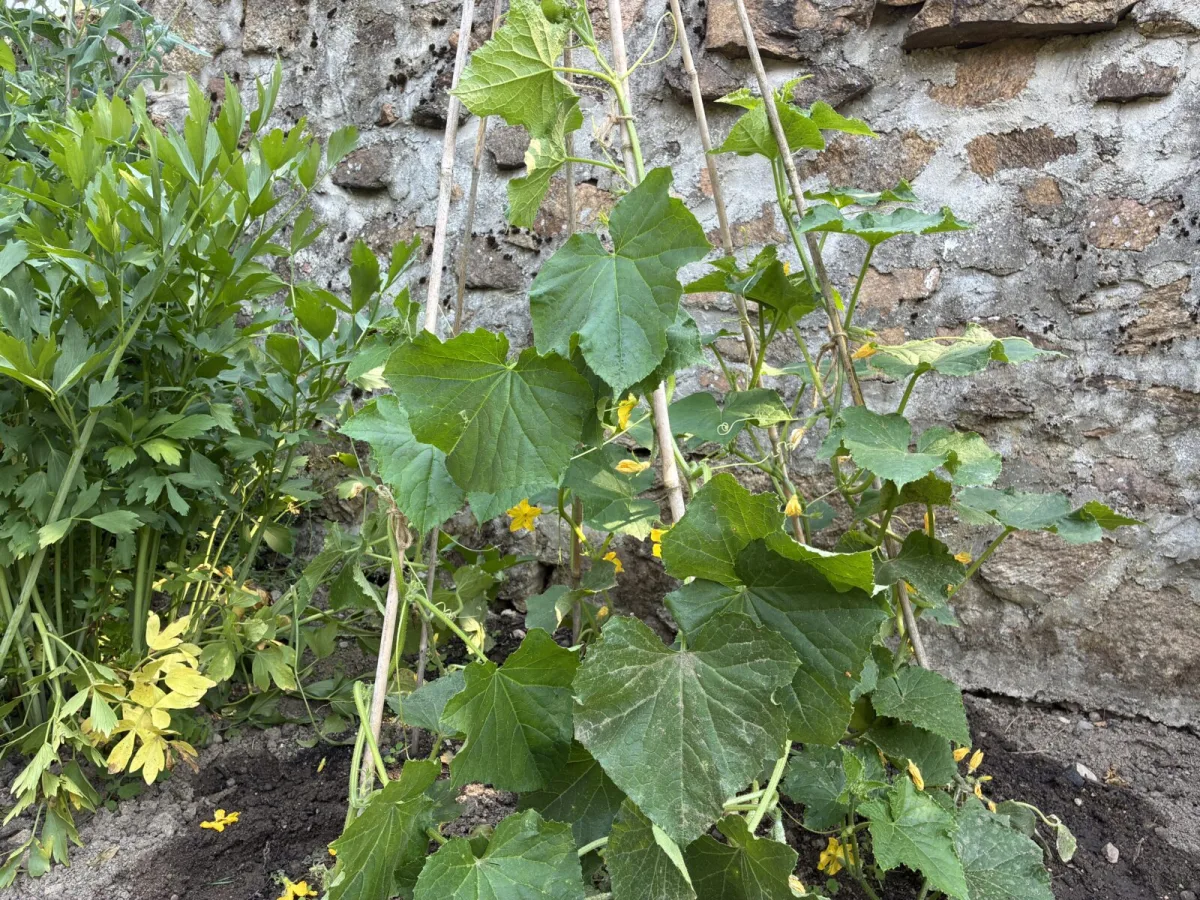
Growing cucumbers can be very rewarding, but they will also quickly reveal any mistakes in care. Problems often show up as wilting, young fruits drying up, or cucumbers staying small, misshapen or simply poorer in quality. The result is twofold: we harvest fewer fruits, and what we do pick is often not in the condition we expect from home-grown produce. Most issues are linked to site choice, watering regularity, feeding, and the way you harvest.
Site choice matters right from the start
Cucumbers are warmth-loving plants, and cold conditions do them no favours. They grow best in a sunny spot without prolonged shade, where the soil can warm up properly. Heavy, compacted, poorly draining soils are unsuitable, as water sits in them and roots suffer from a lack of air. These conditions can later lead to weaker growth, poorer fruit set and higher disease pressure.
The previous crop also matters. Ideal choices are crops that don’t deplete the soil in a one-sided way, such as leeks, celery, onions or potatoes. On the other hand, it’s best not to grow cucumbers after other cucurbits or after brassicas, as they can share similar pests and diseases. Fruit quality problems also arise when cucumbers are grown in the same spot for several years in a row. It’s better to leave a longer break and return them to the same bed only after four to five years.
Roots are shallow and easily damaged
The cucumber root system spreads quite close to the surface. When hoeing or weeding, work carefully so you don’t tear the fine feeder roots that supply the plant with water and nutrients. Once damaged, they regenerate only with difficulty. The plant may then wilt more quickly when moisture fluctuates, and if nutrients are short, it may struggle to keep producing new fruits steadily.
Without regular watering, cucumbers struggle
Cucumbers need the entire root zone to stay evenly moist. A one-off heavy watering followed by a long dry spell is often worse than smaller amounts topped up regularly. Water temperature matters too and should not be lower than the soil temperature. Cold water can shock the plants and slow growth.
Morning is considered the best time to water, when soil and plant temperatures are similar and the change is less abrupt. It also pays to water soon after harvesting, because once fruits are removed the plant intensively sets more, and a steady water supply supports that process.
Watering methods that reduce the risk of mildew
Practical methods are those that keep the leaves dry, such as watering into furrows or drip irrigation. Dry leaves mean a lower chance of fungal diseases. Just as important as the method is the right amount and consistency. With correct irrigation, wilting of both plants and fruits is reduced, and the risk of disease development also drops, as infections spread easily in warm, humid spells.

Nutrition and feeding as the foundation of quality fruit
Insufficient nutrition shows up quickly in cucumbers, often as weaker growth, reduced fruit set and poorer harvest quality. The foundation is organic matter. Well-rotted farmyard manure is best worked in during autumn soil preparation, or replaced with good-quality, fully matured compost. This organic component improves soil structure and helps maintain a more even moisture balance.
Phosphorus, potassium and nitrogen with sensible timing
Phosphorus and potassium fertilisers are commonly applied in two doses. The first during soil preparation, often in autumn, and the second in spring. For cucumber growth and yield, nitrogen is also particularly important, and it pays to split it into several smaller applications. One portion is added during soil preparation, another about three to four weeks after planting out or at the moment flower buds start to appear. A final nitrogen feed is useful during fruit growth, when the plant’s nutrient demand is highest and any shortage would easily slow the production of further fruits.
Gentle harvesting encourages further fruit set
At first glance harvesting may seem like a simple step, but mistakes happen here too. Roughly pulling fruits can damage shoots or stems, and in extreme cases part of the plant may die back. It’s safer to snap cucumbers off gently, cut them off, or use scissors so you’re not tugging on the whole plant.
Harvest speed matters just as much. Cucumbers at the right size should be picked as soon as possible, because this encourages the plant to keep producing more fruits. If overgrown cucumbers are left on the plant for too long, the plant may fail to hold on to younger fruits, drop some of them, and they won’t develop to harvest size.
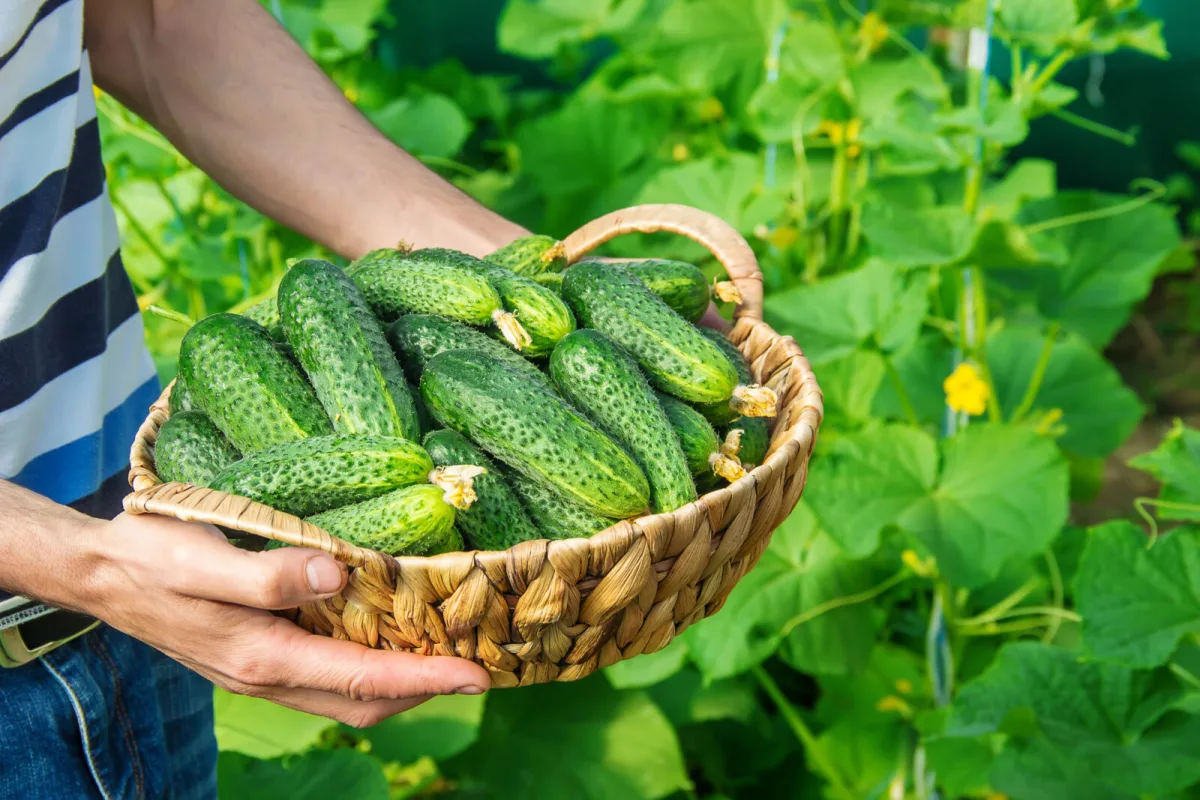
Why cucumbers can turn bitter and how to prevent it
Bitterness is linked to a higher content of glycosides. In many modern varieties this tendency has been reduced through breeding, yet bitterness can still appear when the plant is under stress. Typical triggers are prolonged drought, irregular watering, or alternating waterlogging and drying out. Large differences between day and night temperatures also have a negative effect.
In practice, a stable watering routine and humus-rich soil help most, as bitterness appears less often in such conditions. When cucumbers receive water and nutrients regularly and aren’t grown under constant stress, the fruits usually taste better, keep a more even shape and are higher quality overall.
Most cucumber problems take off due to a combination of a poor site, fluctuating moisture and feeding mistakes. Focus on sun, regular watering, humus-rich soil and gentle harvesting, and the crop is usually noticeably better.
Source: Rhs, Zahradkar , Pestrazahrada.cz
Related articles
Next year you can harvest better if you don’t sow carrots where they won’t thrive
Carrot root fly can ruin carrots, parsley and celery from the inside out, often without obvious warning until harvest. Better site choice, rotation, later sowing and simple physical barriers can dramatically cut damage next season.

How to Propagate Roses from Cuttings at Home and Fill Your Garden with Blooms Almost for Free
Want more roses without paying for new plants? With a few healthy cuttings and a simple plastic-bottle mini greenhouse, you can root new bushes at home in just a few weeks.
Heathers can cope where other plants won’t, but one soil detail decides everything
Heathers and heaths are tough evergreen shrubs that can flower across the seasons when you choose the right types. Success hinges on matching the plant to your soil pH and ensuring free drainage.
Comments (0)
Be the first to comment.