
 English
  Polski
  Deutsch
  Nederlands
  Svenska
  Norsk
Norsk  Dansk
Dansk  Français
  Italiano
  Español
  Português
  Slovenčina
  Suomi
Suomi  Gaeilge
 The Secret of Asparagus, an Easy Perennial That’s Good for You and Delicious
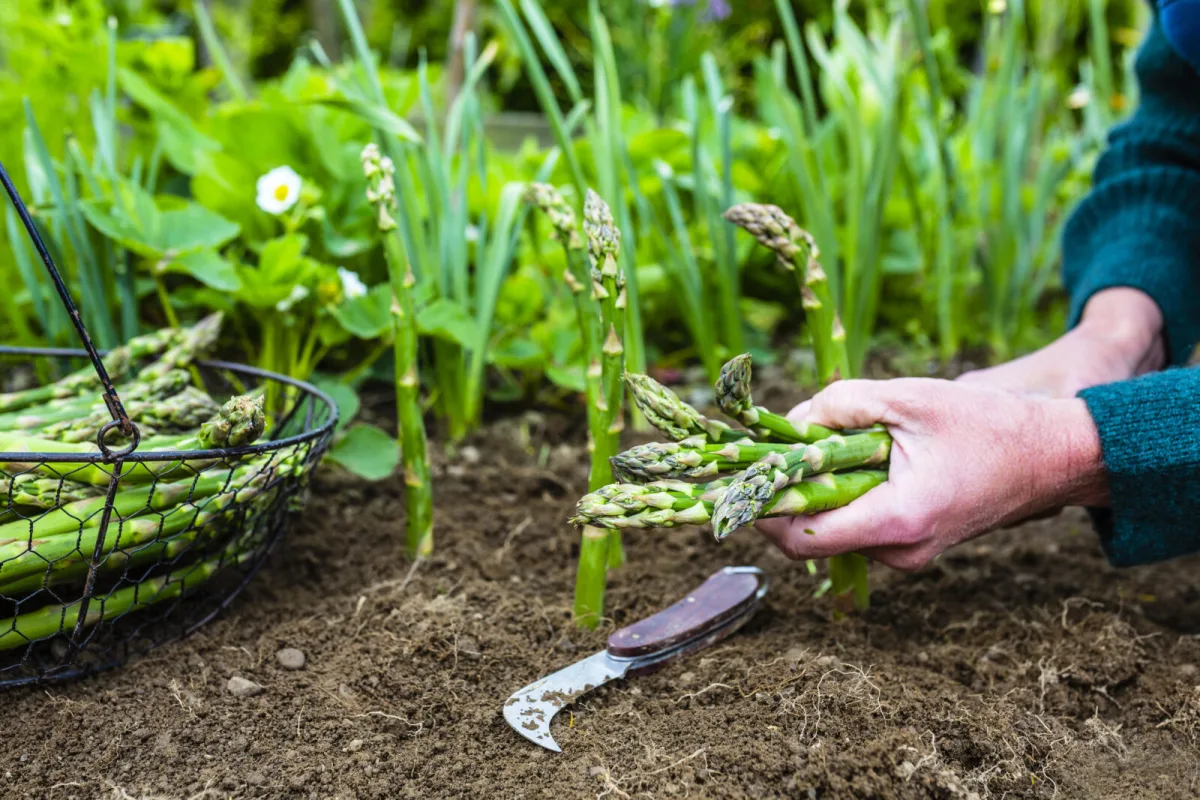
Asparagus is one of the most rewarding perennials in an edible bed. If you give it the right start and then sensible care, it can crop in one spot for a good 10 to 15 years. The reward is tender spring spears with excellent flavour, useful in the kitchen in countless ways. What’s more, it’s a highly nutritious vegetable, rich in vitamins A, C, E, K and the B group, containing folate and minerals including potassium, phosphorus and iron.
Asparagus is an investment for the future, and with each year in the right position its yield usually increases.
Choosing the right spot decides your success
The most important step is to pick a place where asparagus can stay undisturbed for many years. It does best in full sun, ideally with at least six hours of direct light a day. Shelter from cold winds helps too, as spring spears then emerge more evenly.
Good drainage is just as crucial. Asparagus can’t tolerate waterlogged soil for long; the roots and crowns suffer and may rot. If you have heavy soil, it pays to work in plenty of organic matter and make the bed slightly raised so excess water can drain away more easily.
Soil for asparagus step by step
Asparagus needs deep, open, humus-rich soil because it forms a robust root system. A slightly alkaline pH of about 6.5 to 7.5 is ideal. Prepare the soil thoroughly before planting, because later deep cultivation will be much harder.
Deep cultivation and organic matter
Dig or loosen the bed to at least 30 to 40 cm, removing perennial weeds and stones. Then work in mature compost, well-rotted manure or horn meal. Plenty of humus helps retain moisture while also improving aeration—something asparagus really appreciates.
Planting asparagus from crowns or from seed
Asparagus can be grown from seed, but planting one-year-old plants—so-called crowns—is faster and more reliable. Plant in spring, most often from April to May, once the soil is no longer cold and waterlogged.
Correct depth and spacing
Dig trenches about 25 cm deep and around 40 cm wide. Put a layer of compost or composted manure in the bottom, then mound a low ridge of loose soil on top. Set the crowns on this ridge about 30 to 40 cm apart, with the roots spread out to the sides so they don’t bend or snap. Cover first with roughly 5 cm of soil and, as the plants grow, gradually add more soil until the trench is completely filled over the season.
Care in the first years is the key to a heavy crop
The first two seasons are crucial for future harvests. The plant is building root reserves that it will draw on in later years to produce strong spears. That’s why it’s important not to neglect moisture, weed control and feeding.
Watering, weeding and light hoeing
Water regularly during dry spells, especially with young plantings. Keep the bed free of weeds, which compete with asparagus for water and nutrients. Loosen the soil surface occasionally to prevent crusting, but be careful around the shallow parts of the root system.
Feeding and autumn care
Each autumn, add a layer of compost or well-rotted manure. Once the fern has yellowed, cut it down to ground level and keep the bed tidy so diseases and pests don’t overwinter unnecessarily. A compost mulch also helps stabilise temperature and improves soil structure.
When and how to harvest so asparagus doesn’t weaken
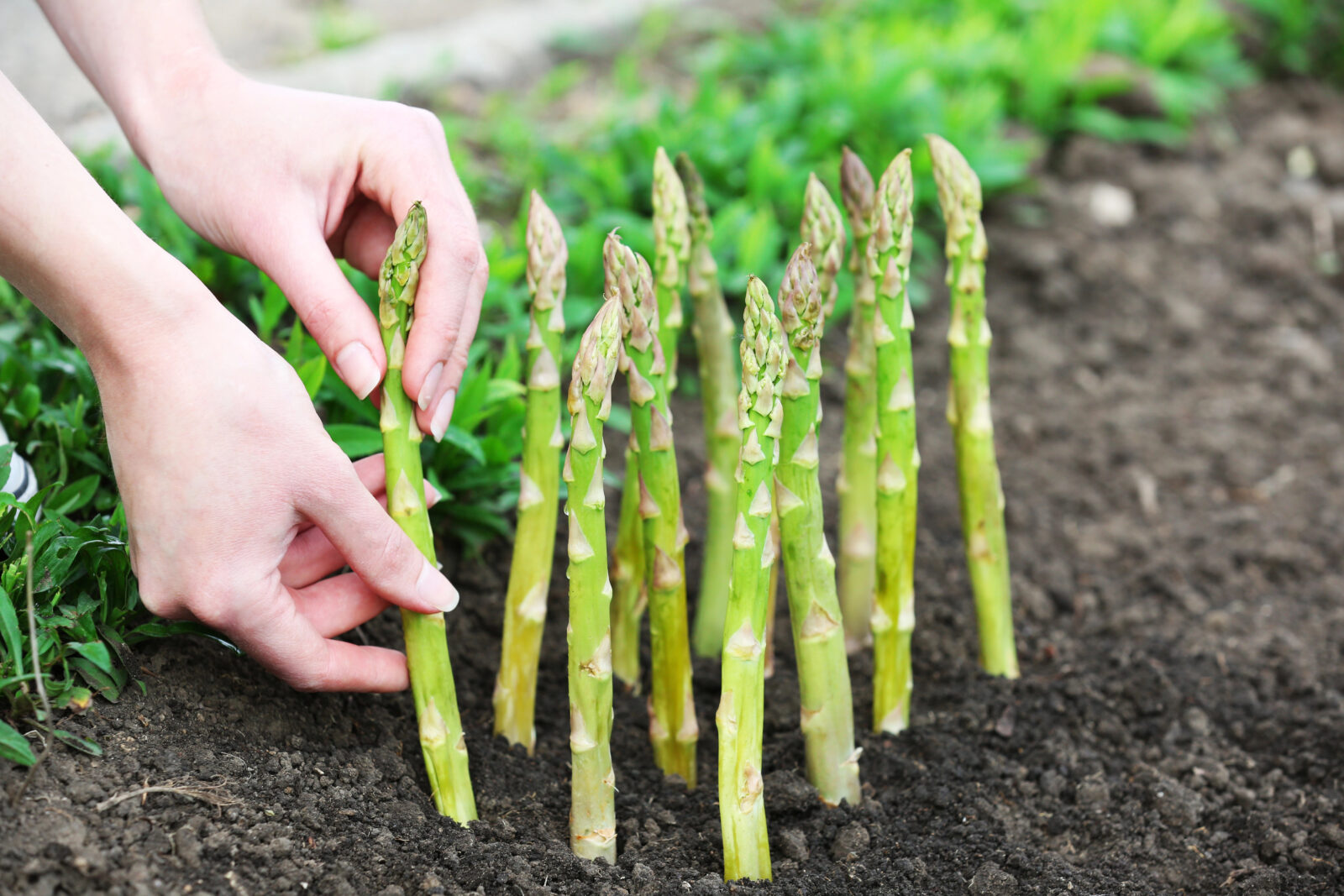
Start harvesting no earlier than the third year after planting. Pick spears when they’re about 20 to 25 cm tall and the tips are still tightly closed. The main harvest period is usually from April to June, depending on the weather and your garden’s location.
It’s important not to overwork the plants. In the first harvest years, harvest for a shorter period so the asparagus can produce plenty of fern afterwards and rebuild its reserves. After you finish harvesting, let the shoots grow on and mature, because photosynthesis in the fern largely determines the strength of next spring’s crop.
How to boost yields long-term and avoid disappointment
For a generous harvest, it pays to top up organic matter regularly, watch watering during dry weather and weed consistently. Heavy weed growth can reduce spear thickness and the total number you harvest. If you want steady results, stick to the rule of moderation in harvesting, especially with younger plants, and focus on building soil fertility rather than excessive feeding.
Conclusion
Growing asparagus takes patience and a good start, but the reward is worth it. Once you establish a bed in a sunny spot, prepare deep, humus-rich soil, and give the plants peace, moisture and nutrition in the early years, you’ll have a reliable source of a spring delicacy for many seasons. Asparagus then becomes a staple in both the garden and the kitchen, and can delight you with a heavier harvest each year.
Source: RHS, The Spruce, Pestrazahrada.cz

A lover of nature, gardens, and everything that moves, blooms, or grows. He literally grows everything, from herbs to rare species, and he enjoys caring for animals just as much. In his work, he connects modern technology with tried-and-tested grandmotherly methods and is happy when both paths lead to the same goal.
Related articles
Next year you can harvest better if you don’t sow carrots where they won’t thrive
Carrot root fly can ruin carrots, parsley and celery from the inside out, often without obvious warning until harvest. Better site choice, rotation, later sowing and simple physical barriers can dramatically cut damage next season.

How to Propagate Roses from Cuttings at Home and Fill Your Garden with Blooms Almost for Free
Want more roses without paying for new plants? With a few healthy cuttings and a simple plastic-bottle mini greenhouse, you can root new bushes at home in just a few weeks.
Heathers can cope where other plants won’t, but one soil detail decides everything
Heathers and heaths are tough evergreen shrubs that can flower across the seasons when you choose the right types. Success hinges on matching the plant to your soil pH and ensuring free drainage.
Comments (0)
Be the first to comment.