
 English
  Polski
  Deutsch
  Nederlands
  Svenska
  Norsk
Norsk  Dansk
Dansk  Français
  Italiano
  Español
  Português
  Slovenčina
  Suomi
Suomi  Gaeilge
 A Simple Trick for Getting Rid of Gnats in a Plant Pot Our Grandmothers Swore By
Most people think of bay leaf mainly as a seasoning for soups and sauces. But indoors it can be useful in other ways, too. If you’re bothered by tiny flies hovering around houseplants, they’re often not random visitors. Usually they’re fungus gnats and similar insects that like to hang out in the potting mix. Bay leaf is a subtle, natural and gentle helper that can make a real difference.
The advantage is that it’s not only about repelling the adults. With the right approach, you can also target their developmental stages in the soil and limit further breeding. In practice, a few leaves and a bit of patience are often enough.
Why fungus gnats multiply so quickly in plant pots
They most commonly appear on freshly repotted plants, on young cuttings, or when poor-quality or long-stored potting compost has been used. In that kind of soil, larvae may already be present. The adult gnats then lay eggs into damp potting mix and the cycle repeats. That’s why it’s important to focus mainly on what’s happening in the compost, not only on the flies you see hovering.
What makes bay leaf work against pests
Bay leaves contain aromatic compounds and essential oils that some pests find unpleasant. Indoors, you can take advantage of both the scent and contact with the surface of the compost. This can make it a useful supporting measure for reducing gnats and their larvae.
Two proven ways to use bay leaves
Method with leaves directly in the potting mix
First, carefully remove the top layer of soil, roughly to a depth of about 3 cm. This removes part of the area where larvae often linger. Then take 2 to 3 bay leaves, tear them into smaller pieces, and spread them evenly over the surface. Next, top up with fresh potting mix back to the original level. After some time, the number of gnats around that plant should noticeably drop.
Method with a bay-leaf infusion for a spray bottle
Take 2 to 3 bay leaves and pour 1 litre of boiling water over them. Let the mixture stand and steep for at least 24 to 48 hours so the active aromatic components are released. Then strain the infusion and pour it into a spray bottle. Apply the spray to affected plants and, if needed, to the surface of the potting mix as well. With a lighter infestation, you’ll often see a change within a few days. If the problem is more severe, it’s a good idea to repeat the treatment after a while.
Other uses of bay leaves in the home
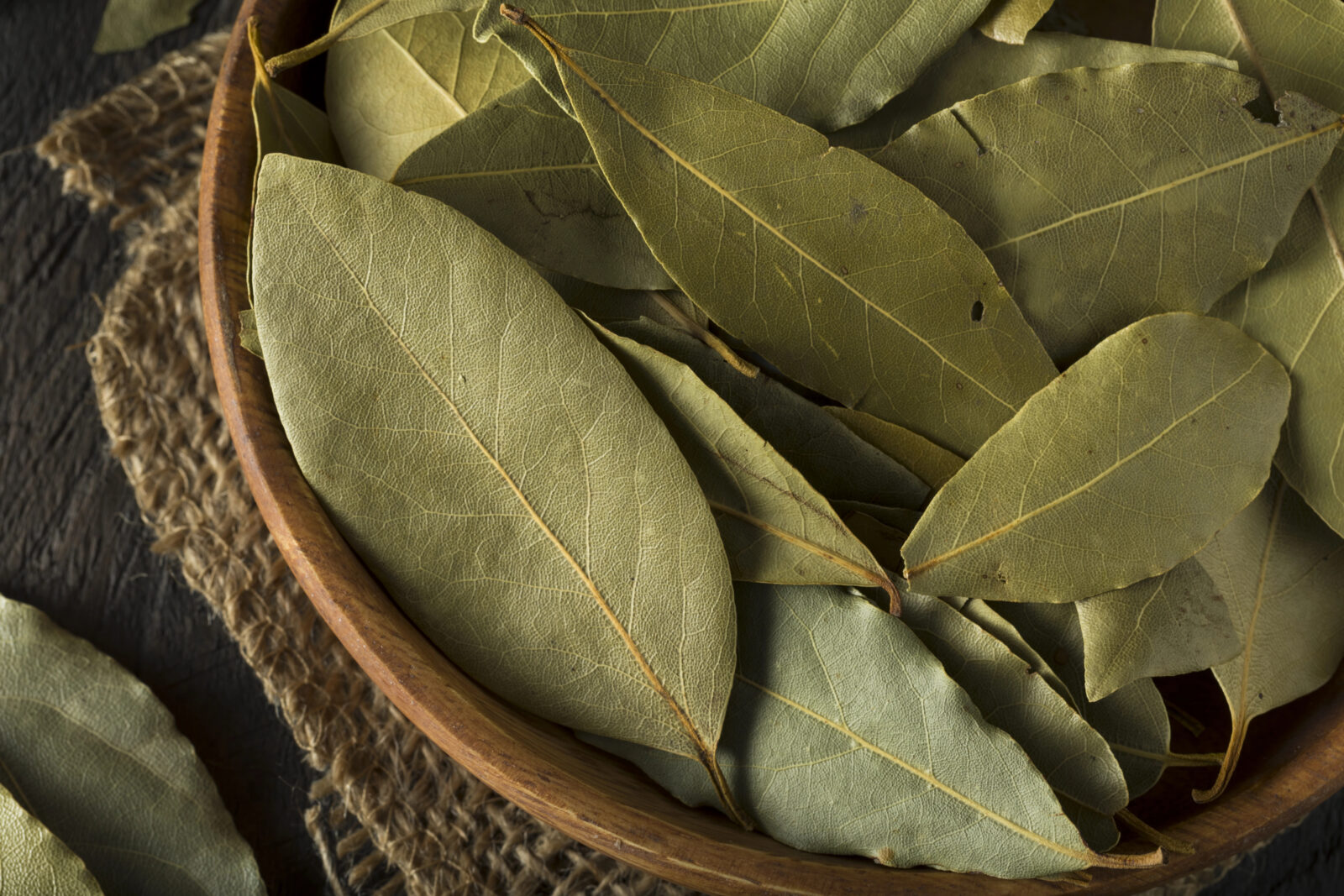
Bay leaves are traditionally linked with simple home rituals for scenting a room. In some places they’re used a bit like incense, where a dried leaf is briefly lit and allowed to smoulder. The key is not to overdo the smoke and to ventilate, because the goal is a gentle fragrance, not a smoke-filled flat.
A scent that may help create a calmer feel
The aromatic compounds in bay leaf are known for having a relaxing effect for some people. At home, it’s used when you want to soften the atmosphere, ease tension and fragrance a room without synthetic air fresheners. It’s also said that, unlike some heavy scents, it may not make you feel drowsy.
Breathing comfort and overall well-being
In some traditional approaches, such as Ayurveda, bay laurel is mentioned as aromatic support for breathing comfort. Alongside dried leaves, bay laurel oil is also used. If you have allergies or asthma, it’s always best to proceed cautiously and skip similar methods if you’re sensitive.
Bay leaf in the kitchen and its link with wellbeing
Beyond household tricks, bay leaf also has a long history in cooking. It’s often noted for containing naturally occurring compounds that people associate with supporting the body. Various sources mention, for example, a link with cardiovascular comfort or a more balanced metabolism, though in practice it’s mainly about using it regularly and sensibly in food as part of a varied diet.
Some folk recipes also mention using it for urinary tract discomfort, for example combining dried leaves with milk during the day. But if you’re dealing with a health issue, it’s best to treat such advice as a complement and address the cause with a professional in good time.
Why it’s worth keeping bay leaves at home
They’re inexpensive, easy to find, keep for a long time, and you can use them in several ways. In the kitchen, they add depth to food; at home, they can help scent the space; and with houseplants, they’re worth trying as gentle support against gnats in the potting mix. If you stick to simple methods and also adjust your watering habits and soil quality, there’s a good chance the situation with plant-pot pests will start improving quickly.
Source: To je nápad, Bylinky pro všechny, Pestrazahrada.cz

A lover of nature, gardens, and everything that moves, blooms, or grows. He literally grows everything, from herbs to rare species, and he enjoys caring for animals just as much. In his work, he connects modern technology with tried-and-tested grandmotherly methods and is happy when both paths lead to the same goal.
Related articles
An Orchid That Only Grows but Won’t Bloom Has Three Common Causes You’ll Never Fix with Fertiliser
If your orchid looks healthy but refuses to bloom for months, the cause is usually not a lack of fertiliser. Light, watering habits, and temperature patterns are far more often to blame.
Winter is crucial for raised beds and most people skip the pest prevention step
Your raised beds don’t go dormant just because winter arrives. A few quick, well-timed tasks now will protect the soil, discourage pests, and set you up for a smoother, more productive spring.
When to Mow the Lawn for the Last Time Before Winter
There’s no universal date for the season’s final mow—your lawn and the weather will tell you. Time it just ahead of hard frost and leave the grass slightly higher to help it overwinter healthier and bounce back faster in spring.
Comments (0)
Be the first to comment.