
 English
  Polski
  Deutsch
  Nederlands
  Svenska
  Norsk
Norsk  Dansk
Dansk  Français
  Italiano
  Español
  Português
  Slovenčina
  Suomi
Suomi  Gaeilge
 Proven Pepper Growing Secrets for a Big, Stress-Free Harvest
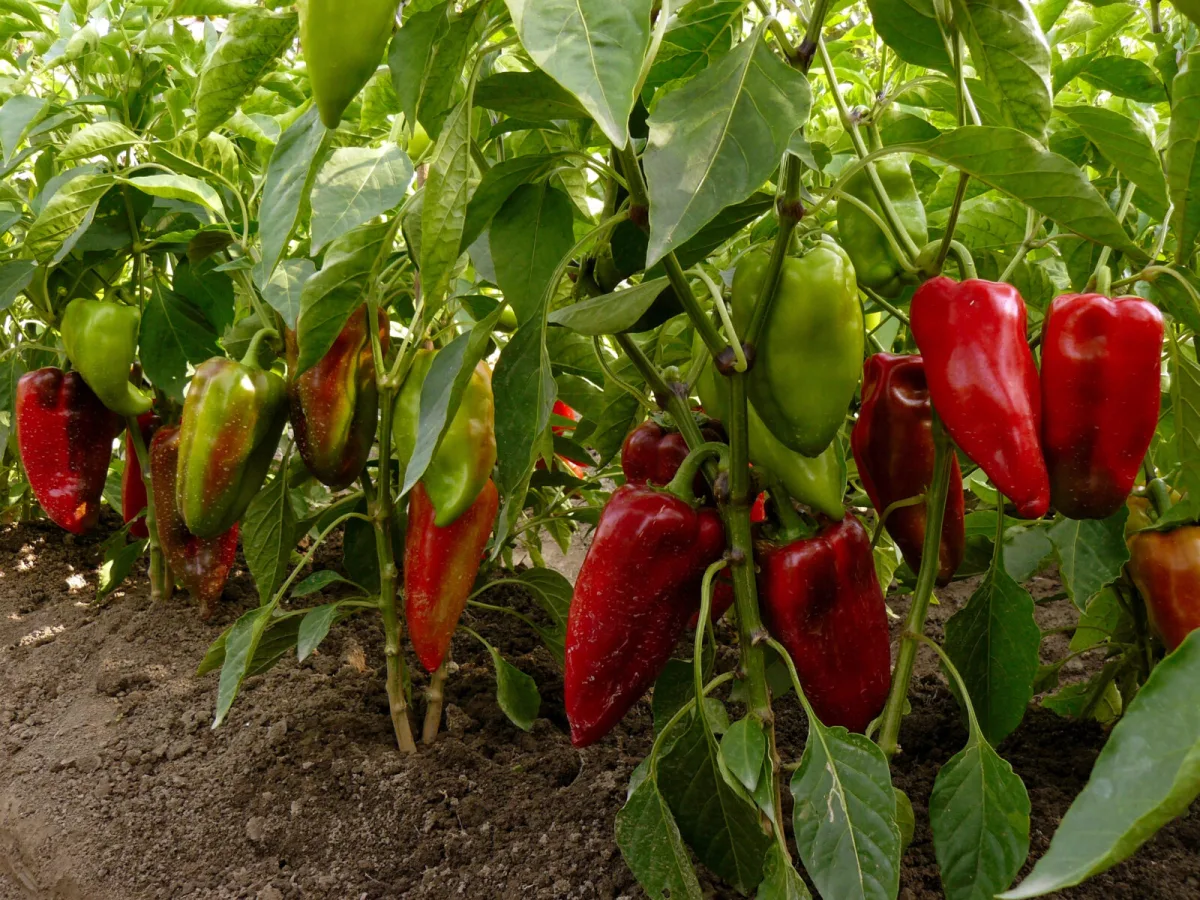
Peppers (Capsicum) are among the most popular fruiting vegetables, thanks to their wide range of colours, flavours and shapes—and with good care they can crop for a long time. At the same time, they’re heat-loving, sensitive plants that perform best with stable warmth and plenty of sun. In our climate, they’re therefore most reliably grown under cover, typically in a greenhouse, polytunnel, conservatory, or at least in a sheltered cold frame. Outdoors they only do well in the warmest spots and in years with a long, hot summer, when they benefit greatly from being covered with horticultural fleece or a simple shelter against cold and wind.
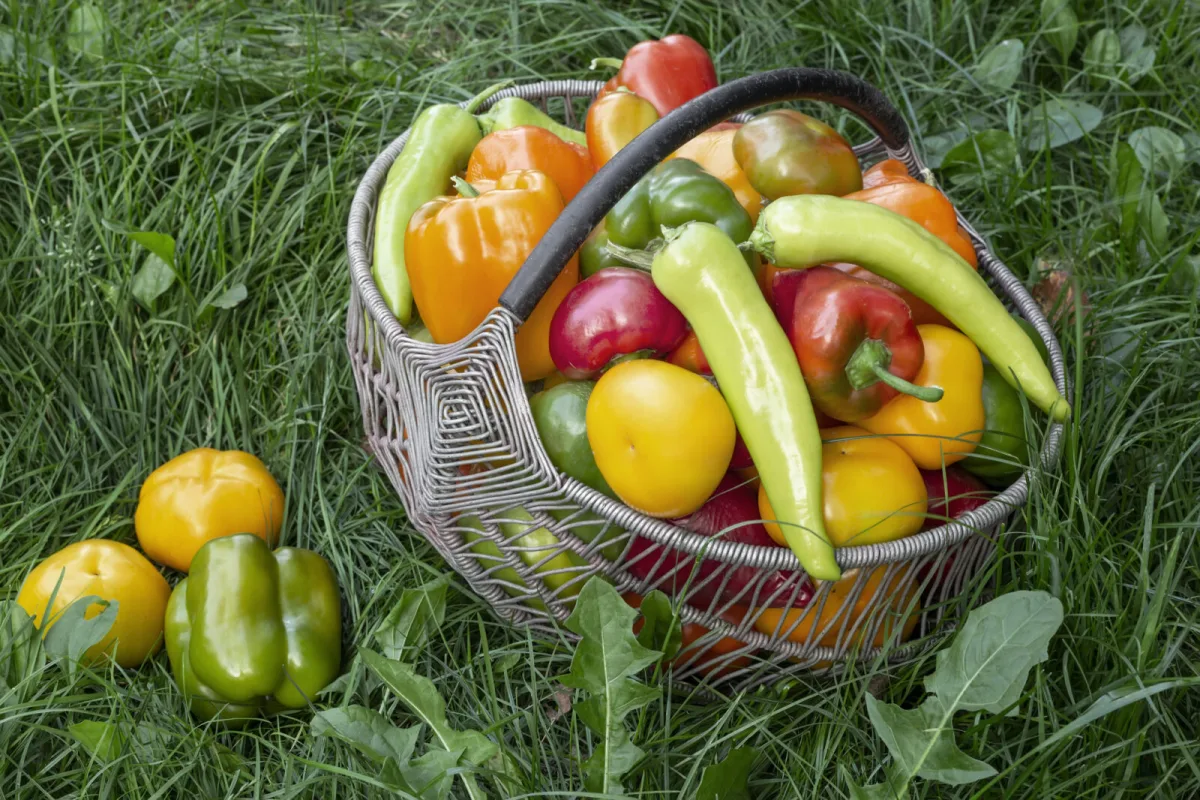
The good news is that peppers don’t take up much space and are excellent for large containers. Many varieties grow to roughly 50–70 cm tall and, in a pot on a sunny terrace, can produce a surprisingly good harvest as long as they get regular watering and nutrients. Fruits typically ripen from mid-summer into autumn, often colouring from green to red, yellow, orange or purple depending on the variety.
Choosing a variety to match your site and season length
The foundation of success is choosing a pepper that suits where you want to grow it. In a greenhouse you can get away with larger, thick-fleshed types that need more time to size up and colour. For outdoor growing, it’s usually better to choose varieties with smaller to medium fruits, which ripen faster and cope better with a shorter season. Plant habit matters too. Compact and dwarf varieties are ideal for containers on a balcony or terrace, while more vigorous types appreciate support and the steadier conditions under cover.
In practice, it pays to grow several varieties at once. You’ll get a more varied harvest for the kitchen, spread ripening over a longer period, and often discover that some types are simply more reliable in your own conditions. If you’re buying transplants, choose plants with sturdy stems, deep green leaves without spots, and no visible pests on the undersides of the leaves. When buying seed, pay attention to sowing dates and earliness—these are what decide whether you’ll have time to bring fruits to sweet, fully coloured ripeness.
Sowing and raising strong seedlings
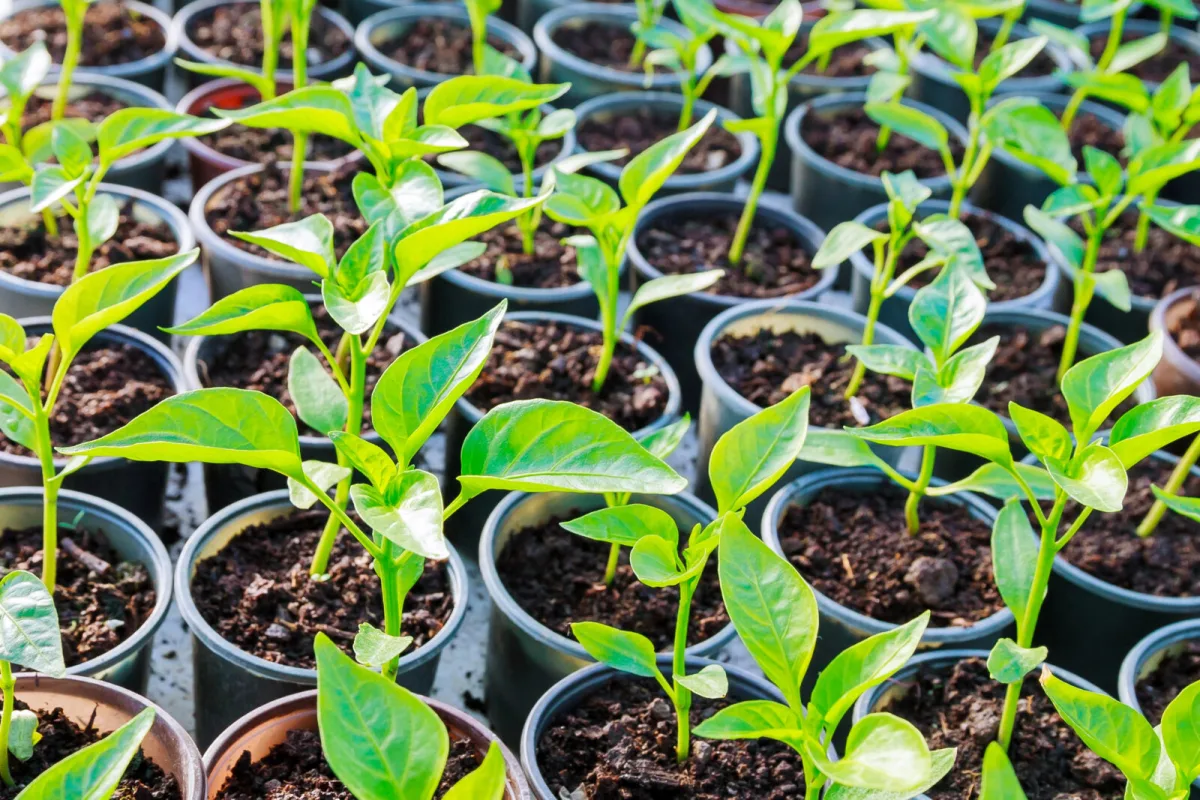
Peppers need warmth to get going. For greenhouse growing, sow from about mid-February to early March; for outdoor growing, it’s better from late March to early April. Seeds germinate best at 18–21 °C, so in a warm indoor spot—ideally in a propagator or on a bright, warm windowsill. Keep the compost evenly moist, not waterlogged, and as soon as seedlings appear, give them as much light as possible and a slightly lower but still comfortable temperature around 16–18 °C so they don’t get leggy.
Once seedlings have their first true leaves, pot them on individually into small pots. Potting on matters because it builds a stronger root system and makes the plant more stable. At this stage, consistency is everything: even moisture, plenty of light, no draughts, and don’t overdo the watering. If you’re growing on a windowsill, it helps to turn the plants regularly so they don’t grow lopsided. Gentle air movement in the room is also useful, as it encourages sturdier stems.
Planting in the greenhouse, in beds and in containers
Only plant young peppers outside once nights are consistently warm. A rough minimum is around 12 °C at night, but for good growth it’s better if temperatures stay above 15 °C. In an unheated greenhouse, peppers are often planted out during May; outdoors in a bed, usually late May into June depending on your location. Before moving them outdoors, hardening off is essential—gradually acclimating plants to outdoor conditions over about two weeks, so they don’t suffer shock from sun, wind and cooler nights.
For containers, choose a pot at least about 30 cm in diameter and a high-quality vegetable compost. Plant one pepper in the centre so it has enough space, and add a support at planting time, especially for taller varieties. In a bed, peppers like a free-draining, fertile soil that still holds moisture. If your soil is heavy or poor, work in well-rotted compost or thoroughly decomposed manure, and consider mulching. Choose the warmest, most sheltered, fully sunny spot you can—such as by a south-facing wall that stores heat during the day.
Watering, feeding and microclimate for reliable fruit set
Peppers need a steady supply of water. Letting the compost dry out can cause bud drop and uneven growth, while long-term waterlogging encourages root problems. In containers, check moisture more often—in hot weather, even daily—and water so the compost stays evenly moist. In beds, mulch helps reduce evaporation and stabilise soil temperature. In a greenhouse, aim for even conditions, because big temperature swings and very dry air can reduce fruit set.
Start feeding properly once plants begin to form flowers. Peppers respond well to fertilisers with a higher potassium content, which supports flowering and fruit development. In containers, feeding once a week with a liquid fertiliser is common; in beds, good soil preparation and occasional supplementary feeding based on plant vigour may be enough. In a greenhouse, also watch for overheating. Temperatures well above 30 °C can reduce fruit set, so ventilate well and, during the hottest spells, consider shading.
Stable warmth, even watering and plenty of potassium at flowering time are the three keys to helping peppers set and hold their fruits.
Pinching and tying in so plants don’t snap
Pinching out the growing tips isn’t always necessary with peppers, but it can help produce more side shoots and increase the number of smaller fruits. If you choose to do it, only pinch plants that are strong and roughly around 30 cm tall. Bear in mind the intervention can slightly delay the first harvest. Tying in is often more important. Pepper stems are more brittle than they look, and under a heavy crop they can snap. Gradually tie plants to a cane, and on heavily fruiting plants support side shoots carrying fruit as well.
Harvesting and ripening for the best flavour
Pick fruits regularly once they’ve sized up and are glossy and firm. You can harvest them green, but sweetness and aroma usually intensify as they colour. On the other hand, leaving lots of fruits to ripen fully on the plant for too long can slow the formation of new ones. It’s practical to combine approaches: pick some earlier for the kitchen and leave some to fully colour for maximum flavour. Toward the end of the season, outdoor plants benefit from protection against cold—such as covering with horticultural fleece—and container plants can be moved to a sheltered spot so the last fruits have time to ripen.
Most common problems and pest prevention
The most common issue is aphids and other sap-sucking pests, especially in a greenhouse and when the air is dry. Check shoot tips and the undersides of leaves regularly, because early action is far easier than dealing with an established colony. It helps to keep plants in good condition, avoid overfeeding with nitrogen, ventilate, and keep up with watering. If peppers drop flowers, the cause is often stress from drought, overheating, sharp temperature swings, or lack of light. Improving conditions usually achieves more than any “miracle” product.
Once you find a care routine and a variety that suits your conditions, peppers will reward you with a steady harvest right into autumn. Whether you grow in a greenhouse, a sheltered bed, or a pot, the same rule applies: warmth, light and consistency make the difference.
Source: Rhs, Creative Vegetable Gardener , Pestrazahrada.cz
Related articles
The Christmas Amaryllis That Can Bloom for Years but Most People Throw It Away After Flowering
Hippeastrum is a spectacular winter-blooming bulb that, with the right care, will flower again year after year. Learn how to plant it correctly, look after it after flowering, and bring it into dormancy so it reliably reblooms.
How to Grow Winter Garlic for a Much Bigger Harvest
Autumn planting is the key to strong, healthy winter garlic, but the details make all the difference. With the right timing, bed choice, seed-clove treatment and a simple bicarbonate trick, you can noticeably boost yield.
A tree or shrub planted properly in autumn can outpace spring stock and improve fruiting
Many fruit trees and soft-fruit shrubs establish better when planted in autumn, because roots keep growing while the top is dormant. Done well, this head start means stronger spring growth, less watering, and a healthier first year.
Comments (0)
Be the first to comment.