
 English
  Polski
  Deutsch
  Nederlands
  Svenska
  Norsk
Norsk  Dansk
Dansk  Français
  Italiano
  Español
  Português
  Slovenčina
  Suomi
Suomi  Gaeilge
 Natural Protection for Cucumbers These Plants Help Effectively Against Mildew
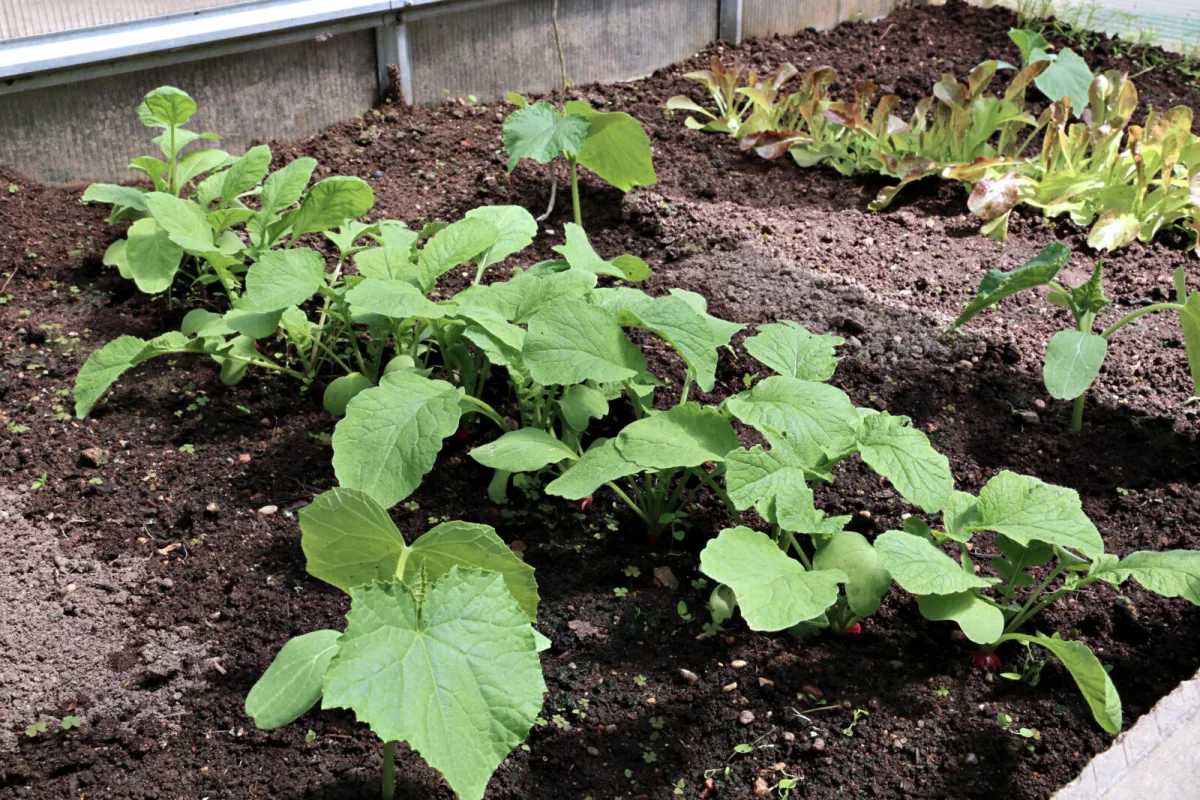
Cucumbers are among the vegetables that can succumb to mildew very quickly. Once a fungal disease takes hold, it spreads across leaves and stems and, in a short time, can destroy a large part of the crop. Many growers do reach for chemical sprays, but not everyone wants to use them. That’s why prevention makes so much sense: it reduces moisture on the leaves, improves airflow, and at the same time supports the plants’ natural resilience.
Basic prevention starts at planting
Companion plants on their own aren’t a miracle fix, but they work far better when cucumbers have the right conditions. Proper spacing between plants is essential so the bed isn’t unnecessarily crowded. A proven distance is roughly 50–60 cm, which helps leaves dry more quickly after dew and watering.
Growing cucumbers vertically also makes a big difference. Training the vines upwards improves air circulation and reduces the time leaves stay wet, which is key for mildew to develop. You don’t need complicated supports; in a greenhouse, a taut string is often enough, with plants tied in as they grow. Outdoors, a simple A-frame made from stakes with strings works well.
If you want to push prevention even further, it pays to choose more disease-tolerant varieties. There are hybrids that tend to cope better with disease, buying you valuable time before any potential problem spreads.
Garlic as a natural protective shield
One of the most reliable neighbours for cucumbers is garlic. It contains sulphur compounds and other substances with natural fungicidal effects that are released into the soil and the surrounding air. If you plant garlic about 30 cm from cucumbers, you create a zone around them that can limit disease development. Another advantage is that garlic doesn’t take up much space, so it’s suitable even in a greenhouse.
With this pairing, it’s worth adjusting watering. Direct water straight to the cucumber roots and avoid overhead sprinkling, because garlic doesn’t like daily waterlogging. Once cucumbers reach about 60 cm in height, it also helps to remove the lower leaves so they aren’t unnecessarily splashed during watering and don’t trap moisture near the soil.
Aromatic herbs that mildew doesn’t like
Strongly scented herbs can improve the microclimate around cucumbers and also act as a natural barrier against some pests and diseases. Basil is especially popular; besides its protective effect, it’s often associated with better-tasting fruit. Conveniently, basil tolerates more frequent watering, so it usually does well next to cucumbers.
To keep basil bushy and strong, pinch it back regularly. Summer savory and dill work similarly. Dill can be allowed to grow toward the back of the bed, while other herbs can form an edging. The key is to make sure cucumbers aren’t smothered in shade by overgrown herbs and that the planting stays airy.
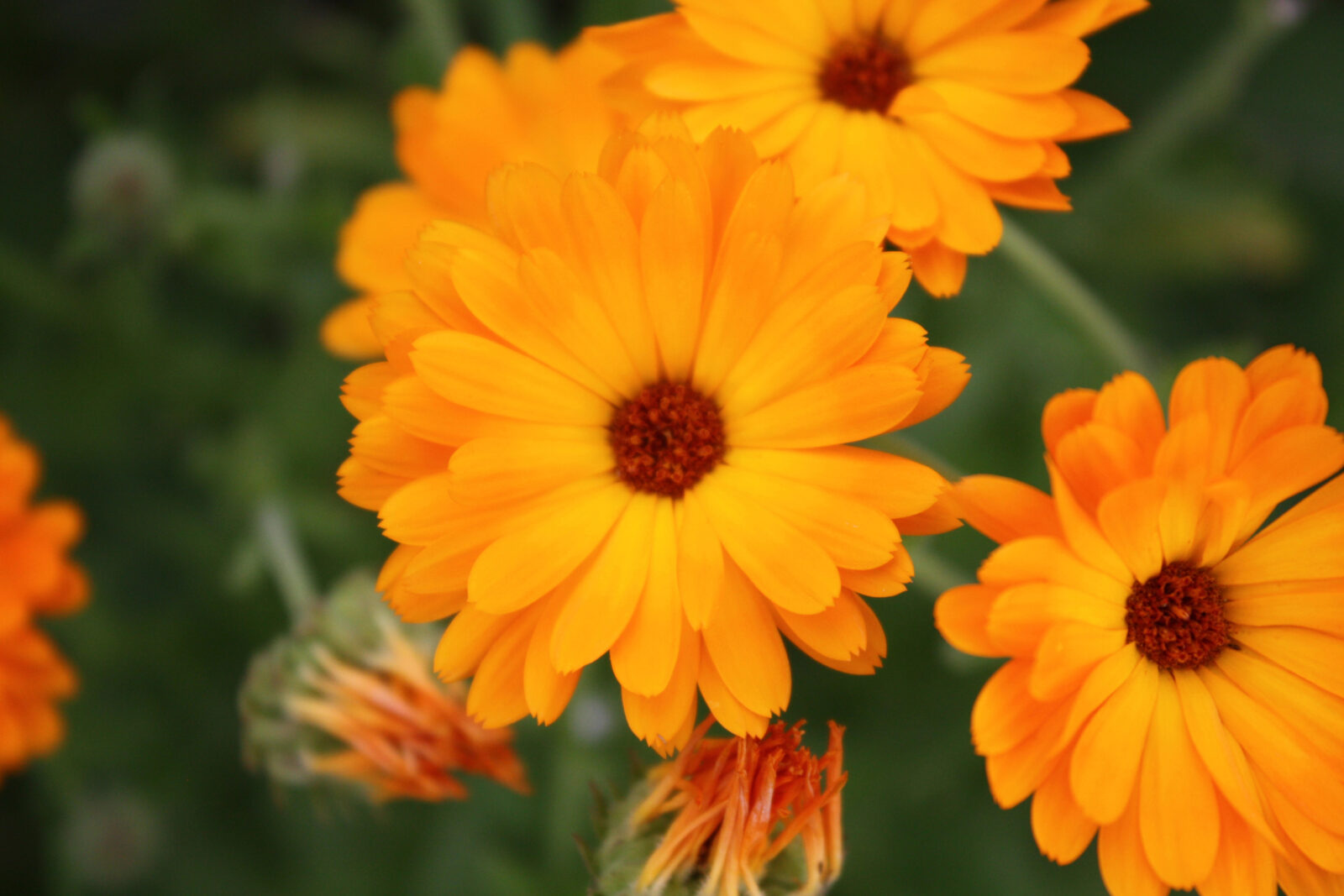
Calendula as a biological barrier along the bed edges
Calendula (pot marigold) is not only ornamental, it can also be a useful helper. Its roots release substances that may suppress certain soil-borne pathogens, and when you plant it around the perimeter of a bed, it creates a natural protective line. It also attracts beneficial insects that help maintain balance in the garden and indirectly reduce pest pressure.
Calendula does like to spread, so it’s a good idea to remove spent flowers regularly and keep an eye on it so it doesn’t overwhelm the space meant for cucumbers. The flowers can also be put to practical use, for example dried and saved for later.
What to watch so protective plantings actually work
Companion plants work best as part of an overall strategy. The foundation is an airy canopy, growing on supports, watering at the roots, and keeping leaves as dry as possible. Add garlic, suitable herbs, and calendula along the bed edge, and cucumbers get noticeably better conditions, with the risk of mildew potentially reduced significantly.
The biggest difference usually comes from combining airy vertical training, watering without wetting the leaves, and smart planting of neighbouring plants with natural protective effects.
Source: RHS, Rostlinky, Gardening Know How, Pestrazahrada.cz

A lover of nature, gardens, and everything that moves, blooms, or grows. He literally grows everything, from herbs to rare species, and he enjoys caring for animals just as much. In his work, he connects modern technology with tried-and-tested grandmotherly methods and is happy when both paths lead to the same goal.
Related articles
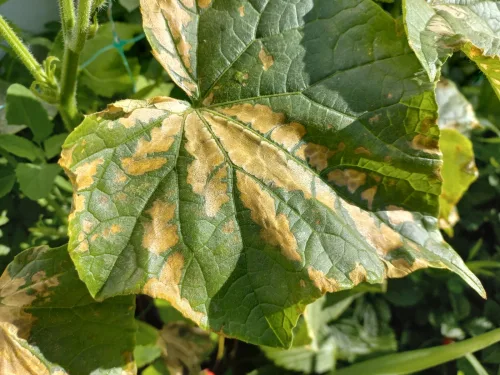
Yellowing cucumber leaves have a clear cause and with the right response plants recover quickly
Cucumber leaves turn pale and yellow when the plant is under stress—most often from watering mistakes, nutrient imbalance, or sudden temperature swings. Spot the pattern early and you can restore growth and protect your harvest fast.
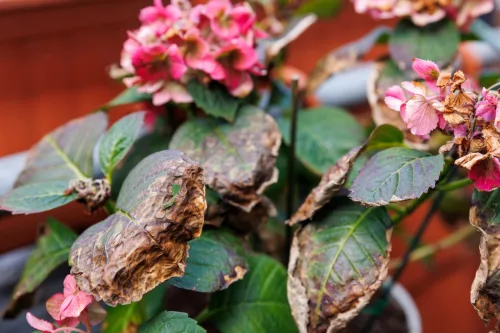
How to Get Browning Hydrangeas Back on Track Without Chemicals
Brown leaf edges or spots on hydrangeas usually point to a simple mismatch in light, watering, or airflow rather than a lost cause. Learn how to read the symptoms and restore your shrub quickly with gentle, practical fixes.
Turn Ground Cinnamon Into a Secret Weapon for Stronger, Tougher Plants
Ground cinnamon isn’t just for baking—it can help protect houseplants and garden plants from mould and fungal issues, support cuttings, and even act as quick first aid for minor wounds. Used lightly, it’s an affordable, gentle, natural add-on to good growing practice.
Comments (0)
Be the first to comment.