
 English
  Polski
  Deutsch
  Nederlands
  Svenska
  Norsk
Norsk  Dansk
Dansk  Français
  Italiano
  Español
  Português
  Slovenčina
  Suomi
Suomi  Gaeilge
 Kohlrabi Stays Tender When You Manage Warmth, Water and Harvest Timing
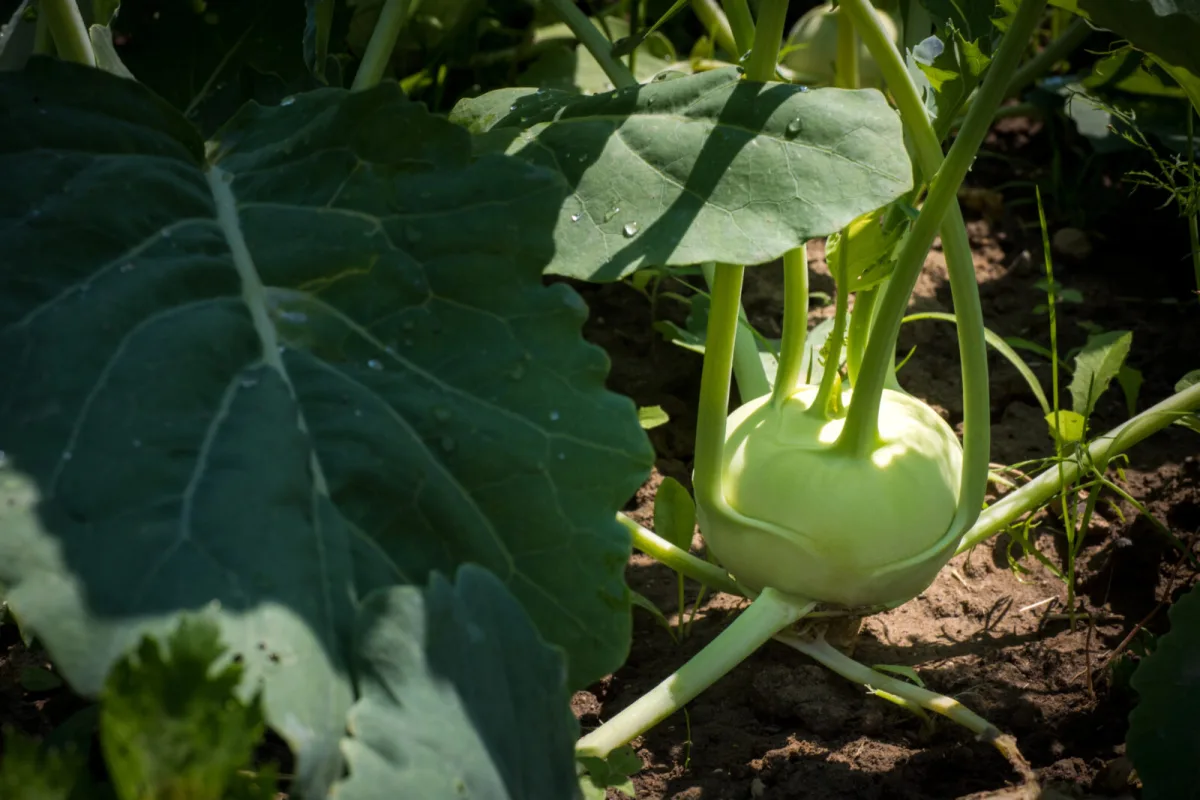
Many people look forward to kohlrabi because it’s one of the most rewarding brassicas to grow. But when the harvest only half succeeds, you may be surprised by unpleasant toughness, fibrous flesh, or a cracked skin. These problems don’t show up only on oversized bulbs that were left in the bed too long. Often, it’s the plant’s response to the conditions it experiences while growing. Two issues come up most often—woodiness and cracking—and both share the same root cause: growing stress.
Why kohlrabi turns woody and loses its juiciness
Woodiness shows up as a drier texture and pronounced fibres that spoil both flavour and digestibility. People sometimes blame it only on harvesting too late, but there are usually several causes and they can overlap. Typical triggers include lack of light, insufficient water, overly heavy clay soil, and delayed picking. The first two are often the most decisive, because the plant reads drought and shade as a threat. Instead of forming tender tissue, it starts building tougher structures to survive—resulting in a hard bulb filled with coarser fibres.
Tough, fibrous kohlrabi often develops as a defensive response to stress—especially drought and lack of light.
Conditions that help keep the flesh tender
The foundation is the right site and soil. Kohlrabi thrives in lighter, well-drained soil that holds a reasonable amount of moisture without sticking into heavy clods. A higher proportion of organic matter also helps, making the soil more biologically active and better able to manage water evenly. Proper spacing is important too, so each plant gets enough light and air. For early varieties, roughly 25 × 25 cm usually works well; for varieties grown for storage, closer to 30 × 30 cm or more is better, depending on vigour.
Even more important is your watering routine. Kohlrabi has relatively shallow roots, so it reacts quickly to fluctuations. It needs regular, steady moisture rather than occasional soaking. The common pattern of a long dry spell followed by one heavy watering often leads to more tough fibres forming in the bulb. If you want consistently tender bulbs, it pays to water more often in smaller amounts and make sure the soil doesn’t dry out completely between waterings.
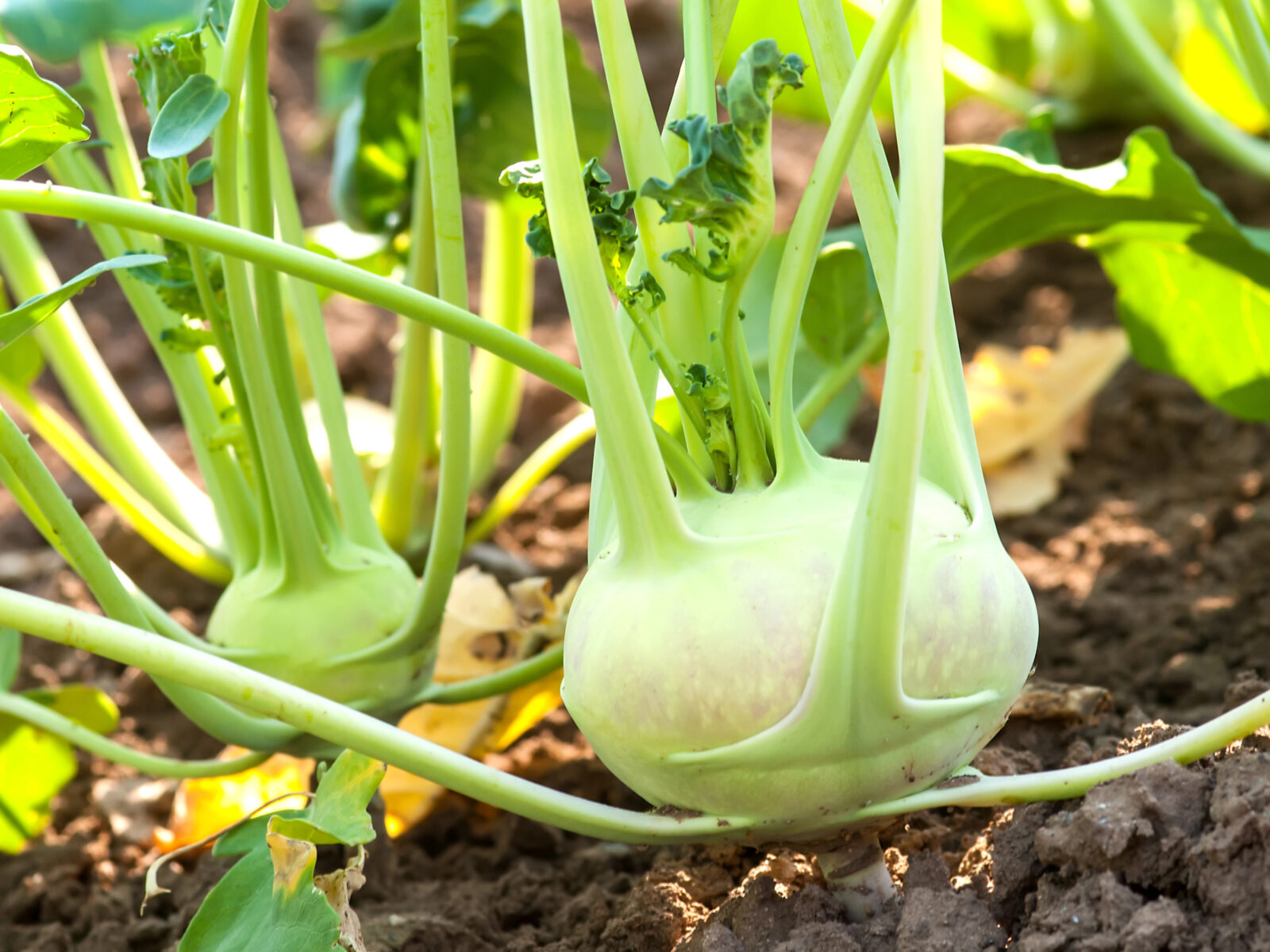
Cracking isn’t a disease—it’s the result of sudden changes
The second common nuisance is cracking. Cracked kohlrabi may look worse, but in most cases you can eat it without worry, because it isn’t caused by disease. It’s a physiological problem that appears mainly after heavy rain or after a strong watering following a longer dry period. The plant goes through a rapid change that the skin can’t adjust to elastically in time.
The mechanism is simple. In dry conditions, the tissues toughen and lose some elasticity. Once a lot of water suddenly reaches the soil, kohlrabi absorbs it quickly; the inner part of the bulb increases in volume, but the skin can’t cope with the jump and splits. Just as with woodiness, the main cause here is usually lack of water and uneven watering.
How to reduce the risk of cracking and woodiness in practice
The most reliable prevention is discipline with watering and an effort to keep moisture around the roots stable. A simple trick also helps: cover the soil surface around the kohlrabi with a thin layer of organic mulch. Grass clippings or straw slow evaporation, soften temperature swings, and the soil doesn’t dry out as fast. That reduces the chance the plant goes through a stress cycle followed by a water shock—the driver behind both fibrous bulbs and cracking.
Add suitable, lighter soil, plenty of light through correct spacing, and timely harvesting, and you’ll get kohlrabi that’s crisp, juicy, and with skin free of splits. In practice, these aren’t complicated techniques—more a matter of consistency. Even conditions are what most often decide quality with this vegetable.
Source: Urob si sám, Gardening Know How, Pestrazahrada.cz

A lover of nature, gardens, and everything that moves, blooms, or grows. He literally grows everything, from herbs to rare species, and he enjoys caring for animals just as much. In his work, he connects modern technology with tried-and-tested grandmotherly methods and is happy when both paths lead to the same goal.
Related articles
Next year you can harvest better if you don’t sow carrots where they won’t thrive
Carrot root fly can ruin carrots, parsley and celery from the inside out, often without obvious warning until harvest. Better site choice, rotation, later sowing and simple physical barriers can dramatically cut damage next season.

How to Propagate Roses from Cuttings at Home and Fill Your Garden with Blooms Almost for Free
Want more roses without paying for new plants? With a few healthy cuttings and a simple plastic-bottle mini greenhouse, you can root new bushes at home in just a few weeks.
Heathers can cope where other plants won’t, but one soil detail decides everything
Heathers and heaths are tough evergreen shrubs that can flower across the seasons when you choose the right types. Success hinges on matching the plant to your soil pH and ensuring free drainage.
Comments (0)
Be the first to comment.