
 English
  Polski
  Deutsch
  Nederlands
  Svenska
  Norsk
Norsk  Dansk
Dansk  Français
  Italiano
  Español
  Português
  Slovenčina
  Suomi
Suomi  Gaeilge
 June brings an invasion of a banned plant into gardens reporting it can save you from a fine
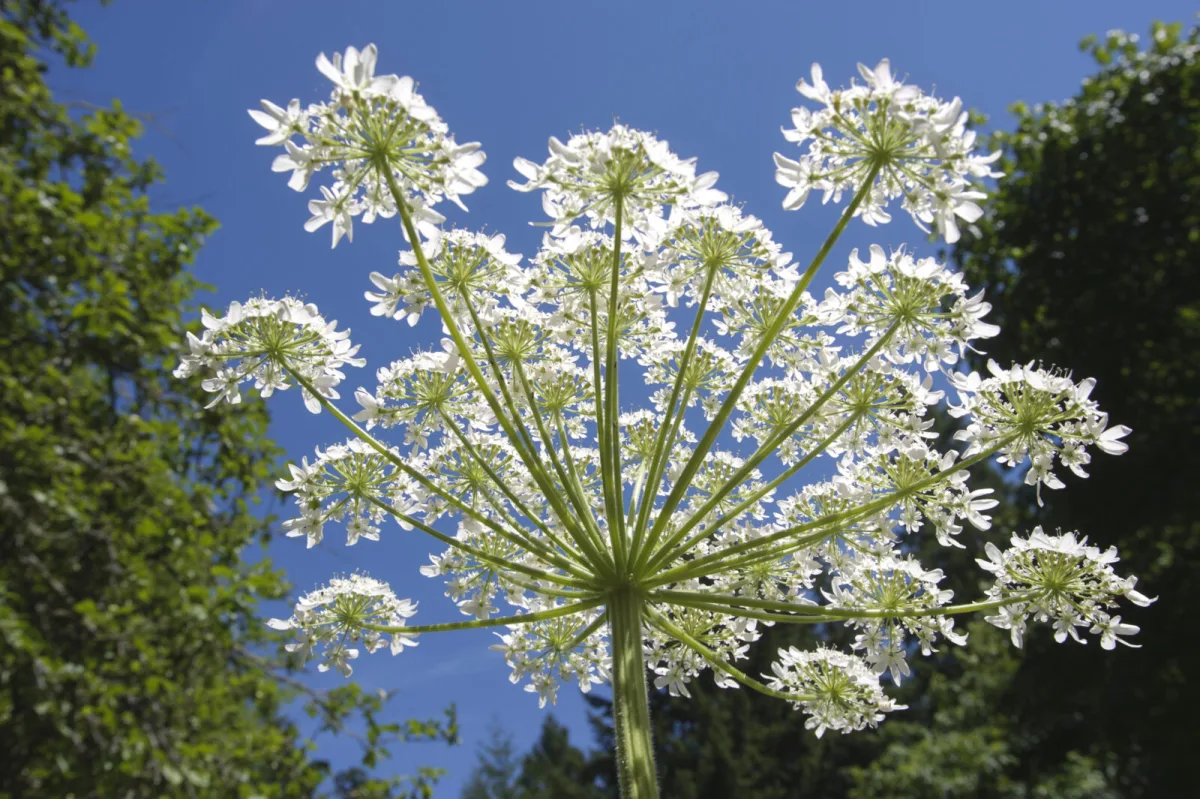
Giant hogweed is one of the highest-risk invasive plants here. At first glance it catches the eye with its abundant white, umbrella-shaped flower heads and massive leaves, but its real power lies in how quickly it spreads and how ruthlessly it crowds out other vegetation. In gardens and in the wider landscape it can take over a space in a short time and turn a diverse sward into a uniform green mass.
How an ornamental curiosity became a nationwide problem
The history of hogweed in Europe is often linked to the 19th century, when it was brought into gardens and parks as an exotic curiosity from the Caucasus. It was prized mainly for its height, as it can reach roughly 2 to 5 m, and it looked strikingly decorative. What was once seen as an advantage, however, proved over time to be a major threat. The plant naturalised, escaped cultivation, and gradually spread along roads, streams, meadows and private land.
Why it multiplies so quickly and is hard to stop
Hogweed is exceptionally successful because of how it reproduces. It can self-pollinate, so it does not need special conditions to set seed. A single plant can produce tens of thousands of seeds, which then spread by wind and water. The unpleasant part is that the seeds remain viable for a long time, so even years later they can germinate again in places where it seemed the battle had been won.
Health risks are the rule, not the exception
The plant is not dangerous only to surrounding vegetation. Its pollen can trigger severe allergic reactions and breathing problems. Even more serious is contact with the sap, which contains phototoxic compounds. When sap gets on the skin and that skin is then exposed to sunlight, blisters, painful burns and slow-healing wounds can appear. Sensitive people may also react to the vapours released during mowing or handling, for example with watery eyes and a burning sensation in the mouth or throat.
June as a period of increased danger
It is in June that the risk is often highest. The combination of strong sunlight and hogweed’s active compounds increases the likelihood of skin reactions. At the same time, this is when the plant is already huge and able to shade a large area around it. Its leaves and height mean that very little light reaches lower plants, so garden planting gradually weakens and disappears. Hogweed therefore does not harm only individual beds; it can ruin an entire area.
Control is demanding and requires caution
Getting rid of hogweed means allowing for repeated action. Mechanical removal, regular cutting, and timely prevention of flowering and seed set can help. The key is to work in a way that prevents the plant from seeding again. In some situations, herbicides are used too, typically products based on glyphosate or triclopyr, but in protected areas these approaches may be restricted or banned. In that case, careful hand work and consistent monitoring over the following seasons are the main options.
Safety while working is decisive
When tackling it, you need to protect your skin and eyes. The essentials are clothing with long sleeves and long trousers, sturdy gloves, safety goggles and, depending on the situation, a respirator. In practice it is often recommended to carry out control late in the evening or at night, when sunlight intensity is lower and the risk of a phototoxic reaction is reduced. After finishing, wash the clothing and rinse any skin that may have come into contact with the plant as soon as possible.
Hogweed is on the list of banned species and penalties apply
Growing giant hogweed is prohibited in the Czech Republic. If it appears on a plot and the owner does nothing, it can be treated as an offence and lead to a fine. For individuals, penalties are commonly cited in the range of a few thousand Czech crowns up to around 10,000 CZK; for companies and self-employed businesses they can be far higher, up to 1,000,000 CZK. Oversight and enforcement fall under the relevant authorities, and in some cases removal can be arranged even without the owner’s consent, with costs potentially recovered afterwards.
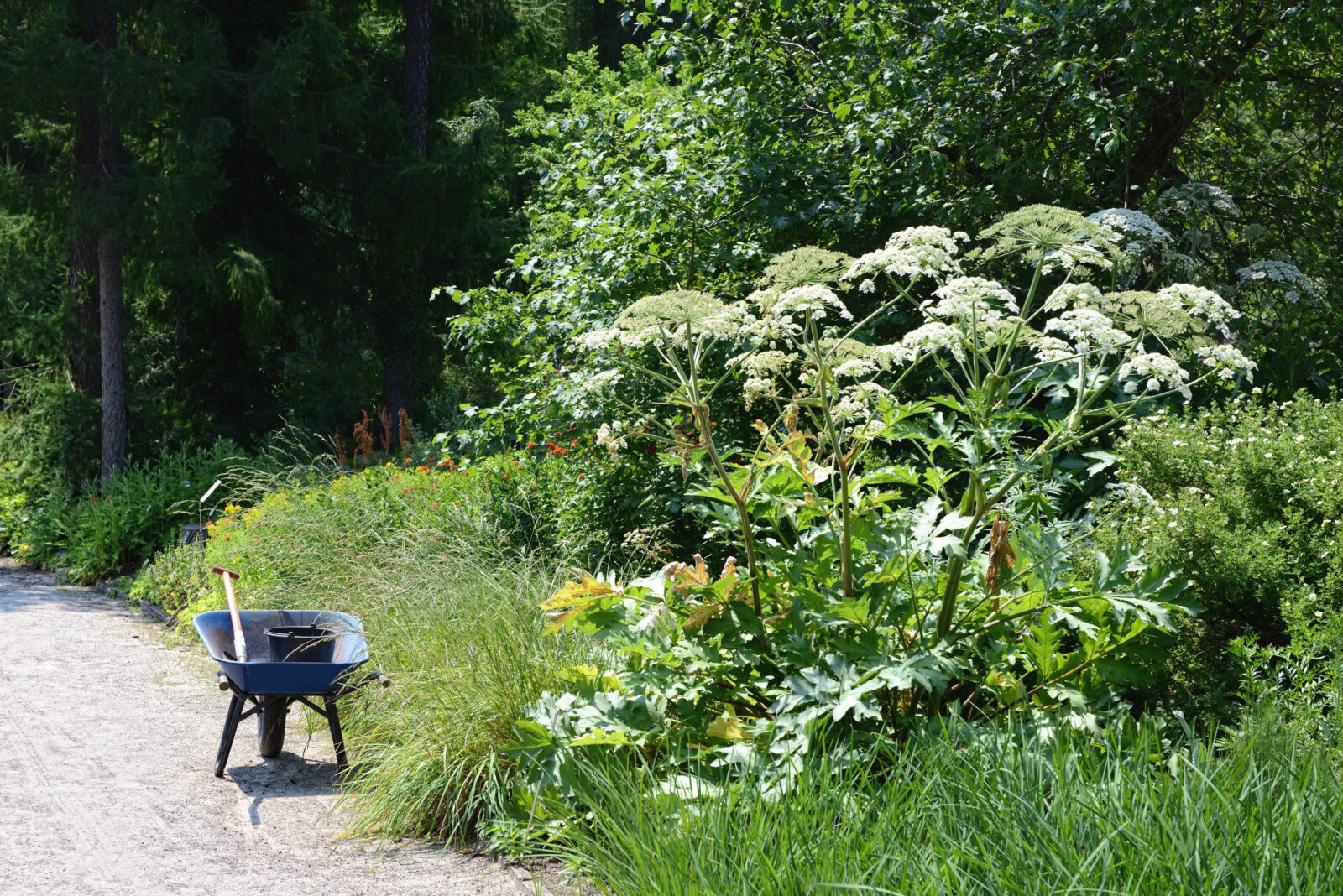
How to recognise hogweed and where to report a find
Typical features include very large leaves, a hollow, striped stem, and white flowers in a broad umbrella-like umbel. The height is striking and it literally towers above other growth. If you are not sure, it is sensible to document the plant with a photo and add information about the location and the extent of the stand. Reports can be made to the local authority with extended powers, the administration of a protected landscape area or national park, or the Nature Conservation Agency of the Czech Republic.
Prevention is easier than fighting an established stand
The best strategy is early checking of your property boundaries, especially near watercourses, where seeds spread easily. It also pays not to take unknown plants from the wild just because they look interesting, and not to pass suspicious species on to others. Hogweed is not the only issue, either. Other unwanted invasive plants include Japanese knotweed and Himalayan balsam, both of which can spread quickly and are often time-consuming to eradicate.
Source: NKZ, Energožrouti, Česká televize, ASZ, Pestrazahrada.cz

A lover of nature, gardens, and everything that moves, blooms, or grows. He literally grows everything, from herbs to rare species, and he enjoys caring for animals just as much. In his work, he connects modern technology with tried-and-tested grandmotherly methods and is happy when both paths lead to the same goal.
Related articles
How to Keep Your Pool Sparkling Clean Without Unnecessary Effort or Stress
Keeping pool water crystal clear doesn’t have to be hard work. With a simple daily-and-weekly routine, you’ll prevent cloudiness, algae and breakdowns before they start.
A Simple Trick for a Bigger Pepper Harvest and Faster Ripening
Regular watering and feeding aren’t always enough for a heavy pepper crop. Pinching out the growing tips redirects the plant’s energy into branching, flowering, and ripening fruit faster.
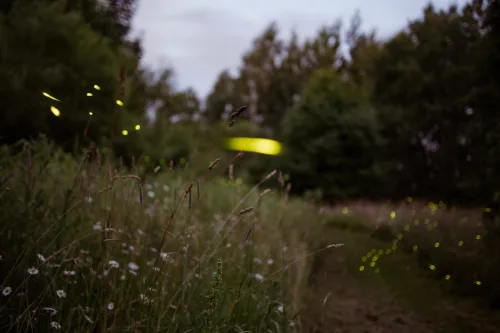
Fireflies are disappearing from the landscape, learn how to create a safe garden home
Warm summer nights are even more magical when fireflies start flashing at dusk—but their numbers are falling. With a few simple changes to mowing, planting, lighting and chemical use, your garden can become a safe refuge again.
Comments (0)
Be the first to comment.