
 English
  Polski
  Deutsch
  Nederlands
  Svenska
  Norsk
Norsk  Dansk
Dansk  Français
  Italiano
  Español
  Português
  Slovenčina
  Suomi
Suomi  Gaeilge
 How to Water Seedlings Properly for Fast Growth and Strong Roots
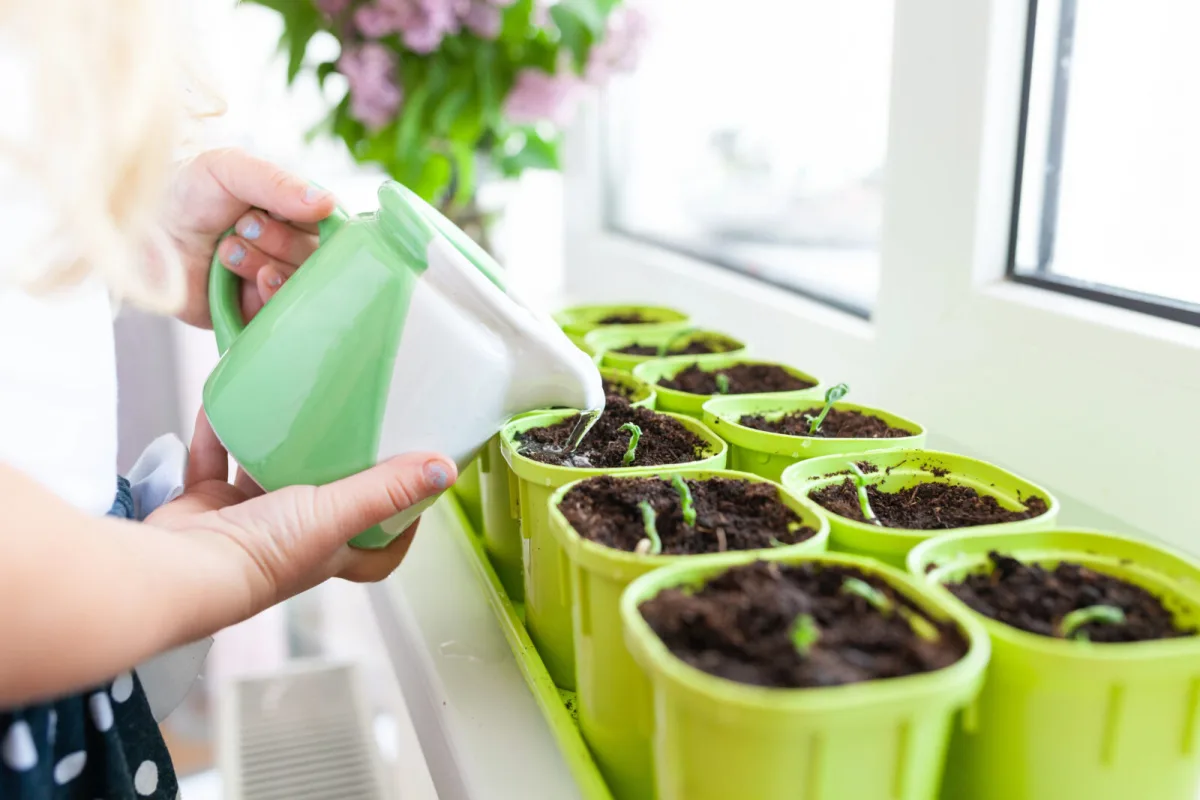
Many growers feel that young plants need water every day. But regular daily watering is one of the mistakes that often harms seedlings more than it helps. With the best intentions we try to prevent wilting and encourage growth, yet waterlogged potting mix can weaken the root system, slow development, and in extreme cases kill the plants. It often looks paradoxical: a seedling droops, so we water again, even though the cause is the opposite of drought.
Why roots need air, too
Roots don’t just need water and nutrients, they also need oxygen. In a light potting mix there are tiny air pockets that let fine roots breathe. As soon as the soil stays wet all the time, it becomes heavy, compacts, and those pockets fill with water. The roots then literally suffocate, their function slows, and with prolonged dampness rot can quickly set in. Once delicate feeder roots start to die back, the plant can’t take up nutrients properly and growth stalls.
The first warning can be a change in leaf color, typically yellowing, overall limpness, or an unexplained slowdown. At that moment, the worst response is usually to add more water. It’s far wiser to check moisture and improve conditions so the roots can access air again.
How to tell the right time to water
The most reliable method is a simple finger test. Push your finger into the potting mix to a depth of about 2 cm. If the soil in that layer is still moist, delay watering. Seedlings usually do best when the mix dries slightly between waterings. The goal isn’t to let plants suffer, but to give the roots a short window with more air and a natural incentive to seek moisture deeper down.
Letting the mix dry slightly between waterings encourages stronger roots and helps prepare seedlings for transplanting.
Seedlings grown this way are often tougher, develop sturdier stems, and handle the change of environment after planting out with less shock. By contrast, plants accustomed to constantly wet mix often respond worse after transplanting, because their roots aren’t used to working and growing quickly.
The right watering technique so neither leaves nor mix suffer
Bottom watering into a tray is very practical. Pour settled water into the saucer and let the seedlings wick up as much as they need for a few minutes. After about five minutes, pour off any remaining water so the roots don’t sit in moisture longer than necessary. This method helps keep leaves dry and reduces the risk of fungal problems, which spread easily in high humidity.
If you water from above, direct the stream straight onto the potting mix and try not to wet the leaves. Some plants are more sensitive, typically peppers or basil, which can react poorly to repeated leaf wetting. Even with tougher plants, wet foliage and a constantly soggy surface are an unnecessary invitation to mildew and other diseases.
What cutting back on watering does and what to watch out for
When you reduce how often you water and only add water once the mix has dried slightly, seedlings usually become stronger. They gain natural resilience, manage water better, and the risk of mold on the soil surface and on leaves drops. Less waterlogging also means fewer rotting roots and fewer plants that fail for no obvious reason.
Feeding seedlings without burning the roots
Beyond water, feeding matters too. If you transplant seedlings into a potting mix that’s already enriched with nutrients, don’t rush to fertilize. It’s usually safest to feed only after about four weeks, once the plants have gradually used what’s in the soil. Too-early fertilizer can damage the young root system and literally burn it, showing up as weakness, stalled growth, or sensitivity to further stress.
A simple rule for healthy seedlings
Don’t follow the calendar, follow the condition of the potting mix. Water only when the top layer is slightly dry and the finger test shows that at around 2 cm deep the soil is no longer noticeably damp. A combination of moderate watering, dry leaves, and sensible feeding is the surest route to seedlings with strong roots that take off quickly after planting out.
Source: Daily Improvisations, The Spruce, Pestrazahrada.cz

A lover of nature, gardens, and everything that moves, blooms, or grows. He literally grows everything, from herbs to rare species, and he enjoys caring for animals just as much. In his work, he connects modern technology with tried-and-tested grandmotherly methods and is happy when both paths lead to the same goal.
Related articles
Why the Tree That Feeds a Family for Generations Is Disappearing from Czech Gardens
The English walnut used to be a staple of larger gardens and farmyards, valued for its nutritious nuts and many practical uses. With the right site and variety, it remains one of the most rewarding long-lived trees you can plant.
How to Get Rid of Mice and Rats in the House, Loft and Garden Effectively
Mice and rats don’t leave quietly—scratching sounds, droppings and gnaw marks are clear warnings. A lasting solution comes down to three steps: block entry points, remove food sources, then use traps or professional control.
Two Mistakes When Harvesting Onions Can Cut Your Supply by Months
With good growing and the right handling, onions can turn into a near year-round pantry staple. These simple harvest and curing steps determine whether they keep for weeks or for months.
Comments (0)
Be the first to comment.