
 English
  Polski
  Deutsch
  Nederlands
  Svenska
  Norsk
Norsk  Dansk
Dansk  Français
  Italiano
  Español
  Português
  Slovenčina
  Suomi
Suomi  Gaeilge
 How to Tell When Carrots Are Truly Ripe and Ready to Harvest
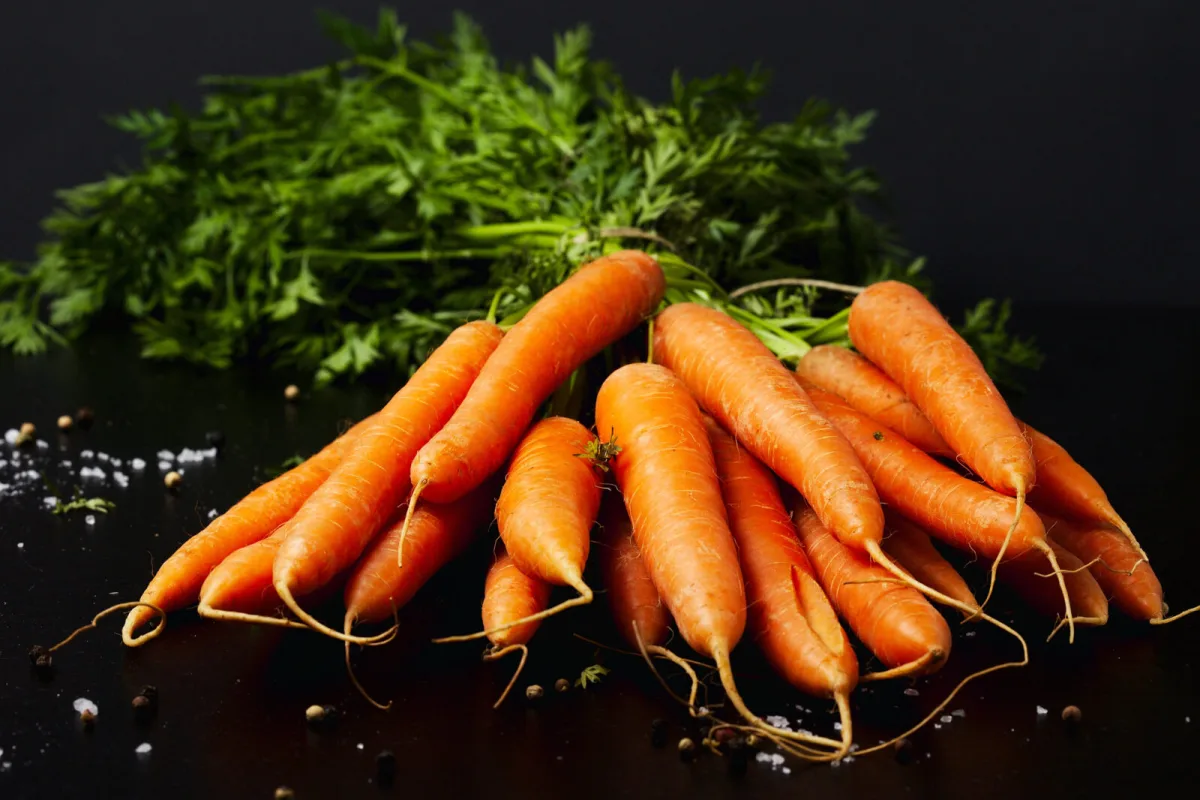
Growing carrots may look straightforward at first glance, but the biggest difference in quality comes down to harvesting at the right time. The foliage can stay fresh and dense for a long while, but that doesn’t automatically mean the root below is big enough. Harvest too early and you’ll end up with smaller, less sweet carrots. Leave them too long and they can lose their crisp bite, turn woody, and sometimes even split. Once you learn to read the plant’s signals, you’ll pull juicy, sweet, well-developed roots from the bed.
Approximate ripening time after sowing
Most varieties mature in roughly 60 to 80 days from sowing. Treat this as a guideline, not a hard rule. Growth speed is influenced by the weather, sowing density, and soil type. In cooler conditions development slows, while in light, well-warmed soil carrots can size up faster. That’s why it pays to watch not only the calendar, but above all the plants themselves.
The tops give the first clue
The first visible sign is usually firmer foliage and a height of about 20 to 30 cm. When the leaves start to lose their upright stance, bend, or flop over, it often indicates the root has already reached its typical size underground. At the same time, lush tops alone aren’t a 100% guarantee of maturity—but they are a good cue that it’s worth taking a closer look.
The most reliable check is at the crown
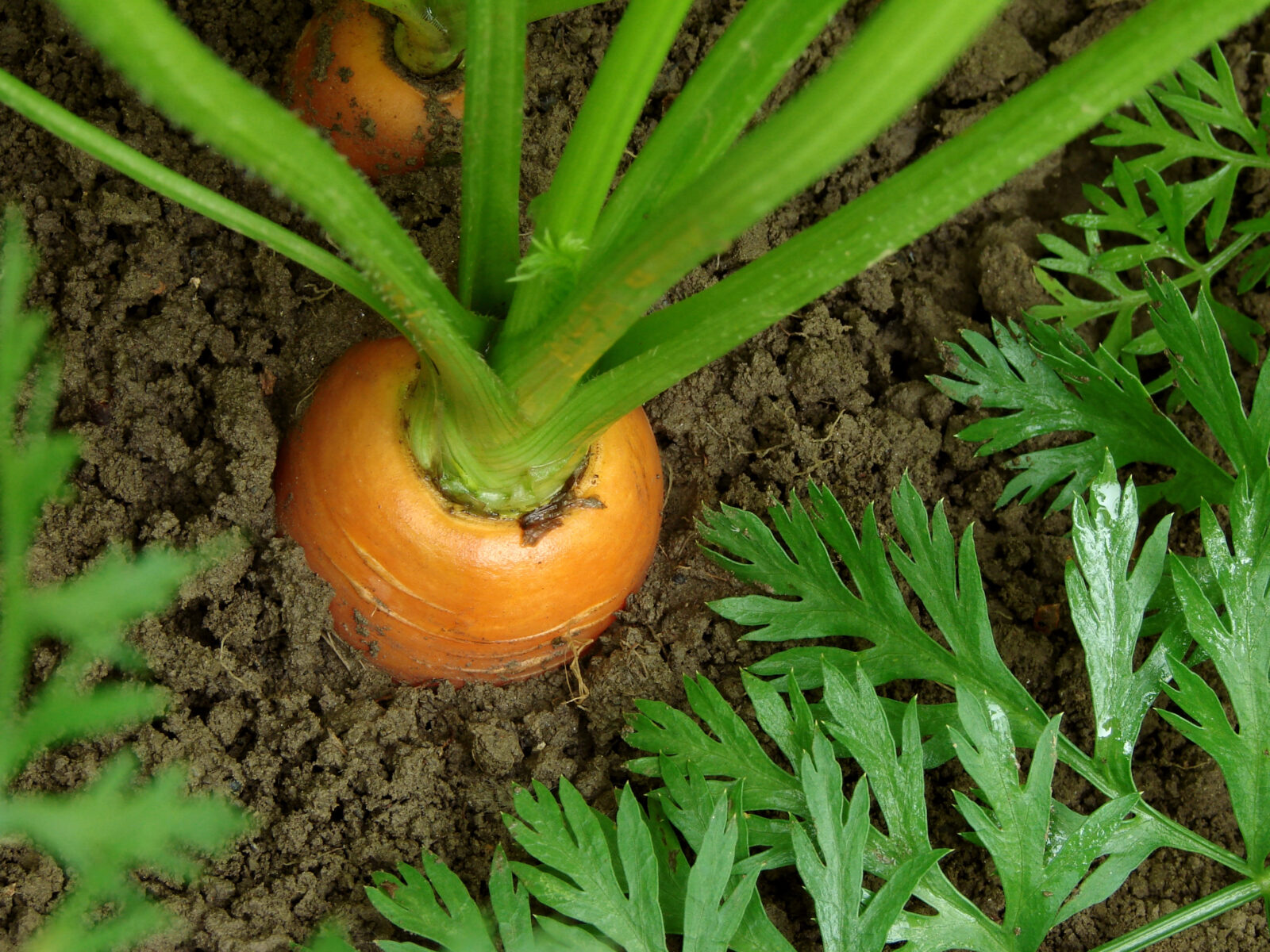
Many gardeners follow a simple rule: once the top of the root starts to peek slightly above the soil, it’s often time to harvest. The top of the root visible above the surface is one of the surest signs of maturity. If you want to be certain, gently scrape the soil away at the crown and check the diameter. When the orange part at the surface is around 2 to 3 cm across, carrots are usually ready. Smaller ones can be left to size up, and larger ones can be pulled without worry.
A taste test can be better than any guide
You don’t have to harvest carrots all at once. In fact, it often pays to pull the biggest roots first and give the rest more time. The practical method is simple: pull one carrot and taste it. If the root is crisp, juicy, and sweet, you’ve hit the right window. If the flavour is bland and the texture too tough, wait a few more days to a few weeks, depending on conditions in the bed.
What happens if carrots stay in the ground too long
Overmature carrots gradually lose tenderness, can turn woody, and are more prone to splitting. The taste is then less pleasantly sweet, and the root is harder to use in the kitchen. For that reason, it makes sense to harvest little and often as individual roots reach the size you prefer. This keeps quality consistent and helps prevent part of the crop from becoming overgrown.
How to harvest without damaging the roots
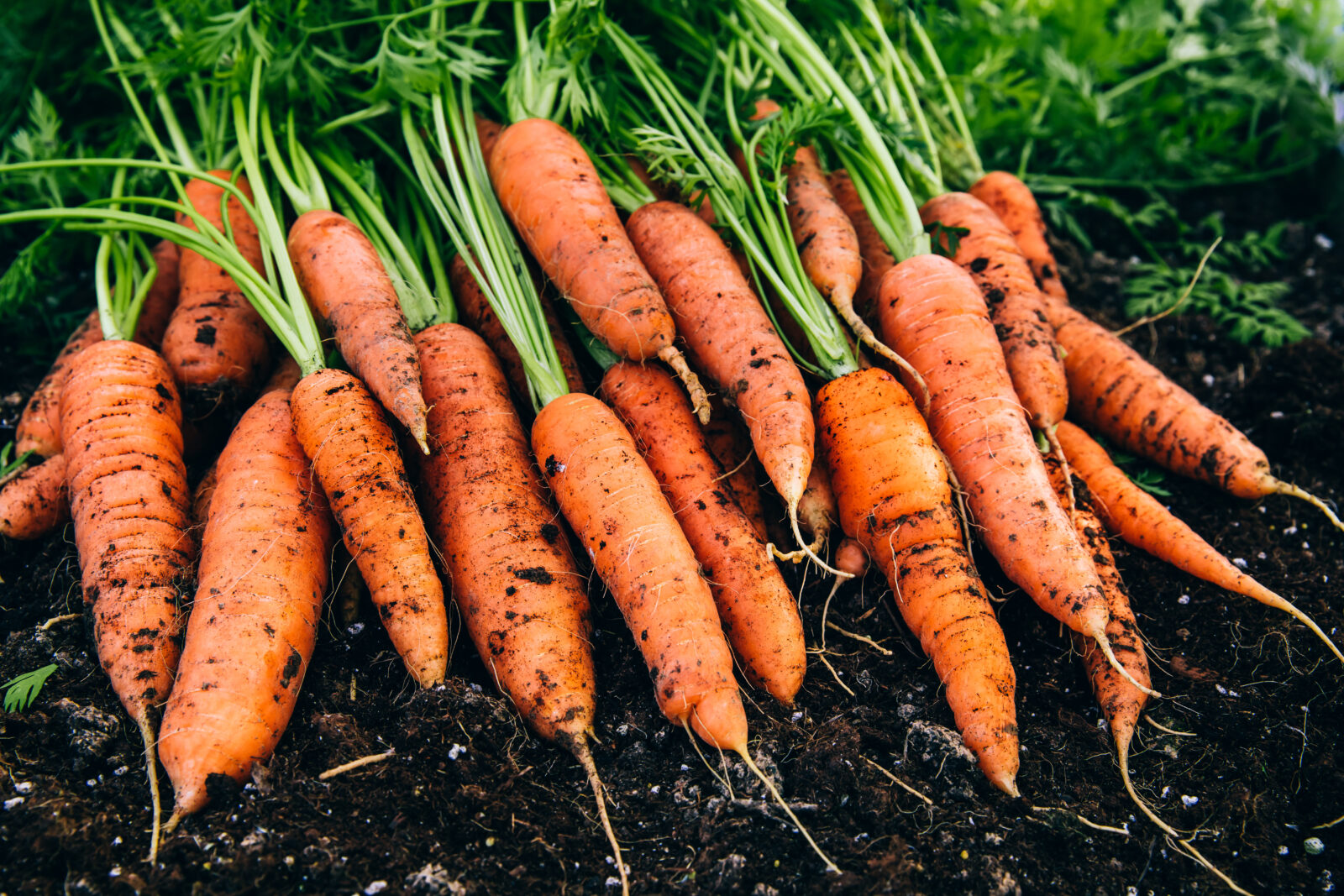
When harvesting, grasp the tops firmly and pull the carrot straight up. In light soil they come out easily, but in heavier, clay soils roots are more likely to snap. In that case, it’s worth loosening the soil carefully beforehand so the root releases and comes out whole. If you plan to store carrots, it’s better to harvest in dry weather. Right after pulling, remove the tops as well, because the green growth draws moisture from the root and carrots wilt faster.
A simple summary to make the decision easier
Keep an eye on the time since sowing, the condition of the tops, and especially the crown of the root. Once the top of the carrot is visible above the surface and the diameter at the crown is about 2 to 3 cm, it’s usually the ideal time to start harvesting. Picking gradually, checking size now and then, and doing the occasional taste test will help you fill baskets with healthy, crisp roots that work just as well for everyday cooking as they do for winter stores.
Source: The Spruce, Martha Stewart, Gardening Know How, Pestrazahrada.cz

A lover of nature, gardens, and everything that moves, blooms, or grows. He literally grows everything, from herbs to rare species, and he enjoys caring for animals just as much. In his work, he connects modern technology with tried-and-tested grandmotherly methods and is happy when both paths lead to the same goal.
Related articles
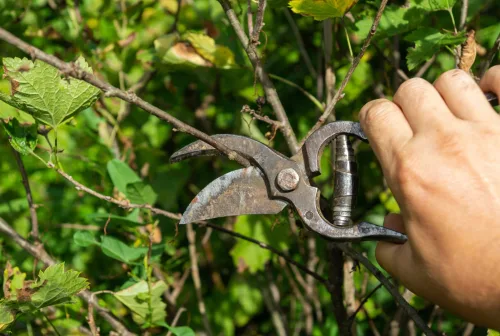
Ten Minutes in Autumn Decide Your Currant Crop
Currants crop best on younger wood, while old stems drain the plant and shade out productive new growth. A quick autumn prune keeps the bush open, healthy, and reliably fruitful next season.
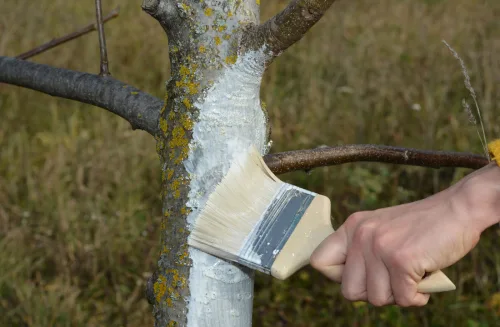
White Painted Trunks in Orchards Protect Trees from a Hidden Winter Threat
Whitewashing tree trunks in winter isn’t decoration. It helps prevent bark cracking caused by sharp day-to-night temperature swings and reduces the risk of disease entering through wounds.
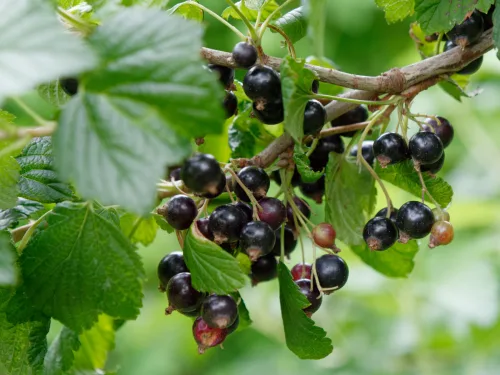
What to do for currant bushes in October so they’re loaded with fruit next year
October is the best time to set currant bushes up for a strong spring and a heavy crop. With the right pruning, protection and autumn feeding, you’ll encourage more flower buds and better winter hardiness.
Comments (0)
Be the first to comment.