
 English
  Polski
  Deutsch
  Nederlands
  Svenska
  Norsk
Norsk  Dansk
Dansk  Français
  Italiano
  Español
  Português
  Slovenčina
  Suomi
Suomi  Gaeilge
 How to Stop Apples Falling Too Early and Save Your Garden Harvest
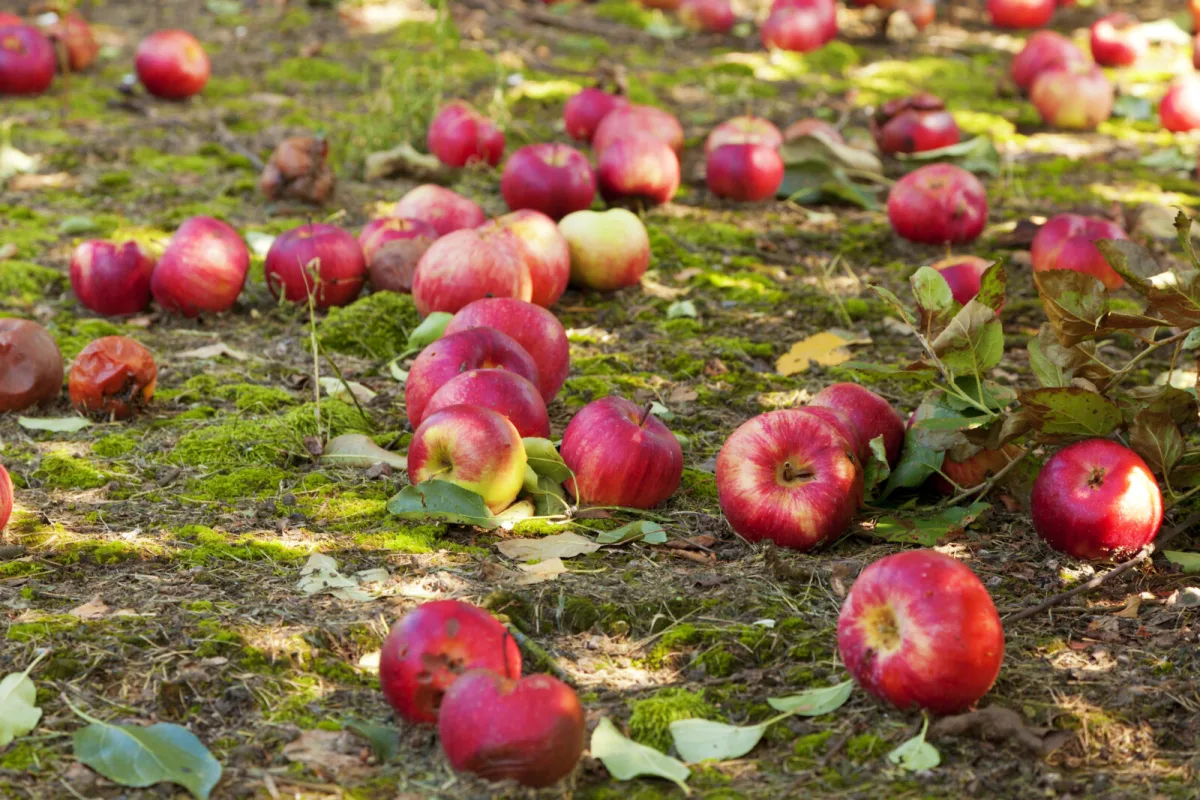
Watching apples gradually ripen in the canopy is a grower’s reward for a year of care. All the more frustrating is the moment when hard, unripe fruit starts piling up under the tree. Premature drop usually means the apple tree is trying to relieve itself because it can’t hold and feed all the fruit. If it keeps happening or suddenly worsens, you need to act fast—just a few days can decide how many apples actually make it to ripeness.
There isn’t one universal cause. Sometimes the problem is simply an overloaded tree; other times it’s water stress, nutrition, or pest pressure. The first step is always to identify the reason—only then does it make sense to choose the right intervention.
Too many fruits for the tree to support
One of the most common reasons is an excessive fruit set. In practice, you can spot it without measuring: when you look into the canopy and see more apples than leaves. Leaf area is the tree’s energy source, and if there isn’t enough of it relative to the number of fruits, the tree will start shedding part of the crop. Sometimes at a later stage there isn’t much you can do, but you can often reduce the impact.
Hand thinning can help—deliberately removing some of the fruit so the remaining apples have a chance to size up and ripen properly. In tight clusters, it’s best to leave only enough apples so there is roughly a fifteen-centimetre gap between fruits. The tree then doesn’t spread its energy too thinly, and the fruit that remains is usually larger and better quality.
Water matters most on hot days
Another common trigger for fruit drop is drought. When it doesn’t rain and temperatures are high, many people automatically water vegetables but forget about fruit trees. Yet an apple tree carrying fruit has a high demand for moisture. If it doesn’t get enough, it helps itself by reducing the number of apples to what it can manage.
It’s important to remember that the tree doesn’t need frequent, light sprinkling at the surface, but rather a thorough soak that reaches the roots. If the water doesn’t make it into the deeper soil layer, the stress repeats and fruit drop can continue despite your attempts to save the tree.
Nutrition is fundamental, nitrogen is often lacking
If the crop load isn’t extreme and the soil isn’t dried out, the issue may be nutrition. Gardeners’ experience often points to a lack of nitrogen, which supports growth and overall vigour. A weaker tree under the burden of fruit slips out of balance more quickly and chooses the simplest solution—letting part of the crop fall to the ground.
Fertilising only makes sense when done thoughtfully and at the right time. The goal is to strengthen the tree, not push it into unwanted lush growth. If you’re unsure, choose a lighter rate or consult someone experienced, because overfeeding can cause problems too.
Check for pests and signs of damage
Premature drop can also be linked to insect attack or other damage. As soon as you notice apples falling in greater numbers, it’s worth inspecting the tree. Check the leaves, young shoots, and the fruit itself for signs of chewing, punctures, deformities, or early yellowing.
Many growers don’t want to reach for harsh sprays during ripening, which is understandable. However, there are gentler, more eco-minded products that can reduce pest pressure without compromising the fruit’s safety for eating. Always follow the use recommendations and take the pre-harvest interval into account.
What you can’t fix this year, correct with proper pruning in future seasons
Some measures won’t bring back this year’s fallen apples, but they can help enormously going forward. A typical example is opening up the canopy with pruning. An overly dense tree has less light inside, poorer airflow, and often sets an excessive number of blossoms that later turn into an over-limit number of fruits. When the crown is sensibly maintained, the tree manages its energy better and isn’t forced to support unnecessary amounts of wood.
Well-managed pruning doesn’t just improve light reaching the fruit—it also brings a more reliable crop and a lower risk that the apple tree will reach a point in the season where it starts shedding fruit en masse.
Timely action and careful observation pay off
Caring for an apple tree isn’t just passively waiting for harvest. The tree can solve some problems on its own, but sometimes it does so in a way that costs the grower. As soon as you see more unripe fruit accumulating under the tree, take it as a signal to quickly check the canopy, the soil, and the tree’s overall condition.
If you identify the cause in time and choose appropriate steps, you can usually save a substantial portion of the apples, and the rest of the crop can finish ripening without trouble.
Simple consistency helps too: check the tree regularly, keep an eye on moisture, don’t underestimate feeding, and think ahead about pruning. If you’re not sure, the best move is often to ask a more experienced gardener. Even a small change in care can mean the difference between disappointment and baskets full of healthy apples.
Source: Gardenery, Gardening Know How, Gardener’s Path, Pestrazahrada.cz

A lover of nature, gardens, and everything that moves, blooms, or grows. He literally grows everything, from herbs to rare species, and he enjoys caring for animals just as much. In his work, he connects modern technology with tried-and-tested grandmotherly methods and is happy when both paths lead to the same goal.
Related articles
The More Often You Harvest, the Longer Plants Keep Cropping
With fruiting vegetables, frequent picking keeps plants flowering and producing for longer. A few crops, such as aubergines, are tastiest when harvested slightly earlier rather than fully mature.
Wasps Aren’t Just a Barbecue Menace They Can Ruin Your Garden Woodwork Too
Weathering isn’t always the main culprit behind damaged outdoor timber. Wasps can scrape fibres from boards and beams surprisingly fast, leaving grooves that soak up water and accelerate decay.
Why hydrangeas wilt in summer even when watered and how to save them fast
Hydrangeas can look limp in hot weather even if you’ve been watering faithfully. The key is to check what’s happening in the root zone, then adjust watering, shade and mulching so the plant can actually use the moisture available.
Comments (0)
Be the first to comment.