
 English
 Polski
 Deutsch
 Nederlands
 Svenska
 Norsk
 Dansk
 Français
 Italiano
 Español
 Português
 Slovenčina
 Suomi
 Gaeilge
Fresh Rocket Even in January What a Greenhouse Can Do in Winter
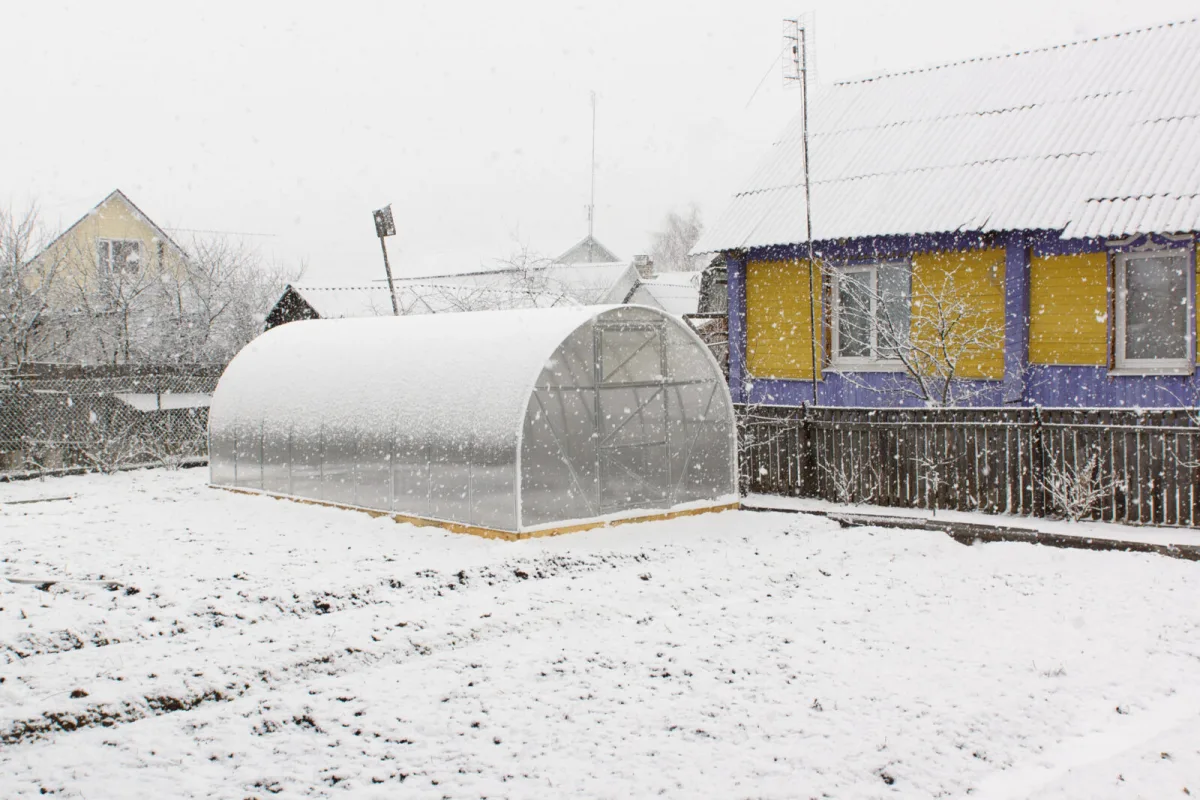
A greenhouse doesn’t have to be only for spring sowings, raising seedlings, or summer tomato growing. In the colder part of the year it can become a practical and beautiful space where more valuable plants ride out winter and where, even in bleak weather, you can enjoy the sight of greenery. If you start thinking of your greenhouse as a large indoor terrarium, you’ll gain far more than just a functional growing area.
Many gardeners pass their greenhouse every day and see it from the house windows. That’s exactly why it’s worth creating a considered winter arrangement inside that’s not only useful, but decorative too. In winter, the greenhouse becomes a showcase of favourite plants and can be the very reason you step outside even on damp, grey days.
Start with a thorough clean and a condition check
Before you move plants into the greenhouse to overwinter, everything needs a good clean. Winter light is limited, so every ray counts. Dirty glazing, algae build-up, dust, twigs, or fallen leaves can significantly reduce the amount of light getting inside. It’s worth washing the panes inside and out, and not forgetting the gutters and those harder-to-reach spots.
While cleaning, you’ll also quickly spot any damage: a compromised frame, cracked glass, or loose sections that should be fixed before harder frosts and winter winds arrive. Algae often settles on the inside of the glass, especially where plants grew close to the sides during the season. A soft cloth and a gentle approach are enough to remove it without damaging the glazing or nearby plants.
Order on the floor and on the staging
After the main growing season, a greenhouse is often full of leftover compost, old labels, strings, bits of wire, and small tools. Winter prep is the ideal moment to sort everything out. Sweeping the floor and cleaning the shelves helps not only with appearance, but with plant health too. Old compost can be spread on beds or added to the compost heap, tools stored neatly in one place, and anything unnecessary cleared away.
An important part of tidying is checking for pests. Slugs and snails love to hide in greenhouses and will quickly feast on overwintering plants or winter greens. They often tuck themselves into runner tracks, around window frames, or under the base of pots. That’s why it’s worth inspecting containers carefully before moving them in. Vine weevil larvae also deserve attention, as they damage roots and can weaken plants at the very time they should be resting.
A winter harvest straight from the greenhouse
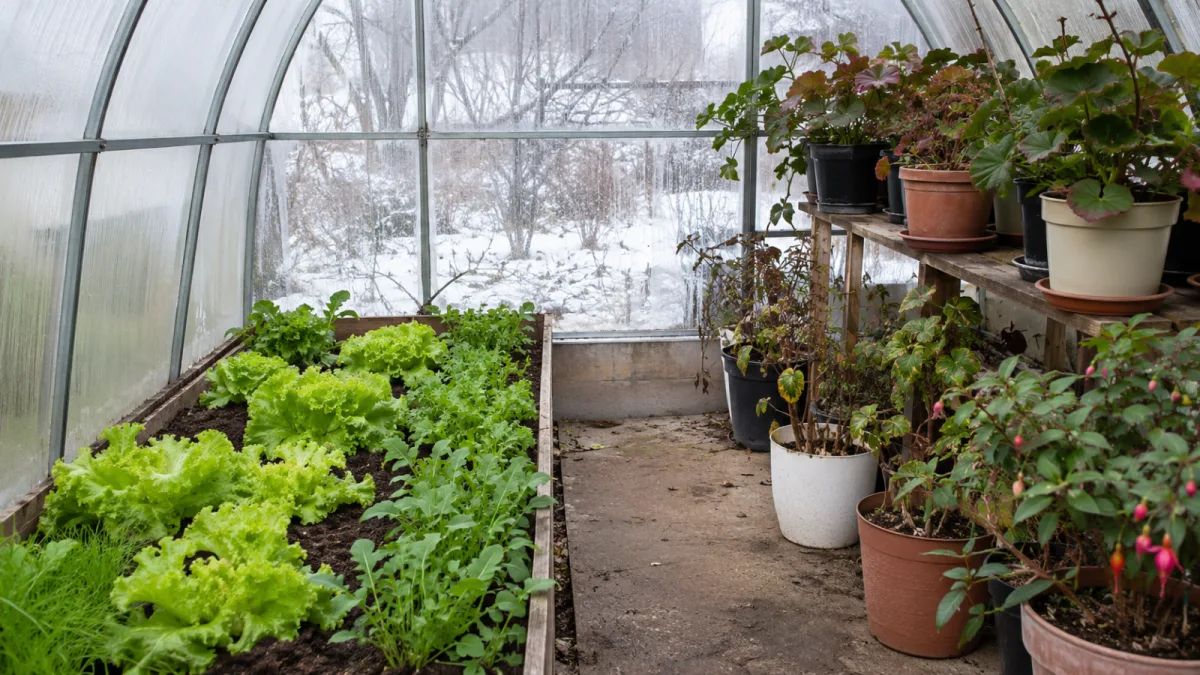
A greenhouse doesn’t have to be just a winter store for pots. It can continue to grow edible crops. Winter salads do especially well, such as rocket and mizuna. Pea shoots, parsley, and hardy brassicas are also good choices. Fresh green pickings at a time when the outdoor garden has slowed down are among the biggest advantages of a winter greenhouse.
This combination of usefulness and aesthetics is what makes the space so valuable. Alongside vegetables, you can place pots of ornamental plants, and the whole greenhouse will feel alive even while most of the garden is resting.
A greenhouse as a thoughtfully arranged winter display
Rather than letting the greenhouse become an emergency dumping ground, it’s better to treat it as a carefully organised space. Frost-sensitive plants deserve placing according to size and needs. Heavy pots are best kept on the floor; smaller containers can go on benches or shelves. It helps to sit them on small pieces of wood or slate so air can circulate underneath.
Leave space between plants. If leaves touch and the air is still, mould can appear easily, especially grey mould (Botrytis). Ventilation is therefore essential in winter. It reduces humidity, supports a healthier environment, and keeps air moving. When bringing plants inside, always remove any dry, damaged, or rotting parts that could become a source of problems.
Which plants need protection
What can stay outside and what needs shelter depends mainly on your local climate. In milder areas, even plants that would not survive elsewhere can sometimes make it through winter outdoors. Still, it doesn’t pay to rely on calm weather. After a warm spell, a sudden frost can arrive and damage more delicate plants in a single night.
Scented pelargoniums, more tender osteospermums, and succulents such as Aeonium are often moved into the greenhouse. Some may cope outdoors in very favourable conditions, but it’s safer to bring your most valued specimens under cover. If they’re planted directly in beds, a thicker layer of horticultural fleece or another suitable covering material can help.
If you don’t have a heated greenhouse, it’s worth choosing tougher plants too, ones that still create an attractive winter scene. Chrysanthemums, cyclamen, violas, pansies, or early-sprouting bulbs can all work well. In an unheated space, some penstemons and salvias often cope too.
Be ready for unpredictable weather
You can’t count on winter behaving as it once did. Instead of long, cold spells, we often get damp, milder weeks that can be interrupted at any moment by sharp frosts. The most sensible approach is to prepare protective materials in advance and have a plan for what you can quickly cover or move if temperatures drop.
A good insurance policy is also to propagate more tender plants. For borderline-hardy species, it’s worth making spare young plants or taking cuttings. If the parent plant doesn’t survive outside, you won’t lose it entirely. Some plants root very easily and quickly, so within a few weeks you can have young plants ready to overwinter safely under glass.
A winter greenhouse as part of the garden cycle
Using a greenhouse in winter isn’t just a practical necessity; it’s also a way to stay connected to the garden all year. A clean, bright, well-ventilated space will protect tender plants, provide room for winter vegetables, and bring the simple pleasure of living greenery in the middle of winter. With good preparation, your greenhouse becomes both a safe harbour for plants and an inspiring corner where the next growing season is already beginning to take shape.
A well-organised greenhouse can combine plant protection, fresh harvests, and beauty in winter, making the wait for spring much easier for any gardener.
Source: RHS, Green House Stores , Pestrazahrada.cz

A nurse by profession, she is passionate about healthy living, nature, and everything that benefits both people and the world around them. In her free time, she enjoys gardening, cooking, sewing, and caring for her family. In her articles, she loves combining professional expertise with practical experience from the garden and everyday life.
Related articles
Why Plant Onion Sets in Autumn
Planting onion sets in autumn gives them time to root before winter, so they spring into growth early and can be ready to harvest as soon as June. Choose hardy varieties, provide free-draining soil and steady weeding for the best results.
Plant Garlic Now Cool Soil Protects It From Rot Depth and One Small Mistake Matter
November may be quieter in the garden, but it’s prime time to prep beds and plant garlic. Cooler soil helps reduce rot, and correct planting depth plus good technique make all the difference.

When to Plant a Cherry Tree in Your Garden for Strong Roots and Heavy Crops
Cherry trees establish best when planted during dormancy, either in autumn after leaf fall or in early spring before bud break. The right timing depends as much on soil and weather conditions as it does on the type and quality of the young tree.
Comments (0)
Be the first to comment.