
 English
  Polski
  Deutsch
  Nederlands
  Svenska
  Norsk
Norsk  Dansk
Dansk  Français
  Italiano
  Español
  Português
  Slovenčina
  Suomi
Suomi  Gaeilge
 Hardy Geraniums for Sun and Part Shade, Perennials That Flower from Spring to Autumn
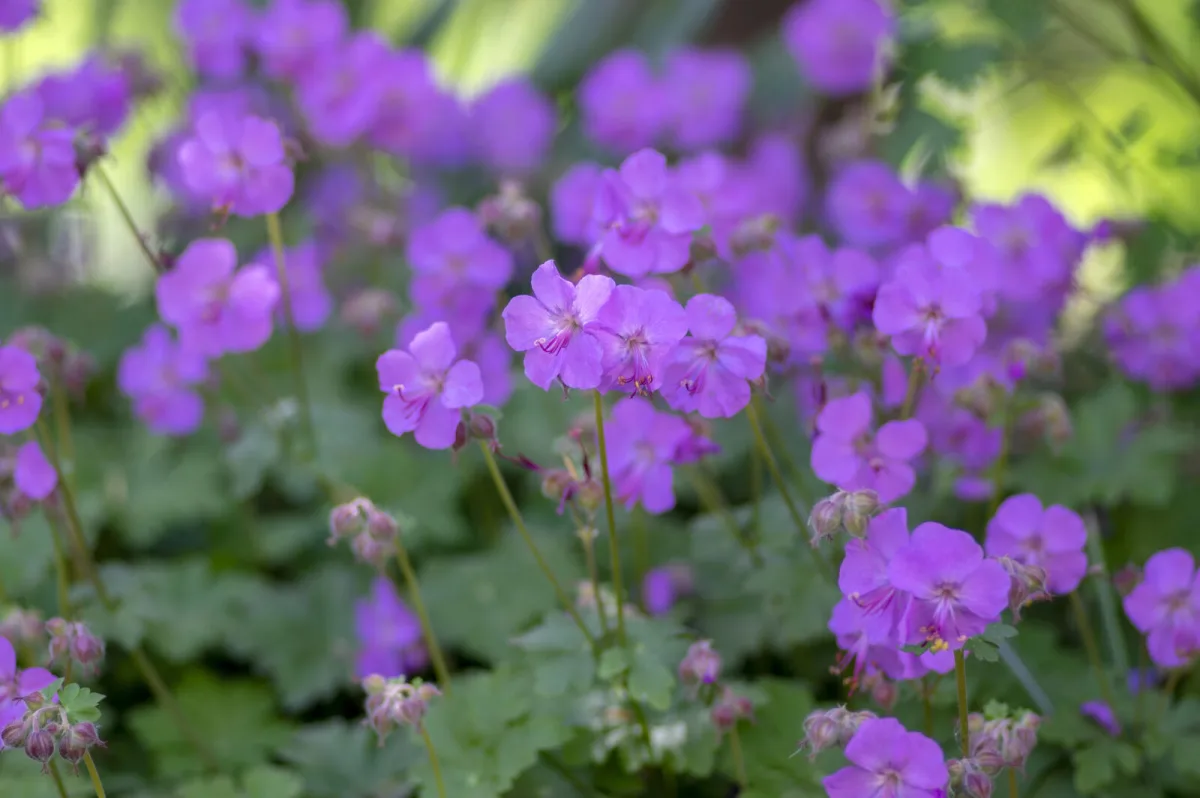
Hardy geranium (Geranium) has become one of the most popular perennials in recent years because it combines beauty with toughness and a natural look. In Czech it’s often confused with the so-called “geraniums” grown in window boxes, but those are botanically pelargoniums (Pelargonium). Hardy geraniums, by contrast, are true geraniums: frost-hardy plants that overwinter reliably in the garden and return year after year. In practice, that means less work, a stable backbone for your borders, and a long-term effect without the need for replanting every season.
Tip: If you want a perennial that fills space, suppresses weeds, and still won’t be “invasive”, hardy geranium is one of the safest choices for Central European conditions.
Why hardy geraniums have earned a reputation as a sure thing
Hardy geraniums are wonderfully adaptable and cope with a wide range of sites. You’ll find species suited to full sun and to part shade; some tolerate dry soil under trees, while others prefer evenly moist ground. They form dense growth and often compact “cushions” that look good even when not in flower. The blooms are usually showy yet still delicate and natural, so they fit modern plantings as well as cottage gardens. Another bonus is that they attract pollinators, especially bees and butterflies, and by knitting together into a closed canopy they greatly reduce space for weeds.
A major advantage is their hardiness. Many species are rated to very low temperatures, so an average Czech winter is rarely a problem. Where other perennials suffer from weather swings or winter kill, hardy geraniums often just keep going—quietly and reliably.
Site and soil: how to choose the right place for hardy geraniums
There isn’t one universal rule, because the Geranium genus is broad. Still, it’s fair to say that most hardy geraniums do best in free-draining soil with plenty of organic matter. Waterlogging and long-term heavy, airless soil are more commonly an issue than drought. In full sun they usually flower more generously; in part shade the foliage often stays fresher for longer and copes better with hot spells.
If you have a tricky spot in the garden, hardy geranium may be the solution. Under trees the soil tends to be drier with strong root competition; in a corner by a fence you may be dealing with shade and damp. It pays to choose a specific species and cultivar based on what that site can offer, rather than trying to “talk” a plant into growing where it will never truly thrive.
Planting: when to plant and how to achieve quick ground cover
Hardy geraniums are most often planted in spring or autumn, when the soil is naturally moister and plants root in more easily. After planting, water especially during the first few weeks, until they get established. If you want a bed to look full quickly, space plants so they have room to develop but will still knit together into a continuous cover within a sensible time. Planting too densely can reduce air circulation and increase susceptibility to disease, while planting too sparsely leaves gaps for weeds.
In smaller borders, it’s worth choosing cultivars that stay presentable for a long time and don’t suffer badly from disease. Hardy geraniums often act as “fillers” between dominant perennials and shrubs, and it’s helpful if they look good even outside the main flush of flowers.
Care: watering, feeding and pruning for a second flush
Once established, hardy geraniums are usually low-maintenance. Watering matters mainly during prolonged drought, especially for new plantings or those in full sun. Don’t overdo feeding—too many nutrients can encourage lush leaf growth at the expense of flowers and can also make clumps flop. Often a spring mulch of compost or a light feed at the start of the season is plenty.
Cutting back after flowering is extremely useful. With taller species and cultivars, it’s worth shearing the plant back after the first flush, which encourages denser growth and often a second round of flowers. It also removes tired foliage, giving the border a fresh, tidy look.
Quick tip: If your hardy geranium looks “tired” after the main flush, cut it back and water well. For many cultivars, it’s the simplest route to another wave of bloom.
Species and cultivars that have proved themselves in Czech gardens
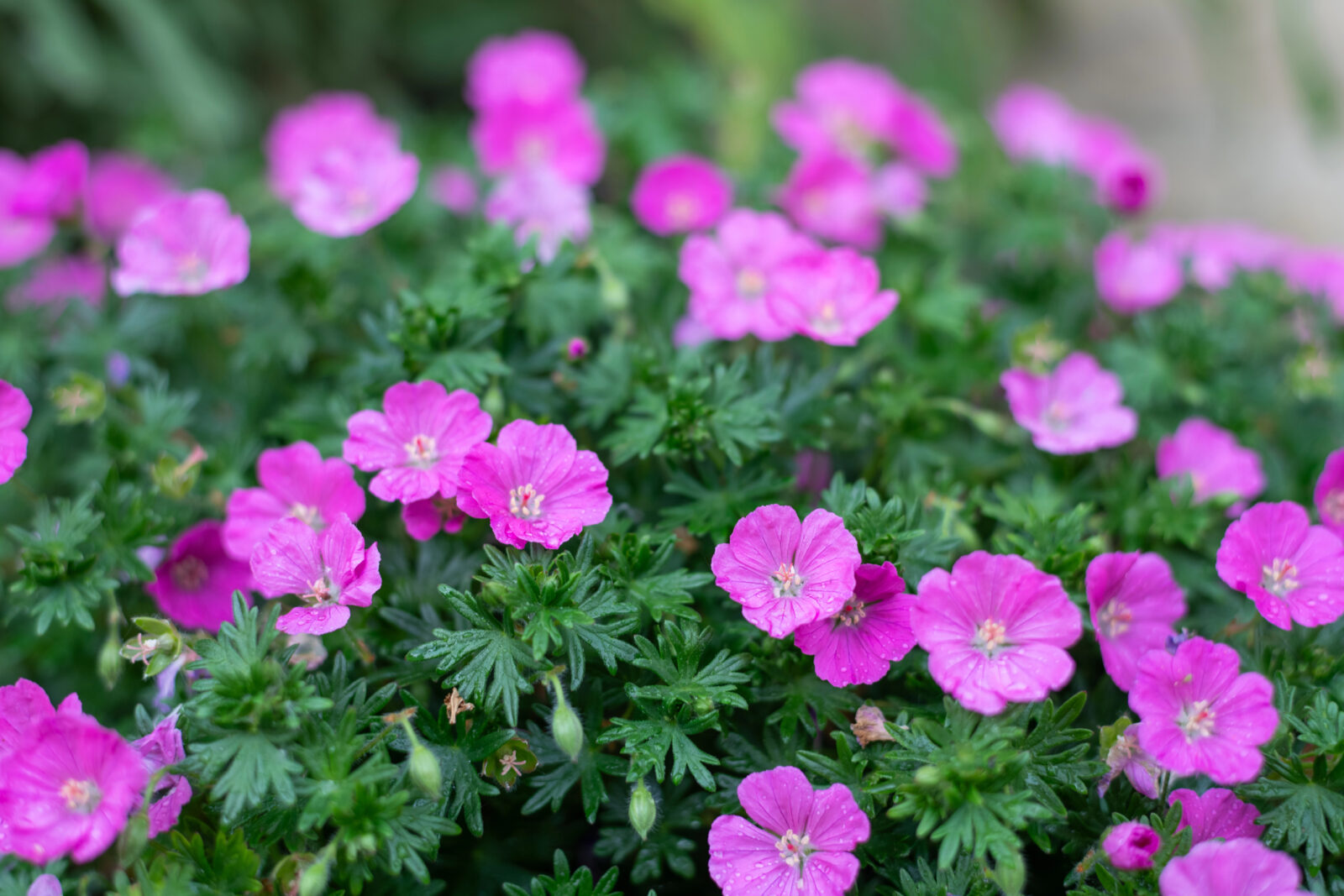
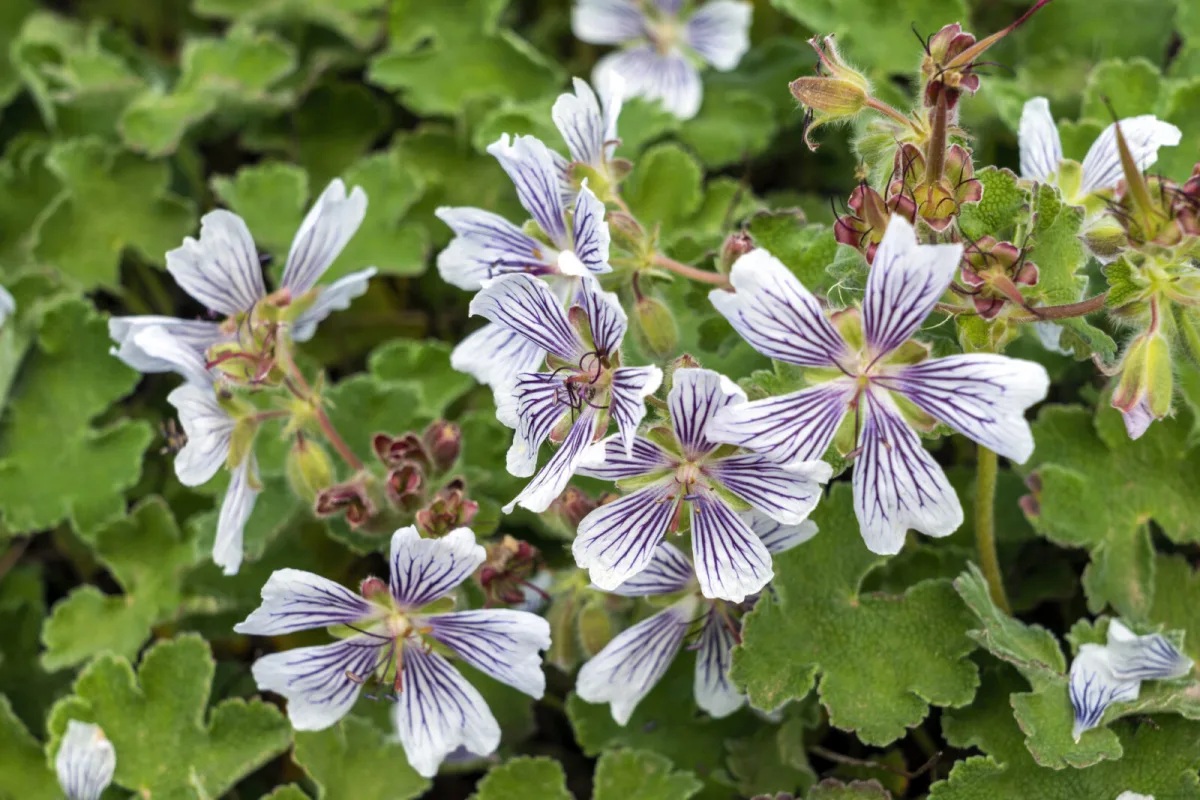
For the front of borders, lower-growing species that form compact cushions and hold their shape are ideal. Bloody cranesbill (Geranium sanguineum) is often recommended, including the popular cultivar Max Frei, which makes neat ground cover and flowers very reliably in the right spot. Where you want a bolder effect and more leafy presence, taller species such as Geranium magnificum or Renard’s geranium (Geranium renardii) also shine, and look decorative even for their foliage.
If you’re aiming for a second flush of bloom, focus on species and cultivars that respond well to cutting back. Himalayan geranium (Geranium himalayense) is often mentioned, as are selected cultivars of meadow cranesbill (Geranium pratense) and some forms of wood cranesbill (Geranium sylvaticum). The right choice is always a balance of height, flower colour, site requirements, and how long you want the planting to stay attractive.
Self-seeding and spread: when it’s an advantage and when to rein it in
Some hardy geraniums will self-seed. This can be a wonderful trait in a naturalistic garden, where you want plantings to feel lively and to shift a little over time. On the other hand, in tightly designed borders self-seeding may be unwanted. Oxford cranesbill (Geranium x oxonianum) is commonly cited as an eager spreader, as is knotted cranesbill (Geranium nodosum), which is also useful for shade.
If you want to limit spread, removing spent flowers and developing seed heads in time helps. If, on the contrary, you welcome self-seeding, let part of the plants mature and simply keep an eye on where seedlings appear so they don’t crowd more delicate areas of the border.
Hardy geraniums in garden design: small borders, big impact
Hardy geraniums excel as edging, as underplanting beneath shrubs, as a filler between roses, and as a natural “carpet” over larger areas. Because they form dense cover, they visually link different parts of a planting and soften transitions between statement plants. They work beautifully in perennial borders, in part-shaded areas near the house, and in cottage gardens where the goal is an easy, long-lasting look.
If you choose suitable species for your particular site and provide basic care, you’ll gain plants that will grow and flower reliably year after year, making the garden naturally beautiful without fuss. That’s the main reason hardy geraniums are considered one of the best perennials for both beginners and experienced gardeners.
Source: Gardening Know How, Garden design , Pestrazahrada.cz
Related articles
The Christmas Amaryllis That Can Bloom for Years but Most People Throw It Away After Flowering
Hippeastrum is a spectacular winter-blooming bulb that, with the right care, will flower again year after year. Learn how to plant it correctly, look after it after flowering, and bring it into dormancy so it reliably reblooms.
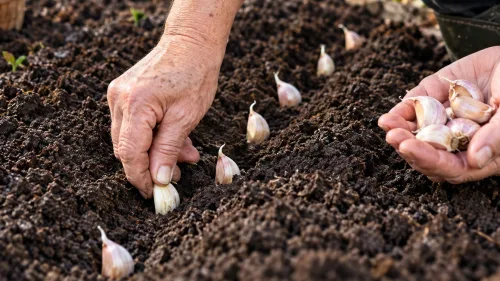
How to Grow Winter Garlic for a Much Bigger Harvest
Autumn planting is the key to strong, healthy winter garlic, but the details make all the difference. With the right timing, bed choice, seed-clove treatment and a simple bicarbonate trick, you can noticeably boost yield.
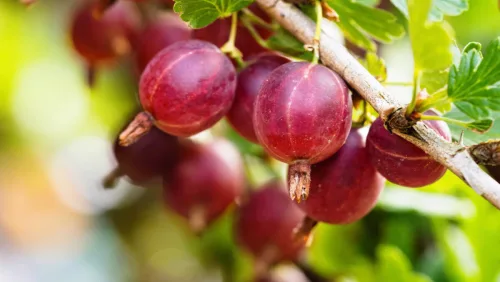
A tree or shrub planted properly in autumn can outpace spring stock and improve fruiting
Many fruit trees and soft-fruit shrubs establish better when planted in autumn, because roots keep growing while the top is dormant. Done well, this head start means stronger spring growth, less watering, and a healthier first year.
Comments (0)
Be the first to comment.