
 English
  Polski
  Deutsch
  Nederlands
  Svenska
  Norsk
Norsk  Dansk
Dansk  Français
  Italiano
  Español
  Português
  Slovenčina
  Suomi
Suomi  Gaeilge
 Bad autumn pruning of hydrangeas can cost you blooms all next season
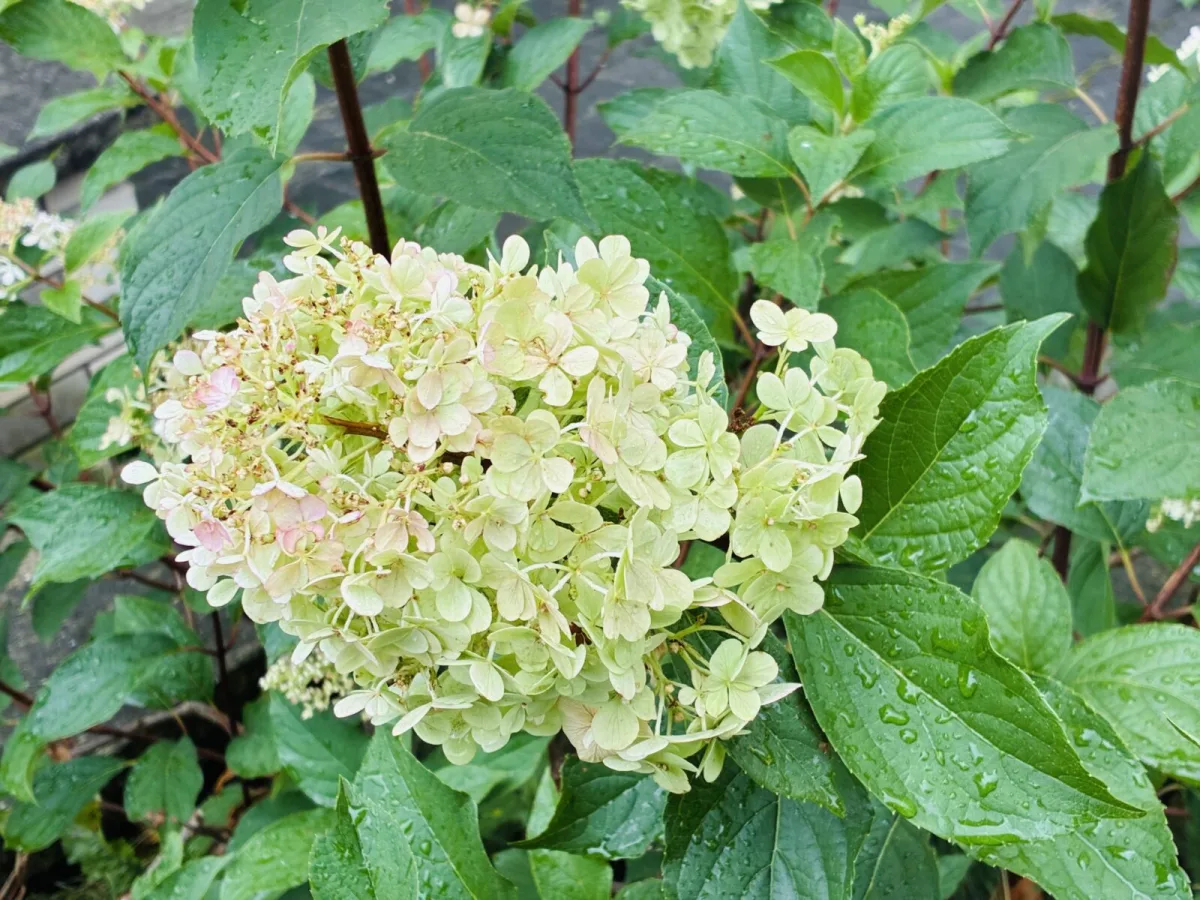
Overwintering hydrangeas can challenge even experienced gardeners, because different types behave differently. The key rule that determines next season’s success is simple: find out whether your hydrangea sets flowers on old wood or on new shoots. That dictates when to remove spent flower heads, when to prune, and how much winter protection the shrub needs. When autumn care is done correctly, the plant copes better with frost and starts spring with more energy and more buds.
Removing spent blooms without unnecessary risk
Hydrangeas can flower from spring right through autumn, depending on the variety. With types that bloom on new wood, you can deadhead regularly for most of the season. This often encourages more fresh growth and can even lead to more flowers. The problem comes when you keep cutting too late in summer, because fresh cuts and soft tissue are more likely to be damaged by winter cold.
With hydrangeas that bloom on old wood, caution matters even more. Early in the season, removing faded blooms is usually fine, but after mid-August it’s best to leave the flower heads on the shrub. The dried heads act like a natural shield, helping protect the buds that are forming for next year. You can remove the blooms left for winter in late winter or early spring, ideally once you can clearly see where new growth is emerging on the stems and from the base.
Autumn pruning and shaping based on bloom type
Well-timed pruning keeps the shrub healthy and reliably flowering. Dry, dead, or damaged branches can be removed at any time of year, but it always pays to make clean, precise cuts to reduce the risk of pests and fungal disease. With many hydrangeas, heavy renewal pruning isn’t needed very often; shaping is often only necessary after several years of growth.
Hydrangeas that bloom on old wood
Bigleaf hydrangeas, including mophead and lacecap forms, as well as oakleaf hydrangea, usually don’t need frequent shaping, and more significant intervention is typically only needed once every few years. If the shrub needs reducing or a general boost in condition, you can shorten stems by about a third during summer, but no later than mid-July. The reason is that buds for the following season begin forming in August. If pruning in autumn is unavoidable, it’s safer to cut so that each cut is just above the first pair of buds on each stem, reducing the chance you remove future flowers.
Hydrangeas that bloom on new wood
Panicle and smooth hydrangeas typically flower on new growth, so they tolerate harder pruning. After summer flowering finishes, you can shape the shrub and reduce its size; commonly, up to a third of the branching is removed from the top and sides. Another option is cutting back low to the ground in autumn, or in late winter or early spring. In spring, new canes will push up from the base. With older, well-established plants, though, regular shortening by about a third often works better than cutting to the ground every year, because the shrub tends to have better vigor and a more stable growth habit.
How to reduce damage from deer
Deer can severely damage hydrangeas in a single night by browsing fresh leaves, soft shoots, buds, and flowers. Practical prevention starts with placing the shrub in a part of the garden with frequent human or pet activity, such as near paths or close to the house. It can also help to pair hydrangeas with strongly scented plants that deter browsing, such as sage or rosemary. In some gardens, deer-resistant choices can help too, such as boxwood or marigolds.
A physical barrier is usually the most reliable approach, but a standard fence must be very tall to be truly effective. An alternative is netting, especially in spring when new growth is at its most tender. Electric fencing can be less conspicuous if installed correctly. Motion-activated lights or sprinklers sometimes help, as do shiny or noisy objects, but these need to be moved regularly so deer don’t get used to them. You can also use commercial deer repellents formulated for ornamental shrubs. In general, hydrangeas that bloom on old wood tend to be less attractive, because they don’t produce as much juicy new growth.
Feeding and managing flower colour
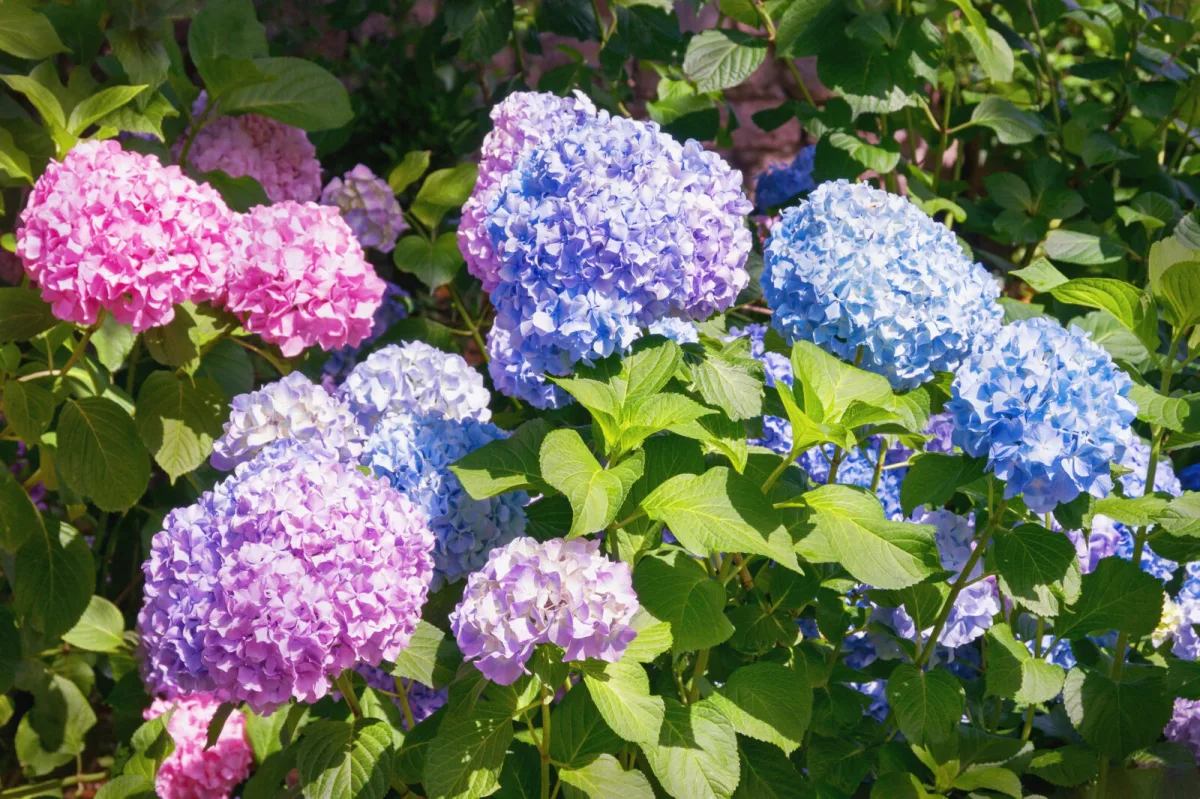
Mature hydrangeas are typically fed once a year in spring, ideally with a slow-release fertiliser with a balanced nutrient profile. Common blends include 15-10-10 or 10-5-5. With certain species and cultivars, soil pH can influence flower colour. In more acidic soil, blooms shift towards blue tones, while a higher pH pushes colour towards pink. If you want to adjust the shade, the soil reaction needs to be altered gradually and over time, not in a single one-off treatment.
Young or newly planted hydrangeas can benefit from more frequent feeding in the first few years, from early spring to mid-summer, to help them build strength faster. With container-grown hydrangeas, it depends on the potting mix used. If it already contains a controlled-release fertiliser, additional feeding isn’t necessary. If not, it’s best to add nutrients at planting and again in late spring. Fast-acting liquid feeds are generally not ideal; slow-release granular blends are better. In practice, rose fertilisers often work well too. To lower pH for blue flowers, use products intended for acid-loving plants; to raise pH for pink tones, you can choose fertilisers with nitrate nitrogen or work carefully with dolomitic limestone.
Mulch as a winter and year-round helper
Mulching benefits hydrangeas in several ways. The soil stays cooler, holds moisture better, and weeds are suppressed. You can use various materials, such as shredded conifer or deciduous mulch, pine bark, pine needles, dry leaves, or straw. In colder areas, apply a thicker layer in autumn, even up to about 15 cm, to better protect roots from freezing. For the rest of the year and in warmer regions, a thinner layer of around 5 cm is usually enough, mainly serving a protective, moisture-conserving role.
Protection from snow, ice, and winter wind
Heavy snow, ice, and strong wind can snap shoots and, on old-wood bloomers, damage buds that are already set. A good planting location makes a big difference. In more northerly areas, it’s often an advantage to site the shrub near a house or other structure that breaks the wind and creates a milder microclimate. In warmer regions, plants often appreciate a spot with afternoon shade so they don’t suffer from sun stress.
Beyond a deeper mulch layer, in very cold areas you can also protect the top growth. A common method is to build a simple cage of wire mesh around the shrub, fill it with straw or another insulating material, and in this way protect the buds. Burlap can also be used to wrap the shrub loosely. Once the worst frosts have passed in spring, it’s important to remove protection in time and reduce the mulch layer so the plant doesn’t rot and can break dormancy without obstruction.
Autumn and winter care for potted hydrangeas
Container hydrangeas are more vulnerable because roots freeze faster than they do in the ground. Once temperatures drop to around 7 °C, it’s best to move the pot indoors. An unheated garage, basement, or enclosed porch works well—cool, dry, and dark conditions allow the plant a natural dormant period. Over winter, water only enough to keep the plant from completely wilting; waterlogging during dormancy is risky.
In spring, bring the hydrangea back outside gradually, and only once frost is no longer a threat. If you can’t overwinter the pot indoors, it helps to move the container tight against a building and wrap both the pot and the shrub in burlap to better insulate the root ball. Here too, less water and better wind protection are often key to getting through winter successfully.
Source: The Spruce, Gardening Know How , Pestrazahrada.cz
Related articles
Don’t Prune Hydrangeas in October
Tidying the garden in autumn is tempting, but October pruning can cost your hydrangeas next year’s flowers. Only two light interventions make sense this time of year; everything else is best left until the right season.
A Pineapple Top Will Root in Two Weeks, but Success Depends on the Step Most People Skip
Don’t throw away the leafy crown when you cut a pineapple. With the right prep, light, warmth and careful watering, you can root it and grow a houseplant that may eventually fruit.
Overwintering Geraniums in a Box Ensures Stronger Growth and More Abundant Spring Bloom
Many people throw balcony geraniums away after the season, even though they can overwinter very well. Stored correctly in a box in cool, dark, dry conditions, they’ll come back stronger and flower generously in spring.
Comments (0)
Be the first to comment.