
 English
  Polski
  Deutsch
  Nederlands
  Svenska
  Norsk
Norsk  Dansk
Dansk  Français
  Italiano
  Español
  Português
  Slovenčina
  Suomi
Suomi  Gaeilge
 After Summer Showers, Downy Mildew Attacks Cucumbers Stop It Early Without Chemicals
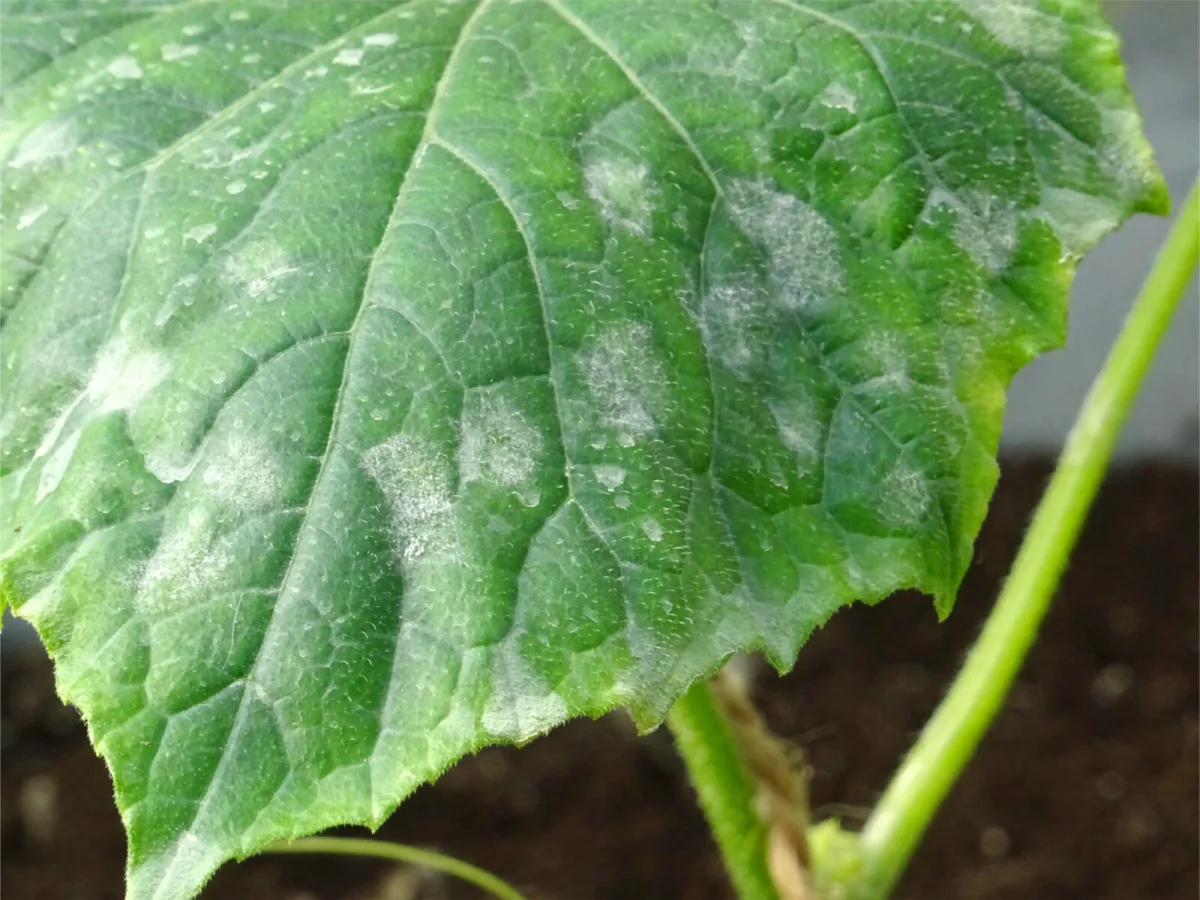
Many growers look forward to cucumbers in summer, because in just a few days the harvest feels within reach. Exactly at the time when plants are gaining the most strength, cucumber downy mildew can ruin the crop. It most often spreads explosively after short summer showers, when warmth combines with high humidity. Similar conditions also arise when watering is done poorly, leaves are kept wet for long periods, and the planting is too dense.
The pathogen is Pseudoperonospora cubensis, which doesn’t threaten cucumbers alone but also other cucurbit crops, such as melons and squash. Once an infection gets going, losses can come quickly, so it pays to act as soon as the first symptoms appear.
How to reliably identify cucumber downy mildew
On the upper surface of the leaves, pale green to yellow patches appear first, often angular because they “break” along the veins. On the underside of the leaf, a coating forms where the spots are—typically whitish to grey-brown and it may look slightly water-soaked.
Infected leaves then quickly turn brown, die back, curl upward, and dry out. If a plant loses most of its leaf area, photosynthesis is severely reduced. The result is stunted fruit, or even rot, because a weakened plant can’t feed the cucumbers properly or defend them against further problems.
When the risk is highest and what makes it unnecessarily worse
Mildew thrives especially at temperatures above 25 °C and with air humidity roughly above 75 %. That’s exactly what happens after a shower, during muggy weather, or in a greenhouse without ventilation. Cucumbers grown without support on the ground are also at risk, because the leaves sit on damp soil and dry slowly after rain.
Poor watering makes a big difference too—especially regular overhead watering onto the leaves. Water on the leaf surface prolongs leaf wetness and creates ideal conditions for infection and its rapid spread through the crop.
First aid when you find infected leaves
As soon as you notice the first affected leaves, time is working against you. Take sharp scissors and a disinfectant and remove the infected parts immediately. Work carefully so you don’t unnecessarily spread spores onto healthy leaves and shoots.
Put the leaves aside into a container and dispose of them in the rubbish. They don’t belong in a home compost heap, because you can end up spreading the pathogen back onto your beds. It’s also important to disinfect the scissors continuously after each plant so the infection isn’t mechanically transferred further during cutting.
Homemade sprays and when stronger protection is needed
In the early stage or as prevention, simple homemade sprays can help. It’s best to repeat them roughly once every 5 to 7 days, because the protective effect on leaves doesn’t last forever. But it’s worth bearing in mind that with heavy infection, they usually won’t turn the situation around on their own.
A popular option is a milk-and-water mix, made from roughly 200 ml fresh milk and 800 ml water. After application, the proteins form a fine protective film on the leaves, and the milk also works as a mild foliar feed. Another cheap option is a bicarbonate of soda solution, for example 1 tablespoon of bicarbonate of soda per 1 litre of water. It shifts the pH on the leaf surface more towards alkaline, which generally doesn’t suit mildew spores.
If the planting is affected extensively, suitable fungicides come into play. Copper-based products are often used; they work mainly on the surface and create a protective barrier. In more severe cases, systemic fungicides are used, which move into the plant and protect new growth as well. Always follow the product label and stick to the conditions of use.
What the harvest interval means for sprays
The harvest interval is the minimum number of days that must pass from the last treatment to harvest so the fruit can be eaten safely. During this time, the active substances on the plant and in the fruit gradually break down to permitted, safe levels. The length differs between products, so never guess—use the manufacturer’s exact information.
Prevention that genuinely eases cucumbers even mid-season
For the future, it makes sense to choose varieties with increased resistance to cucumber downy mildew, but during the current season it’s more important to adjust your routine. The biggest improvement comes from watering only at the roots, i.e. under the leaves. Once you stop wetting the foliage, you reduce moisture on the leaf surface and therefore the chance that the infection will take hold quickly.
Training cucumbers up a vertical support is also very practical—such as netting or wire mesh. When leaves are lifted off the ground, they dry faster after rain and aren’t in direct contact with wet soil. A side benefit is easier picking and a clearer view of whether new spots are appearing on the plants, which need dealing with immediately.
Source: Urob si sám, Gardening Know How, Pestrazahrada.cz

A lover of nature, gardens, and everything that moves, blooms, or grows. He literally grows everything, from herbs to rare species, and he enjoys caring for animals just as much. In his work, he connects modern technology with tried-and-tested grandmotherly methods and is happy when both paths lead to the same goal.
Related articles
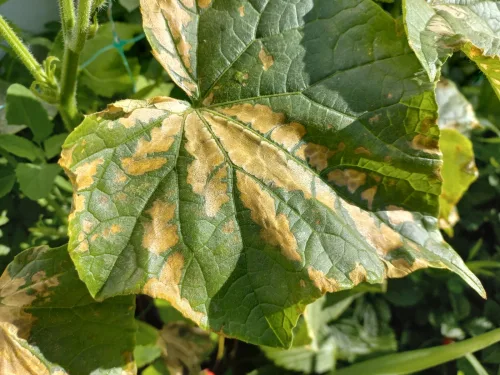
Yellowing cucumber leaves have a clear cause and with the right response plants recover quickly
Cucumber leaves turn pale and yellow when the plant is under stress—most often from watering mistakes, nutrient imbalance, or sudden temperature swings. Spot the pattern early and you can restore growth and protect your harvest fast.
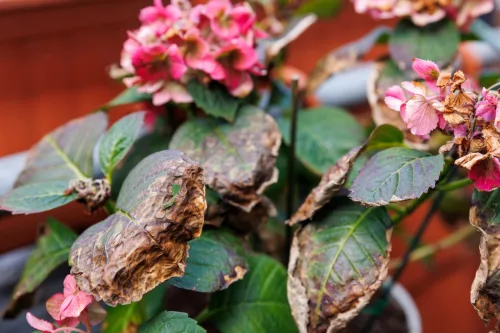
How to Get Browning Hydrangeas Back on Track Without Chemicals
Brown leaf edges or spots on hydrangeas usually point to a simple mismatch in light, watering, or airflow rather than a lost cause. Learn how to read the symptoms and restore your shrub quickly with gentle, practical fixes.
Turn Ground Cinnamon Into a Secret Weapon for Stronger, Tougher Plants
Ground cinnamon isn’t just for baking—it can help protect houseplants and garden plants from mould and fungal issues, support cuttings, and even act as quick first aid for minor wounds. Used lightly, it’s an affordable, gentle, natural add-on to good growing practice.
Comments (0)
Be the first to comment.