
 English
  Polski
  Deutsch
  Nederlands
  Svenska
  Norsk
Norsk  Dansk
Dansk  Français
  Italiano
  Español
  Português
  Slovenčina
  Suomi
Suomi  Gaeilge
 Your Garden Will Cool Itself When You Build the Right Layers of Greenery
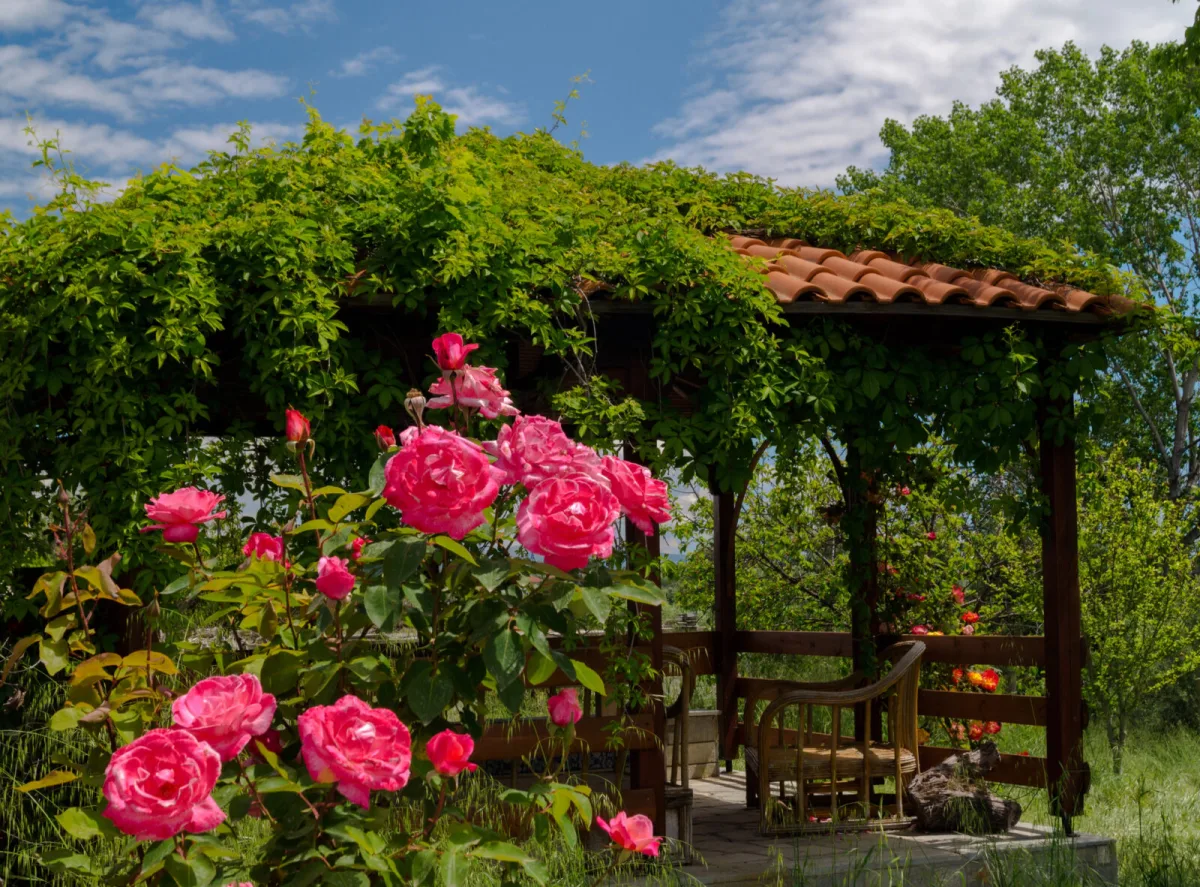
It’s during a hot summer that you can most clearly see where the garden overheats and which areas need more shade or moisture. If you’re struggling with a blazing patio, a parched lawn or unpleasant heat near the house, now is the perfect time to plan changes for autumn or next spring. A garden doesn’t cool down with a single fix, but with a thoughtful combination of trees, shrubs, mulch, well-chosen plants and surfaces that don’t heat up as much. When these elements work together, they create a more comfortable microclimate, help retain moisture in the soil and lower temperatures around the house and near windows.
A mix of several layers of greenery works best
The most effective gardens are made up of several height levels. Trees cast shade and change air movement, shrubs add green volume lower down, perennials and groundcovers keep the soil covered and moister, lawns help through evaporation, and climbers can shade vertical surfaces that otherwise overheat the most. This structure also supports biodiversity and manages rainwater more effectively.
With perennial plantings, it’s essential to choose species that match local conditions and transpire well. In denser planting, the soil dries out less because the foliage shades the surface and reduces unproductive evaporation. In practice, that means less scorching bare ground and a more stable microclimate day and night.
Trees as multi-layer cooling for gardens and cities
The strongest cooling element is a tree, especially an older, well-established one. It’s not just about the shade. The canopy creates multi-layer dappled cover, so the soil and surrounding surfaces don’t heat up as much. A tree also reduces wind speed at ground level, which limits drying out, and it helps retain water in the wider landscape as well as in the garden.
Trees cool their surroundings through shade, by reducing surface overheating and, above all, by releasing water vapour from leaves, which cools the air.
The cooling power of trees rests on several mechanisms at once. Most often mentioned is evapotranspiration, where water moves through leaves into the air and lowers temperature. Another effect is shading, which protects soil, paths and house walls from direct sun. A third important point is the role of roots: they help keep water in the soil, improve soil structure and support more stable moisture levels. Research shows that greenery with a high transpiration potential can reduce local temperatures by several degrees, and in some situations even more markedly.
Which trees cool best
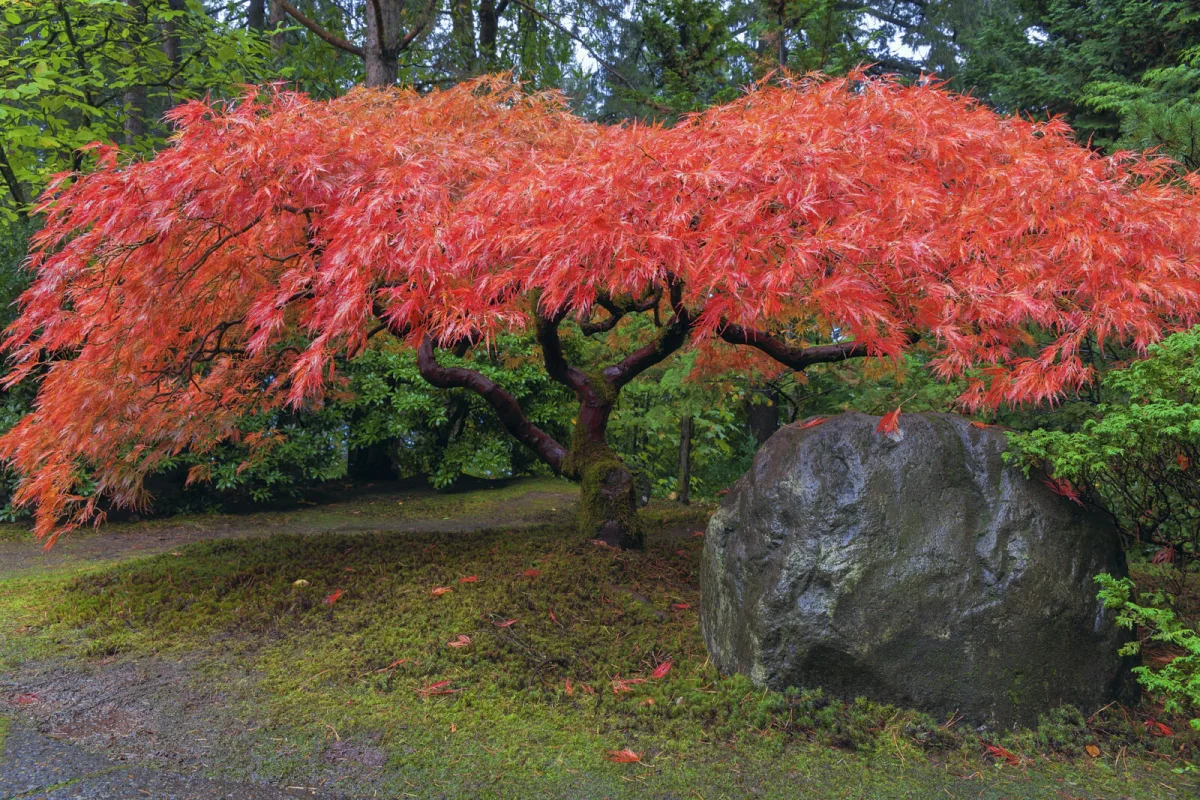
Broadleaf trees with a denser canopy help the most, because they combine strong shade with a large leaf area for evaporation. In our conditions, maple, oak, lime (linden), plane, poplar or beech are often good choices. It’s also practical to think about how the canopy will develop over time, where the shade will fall in the afternoon and whether the tree will let light back in during winter if it’s deciduous.
A lawn only works as a cooler with the right mowing
A lawn cools mainly by releasing water from the soil and from its blades into the air. To provide enough leaf area for evaporation while avoiding unnecessary overheating, it’s recommended not to cut it extremely short. A sensible range is roughly 10 to 30 cm, with around 15 cm often taken as a practical compromise. At this height, the grass retains enough leaf area for transpiration and the roots have a better chance of holding moisture.
Overly frequent, very low mowing can weaken a lawn long term, especially when drought hits and there isn’t enough irrigation. On the other hand, overly long grass can feel heavy in hot weather and, in some conditions, hold more heat. A well-maintained lawn can lower nearby temperatures by roughly 1 to 3 degrees, which is particularly useful in smaller gardens, courtyards and urban spaces.
Shrubs and perennials to stabilise moisture and temperature
Shrubs add shade and leaf mass at the level where people spend the most time. Dense foliage increases air humidity and shades the soil, which matters for smaller plantings and the edges of patios. Species that tolerate heat while still offering decent transpiration work well. Commonly mentioned are shrub-form roses, lavender, rosemary or snowberry.
Perennials and groundcover plants are important mainly to prevent bare soil. Covered soil overheats less, dries more slowly and holds water better after rain. Group plantings also create a more pleasant microclimate than scattered single plants, because the leaves act as a shared shading and humidifying layer.
Climbing plants can cool façades and fences too
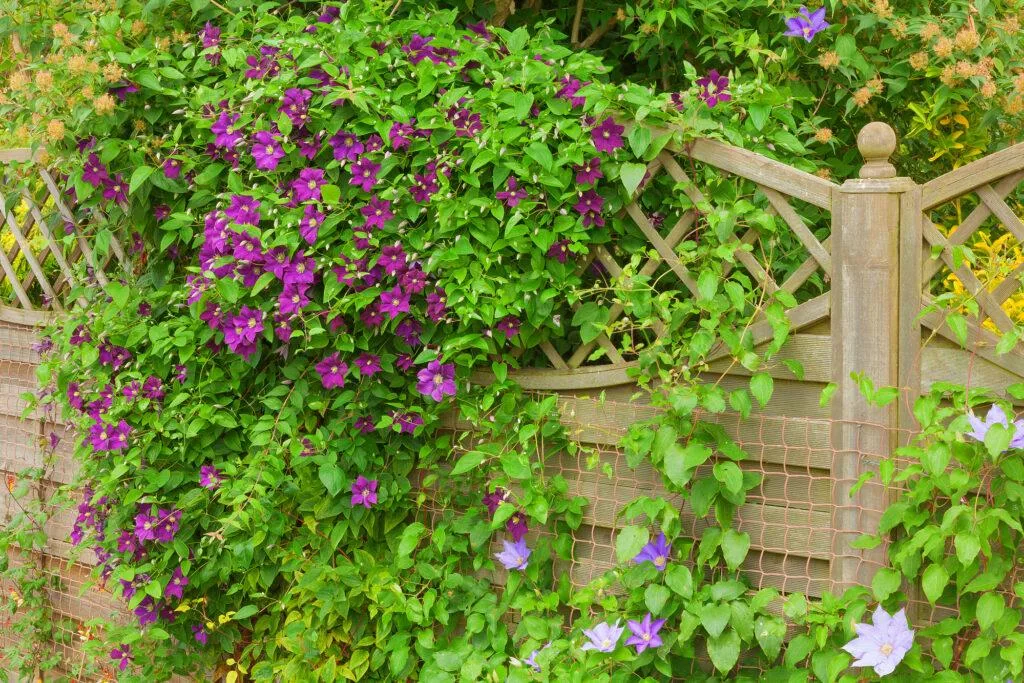
Greenery on vertical surfaces makes a big difference. Facades, low walls and fences can become scorching in summer, and the heat then radiates back into the surroundings well into the evening. Climbers create living shade, intercept part of the sun’s energy and cool through evaporation as well. The advantage is that you don’t need a large planting area. Ivy, climbing roses, clematis or trumpet vine are all suitable.
Pergolas with green cover work in a similar way. Unlike solid, fixed shading, they create soft, shifting dappled shade that feels more natural and often more comfortable. It’s important to think through where the sun hits in late afternoon, because that’s when the garden is usually most overheated.
Water cools most when used correctly
A water feature isn’t just decoration. It really helps mainly when water can evaporate from it or move gently, and when it’s placed so that airflow carries cooler air towards where you sit. It doesn’t have to be a large pond; sometimes a small wildlife container or a simple recirculating feature is enough. A bonus is support for birds and insects, which belongs in a functional garden.
For sustainable use, it makes sense to collect rainwater. Even a basic water butt helps; a larger setup can include an underground tank and drip irrigation, which delivers water directly to the roots and significantly reduces losses to evaporation.
Materials and surfaces determine how long heat will radiate back
Large areas of concrete, stone, gravel or paving absorb heat during the day and gradually release it in the evening, so the garden uncomfortably holds on to warmth. If you want to cool things down, it’s worth limiting hard landscaping, using permeable materials and choosing lighter shades that reflect more sunlight. Where hard surfacing is necessary, it helps to break up the area with planting, shade and, if possible, a permeable solution so water can soak in.
Conclusion
A cooler garden doesn’t come from one intervention, but from linking layers. The best effect comes from broadleaf trees, resilient shrubs, perennials and groundcover planted in groups, a lawn mown to around 15 cm, and climbing plants on pergolas, fences and façades. Add sensibly placed water and less heat-retaining surfaces, and the garden will start to work in summer as a pleasant, sustainable refuge from the heat.
Source: House and Garden, Bydlime na zahrade , Pestrazahrada.cz
Related articles
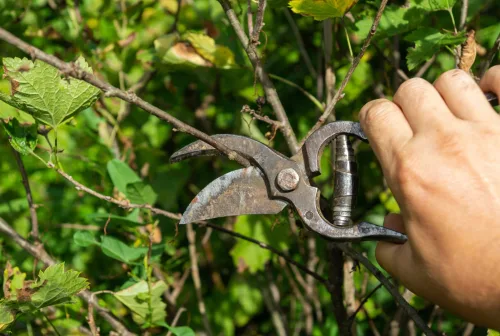
Ten Minutes in Autumn Decide Your Currant Crop
Currants crop best on younger wood, while old stems drain the plant and shade out productive new growth. A quick autumn prune keeps the bush open, healthy, and reliably fruitful next season.
White Painted Trunks in Orchards Protect Trees from a Hidden Winter Threat
Whitewashing tree trunks in winter isn’t decoration. It helps prevent bark cracking caused by sharp day-to-night temperature swings and reduces the risk of disease entering through wounds.
What to do for currant bushes in October so they’re loaded with fruit next year
October is the best time to set currant bushes up for a strong spring and a heavy crop. With the right pruning, protection and autumn feeding, you’ll encourage more flower buds and better winter hardiness.
Comments (0)
Be the first to comment.