
 English
  Polski
  Deutsch
  Nederlands
  Svenska
  Norsk
Norsk  Dansk
Dansk  Français
  Italiano
  Español
  Português
  Slovenčina
  Suomi
Suomi  Gaeilge
 Why Your Rhododendron Isn’t Flowering and What You Can Do Right Now
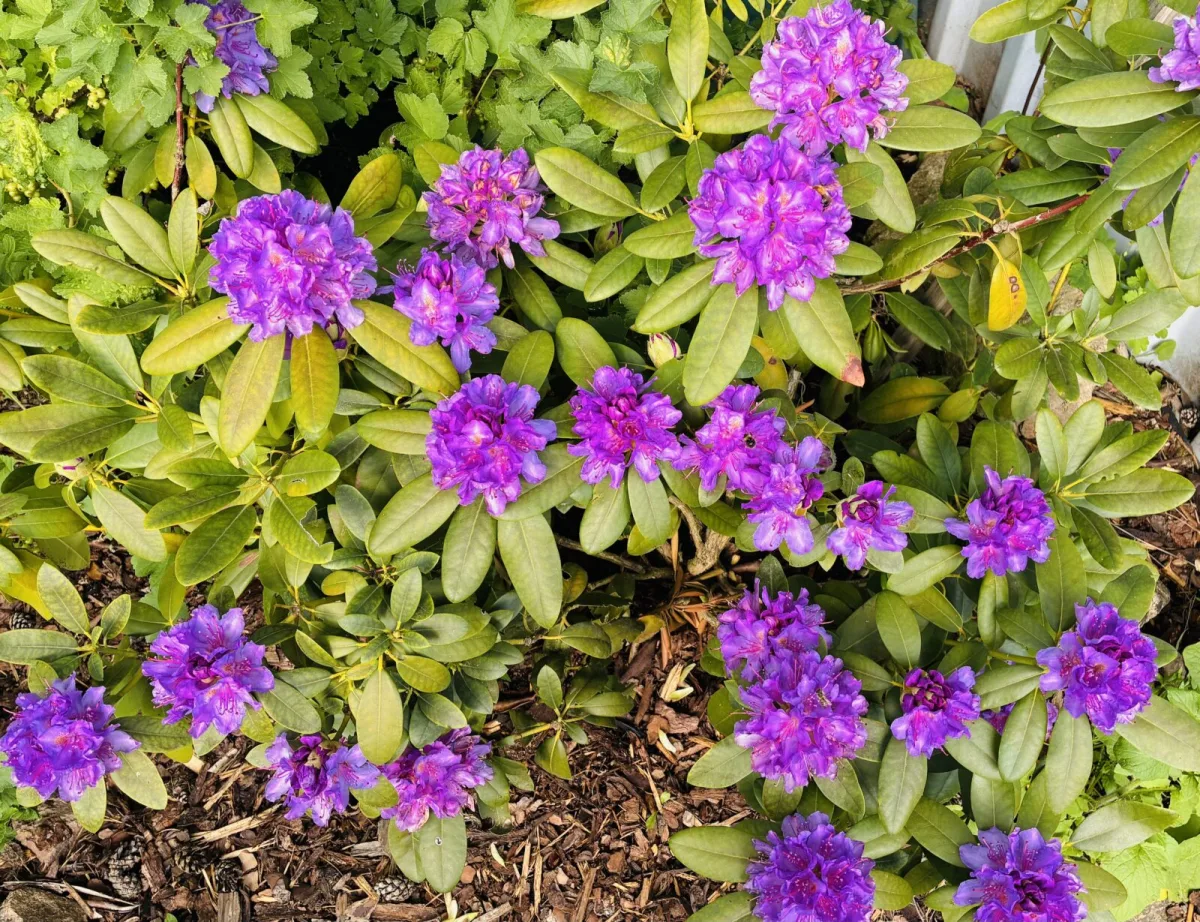
Rhododendrons are among the most popular ornamental shrubs for spring and early summer, when they can turn a garden into a riot of colour. In practice, you’ll often come across two groups: rhododendrons and azaleas. Rhododendrons tend to be medium to large, usually evergreen shrubs with bold trusses of flowers. Azaleas are usually smaller; they can be evergreen or deciduous, often with finer flowers but in richer, more varied shades and sometimes with noticeable fragrance. What most species and cultivars have in common is a need for acidic soil and even moisture without waterlogging.
Position: light, shelter, and avoiding frost pockets
The best spot is bright partial shade with dappled light, typically the edge of taller trees or the north-east side of the house, where plants won’t suffer under harsh midday sun. Deep shade under dense trees isn’t ideal, because rhododendrons then flower poorly and are more prone to problems. They can also do well in a more open place, but they need shelter: cold, drying winds in winter and spring can damage the leaves. It’s also worth avoiding places where cold air settles, and positions exposed to sharp early-morning sun after a frosty night, which increases the risk of tissue damage.
More compact alpine species can cope with more sun, provided the compost never dries out completely. With most garden hybrids, though, consistent moisture and protection from extremes matter more than “as much light as possible”.
Soil: acidity, humus, and drainage make the difference
Rhododendrons have a shallow root system and need soil that is moist but free-draining, rich in organic matter. The ideal reaction is roughly between pH 5.0 and 6.0. In heavy clay without drainage, roots suffer from lack of air; in light sandy soils, the ground dries out quickly. If your garden soil is alkaline, long-term “acidifying” a bed can be difficult, and the most reliable approach is growing in containers with a suitable ericaceous compost, or choosing more tolerant species and cultivars.
Planting: the right depth and mulch are the foundations of success
The best planting times are autumn or early spring. Depth is critical: rhododendrons must not be planted too deeply, as they root close to the surface. The rootball should only be lightly covered and thoroughly watered in after planting. Straight afterwards, a layer of mulch made from acidic materials helps, such as conifer chips or bark. Mulch retains moisture, protects surface roots, and gradually improves soil structure. It’s important that it isn’t compacted; an airy layer works far better. Each spring, it’s worth topping up the mulch, ideally while the soil is still naturally moist.
Growing in containers: a solution for alkaline soil and shaded patios
Rhododendrons can be grown very successfully in pots, especially compact varieties. Choose a quality ericaceous compost with good structure and drainage. With some peat-free mixes, the structure can break down over time, which worsens water run-off and root aeration. A practical rule is to repot about once every two years in spring as growth starts. In the year between, replacing the top layer of compost helps. If you want to keep the same container, you can carefully reduce the rootball and add fresh compost.
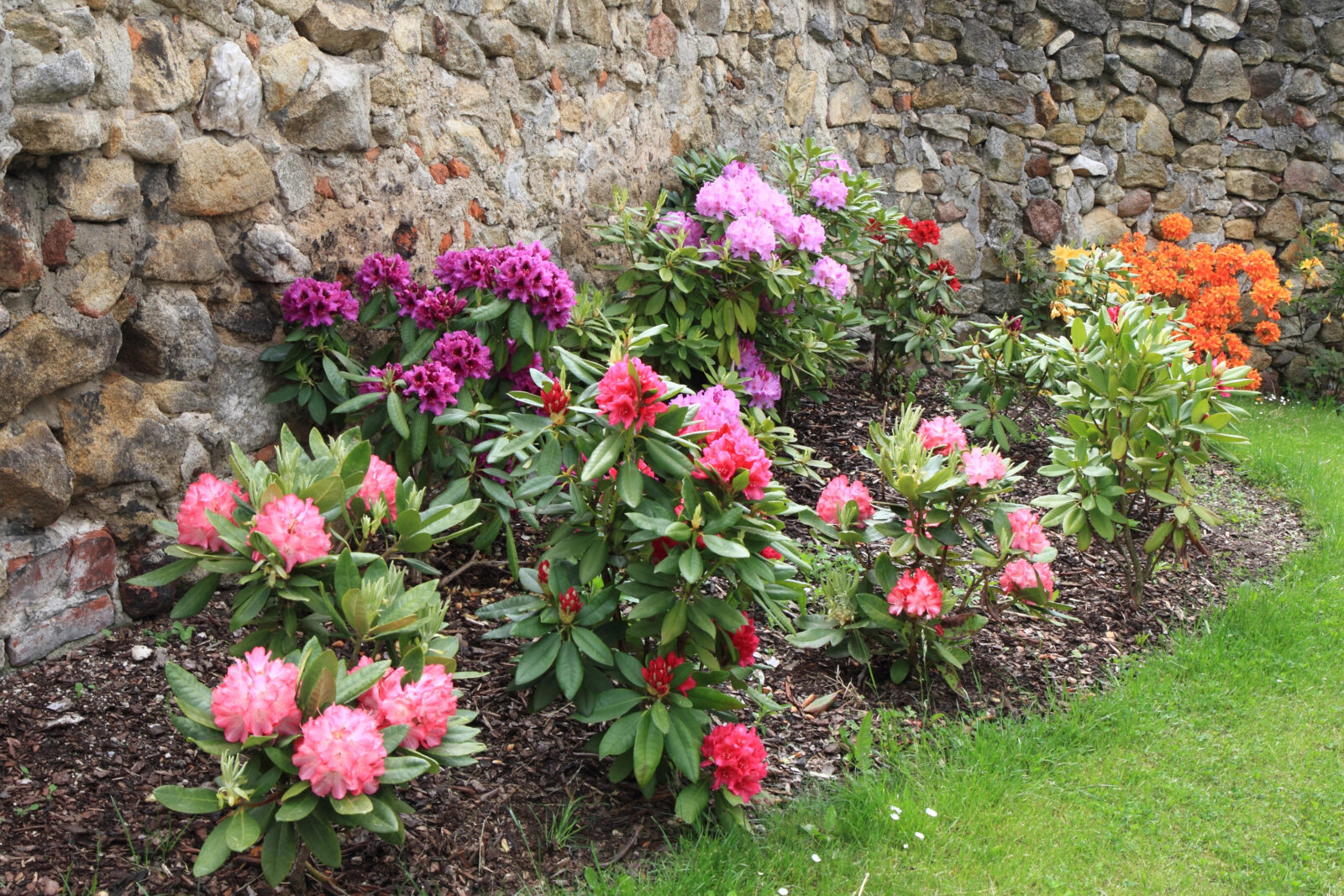
Watering: moist, not waterlogged, and beware hard water
Rhododendrons naturally thrive in areas with higher rainfall, so in drier locations watering is essential. The most critical period is from summer into autumn, when flower buds for the following year are forming. A short drought at this time can mean buds don’t form at all, or only partially, and then drop in spring before opening.
Water quality matters too. In hard-water areas, the water contains more calcium, which gradually reduces acidity around the roots. Ideally, water with rainwater. If it isn’t available, tap water usually won’t be a problem short-term in summer, but over the long term it’s better to look for an alternative.
Feeding: less is often more
In good acidic soil, rhododendrons often don’t need any significant feeding. In unsuitable conditions, however, deficiencies of magnesium, manganese, or iron can appear, typically as yellowing leaves while the veins stay green. In containers, it pays to use a slow-release fertiliser for acid-loving plants in spring, or gentle liquid feeding. It’s important not to exceed the recommended dose, because sensitive roots and foliage can scorch if overfed.
Pruning and after-flowering care: a simple routine
Rhododendrons usually don’t require regular pruning. Most often it’s enough to remove dead or damaged branches and, if possible, to pinch out spent flower trusses so the plant doesn’t waste energy on seed production. If you need to rejuvenate the shrub or limit its size, many rhododendrons will tolerate harder cutting back, especially deciduous azaleas and more rugged, thick-barked types. After such work, it’s a good idea to mulch, ensure even watering, and in poorer soils support the plant with a light feed.
Propagation: seed for species, cuttings for cultivars
Seed is a reliable way to propagate mainly botanical species, which will retain their traits. Named cultivars, to keep identical characteristics, are propagated vegetatively, most often from semi-ripe cuttings taken from this season’s matured shoots from late summer into autumn. With azaleas, timings vary by type, and some deciduous forms are harder to raise from cuttings. In practice, layering is also used; it’s slow but very reliable, and grafting is used for cultivars that are difficult to root.
The most common problems and how to prevent them
The biggest disappointment is when the shrub doesn’t flower. Often the culprit is summer drought during bud formation, or too much shade. Regular watering from July, good mulch, and a better position all help. Leaf drop after drought usually shows up as drooping and curling leaves; older leaves fall first. Waterlogging, on the other hand, leads to long-term root stress and dieback of parts of the shrub. In winter, leaves may temporarily droop in frost, but they often lift again once temperatures rise.
Rhododendrons do best with a simple combination: an acidic, humus-rich growing medium, an airy mulch, even moisture, and a sheltered position with dappled light.
Other risks include leaf scorch from wind and winter sun, damage to flowers from rain or frost, and chlorosis caused by unsuitable pH. Pests can include vine weevils, especially on container plants, along with various sap-sucking insects; with rhododendrons, diseases affecting buds and shoots are also monitored. Most problems, however, can be prevented by respecting the basic requirements of this group from the outset: acidity, moisture, drainage, and the right light.
Source: Rhs, Plantura Magazine , Pestrazahrada.cz
Related articles
Next year you can harvest better if you don’t sow carrots where they won’t thrive
Carrot root fly can ruin carrots, parsley and celery from the inside out, often without obvious warning until harvest. Better site choice, rotation, later sowing and simple physical barriers can dramatically cut damage next season.
How to Propagate Roses from Cuttings at Home and Fill Your Garden with Blooms Almost for Free
Want more roses without paying for new plants? With a few healthy cuttings and a simple plastic-bottle mini greenhouse, you can root new bushes at home in just a few weeks.
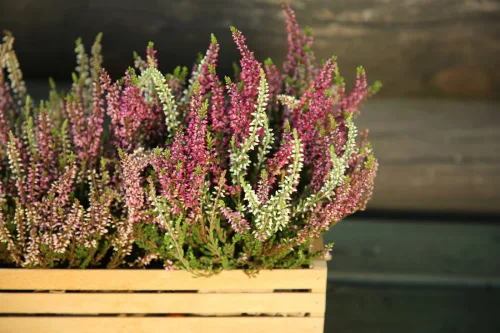
Heathers can cope where other plants won’t, but one soil detail decides everything
Heathers and heaths are tough evergreen shrubs that can flower across the seasons when you choose the right types. Success hinges on matching the plant to your soil pH and ensuring free drainage.
Comments (0)
Be the first to comment.