
 English
 Polski
 Deutsch
 Nederlands
 Svenska
 Norsk
 Dansk
 Français
 Italiano
 Español
 Português
 Slovenčina
 Suomi
 Gaeilge
Why Isn’t Your Poinsettia Turning Colour
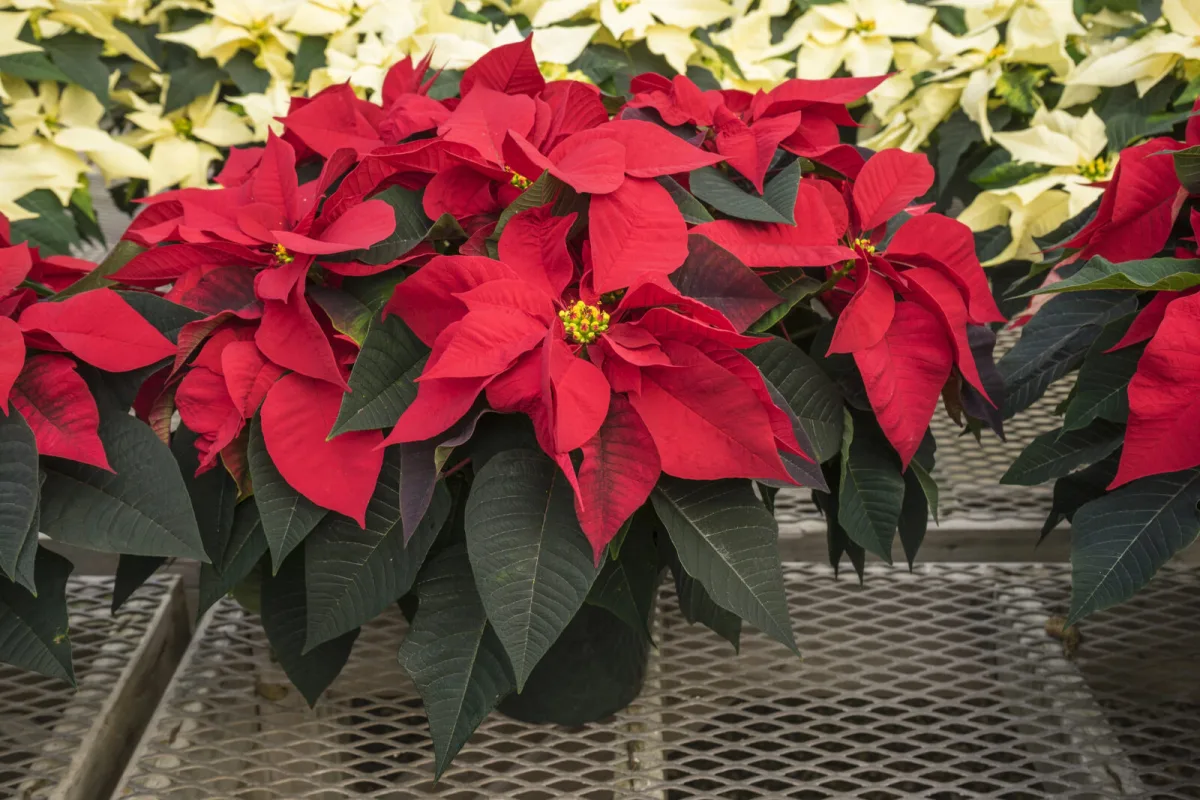
The poinsettia is one of the most popular houseplants of the winter season. It looks its best during Advent and Christmas, when it’s crowned with vividly coloured bracts that resemble flowers. Most are red, but you can also find shades of pink, cream, salmon, or deep burgundy. Many people throw it away after the holidays and buy a new one next year because it’s inexpensive. Even so, it can be grown on successfully and, with the right approach, encouraged to colour up again the following season.
This plant is sensitive to cold and draughts, so it needs careful handling, especially when you’re buying it and taking it home. It’s also worth knowing that if a stem or leaf is damaged, a white milky sap leaks out that can irritate skin and eyes. Take care when handling it.
How to choose a nice, healthy plant
When choosing, the overall look and size matter most. The colour is purely a matter of taste, or what suits your interior. Traditional red remains the favourite, but lighter and less common varieties can look striking too.
Plant size varies a lot. Standard plants can reach roughly 60 cm tall and around 30 cm wide, while miniature forms may be only about 10 to 15 cm. A larger plant makes a strong focal point in a living room, while smaller ones can be grouped together for an attractive display.
When shopping, pick a plant that is firm, not limp, and not dropping leaves. If it already looks wilted in the shop or is shedding bracts, it’s often a sign of cold damage. Poinsettias can’t tolerate low temperatures, and being left in a cold draught, for example near a shop entrance or outside on the pavement, can harm them quickly.
Safe buying and getting it home
Poinsettias are most commonly sold from November until Christmas, already fully grown and coloured. The key during purchase is preventing chilling. Ideally, buy the plant on a milder day and have it wrapped at the top in the shop, or slip it into a bag so it’s protected from cold air. Get it home as quickly as possible.
If it starts to wilt after you bring it home and gradually drops leaves or coloured bracts, the cause is often poor storage even before you bought it. In that case its condition usually continues to deteriorate, and recovery can be difficult.
Where to place a poinsettia
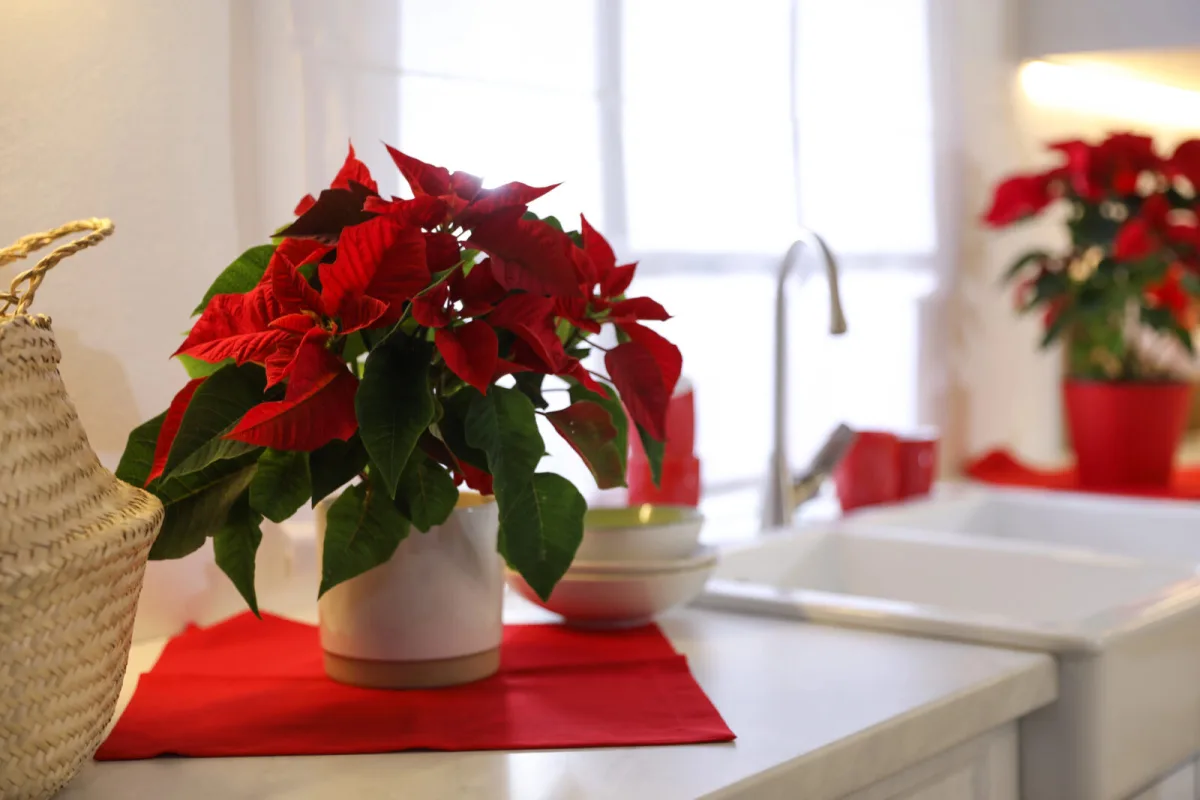
It does best in a bright spot out of direct sun. A warm room without draughts is ideal, where the temperature doesn’t fall below 13 to 16 °C. A small table near a window is often a good choice, but not directly on the windowsill, which can be overheated by a radiator during the day and then too cold at night.
Unsuitable places include behind drawn curtains, near frequently opened doors, in an unheated hallway, on a porch, or in a draught from windows. This plant needs more stable conditions than many other houseplants.
Watering and everyday care during the holidays
While the plant is at its showiest, it doesn’t need complicated care. The biggest mistake is overwatering. The compost should be only lightly moist, never waterlogged. Water only when the surface of the compost is starting to dry.
A practical method is to stand the pot in a container of lukewarm water for 10 to 20 minutes so the compost can soak up the moisture from below. Then let excess water drain away. The plant should not sit in water long-term.
Higher humidity also helps the coloured bracts last longer. If possible, you can mist the plant lightly. But still keep an eye on the compost so it doesn’t become too wet.
Does it need repotting and feeding?
During the Christmas period, poinsettias usually don’t need repotting. If you only want to display it for a few weeks, keep it in its original pot. If you’re combining several plants in a larger container, use a good-quality peat-free multipurpose compost and ensure excellent drainage.
Feeding isn’t necessary during winter display. It only becomes useful if you decide to keep the plant after New Year. In that case, feed about once a month with a fertiliser higher in potassium, such as a tomato feed.
How to get it to colour up again next year
Keeping a poinsettia for another season is possible, but it takes patience. In spring, around April, cut the plant back hard to about 10 cm. Then keep it at a temperature of around 13 °C. In early May, you can repot into fresh compost with some coarser material mixed in to improve drainage.
Over summer it does well in a bright, slightly cooler place, ideally at 15 to 18 °C. The crucial period comes in autumn. Poinsettias form coloured bracts in response to shortening day length. From the end of September, they need a long period of darkness every day, roughly so they receive no more than 12 hours of light per day.
As soon as lights are switched on in the room in the evening, the process can be disrupted. So the plant needs to be covered for part of the day, or moved into a dark room where it won’t be exposed to artificial lighting. This routine needs to be maintained for about 8 to 10 weeks. For good colour, a steady temperature of around 18 °C also helps.
Bear in mind that home-grown plants are often taller and looser in habit than shop-bought ones. Commercially grown poinsettias are frequently treated to keep them compact.
Propagation and pruning
No pruning is usually needed during winter. However, if you’re growing it on, the spring cut-back is important to restart growth. Poinsettias can also be propagated from softwood cuttings taken from spring growth, ideally in May. It’s wise to wear gloves for this job, as the milky sap can irritate the skin.
Most common problems and how to prevent them
The biggest enemy is cold. If the plant has suffered temperature shock, it will start dropping leaves and bracts within days to weeks. This kind of damage is very hard to reverse. At home, provide plenty of light, warmth, and moderate watering.
Other issues can occasionally appear. Overwatering can lead to grey mould. Pests such as scale insects or mealybugs may also occur, as with other houseplants. In general, though, poinsettias don’t suffer from disease often if conditions are suitable.
Safety when growing
Poinsettias are not considered highly poisonous, but they should not be eaten. Their milky sap can irritate skin and eyes, so it’s best to avoid contact, especially for sensitive people and children. Take care when pruning or propagating.
If you protect your poinsettia from cold, avoid overwatering, and give it long, uninterrupted nights without light in autumn, it can bring you joy for more than just one holiday season.
Source: RHS, Love the Garden , Pestrazahrada.cz

A nurse by profession, she is passionate about healthy living, nature, and everything that benefits both people and the world around them. In her free time, she enjoys gardening, cooking, sewing, and caring for her family. In her articles, she loves combining professional expertise with practical experience from the garden and everyday life.
Related articles
How to Grow a Heavy Tomato Harvest Every Year in Twelve Simple Steps
A reliable tomato crop comes down to a handful of proven habits repeated through the season. Follow these 12 steps—from sowing and spacing to watering and picking—to harvest healthier plants and more fruit every year.
Brown Tips on Monstera Leaves Reveal the Winter Problem Plaguing Most Homes
Brown leaf tips on Monstera adansonii are most often a sign of dry indoor air in winter. With the right light, watering routine and a more humid microclimate, Monkey Leaf stays lush and grows quickly.
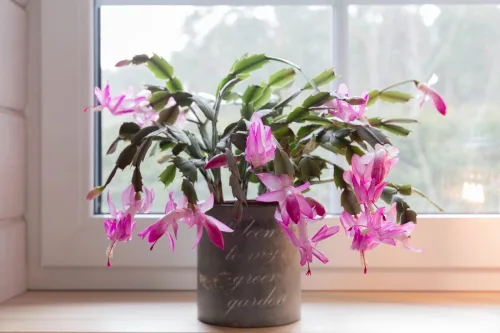
How to Prepare a Christmas Cactus in November for Spectacular Winter Blooms
November is the key month for setting buds on a Christmas cactus. With long, uninterrupted nights, cooler temperatures, and steady watering, you can encourage reliable winter flowering.
Comments (0)
Be the first to comment.