
 English
  Polski
  Deutsch
  Nederlands
  Svenska
  Norsk
Norsk  Dansk
Dansk  Français
  Italiano
  Español
  Português
  Slovenčina
  Suomi
Suomi  Gaeilge
 The Secret to a Beautiful Clematis Is the Right Position, Pruning and Easy Propagation
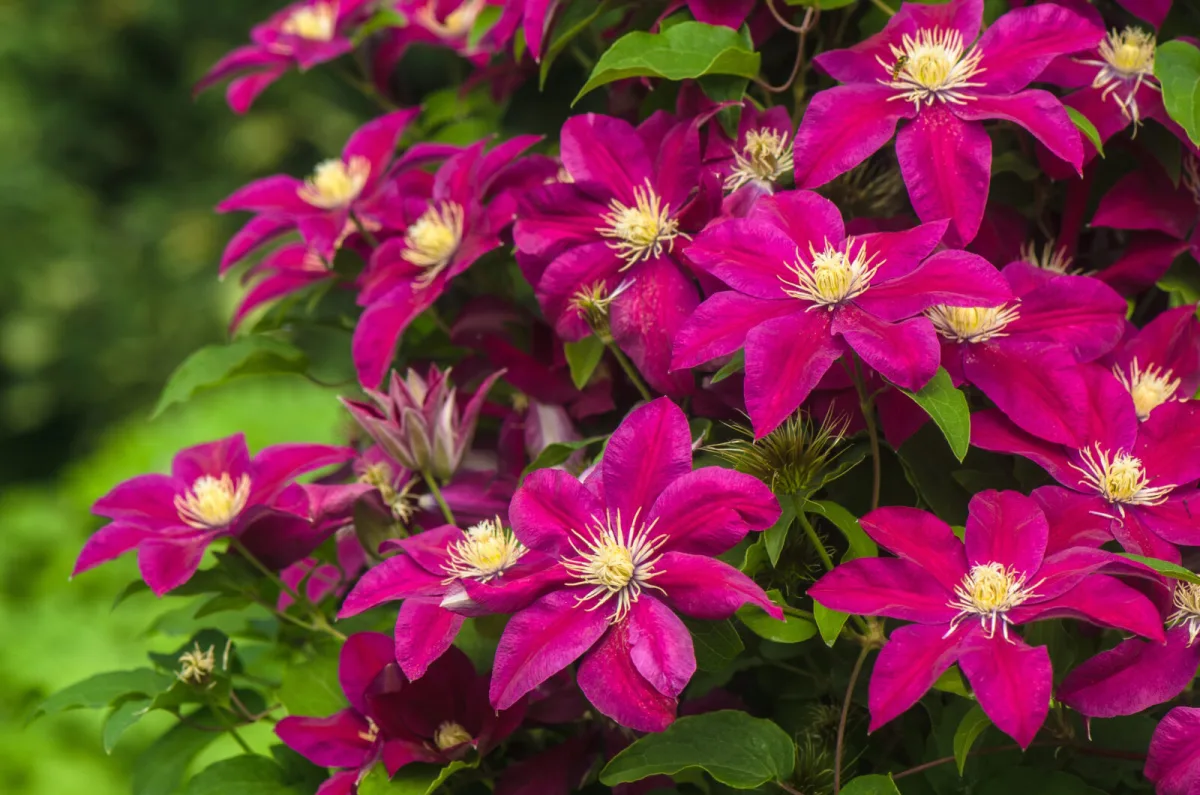
Clematis is one of the most rewarding ornamental plants you can grow in the garden. It offers an enormous range of flower shapes and colours, from small starry blooms to large, show-stopping flowers, and it makes brilliant use of vertical space: it will climb a pergola, fence, obelisk, or even grow well in a container on the patio. With a sensible choice of species and cultivars, you can also enjoy a long flowering season from early spring right through to autumn.
The key rule for success: most clematis like their stems in the light, but their roots kept cool and evenly moist.
How to choose the right clematis
Growth habit and size
First, decide whether you want a climbing clematis or an herbaceous clematis for the border. Herbaceous types usually form clumps and grow to around 75 to 150 cm; they suit a sunny border edge and often need support, or a neighbouring shrub to lean into. Climbing clematis vary widely: from compact cultivars suited to pots to very vigorous species capable of covering a house wall or scrambling up into a tree.
Site and aspect
Most clematis thrive in sun or light partial shade, but flowering is often poor in deep shade. There are cultivars suited to less sunny walls, but expect slower growth and fewer flowers. Evergreen clematis and early-flowering types often appreciate a sheltered spot out of draughts, where winter winds and late spring frosts won’t damage them.
Flowers, fragrance and flowering time
With clematis, the main question is when you want the biggest impact in the garden. Some flower in winter and spring, others in the first half of summer, and many from mid-summer into autumn. Large-flowered cultivars can be repeat-flowering, while many species clematis tend to bloom in one strong flush. Some types also produce attractive seedheads with fluffy, feathery plumes that look good long after flowering.
Planting step by step
When to plant
Spring is best, or early to mid-autumn, when the soil is still warm but naturally moist, helping roots establish quickly. Container-grown plants can also be planted in summer, but you’ll need to water regularly. Don’t plant into waterlogged or frozen soil, or in the middle of a prolonged drought.
Soil and site preparation
Clematis is fairly adaptable, but it grows best in deep, fertile soil that stays evenly moist yet drains well. Work organic matter into heavy clay as well as very sandy soil—mature compost or well-rotted manure are ideal—to improve structure and water-holding.
How deep to plant and where to place it by a support
With large-flowered hybrids it often pays to plant slightly deeper, giving the plant a better chance to reshoot from below-ground buds and recover if stems are damaged. For many species clematis and late-flowering types, it’s usually enough for the rootball to sit just below soil level. If you’re planting by a fence or wall, don’t place the plant right against the foundation: the soil there is often dry and roots can struggle. Leave some space and guide the shoots to the support with a cane or ties until they can cling on by themselves.
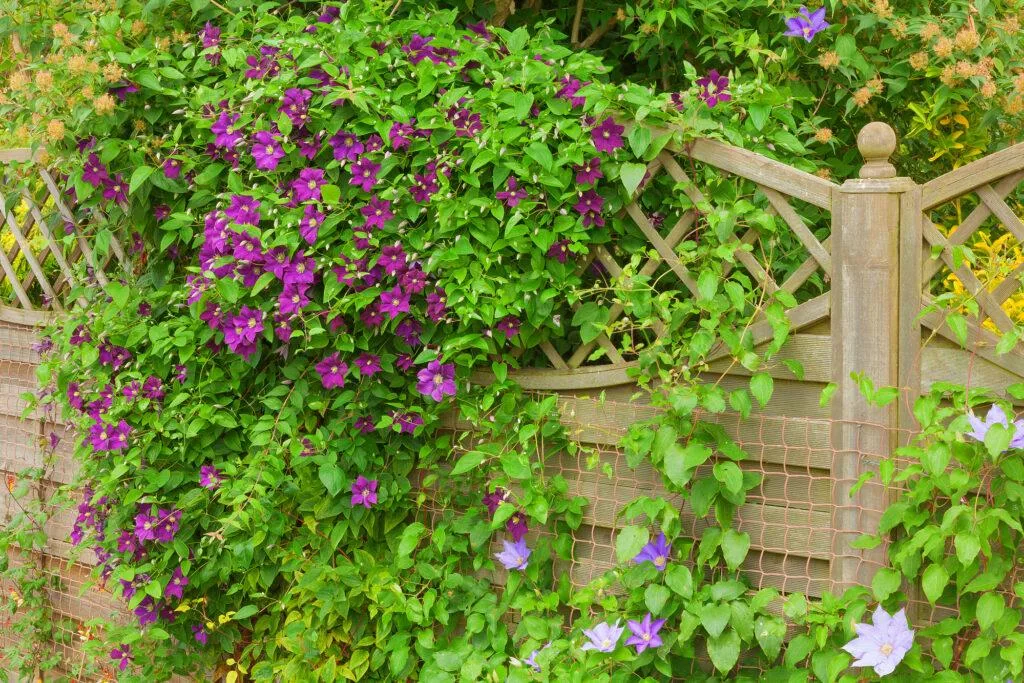
Clematis in a container
Compact cultivars can be grown in a pot, provided it has sufficient volume and depth. What matters is that the compost isn’t overly light and quick to dry out; loam-based mixes are often a better choice. Even in a container, roots need to stay cooler, so a top layer of gravel can help, or underplant with low-growing plants to shade the surface of the compost.
Year-round care for abundant flowering
Watering and maintaining moisture
Clematis dislike drying out for long periods during active growth. Water newly planted clematis during dry spells for the first few seasons until they are well established. In containers, check moisture much more often, because the root space is limited and compost dries out faster. It’s better to water thoroughly less often than to give frequent small amounts, so moisture reaches deeper roots.
Mulch and feeding
In garden soil, an annual mulch with compost is often enough. Mulch helps retain moisture, improves the soil, and suppresses weeds. Don’t pile mulch directly against the stems, to avoid rotting. Clematis in pots usually benefit from feeding through spring and summer according to the fertiliser you choose, as nutrients leach from containers more quickly.
Tying in and training shoots
Although climbing clematis can attach themselves using leaf stalks, it’s worth helping so the growth is spread evenly over the support. You’ll get more flowers and avoid a tangled mass with a bare base. Tie in loosely, ideally with soft twine, so stems aren’t rubbed or constricted.
Pruning clematis without stress
Pruning is the most common source of uncertainty, yet it comes down to flowering time. As a general rule, early-flowering clematis bloom on last year’s wood and need minimal pruning, while clematis that flower from summer onwards bloom on the current season’s shoots and tolerate (and often benefit from) harder pruning.
After planting: a strong start for bushy growth
With newly planted climbing clematis, cutting stems back low above the ground helps the plant produce more shoots from the base rather than remaining a single whip. After that, you can pinch out young tips to encourage branching.
Pruning by flowering groups
Clematis that flower in winter and spring are usually pruned lightly just after flowering, because they carry their flower buds from the previous season. Large-flowered early-summer cultivars often flower in two waves and need a gentler approach so you don’t lose the first flush. By contrast, clematis that flower from late June onwards, along with herbaceous types, are pruned in late winter, when stems are cut back harder; the plant then regrows strongly and flowers freely on new growth.
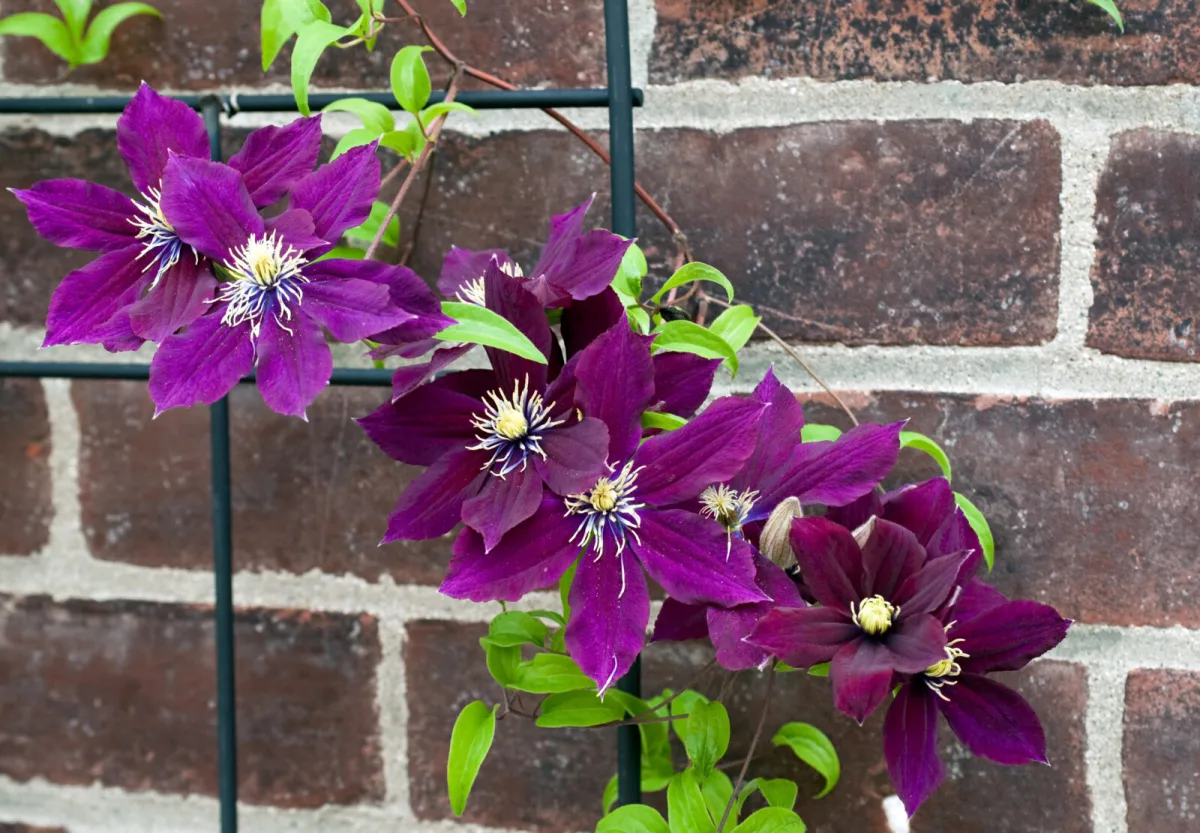
Propagation: how to get new plants
Taking cuttings
The most reliable way to get a true copy of a favourite cultivar is to take cuttings from softwood to semi-ripe, non-flowering shoots from spring into summer. With high humidity and steady warmth, they usually root within a few weeks, and the young plants can then be grown on ready for planting out.
Layering
For a small number of new plants, layering is straightforward: peg down a long, flexible shoot at several points, cover it with soil, and leave it to root. Once roots have formed, the new sections can be cut away from the parent plant and transplanted.
Sowing seed
Species clematis can also be grown from seed. It’s slower, but interesting, because seedlings can vary slightly. Seeds are often sown in autumn and allowed to go through winter cold; flowering may not come for several years.
Most common problems and how to prevent them
Clematis can be attacked by aphids, slugs, and other pests, especially on young growth. However, many issues come down to conditions: drought stress weakens plants and makes them more prone to disease; excessive heat can shorten flower life; and wind can snap brittle stems. With large-flowered hybrids, growers often fear clematis wilt, when shoots suddenly blacken and collapse; planting a little deeper and keeping plants in good condition helps reduce the risk. If your plant is wilting, also check for mechanical damage at the base—for example slug damage.
Clematis as a long-term investment in the garden
Once clematis has established well, it rewards you each year with strong growth and generous flowering. The key is thoughtful selection for your site, careful planting with attention to the roots, even moisture, and correctly timed pruning. Then all that’s left is to train the shoots over the support so they form an airy “flowering wall” that works in the garden as both a striking feature and a soft backdrop for other plants.
Source: Rhs, Garden Design , Pestrazahrada.cz
Related articles
The Christmas Amaryllis That Can Bloom for Years but Most People Throw It Away After Flowering
Hippeastrum is a spectacular winter-blooming bulb that, with the right care, will flower again year after year. Learn how to plant it correctly, look after it after flowering, and bring it into dormancy so it reliably reblooms.
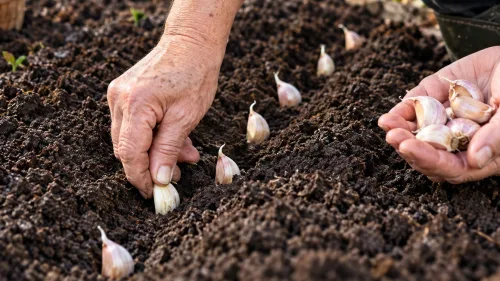
How to Grow Winter Garlic for a Much Bigger Harvest
Autumn planting is the key to strong, healthy winter garlic, but the details make all the difference. With the right timing, bed choice, seed-clove treatment and a simple bicarbonate trick, you can noticeably boost yield.
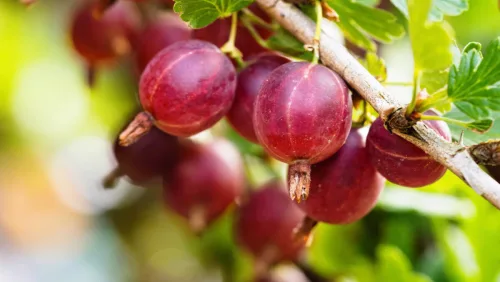
A tree or shrub planted properly in autumn can outpace spring stock and improve fruiting
Many fruit trees and soft-fruit shrubs establish better when planted in autumn, because roots keep growing while the top is dormant. Done well, this head start means stronger spring growth, less watering, and a healthier first year.
Comments (0)
Be the first to comment.