
 English
  Polski
  Deutsch
  Nederlands
  Svenska
  Norsk
Norsk  Dansk
Dansk  Français
  Italiano
  Español
  Português
  Slovenčina
  Suomi
Suomi  Gaeilge
 Speed Up Cucumber Germination by Soaking Seeds for an Earlier Harvest
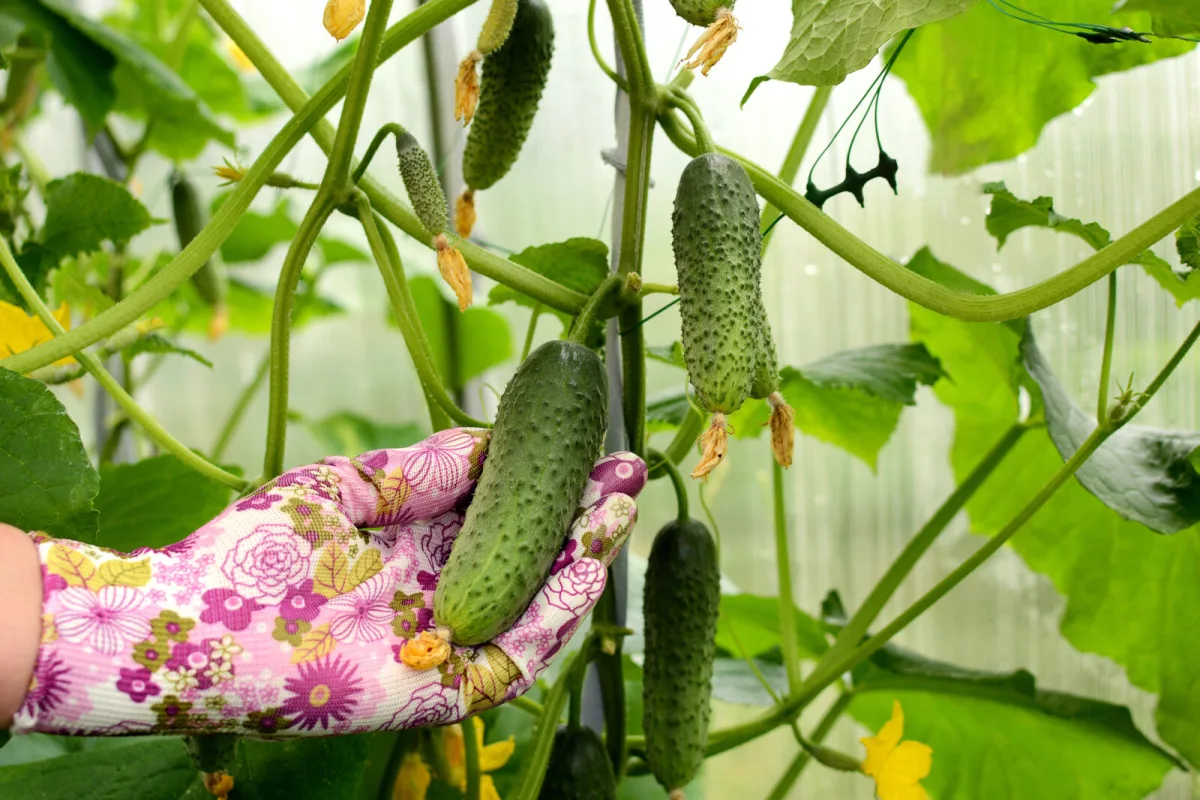
Cucumber is a classic heat-loving crop that can’t tolerate cold—let alone frost. That’s why, in Central European conditions, it’s usually sown outdoors only after mid-May, when the risk of late ground frosts is much lower. If you want even more certainty, you can start seeds in pots and move the plants to the bed in June. Speeding up germination can be used in both cases—whether you sow directly or raise plants in containers first.
Soaking seeds in water isn’t mandatory, but it can bring the appearance of the first leaves forward by about a week. In practice, that means a faster start for the plants and often an earlier harvest, provided the growing conditions that follow remain favourable for cucumbers.
Temperature is crucial for germination
Soaking alone won’t help if you don’t keep cucumbers warm. Speeding things up only makes sense if you maintain higher temperatures for the seeds and later for the sowing as well. The ideal range for germination and early growth is roughly 22 to 24 °C. Cucumbers can still germinate at temperatures around 13 °C, but growth slows dramatically and the benefit of soaking can almost disappear.
Without any acceleration, cucumbers usually germinate in about 5 to 10 days. In everyday conditions it’s often closer to the upper end, because the temperature on a windowsill, in a greenhouse, or in the soil isn’t consistently optimal.
How to soak cucumber seeds in water
Preparation and choosing the water
Pour the seeds into a small container, such as a mug. Then add just enough water to cover them. Room-temperature, standing water works best—for example, the same water you normally use for houseplants. Very cold water isn’t suitable, because it chills the seeds unnecessarily and slows the start of germination.
Soaking time and a suitable place
Place the container with the seeds in a warm spot for 24 to 36 hours. A bright windowsill where it’s warm during the day is ideal, while still avoiding rapid overheating. The goal is for the seeds to absorb water and “wake up”, not to start producing a sprout in the container.
How to recognise properly soaked seeds
After soaking, cucumber seeds look noticeably plumper and feel slightly slippery on the surface. Usually, you won’t see sprouts yet—they should appear only in the soil. That’s perfectly fine, and there’s no need to push the process further, because soaking for too long increases the risk of problems.
Sow immediately—no exceptions
Soaked seeds need to be sown without delay, either straight into the bed or into pots, depending on your chosen method. The key is not to dry the seeds out again after soaking and not to hold them back for a later date. That kind of attempt usually ends with the seeds dying and failing to germinate.
Another way to speed things up—and its pitfalls
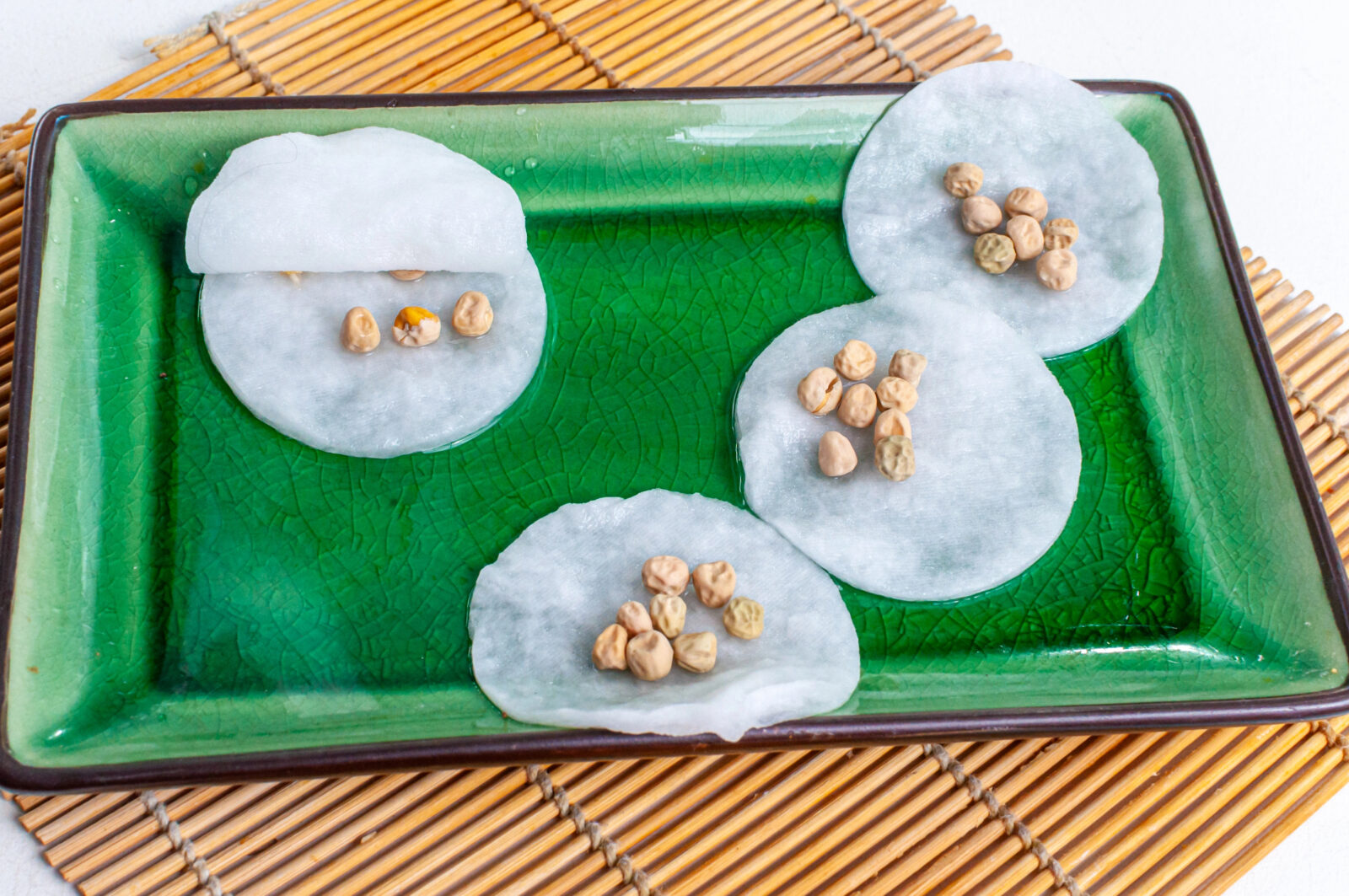
Another option is pre-sprouting on damp paper or kitchen towel. This method can be effective, but it’s more sensitive to mistakes. If the paper dries out even briefly, the seeds can be easily damaged and stop being viable. It therefore requires regular checks of moisture and suitable temperature conditions.
What can naturally support germination
An interesting helper can be dill. If you sow cucumbers next to dill or together with it, you may find the cucumbers get going faster. Dill releases substances that can support germination and early development of cucumbers. In practice, it’s a simple trick you can use without any special products.
Traditional soaking in milk or honey—and what might be behind it
In the past, cucumber seeds were sometimes soaked in milk or honey as well. The point of these old methods wasn’t primarily to speed up germination, but rather the belief that the fruits would be tastier and sweeter. Even so, there may be a grain of truth in it. Both milk and honey can encourage a certain microflora that acts protectively on the seed surface and may reduce attack by pathogenic fungi. The result can be more vigorous plants that grow more briskly and, when in good condition, have a better chance of cropping well.
Summary for a faster start with cucumbers
If you want to speed up cucumber germination, the simplest approach is to soak the seeds for 24 to 36 hours in lukewarm, standing water, then sow immediately and, above all, maintain a temperature of around 22 to 24 °C. Without warmth, cucumbers stall even if the seeds were soaked beforehand. If you also time sowing sensibly and, if you wish, plant near dill, you’ll get a quicker start and an advantage that can show up in an earlier harvest too.
Source: The Spruce, Niepodlewam, Pestrazahrada.cz

A lover of nature, gardens, and everything that moves, blooms, or grows. He literally grows everything, from herbs to rare species, and he enjoys caring for animals just as much. In his work, he connects modern technology with tried-and-tested grandmotherly methods and is happy when both paths lead to the same goal.
Related articles

The Christmas Amaryllis That Can Bloom for Years but Most People Throw It Away After Flowering
Hippeastrum is a spectacular winter-blooming bulb that, with the right care, will flower again year after year. Learn how to plant it correctly, look after it after flowering, and bring it into dormancy so it reliably reblooms.
How to Grow Winter Garlic for a Much Bigger Harvest
Autumn planting is the key to strong, healthy winter garlic, but the details make all the difference. With the right timing, bed choice, seed-clove treatment and a simple bicarbonate trick, you can noticeably boost yield.
A tree or shrub planted properly in autumn can outpace spring stock and improve fruiting
Many fruit trees and soft-fruit shrubs establish better when planted in autumn, because roots keep growing while the top is dormant. Done well, this head start means stronger spring growth, less watering, and a healthier first year.
Comments (0)
Be the first to comment.