
 English
  Polski
  Deutsch
  Nederlands
  Svenska
  Norsk
Norsk  Dansk
Dansk  Français
  Italiano
  Español
  Português
  Slovenčina
  Suomi
Suomi  Gaeilge
 Safe and Effective Ways to Remove a Tree Stump from Your Garden Without Hassle
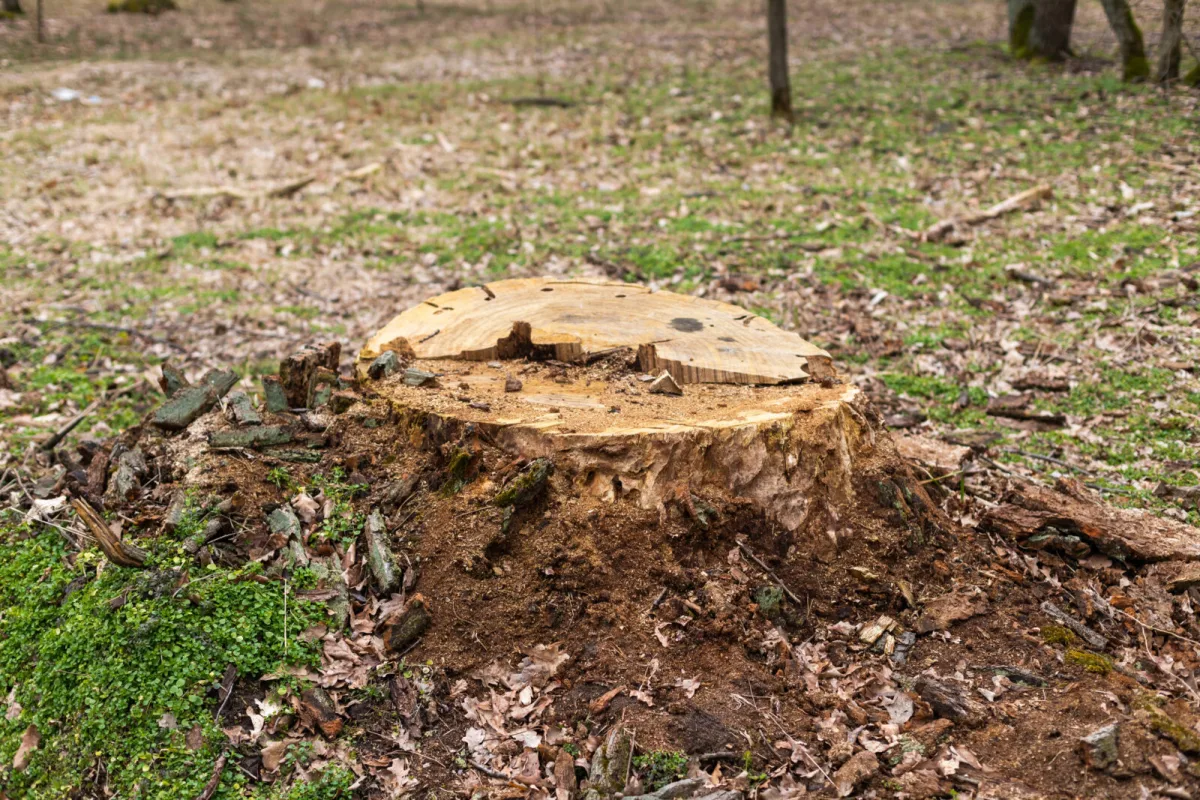
Once the tree is gone, the stump is next. And that can turn into a surprisingly stubborn problem. It depends on the tree species, your soil type, the size and spread of the roots, and what you plan to do with the spot afterwards. Sometimes it’s enough to leave the stump and simply cut it down lower; other times it needs to come out completely so it doesn’t get in the way of building work, planting, or landscaping. Before you start, it pays to ask yourself a few practical questions and choose a method that’s safe, realistic and affordable.
Questions to clarify in advance
What’s your plan for the space where the stump is
First, think about what you want to create in that spot. If that corner of the garden is going to become a natural area, similar to a woodland bed, it can make sense to leave the stump and let it gradually break down. On the other hand, when establishing a productive garden, a new lawn, a path or a patio, a stump is an obstacle that will sooner or later cause trouble. If there’s no risk of tripping and it won’t complicate mowing, sometimes it’s enough to cut the stump as low as possible and leave it alone.
How much you want to invest in removal
Professional removal can be surprisingly expensive, even for a stump that doesn’t look like a big deal. The price varies by region, access to the property and the size of the stump, but even a smaller one can cost hundreds to thousands of Czech crowns. It’s also important to factor in that stump removal is often not automatically included with tree felling and may be billed as a separate service. If you’re hiring a company to fell the tree, ask about the stump right away and have them explain the options.
Will you need to backfill and level the hole that’s left
After pulling a stump or grinding it out, there’s usually a hollow left behind. Some companies will backfill and level it, while others leave the finishing work to you. If you want to plant straight away or make a new bed, you’ll need to add soil. Bear in mind that the ground settles over time, so it makes sense to firm it as you backfill, or even mound it slightly and let the surface drop gradually. Settling can take longer than one season.
If you want to plant a tree again nearby, it’s often better to move the planting spot away from the original one. A tree usually establishes better in the original garden soil than in imported substrate or in the leftover woodchips from stump grinding. And if you’re not sure why the original tree declined, shifting the planting site reduces the risk that the new tree will face the same issue.
Five safe and effective ways to deal with a stump
Grinding the stump with a specialist machine
The cleanest and often the most practical route is to have the stump ground out. A stump grinder has rotating teeth that progressively chip the wood down below ground level. This creates a mix of woodchips and soil that can be left in place to rot down, or taken away. Afterwards you can top up with soil and overseed with grass or lay turf.
Grinders can be hired, but they’re dangerous machines. Without experience, it’s safer to leave the job to a contractor with properly trained operators and insurance. With any noisy, powerful equipment, you must use eye and hearing protection and follow the manufacturer’s instructions.
Digging out the stump by hand
A smaller stump can sometimes be removed by hand, but don’t underestimate the work. Even a stump that looks modest can have a deep taproot that anchors the whole root plate like a mooring. You’ll also often discover you need to dig a larger hole than expected, because you have to get underneath the roots and cut them back bit by bit.
Water can help. If you wash away the soil around the stump in a radius of roughly 50 to 60 cm with a jet of water, the roots are easier to expose. You can do it with a garden hose fitted with a nozzle, faster with the pressure from a pressure washer. Then you cut through the roots gradually with a sharp spade, loppers, or another suitable tool. Once the roots are severed, try rocking the stump. If it moves, you’re close; if it doesn’t, keep exposing and cutting.
A useful trick is to leave a longer section of trunk on the stump. A piece several metres long acts as a lever, making it easier to rock and pry the stump free. After removal, you may need to rinse off soil to make it lighter, or cut it into smaller sections. With larger diameters, the job quickly becomes unrealistic for one person.
Before any digging, it’s essential to check where utilities run. In practice, that means finding out the procedure for your area and having cables and pipes marked to prevent injury or damage.
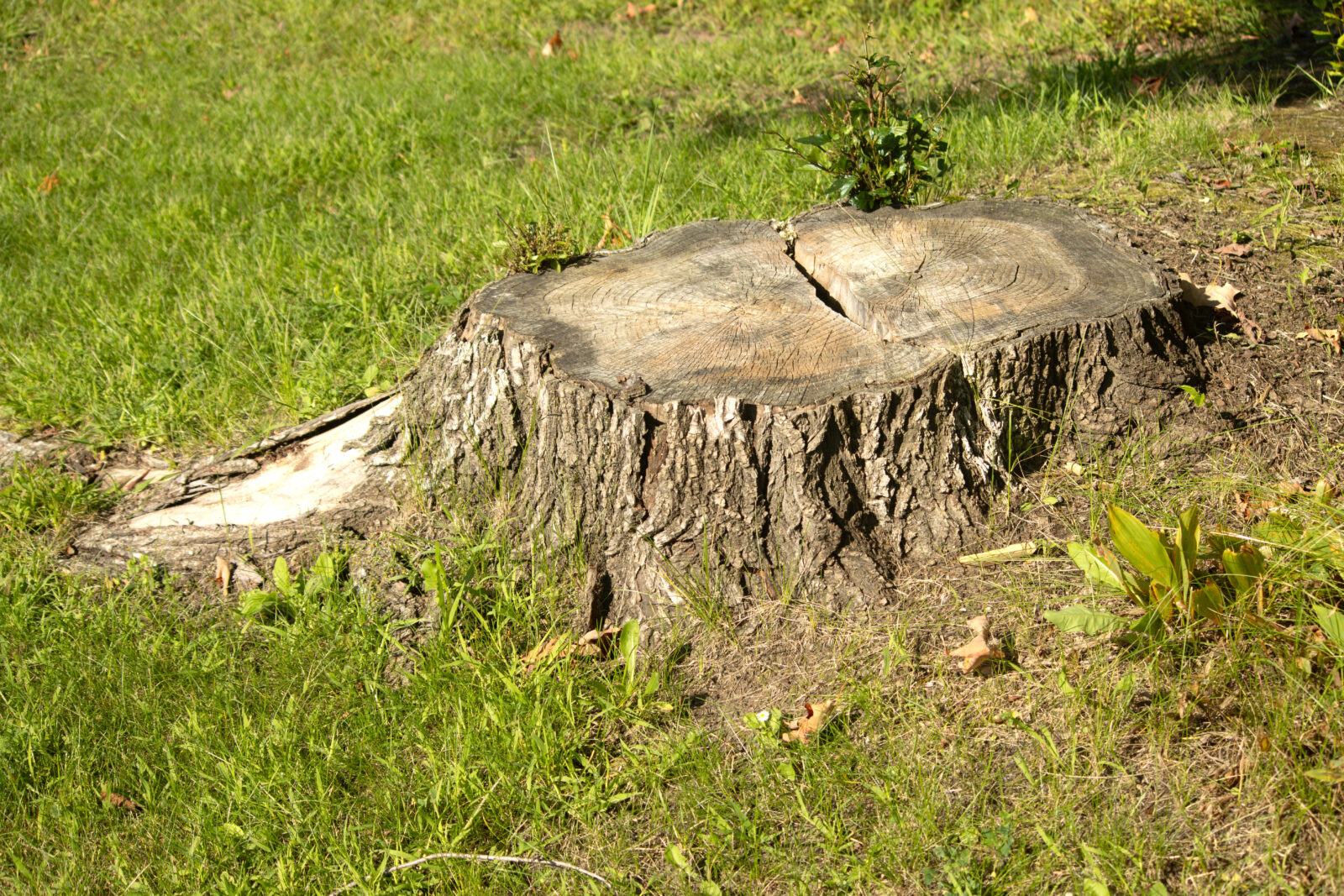
Using heavy machinery
If you have access to a skid-steer loader, a tractor with attachments, an excavator, or similar machinery, a stump can be removed quickly. The key factor is an experienced operator. Heavy machines can be dangerous, and a stump can be more deceptive than it looks. Without practice, don’t attempt it—the risk of property damage and injury can be far higher than any potential savings.
Let the stump rot and break down
There are products designed to speed up wood decomposition. Typically, you drill holes into the stump, fill them with the product, and wait. Some versions also contain substances that suppress regrowth from suckers. Expect this to be a longer process and the results won’t be immediate.
An even cheaper option is purely mechanical and chemical-free. Drill several holes into the stump to a depth of about 15 to 20 cm, fill them with water, and cover the stump so it doesn’t dry out. The cover can be soil or mulch. The process can take years, but it’s low-effort. If you use plastic as a cover, it’s important to remove it in time before it starts to degrade.
Cut it down and hide the stump within planting
You don’t always need to remove a stump physically. Sometimes it’s enough to get it out of sight. One solution is to cut it as low as possible and create a bed above it. If you don’t want to make a bed, you can plant perennials or shrubs so they gradually cover it. If the stump doesn’t compromise safety or future plans, the simplest approach may be to leave it in place and just rework the surrounding area.
Practical tips for safety and fewer problems
Don’t underestimate the weight and resistance of roots
Stumps are heavy, even the ones that look small. Once they’re coated in soil and the root plate is saturated, the weight climbs quickly. A common mistake is trying to yank a stump out with a car or another vehicle. You can easily damage the vehicle and still not succeed. Professionals use different methods precisely because pulling is risky and unpredictable.
Never burn out a stump
Advice like “pour petrol or diesel on it and burn it” is dangerous, time-consuming, and may also be against regulations. There’s a risk of soil contamination, uncontrolled fire spread and serious injury. If you want a sensible approach, burning doesn’t belong on the list.
If you’re not sure, call a professional
Stump removal can turn into a demanding job depending on size, root structure, access and the presence of underground services. If you have any doubts, bringing in a contractor is safer—and often cheaper in the end. If you decide to do it yourself, stick to basic safety principles, use appropriate equipment, and don’t exceed your physical or technical limits.
Source: The Spruce, Illinois Extension, Pestrazahrada.cz

A lover of nature, gardens, and everything that moves, blooms, or grows. He literally grows everything, from herbs to rare species, and he enjoys caring for animals just as much. In his work, he connects modern technology with tried-and-tested grandmotherly methods and is happy when both paths lead to the same goal.
Related articles
Fighting moles tempts you into a quick fix that can put you on the wrong side of the law
Fresh molehills can ruin a lawn, but the common mole is a protected species and lethal control can be illegal. Learn how to tell a mole from a vole and which lawful, effective methods actually encourage it to move on.
Why the Tree That Feeds a Family for Generations Is Disappearing from Czech Gardens
The English walnut used to be a staple of larger gardens and farmyards, valued for its nutritious nuts and many practical uses. With the right site and variety, it remains one of the most rewarding long-lived trees you can plant.
How to Get Rid of Mice and Rats in the House, Loft and Garden Effectively
Mice and rats don’t leave quietly—scratching sounds, droppings and gnaw marks are clear warnings. A lasting solution comes down to three steps: block entry points, remove food sources, then use traps or professional control.
Comments (0)
Be the first to comment.