
 English
  Polski
  Deutsch
  Nederlands
  Svenska
  Norsk
Norsk  Dansk
Dansk  Français
  Italiano
  Español
  Português
  Slovenčina
  Suomi
Suomi  Gaeilge
 Powdery mildew can be tackled without chemicals with several essential steps at once
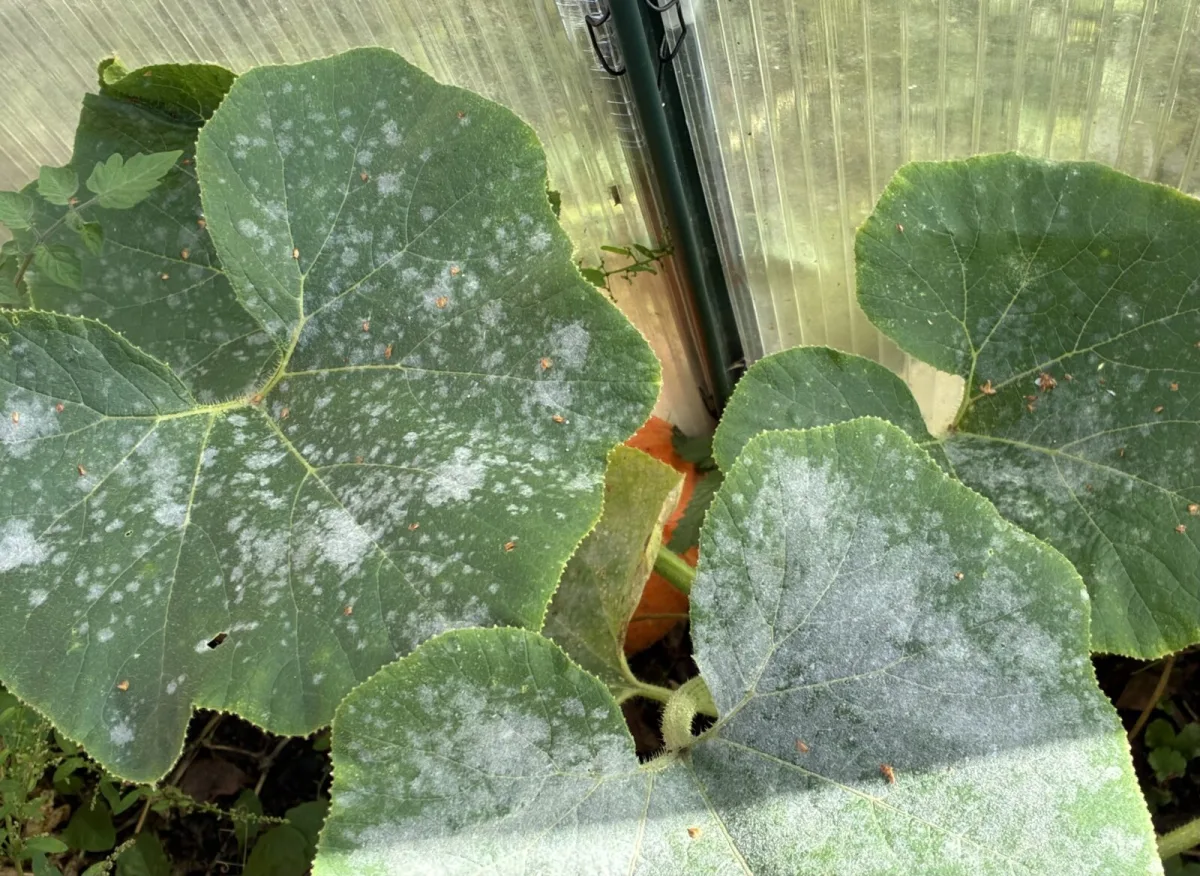
Powdery mildew is a collective name for several related fungal diseases that attack mainly leaves, young shoots, and sometimes flowers or fruit. On the plant surface it forms the characteristic whitish to grey, powdery coating that can look like fine dust. Although much of the fungus sits on the surface, it penetrates the upper cells and draws nutrients from them, weakening growth and the plant’s overall vigour.
Powdery mildew usually starts to show more strongly from spring and can persist throughout the growing season. Unlike many other fungal diseases, it often thrives even when conditions are not particularly rainy. Higher humidity combined with poor air movement is usually the key factor, typically in sheltered corners by walls and fences or in overly crowded plantings.
Which plants are most often at risk
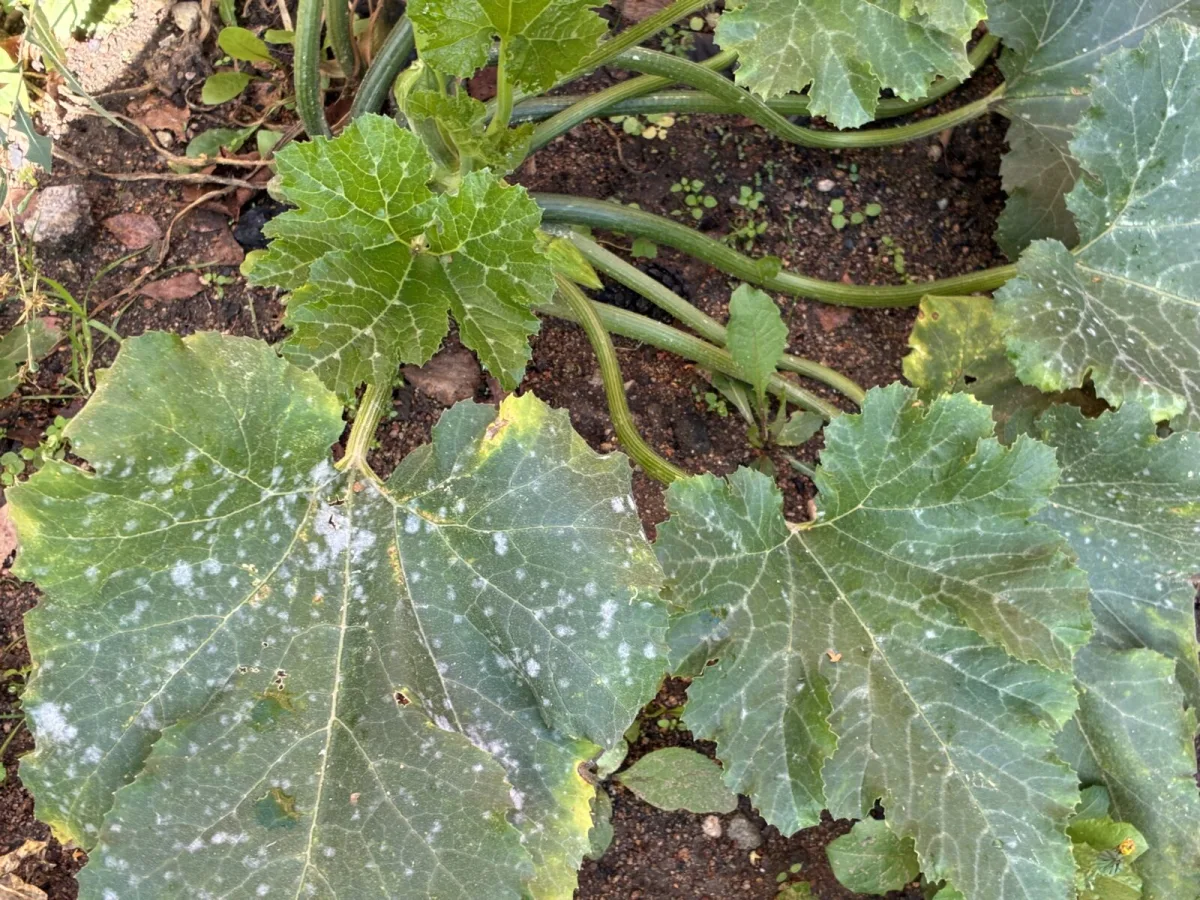
Both edible and ornamental plants can be affected. You’ll often encounter powdery mildew on apple trees, blackcurrants, gooseberries, grapevines, brassicas, and cucurbits such as courgettes, cucumbers and pumpkins, as well as on peas and grasses. On grasses it is important in agriculture too, as it is among the common pathogens of cereals.
Among ornamentals, plants that often suffer include acanthus, delphiniums, phlox, roses, honeysuckles, rhododendrons and azaleas, bay laurel, cherry laurel and other Prunus species, and oaks. It’s important to know that individual powdery mildew species tend to have a narrow host range. Powdery mildew on peas is therefore not the same as powdery mildew on apples, even if the symptoms can look similar.
Wild or feral relatives nearby can also be a source of infection. For example, wild apple trees can contribute to the spread into gardens and orchards if powdery mildew persists in their crowns over the long term.
How to recognise powdery mildew by its symptoms
The most obvious sign is expanding white coatings on the upper and lower sides of leaves. Sometimes they also appear on stems, buds, flowers or fruit. The surface can look as if dusted with flour; at other times the coating is thinner and less noticeable at first glance.
At first, affected parts may show little reaction, but later deforming, curling or stunting of leaves and young shoots often follows. A typical example is powdery mildew on roses, where leaves not only take on a whitish dusting, but may also become wavy, twisted and locally turn purple to purplish-red.
On some plants the visible coating is weak, while colour changes in the leaf are striking. This can include yellowing, bronzing or browning. On cherry laurel and related plants, leaves may brown quickly and drop, and the remaining leaf tissue can resemble insect feeding or slug damage. On wisteria or some rhododendrons, powdery mildew can be hard to spot because the fungus is less obvious on the surface and gives itself away more by mottling and paling of the tissues.
What to do first without chemicals
Prevention and adjusting growing conditions are the foundation, because powdery mildew is strongly influenced by its environment. Garden hygiene also plays a major role. If you remove and dispose of fallen infected leaves in autumn, you reduce the amount of infectious material for the following spring. Likewise, it makes sense to prune out affected shoots promptly so the disease doesn’t continue to spread within the plant or to nearby plants.
With susceptible plants, it’s worth keeping an eye on cultivar choices. Some seed and plant suppliers offer varieties with higher resistance to powdery mildew, whether in vegetables or ornamentals. Resistance is rarely absolute, but combined with good conditions it often determines whether the problem stays cosmetic or becomes a serious, persistent issue.
Choosing the right spot and light
For most affected plants, a sunny position is better, where leaves dry faster and there is more air movement. Exceptions are species that naturally require shade and cooler conditions. In general, avoid spots by walls and fences where it is windless and humid, stagnant air tends to linger, which favours powdery mildew.
Soil, watering and feeding
Well-drained soil and regular watering during dry spells are important. Plants that repeatedly suffer from a cycle of drought stress followed by heavy watering tend to be more susceptible to powdery mildew. Mulch can help too, as it stabilises soil moisture and reduces drought stress.
Keep fertilising to sensible doses. Overfeeding, especially with nitrogen, leads to lush, soft growth that is more prone to infection. Balanced nutrition and steady, moderate growth usually mean less disease pressure.
Plant spacing and humidity
Powdery mildew often breaks out where plants are packed too tightly. Give plantings enough space so air can move freely between leaves. With shrubs and roses, thinning and shaping cuts help create a more open canopy. This lowers humidity within the plant and reduces the conditions needed for spore production.
How you water can play a double role. Leaves that stay wet for long periods can encourage other diseases, but with powdery mildew it’s true that it does not like direct contact with water. In practice, some gardeners use careful overhead rinsing of foliage on a dry day in late morning so the surface dries quickly. By contrast, watering over the leaves early in the morning or in the evening, when foliage remains wet for a long time, isn’t ideal.
When and how to consider fungicides
In general, it’s best to prioritise non-chemical approaches and targeted prevention. Fungicides, including some products marketed as natural, can reduce biodiversity, burden soil life and have wider impacts on the surrounding environment. If you do decide to spray, it should be as targeted as possible, applied at the right time and according to the label, including rules for storage and disposal of leftovers. It’s better to avoid untested home-made mixes, because both their effectiveness and risks can be unpredictable.
How powdery mildew works from a biological perspective
Most powdery mildews form visible growth on the plant surface. From there they send tiny feeding structures into the upper cells to draw nutrients. The plant then loses strength, grows more poorly and, with repeated infection, may drop leaves prematurely or flower and fruit less. Because the fungus is directly exposed to the surrounding environment, it responds to it more strongly than pathogens that spread mainly within plant tissues.
Powdery mildew fungi produce microscopic spores that are spread through the air. These spores have an unusually high water content, so they can infect under drier conditions than many other fungal diseases require. At the same time, higher humidity (but not free water on the surface) favours spore production and successful infection. That combination of humid air and still, sheltered conditions by walls or in dense plantings is often ideal for powdery mildew.
Overwintering happens in two main ways. Either the fungus survives as a hidden, dormant infection on green tissue, or it forms resting stages on fallen leaves. In spring, spores are released from these sources and the cycle starts again. That’s why autumn clean-up and timely removal of infected parts have such a strong preventive effect.
A practical summary for the average garden
Powdery mildew usually can’t be solved with a single intervention, but it can be kept very well in check over the long term. The biggest help is a combination of the right site, more open spacing, sensible watering without drought stress, moderate feeding and regular hygiene, meaning removing infected leaves and shoots. Add more resistant varieties, and in most gardens powdery mildew becomes an occasional nuisance rather than an annual disaster.
Source: Rhs, Almanac , Pestrazahrada.cz
Related articles
An Orchid That Only Grows but Won’t Bloom Has Three Common Causes You’ll Never Fix with Fertiliser
If your orchid looks healthy but refuses to bloom for months, the cause is usually not a lack of fertiliser. Light, watering habits, and temperature patterns are far more often to blame.
Winter is crucial for raised beds and most people skip the pest prevention step
Your raised beds don’t go dormant just because winter arrives. A few quick, well-timed tasks now will protect the soil, discourage pests, and set you up for a smoother, more productive spring.
When to Mow the Lawn for the Last Time Before Winter
There’s no universal date for the season’s final mow—your lawn and the weather will tell you. Time it just ahead of hard frost and leave the grass slightly higher to help it overwinter healthier and bounce back faster in spring.
Comments (0)
Be the first to comment.