
 English
 Polski
 Deutsch
 Nederlands
 Svenska
 Norsk
 Dansk
 Français
 Italiano
 Español
 Português
 Slovenčina
 Suomi
 Gaeilge
Plant garlic pointy end up and at the right depth
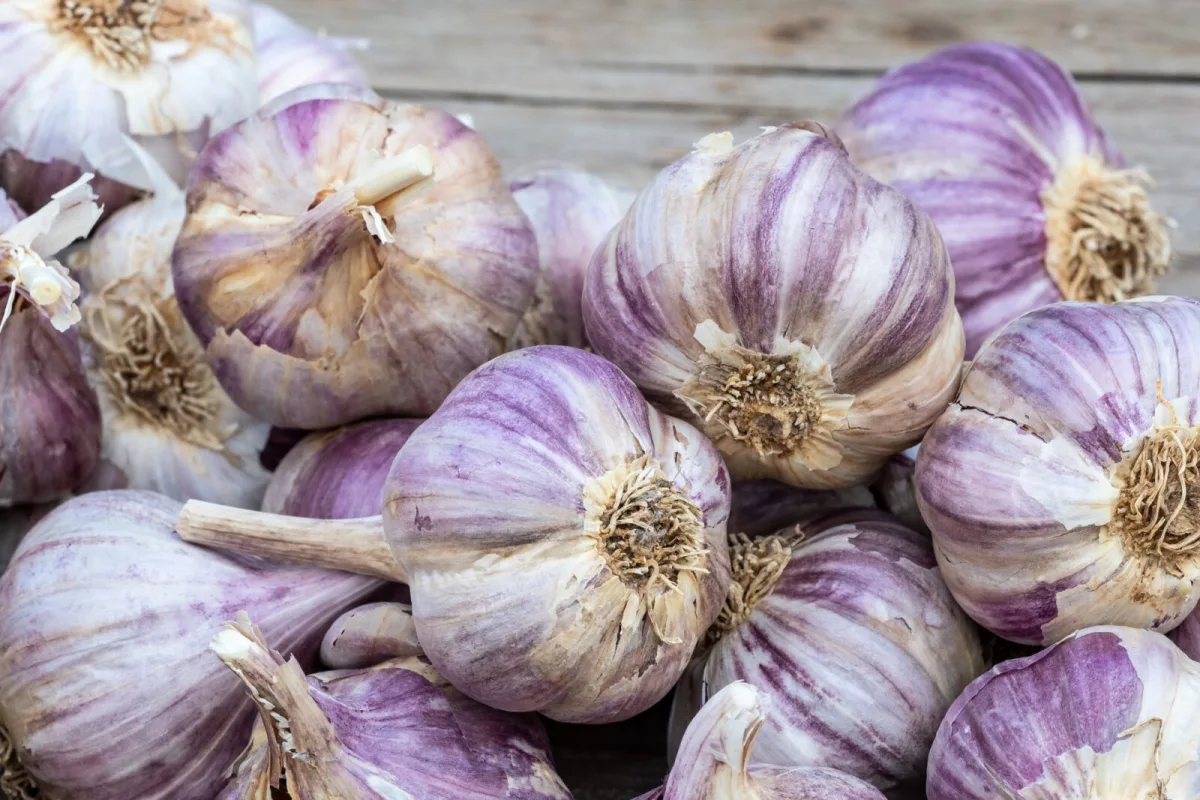
Garlic belongs to the same botanical group as onions, and it has held a firm place in the kitchen for centuries. It’s popular not only for its bold flavour, but also because it’s easy to grow. It thrives in a warm, sunny spot with free-draining soil. Give it the right conditions and it will reward you with a reliable crop, and once cured it will keep in storage for several months.
A big advantage of garlic is that it doesn’t need complicated care. It isn’t grown from seed, but from individual cloves, most commonly planted in autumn. The plants overwinter outdoors, and harvesting comes in late spring or summer depending on the variety and planting date. All you need to do is keep weeds down, water during prolonged dry spells, and remove any flower stalks in good time.
Which garlic to choose
For planting, use only good-quality, named seed garlic bought from a garden centre or specialist supplier. Ordinary supermarket garlic isn’t ideal, because it may not suit local conditions and it can also bring health problems into the bed, such as diseases.
Most often you’ll come across two main types. Hardneck produces fewer but larger cloves, tends to have a stronger flavour, and usually stores for a shorter time. It also sends up a flower stalk more readily, which can reduce bulb size and shorten storage life. Softneck has more, smaller, tightly packed cloves, rarely flowers, and generally keeps much longer in storage, often right through to the next season.
A special group is so-called elephant garlic. In fact, it’s closer to leeks than to true garlic. It forms very large bulbs with just a few huge cloves and has a milder taste. It needs a longer, warmer growing season, so it’s best planted as early as October. Sometimes it won’t split into cloves and will form just one large round. You can eat it or replant it in autumn.
Preparing the soil and site
Garlic loves sun and a lighter, well-drained soil. Waterlogged ground, especially in winter, increases the risk of disease and rot. If you have heavy or wet soil, it’s worth starting cloves in modules and transplanting them out in spring.
The soil shouldn’t be too acidic. A pH above 6 is suitable. If the soil is too acid, you can improve it by liming in autumn or winter. Before planting, it’s a good idea to remove weeds and work in well-rotted compost or aged manure. Organic matter improves soil structure, moisture retention and nutrient supply.
If you don’t want to weed often, you can cover the surface with a layer of mulch or lay biodegradable weed-suppressing fabric and plant the garlic through prepared holes.
When and how to plant garlic
Planting directly into the bed
The most common approach is autumn planting from mid-autumn to early winter. Most varieties need a period of cold to form well-developed bulbs. Some varieties, however, also suit late-winter or early-spring planting.
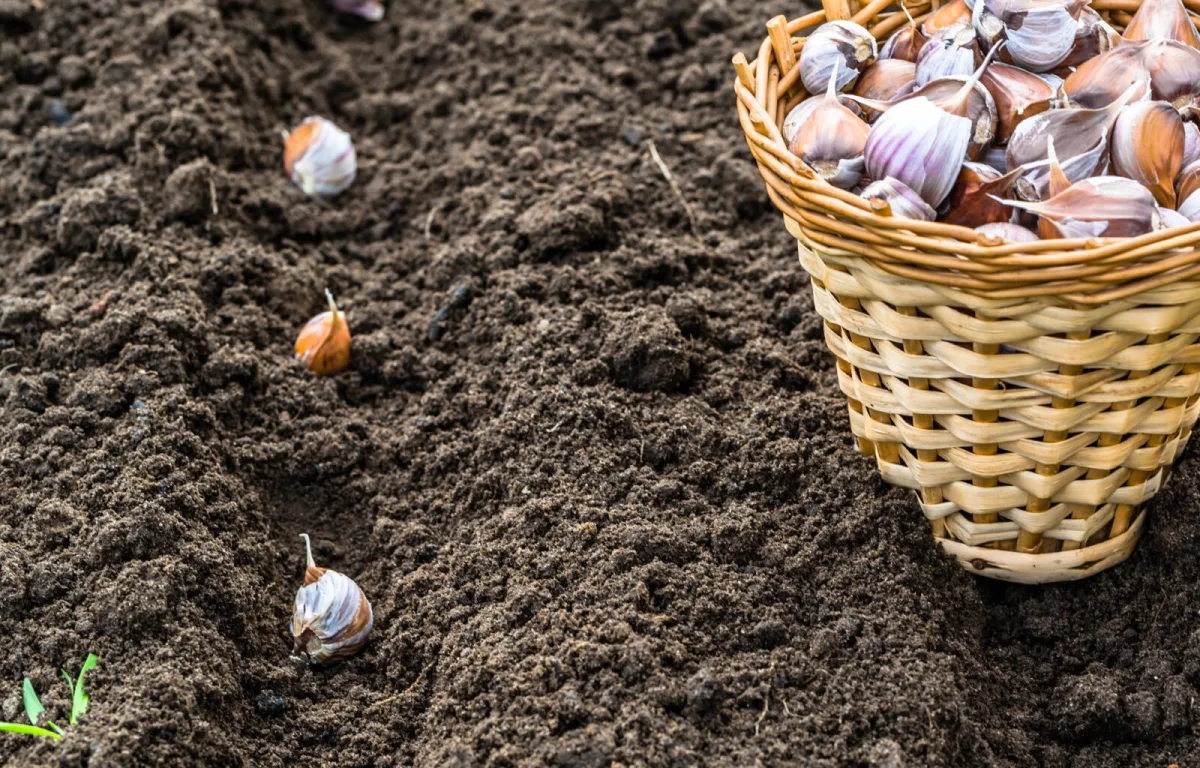
Before planting, carefully split the bulb into individual cloves. Plant each one with the pointed end up and the flat end down. Leave about 15 cm between cloves and around 30 cm between rows. The tip of the clove should sit about 2.5 cm below the soil surface. In light soils you can plant a little deeper; in heavy soils it’s better not to plant too deep.
Soon after planting, birds may pull the cloves out. It’s therefore a good idea to cover a freshly planted bed with horticultural fleece or netting until the plants are well rooted.
Starting in modules
If your garden soil becomes waterlogged over winter, it’s more practical to start garlic in modules. Put each clove into its own cell filled with multi-purpose compost, so it’s covered with about 2.5 cm of compost. Place the tray somewhere cool but protected, such as a cold frame or an unheated greenhouse. Keep the compost only slightly moist. In spring, transplant the young plants into a prepared bed.
Growing in containers
Garlic can also be grown successfully in pots or planters if you don’t have a suitable bed. The container should be at least 25 cm deep and wide enough to keep the recommended spacing between cloves. In containers the compost dries out faster than garden soil, so you’ll need to check moisture more often.
Care during growth
During the growing season, garlic is fairly low-maintenance. What it needs most is light, weed control and sensible watering. In dry spells in spring and early summer it’s worth watering, because adequate moisture helps bulbs size up. However, once the bulbs are well formed and the leaves start to yellow, it’s best to stop watering. Too much moisture at this stage can encourage rot.
Weeds must be removed regularly, because garlic doesn’t tolerate shading or competition well. Hand weeding is safest, to avoid damaging bulbs that sit close to the surface.
As soon as a flower stalk appears, it’s best to remove it as early as possible. The plant will then channel its energy into bulb growth rather than flowering. The young stalks are also edible and taste excellent after a quick cook.
Harvesting and curing properly
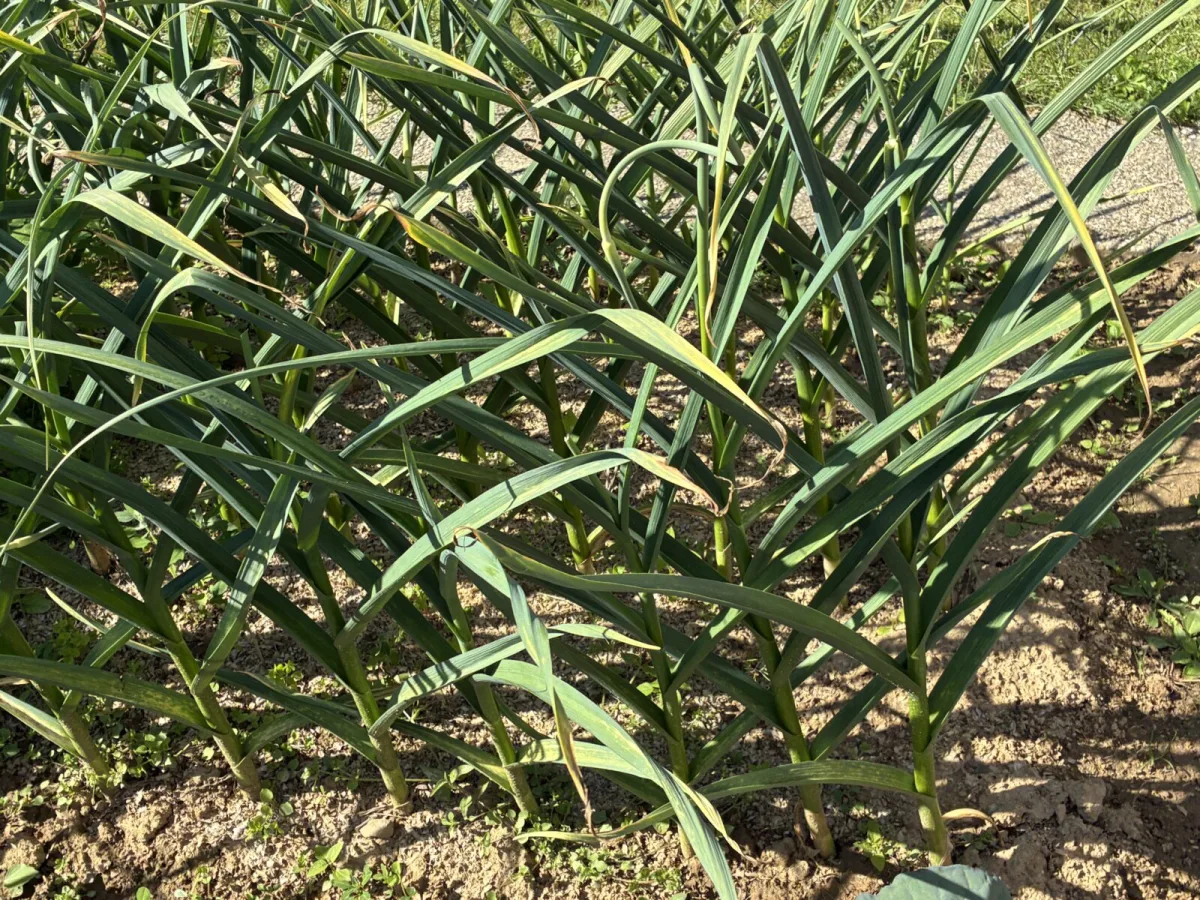
Harvest when the leaves start to yellow. Autumn-planted garlic is usually ready from late spring to early summer, while spring plantings mature more from mid-summer to early autumn. Don’t leave lifting too late. Late-harvested bulbs often split, which shortens their storage life.
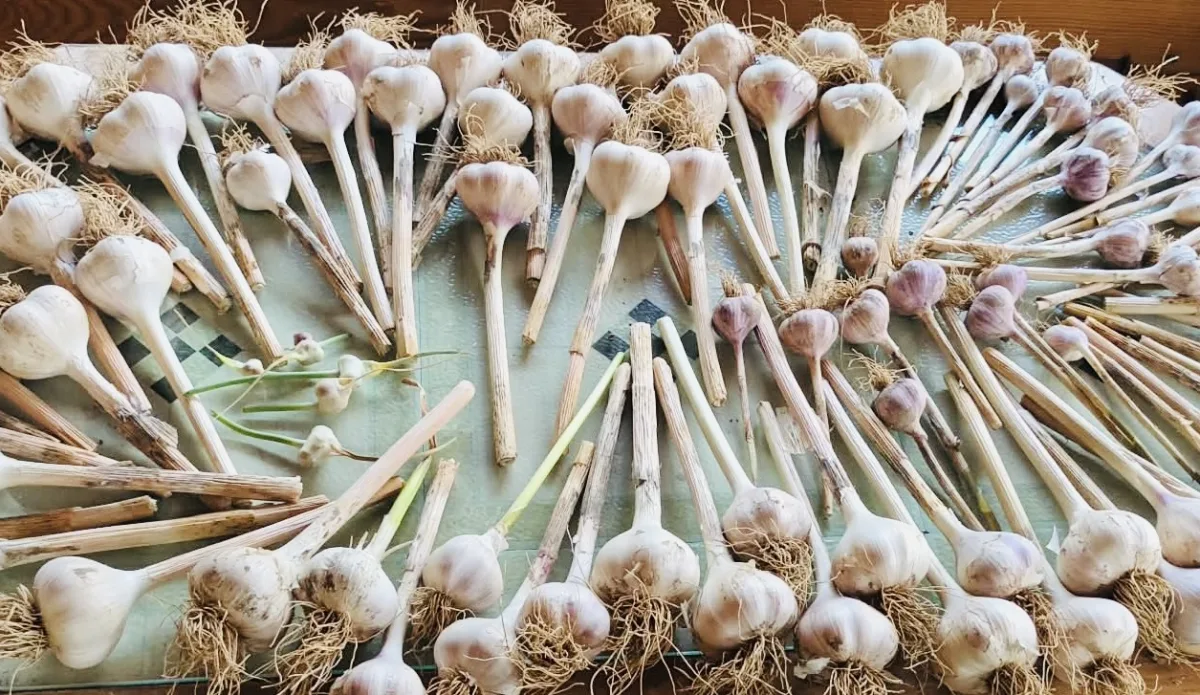
Loosen the bulbs carefully with a fork and lift them from the soil. Handle them gently, as bruising or damage reduces how long they’ll keep. Then lay them out in a single layer somewhere sunny and airy, or in a well-ventilated greenhouse or dry shed. The temperature shouldn’t be too high, however.
The first stage of curing takes about two to four weeks. Once the tops are completely dry and papery, you can trim them. Then store the garlic somewhere cool and dry. Hardnecks typically keep for several months; softnecks last even longer.
Possible growing problems
In good conditions, garlic is usually trouble-free. Still, a few issues can show up related to weather or harvest timing. Sometimes small cloves form on the stem. This is usually the result of temperature swings in spring, and these little pieces can be used in the kitchen as normal.
If bulbs don’t split into individual cloves, the cause is usually an insufficient period of winter cold. Flowering is typical mainly of hardnecks, but it can occasionally appear even in softnecks if they’re stressed by heat or drought. Cracked bulbs generally point to a delayed harvest. Green-tinged cloves occur when planting is too shallow. They’re perfectly safe to eat, but don’t store as well.
Garlic is an ideal crop for anyone who wants to grow something useful, tasty and low-effort. All it takes is the right planting stock, a sunny spot, and patience until harvest.
Source: Rhs, Plantura Magazine , Pestrazahrada.cz

A nurse by profession, she is passionate about healthy living, nature, and everything that benefits both people and the world around them. In her free time, she enjoys gardening, cooking, sewing, and caring for her family. In her articles, she loves combining professional expertise with practical experience from the garden and everyday life.
Related articles
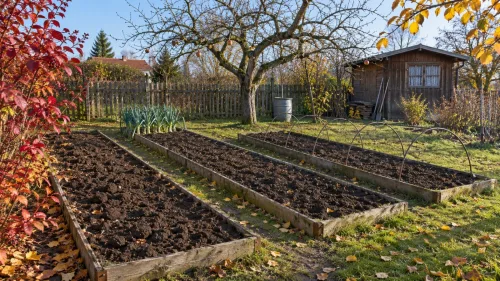
Plant Garlic Now Cool Soil Protects It From Rot Depth and One Small Mistake Matter
November may be quieter in the garden, but it’s prime time to prep beds and plant garlic. Cooler soil helps reduce rot, and correct planting depth plus good technique make all the difference.
When to Plant a Cherry Tree in Your Garden for Strong Roots and Heavy Crops
Cherry trees establish best when planted during dormancy, either in autumn after leaf fall or in early spring before bud break. The right timing depends as much on soil and weather conditions as it does on the type and quality of the young tree.
When to Plant a Butterfly Bush for Heavy Bloom and Better Winter Survival
Butterfly bush (Buddleja davidii) rewards you with months of flowers when it’s planted at the right time. Spring planting is usually the safest choice, giving the shrub time to root well before winter.
Comments (0)
Be the first to comment.