
 English
  Polski
  Deutsch
  Nederlands
  Svenska
  Norsk
Norsk  Dansk
Dansk  Français
  Italiano
  Español
  Português
  Slovenčina
  Suomi
Suomi  Gaeilge
 Pests Won’t Get Your Strawberries With Practical Protection Without Unnecessary Chemicals
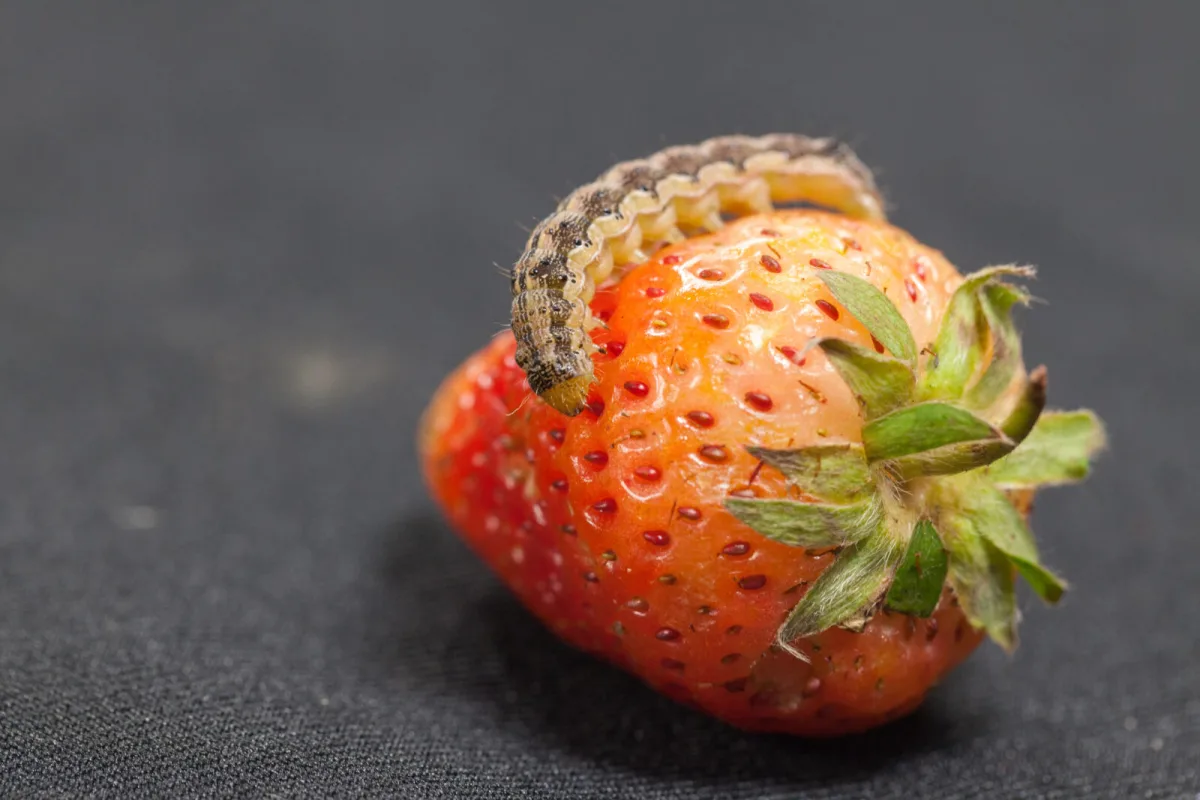
Strawberries are among the most popular fruits in gardens and on balconies. They’re sweet, fragrant, nutritious and also delicate, so the moment they start turning red, they draw the attention of all sorts of visitors. It’s not just people. Birds, insects, slugs, rodents and, unfortunately, sometimes even passers-by looking for a “taste” see strawberries as an easy, quick reward. If you want to harvest regularly and keep quality high, you need protection that’s gentle, effective and ideally free of unnecessary chemicals.
The good news is that most issues can be solved with prevention and simple routines. Often it’s enough to time harvests better, keep the patch clean, and create conditions where pests don’t feel comfortable. With strawberries especially, healthy plants cope with light pressure far better than weakened plants in shade, waterlogged soil, or an overgrown bed.
Protection from birds without a needless battle
Birds can cause surprisingly large damage in a small garden. Often it’s not that they eat every fruit, but that they peck a berry and leave the rest to insects and rot. In urban gardens and around family homes, bird pressure tends to be higher because strawberries are easy to reach and there are plenty of perches nearby.
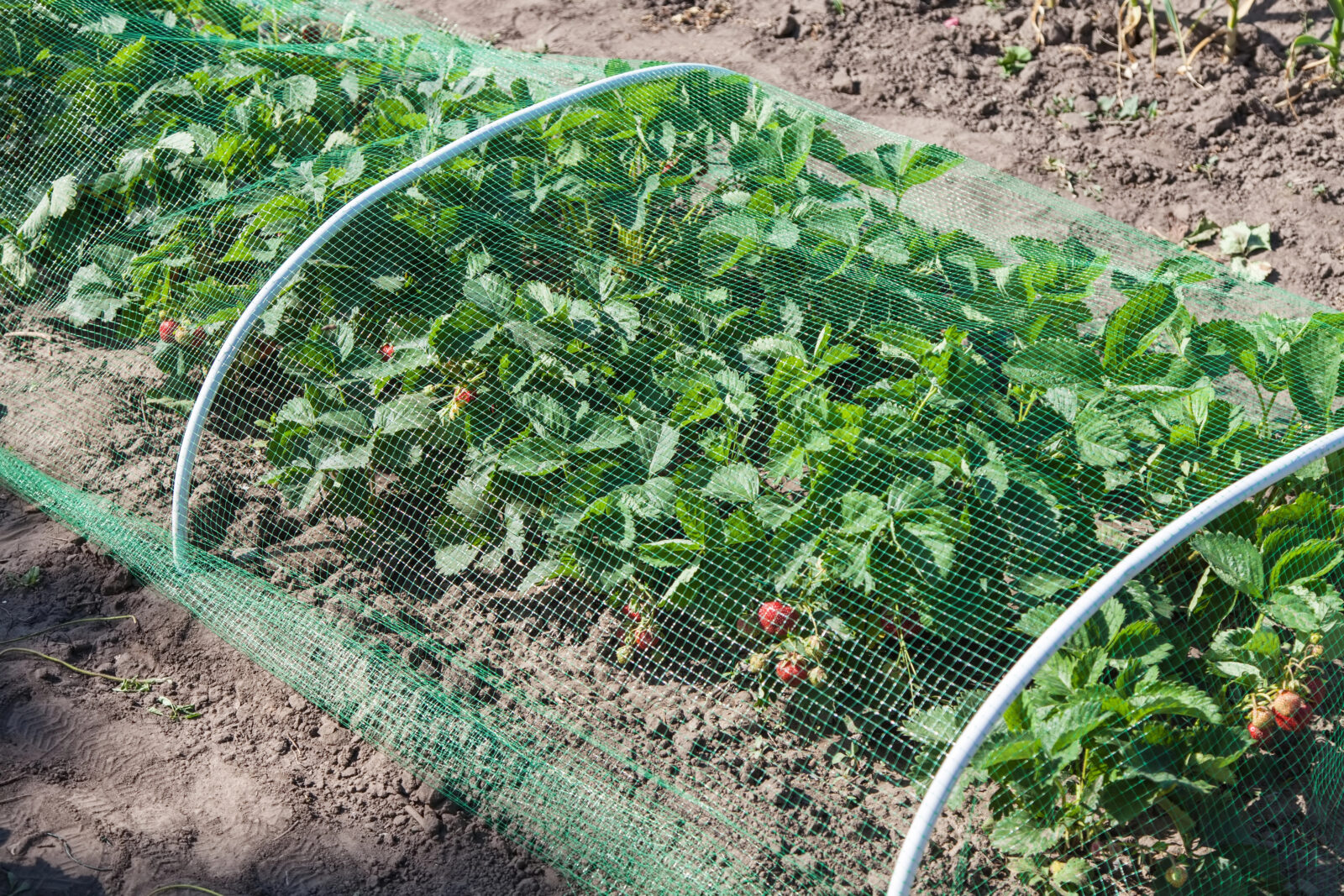
The most reliable solution is a physical barrier. A fine bird net or horticultural mesh stretched over a simple frame above the bed protects the crop without having to kill anything. The structure should be more like a “table” than a box, so leaves and flowers aren’t broken. It’s important to leave enough headroom above the plants, because strawberries put on growth through the season and a low cover can trap heat and humidity unnecessarily.
Visual scare tactics can work too, but birds quickly get used to them. If you try reflective tape, old CDs, “eye” balloons or predator decoys, you need to move and rotate them regularly. One interesting trick is pre-season “training” using small stones painted red to resemble strawberries. After an unpleasant experience, birds sometimes associate the colour red with something inedible and don’t test the real fruit as much. Success depends on timing and on the stones being clearly visible before ripening begins.
Insects in the strawberry patch: when they help and when they harm
Not every insect is an enemy. Some small species, in low numbers, can simply “nudge” plants into a defensive response. Strawberries produce a range of natural substances linked to their colour and flavour. These plant compounds also contribute to fruit quality. For gardeners, that leads to a simple rule: the goal isn’t a sterile, lifeless bed, but a balance where pests don’t rise above a tolerable level.
In practice, the worst offenders are those that damage flowers and young fruit, or attack the crown of the plant. Damage to stems and fruit stalks is also critical, because even a small injury can cause drying out or deformities. Most often, problems show up as slowed growth, spots on leaves, “scuffed” fruit surfaces, or uneven ripening.
Fruit flies and the “invisible” risk inside the fruit
Fruit flies are drawn to the scent of ripe and especially overripe fruit. The problem isn’t just their presence, but also that they can lay eggs in the berries, and the larvae then exploit an environment where yeasts and moulds develop. A neglected strawberry bed with overripe fruit is essentially an invitation.
The basics are a tidy patch and quick picking. Harvest strawberries frequently, ideally daily during the main ripening flush, and remove any spoiled fruit right away. At home and in the garden, simple traps with vinegar and a drop of washing-up liquid help, as the insects drown. Another option is a jar with a piece of overripe fruit; once flies are attracted, close it and dispose of the contents safely. The key is to keep the lure in the trap, not scattered around the bed.
What to do if thrips appear
Thrips are tiny, but they can significantly reduce fruit quality. They often show up as pale to bronze discoloration on the surface, roughened skin, or deformities that spoil appearance and flavour. They do the most damage to flowers and young fruit, so action matters early, not when the crop is already ready to pick.
Helpful measures include airier spacing, avoiding overfeeding with nitrogen, and checking flowers regularly. In everbearing varieties, pressure is often higher in late summer, when thrips populations naturally increase. If the issue persists repeatedly, it’s worth reconsidering both variety choice and site, because thrips thrive more in hot, dry corners of the garden.
Slugs and snails: a quiet threat in damp conditions
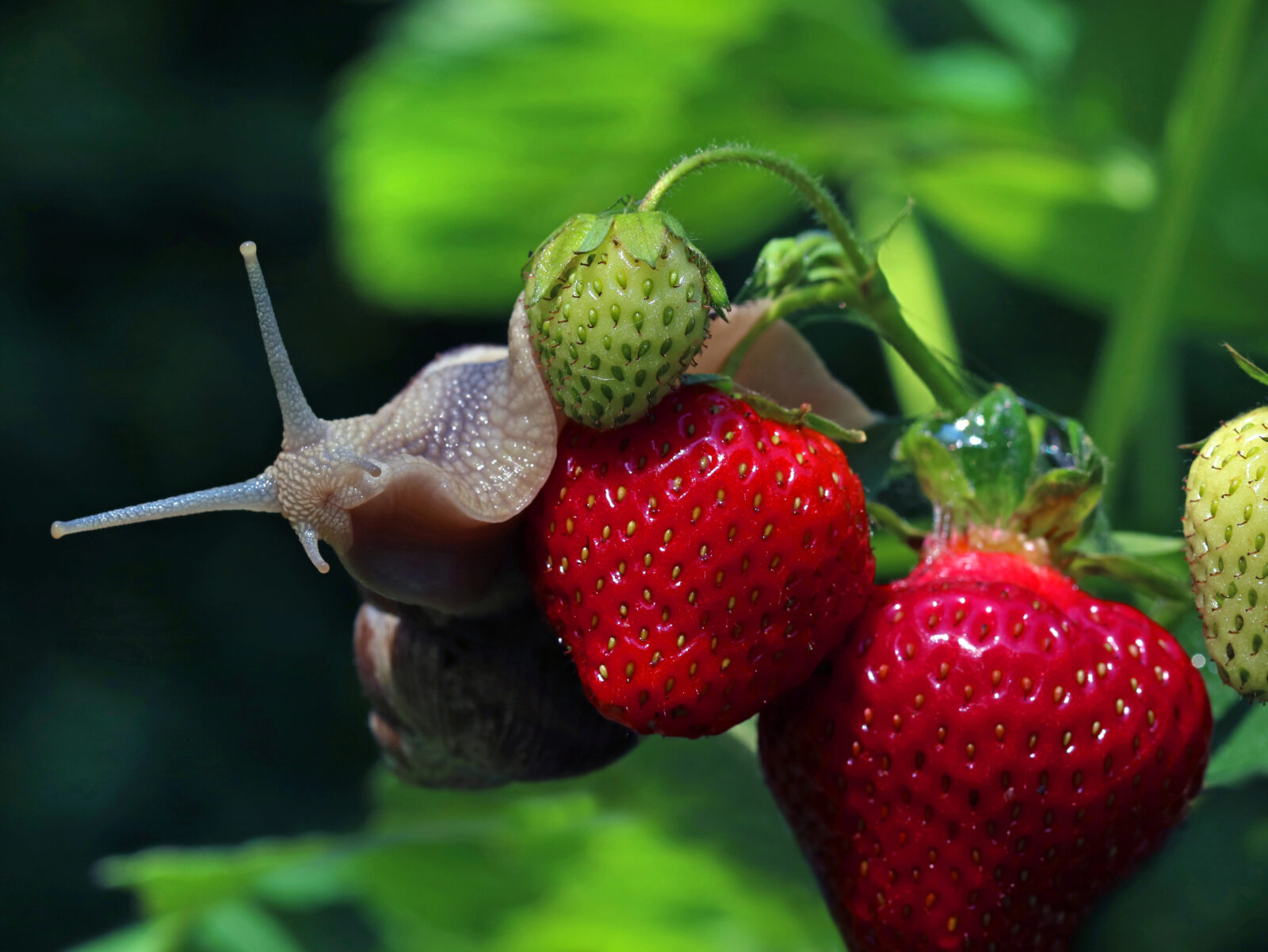
Slugs and snails love strawberries most during cooler, wetter spells. They often damage berries that look perfect from a distance, but when you turn them over you find chewed patches and slime trails. Effective control rests on a combination of prevention and regular hand removal.
Keep the bed clean, without dense weeds and hiding places. Remove overripe fruit, because decomposing berries are even more attractive to molluscs than healthy ones. Practical “hotels” made from leaves or peelings can also help; slugs shelter underneath and in the morning you can easily collect them along with the cover. In the evening, when they emerge, hand-picking with a torch is a surprisingly effective chemical-free solution.
A mechanical copper barrier around the bed also works well if installed correctly and tall enough. It’s an investment that pays back over several seasons. By contrast, salt may kill slugs, but it also harms the soil and strawberries, so avoid it.
Rodents and keeping the area around the bed tidy
Mice and rats can “clean” strawberries systematically, especially if they have hiding places nearby. Most rodents stay within a relatively small radius of their nest, so the most effective approach is to manage the environment. Keep the area around the strawberry patch mown, without tall grass, wood piles, or clutter where they can hide. Also don’t let the bed become weedy, because dense growth provides ideal cover.
Regular picking and removing fallen fruit also helps. Fruit scraps on the ground tell rodents it’s worth returning to the bed. If you grow strawberries near a compost heap, consider moving them, because the combination of warmth, shelter and food is often a magnet for rodents.
An unexpected pest: people and how not to lose your harvest
With strawberries, it’s not uncommon for losses to appear without any signs of pecking or chewing. Ripe fruit is visible from a distance and can tempt passers-by. Sometimes a simple measure is enough: clearly define the space, place the bed farther from a public fence, or use a discreet net cover that also acts as a psychological barrier. Obvious deterrents can discourage people too, because they signal that someone is actively tending the bed.
This isn’t about waging war. The aim is a harvest that stays yours, and a garden that works as a living whole. With strawberries, it usually pays to combine mechanical protection, good hygiene, and regular checks. When you prevent overripe fruit, give plants good growing conditions, and choose gentle barriers, you’ll be rewarded with sweet, healthy strawberries all season.
Source: Strawberry Plant, Rhs, Pestrazahrada.cz
Related articles
Yellowing cucumber leaves have a clear cause and with the right response plants recover quickly
Cucumber leaves turn pale and yellow when the plant is under stress—most often from watering mistakes, nutrient imbalance, or sudden temperature swings. Spot the pattern early and you can restore growth and protect your harvest fast.
How to Get Browning Hydrangeas Back on Track Without Chemicals
Brown leaf edges or spots on hydrangeas usually point to a simple mismatch in light, watering, or airflow rather than a lost cause. Learn how to read the symptoms and restore your shrub quickly with gentle, practical fixes.
Turn Ground Cinnamon Into a Secret Weapon for Stronger, Tougher Plants
Ground cinnamon isn’t just for baking—it can help protect houseplants and garden plants from mould and fungal issues, support cuttings, and even act as quick first aid for minor wounds. Used lightly, it’s an affordable, gentle, natural add-on to good growing practice.
Comments (0)
Be the first to comment.