
 English
 Polski
 Deutsch
 Nederlands
 Svenska
 Norsk
 Dansk
 Français
 Italiano
 Español
 Português
 Slovenčina
 Suomi
 Gaeilge
Ornamental alliums are the stars of modern gardens and the right spot and planting depth decide success
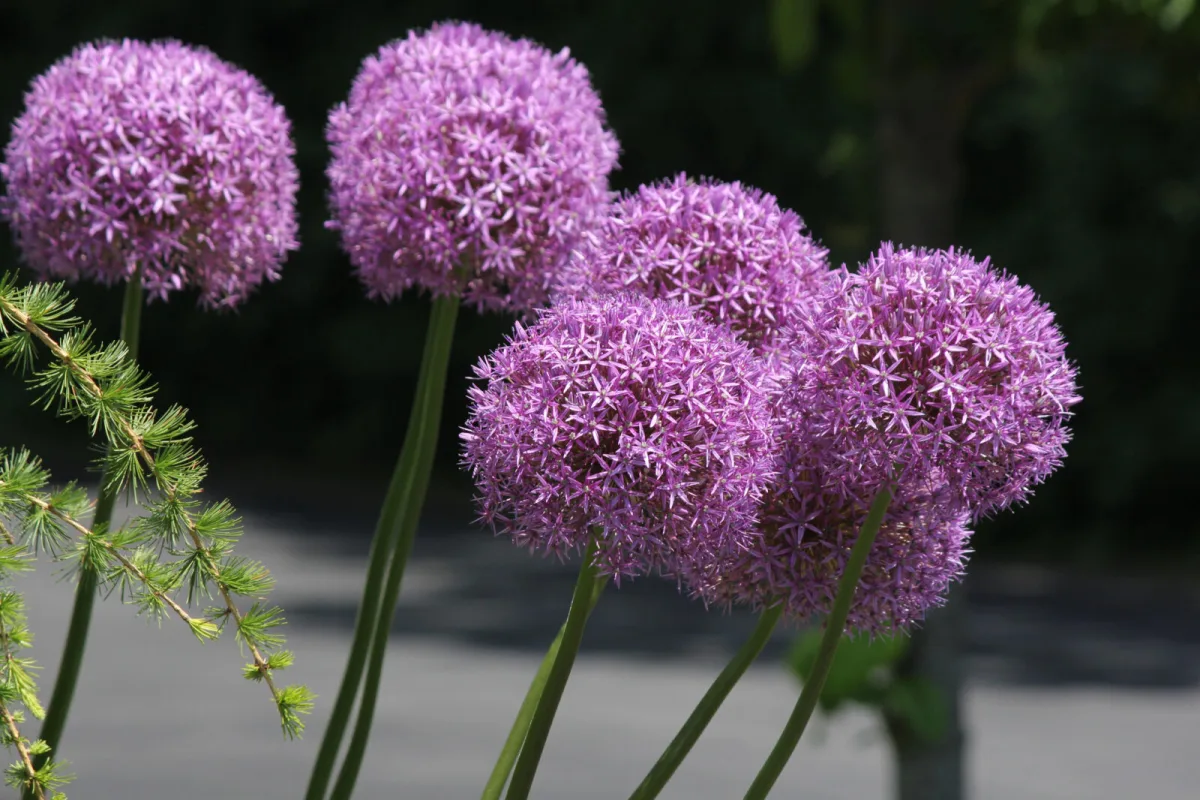
Ornamental alliums are among the most popular bulbs for both contemporary and cottage-style gardens. They’re striking, elegant, and instantly recognisable by their spherical or starry flower heads that float on sturdy stems above surrounding plants. They most often bloom in shades of violet, purple, pink, white or blue, and they look wonderfully architectural. That’s why they’re perfect for borders, where they create vertical accents and give planting both structure and lightness.
A big advantage is that ornamental alliums are usually easy to grow. They thrive in sunny spots, tolerate drier conditions well, and once established generally need almost no special care. They also attract bees, bumblebees and butterflies, supporting garden biodiversity.
How to choose the right species and cultivar
The genus Allium is very diverse. You’ll find tall cultivars with large, round flower heads as well as lower-growing types suited to the front of a border or rock gardens. When choosing, consider height, the size of the flower head and flowering time. Tall cultivars such as Allium giganteum, Globemaster or Mount Everest create a strong focal point and work best in the middle or towards the back of a border. Lower types, for example Allium cristophii, tend to shine in groups closer to the edge.
Most ornamental alliums flower in May and June, but there are later types too. The popular Allium sphaerocephalon doesn’t come into bloom until summer and combines beautifully with ornamental grasses. If you want a long season of interest, it pays to plant several kinds with different flowering times.
Where to plant ornamental alliums
They do best in full sun and in well-draining soil. Waterlogging is the most common cause of failure, because bulbs in heavy, wet ground rot easily. Cold, waterlogged or overly clayey sites are therefore unsuitable. If your soil is on the heavy side, improve drainage by mixing in sand, grit or compost.
Taller types are best planted in a sheltered spot so the flower stems don’t snap in strong winds. Ornamental alliums are ideal in perennial borders, where they pair well with hardy geraniums, catmint, wormwood, spurges or ornamental grasses. They make a striking contrast with yellow- and orange-flowering plants, but are equally beautiful in softer schemes with silvery foliage.
Bear in mind that the leaves start to die back during flowering. For that reason, it’s best to plant bulbs among other plants that will later hide the fading foliage.
When and how to plant the bulbs
The best time to plant is early to mid-autumn. The bulbs need time to root before winter. Plant them like other spring-flowering bulbs, usually to a depth of about four times the bulb’s diameter. Smaller kinds can be planted closer together; larger, taller ones need more space.
Before planting, loosen the soil and remove weeds. Fresh manure isn’t recommended, because overly rich, heavy soil doesn’t suit bulbs. Set the bulb in with the point facing up, cover with soil and press in gently. After planting, heavy watering isn’t necessary if autumn is typically moist.
Growing in containers
Ornamental alliums can also be grown successfully in deeper pots. The compost must be open and free-draining, ideally with added coarse sand or horticultural grit. In containers, watering control matters more, because the compost must not stay wet for long periods. Pots can be positioned behind other plants so the drying leaves aren’t on display.
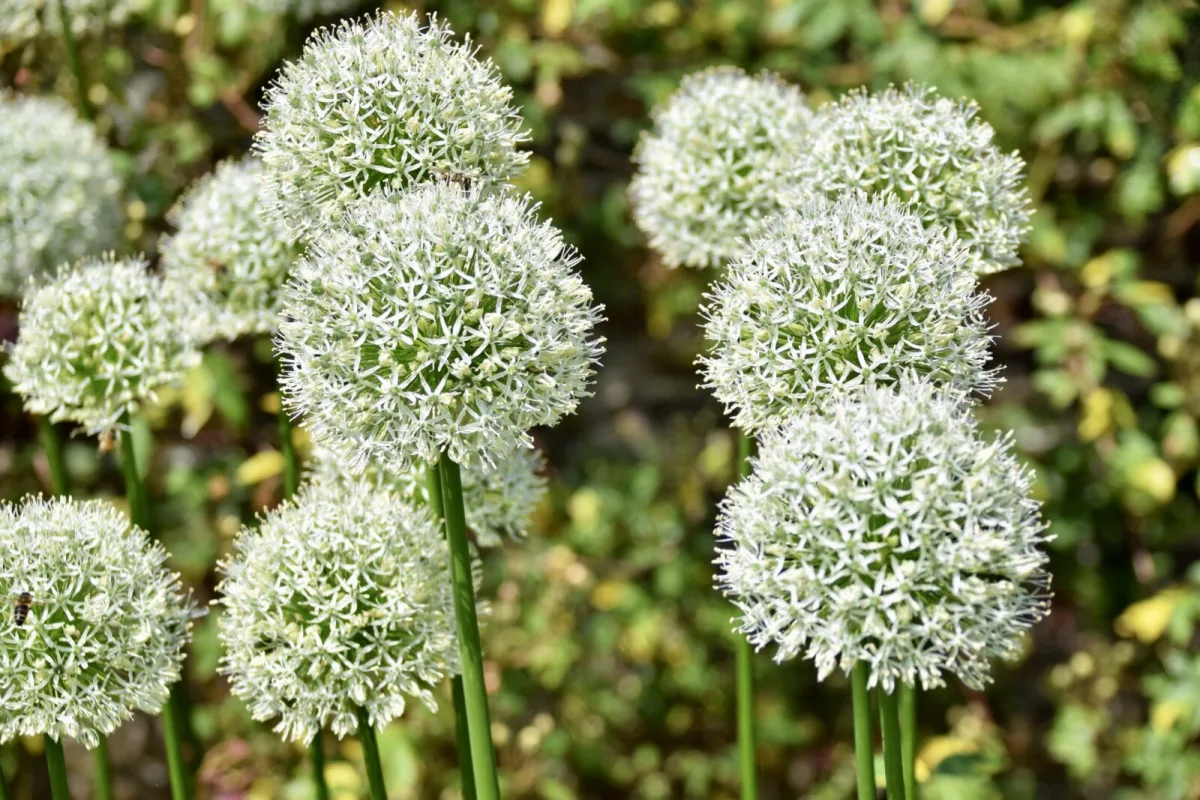
Care during the growing season
Once established, ornamental alliums are fairly drought-tolerant. Plants in borders usually don’t need regular watering unless there’s a long dry spell. Too much summer watering, on the other hand, can harm the bulbs. Plants in containers need watering more often, but always sensibly.
Feeding is usually not essential. In poorer soils, you can apply a small amount of a general-purpose fertiliser in spring to help the bulbs build strength for the next season. There’s no need to remove spent flower heads straight away. The dried seed heads are often very decorative and look good for a long time after flowering, both in the border and in a vase.
Winter care and looking after older clumps
Most ornamental alliums are fully hardy in our conditions and overwinter in the ground without trouble. In containers, however, bulbs can be more prone to freezing, and especially to winter wet. It’s therefore best to move pots for winter against a house wall, under cover, or to another sheltered place.
Older plantings can become congested over time. If plants flower less or are too tightly packed, you can lift them after the foliage has died back, divide them, and replant. This kind of rejuvenation improves vigour as well as the abundance of blooms.
How to propagate ornamental alliums
The simplest method is propagation by offsets, the small bulbs that form beside the mother bulb. After flowering and once the leaves have died back, you can lift the bulbs carefully, separate the young bulbs and plant them on their own. They may take a few years to reach flowering size. Some types also produce bulbils directly in the flower head. These can be used for propagation too, but they require patience.
Growing from seed is also possible, but it’s slow, and with hybrid cultivars the offspring may not come true to the parent plant. For everyday garden practice, dividing bulbs is therefore the most practical approach.
What to watch out for
Ornamental alliums are generally quite healthy, but they can be affected by the same diseases and pests as edible garlic and onions. The main risk is rot in waterlogged soil, along with mildew and pests such as slugs and snails, which chew young leaves. Prevention is key: an airy site, free-draining soil and sensible watering.
The biggest enemy of ornamental alliums isn’t frost, but prolonged wet conditions.
Ornamental alliums as a feature in the border and in a vase
Ornamental alliums are plants that give a garden distinctive character without complicated care. They stand out in both formal and naturalistic plantings, combine beautifully with perennials and grasses, and remain attractive even after flowering. If you provide sun and free-draining soil, they’ll reward you every spring and early summer with showy blooms that are among the most spectacular of all bulbs.
Source: RHS, The Spruce , Pestrazahrada.cz

A nurse by profession, she is passionate about healthy living, nature, and everything that benefits both people and the world around them. In her free time, she enjoys gardening, cooking, sewing, and caring for her family. In her articles, she loves combining professional expertise with practical experience from the garden and everyday life.
Related articles
Plant Garlic Now Cool Soil Protects It From Rot Depth and One Small Mistake Matter
November may be quieter in the garden, but it’s prime time to prep beds and plant garlic. Cooler soil helps reduce rot, and correct planting depth plus good technique make all the difference.
When to Plant a Cherry Tree in Your Garden for Strong Roots and Heavy Crops
Cherry trees establish best when planted during dormancy, either in autumn after leaf fall or in early spring before bud break. The right timing depends as much on soil and weather conditions as it does on the type and quality of the young tree.
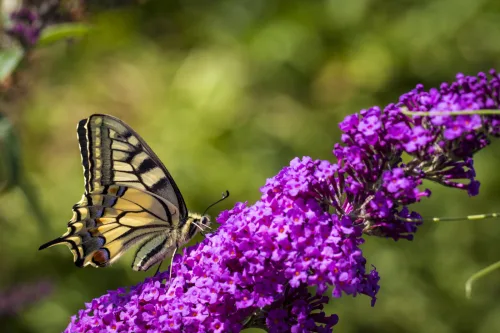
When to Plant a Butterfly Bush for Heavy Bloom and Better Winter Survival
Butterfly bush (Buddleja davidii) rewards you with months of flowers when it’s planted at the right time. Spring planting is usually the safest choice, giving the shrub time to root well before winter.
Comments (0)
Be the first to comment.