
 English
  Polski
  Deutsch
  Nederlands
  Svenska
  Norsk
Norsk  Dansk
Dansk  Français
  Italiano
  Español
  Português
  Slovenčina
  Suomi
Suomi  Gaeilge
 The Most Common Bad Habit When Harvesting Cucumbers That Quickly Weakens the Plants
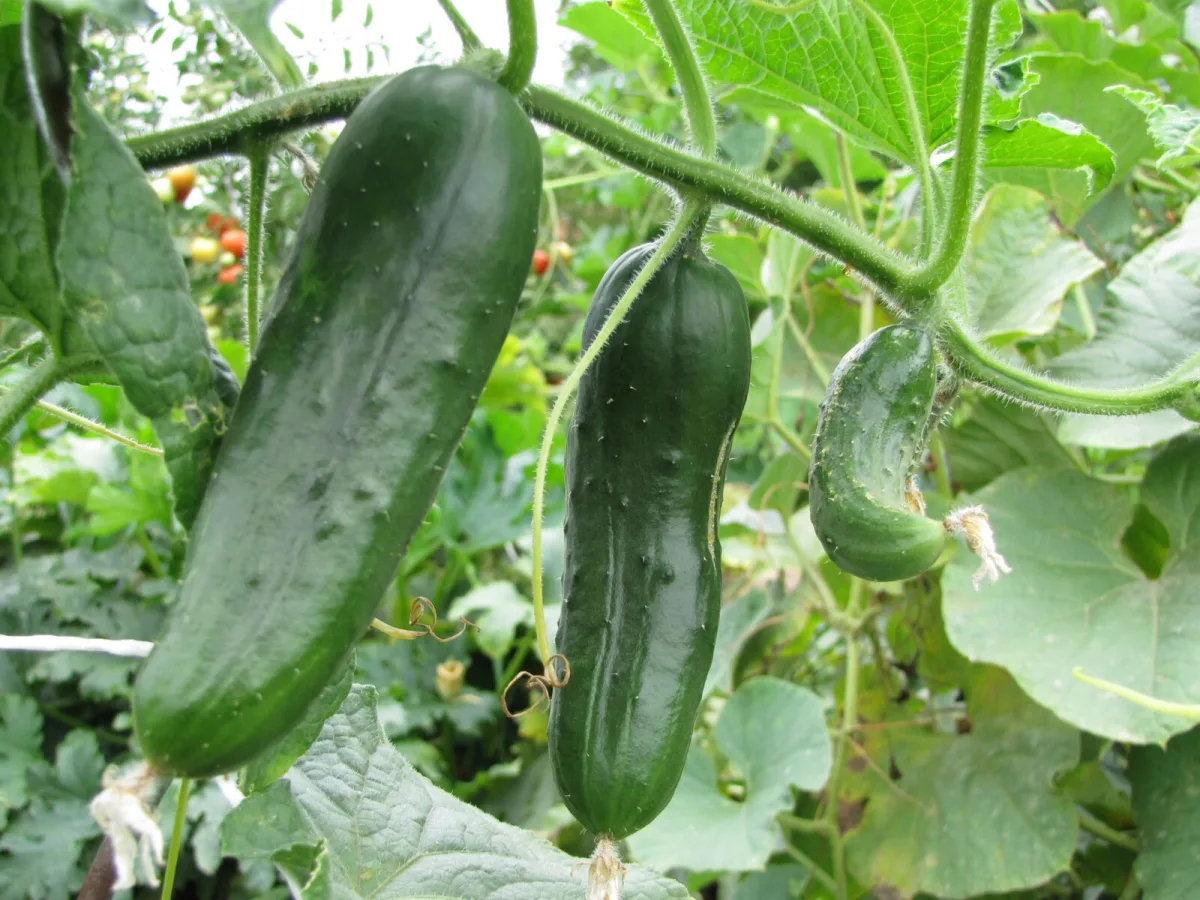
Growing cucumbers can be a real pleasure when you know how to train the plants, when to step in, and what to avoid. An experienced gardener has summed up the methods she has proven over many seasons. With them, your cucumbers will thrive, harvests will be more regular, and you’ll reduce the risk of needlessly weakening the plants or losing the crop to disease. Nothing complicated here, just a handful of small habits that add up to a big difference.
Tendrils alone aren’t enough, the plant needs guiding
Cucumbers do produce tendrils that can latch on, but when growing them vertically it doesn’t pay to rely on them alone. As soon as the plant starts to grow and search for support, it’s practical to gently direct the shoots into netting or onto a string. Sometimes it helps to loosely tie them in now and then, especially if the growth is dense, it’s windy, or the vines are twisting the wrong way. A trained plant is better ventilated, easier to pick, and its leaves dry faster after rain.
Working with side shoots improves fruit set
Once a cucumber has produced roughly six to seven leaves, it’s often helpful to snap out or pinch the growing tip of the main stem. This encourages the plant to put more strength into side shoots, where a large part of the crop often forms. At the same time, it pays to keep an eye on the plant. If a side shoot is just making lush growth but setting no fruit, you can remove it without regret. The cucumber will then devote its energy to more flowering and new fruiting shoots instead of feeding an unproductive section.
Pick gherkins often and always snip the stem
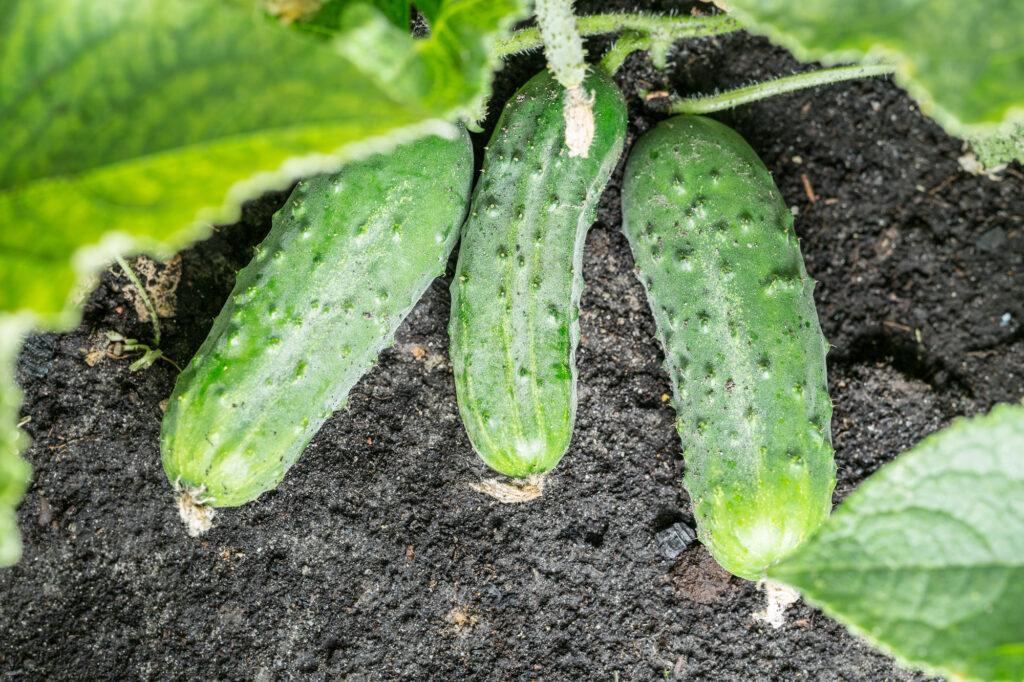
With pickling cucumbers, there’s a simple rule: the more regularly you harvest, the more fruit the plant keeps producing. In season, pick them according to how fast they grow, roughly every two to three days. How you detach the fruits matters too. It’s better to snip the stem with small scissors. Pulling can damage the plant, tear a vine, or even tug it up from the soil, because cucumbers tend to have fairly shallow roots. Gentle harvesting means the crop lasts longer and the plant experiences less stress.
Short-term storage after picking makes batch preserving easier
You won’t always feel like, or have time for, processing cucumbers straight after every pick. If you want to preserve a larger batch, you can set the fruits aside briefly in a cool cellar. In a basket or crate they’ll wait for the next harvest, and then you can process them all at once. But it’s worth remembering that cucumbers aren’t made for long storage. They wilt fairly quickly, lose firmness, and in poor conditions can start to mould. The sooner they’re processed, the better the result.
Use overgrown fruits in salads or for fermented pickles
It happens that some pickling cucumbers get too big, especially if you miss harvesting for a few days. These fruits may not be ideal for classic jar preserving, but there are still good uses for them. You can eat them much like slicing cucumbers, or use them for fermented pickles. It’s important, however, to know your variety. Some types aren’t well suited to fermenting because they soften after fermenting and can fall apart. If you’re not sure, try a smaller jar first and decide on the next batch based on the result.
Deal with diseases quickly, sometimes it’s better to remove the plant
Modern cucumber varieties are often bred for improved resistance, but problems can still appear, especially in damp conditions, with temperature swings, or in overcrowded growth. Once disease takes hold, it can wipe out a planting in a short time. That’s why it makes sense to respond at the first signs. Snip off affected leaves and dispose of them so the infection doesn’t spread further. But if the whole plant is diseased, it’s often most sensible to carefully lift it from the soil and remove it. Even if that feels drastic, it ultimately protects neighbouring plants and preserves part of the harvest.
Small interventions, big impact all season long
Cucumbers can crop for a long time and very generously when they have support, regular harvesting, and the occasional correction of shoots. Add sensible handling after picking and a quick response to the first hints of disease. These simple steps often decide whether you’ll pick a few fruits in summer, or baskets full.
Source: RHS, The Spruce, Záhrada, Pestrazahrada.cz

A lover of nature, gardens, and everything that moves, blooms, or grows. He literally grows everything, from herbs to rare species, and he enjoys caring for animals just as much. In his work, he connects modern technology with tried-and-tested grandmotherly methods and is happy when both paths lead to the same goal.
Related articles

Fighting moles tempts you into a quick fix that can put you on the wrong side of the law
Fresh molehills can ruin a lawn, but the common mole is a protected species and lethal control can be illegal. Learn how to tell a mole from a vole and which lawful, effective methods actually encourage it to move on.
Why the Tree That Feeds a Family for Generations Is Disappearing from Czech Gardens
The English walnut used to be a staple of larger gardens and farmyards, valued for its nutritious nuts and many practical uses. With the right site and variety, it remains one of the most rewarding long-lived trees you can plant.

How to Get Rid of Mice and Rats in the House, Loft and Garden Effectively
Mice and rats don’t leave quietly—scratching sounds, droppings and gnaw marks are clear warnings. A lasting solution comes down to three steps: block entry points, remove food sources, then use traps or professional control.
Comments (0)
Be the first to comment.