
 English
  Polski
  Deutsch
  Nederlands
  Svenska
  Norsk
Norsk  Dansk
Dansk  Français
  Italiano
  Español
  Português
  Slovenčina
  Suomi
Suomi  Gaeilge
 Marsh Marigold for a Wet Garden, an Easy Perennial with Spring Flowers
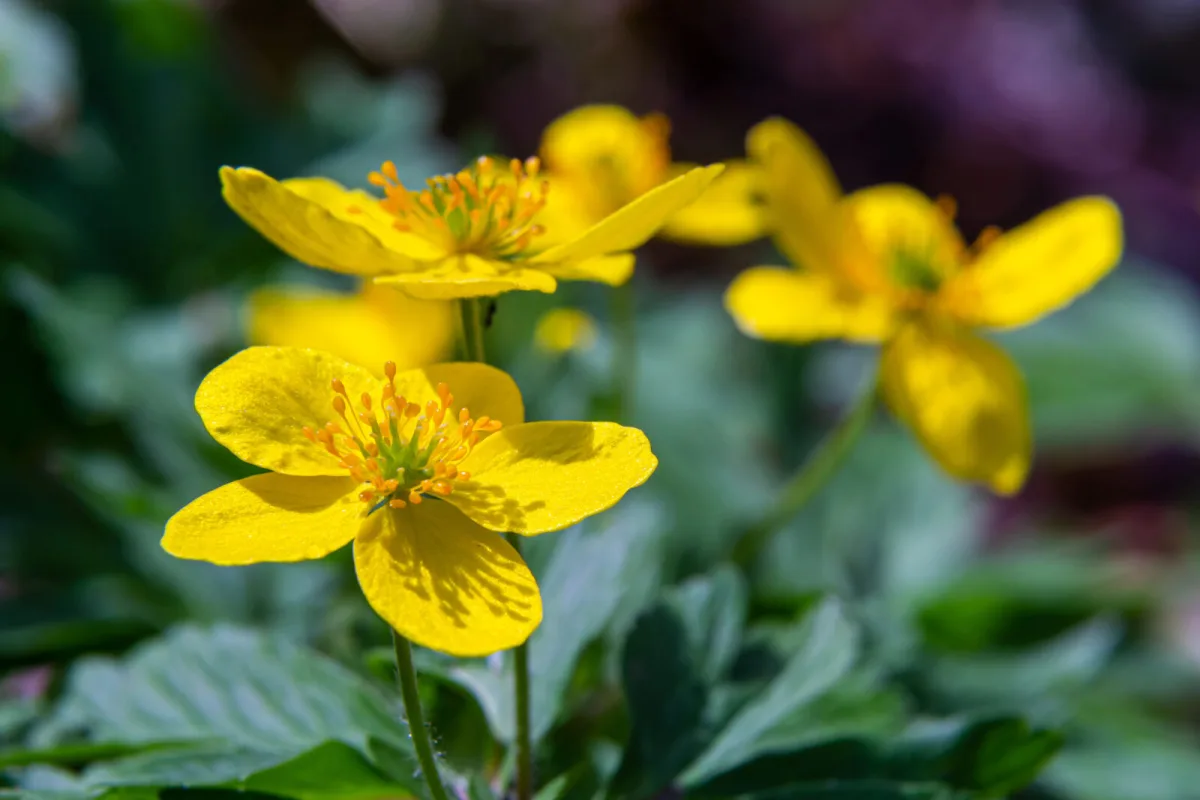
Marsh marigold, botanically Caltha palustris, is a hardy perennial that’s ideally suited to places with long-term wet soil. It’s most often planted along the edges of ponds, streams and pools, but it also thrives in water-filled ditches or in beds with a high water table. Although it’s strongly associated with water, you don’t need to have a pond in the garden. What matters is that the plant has a reliable supply of moisture, or that the site is regularly flooded. Marsh marigold naturally loves growing in muddy ground.
Appearance, size and flowering time
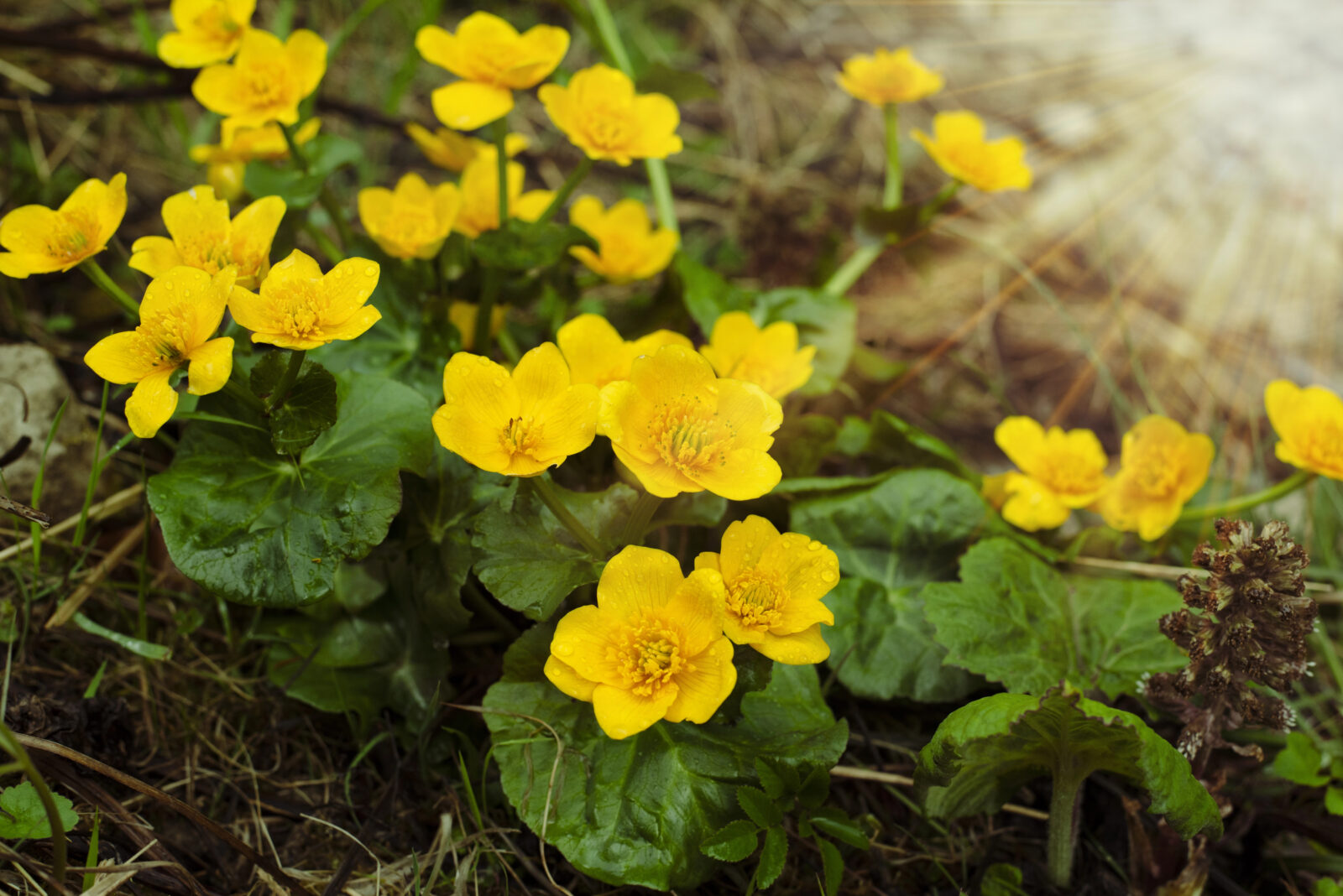
The plant usually grows to around 20 to 50 cm in height and spread, depending on conditions and how rich the site is. It has dark green leaves and showy flowers, most commonly yellow and borne in clusters. The main flowering period is April to June. With suitable moisture and weather, marsh marigold often produces flowers again in late summer, although the second flush is usually lighter than the spring display. Thanks to the flower colour it attracts pollinators and is considered a good nectar plant.
Where to use marsh marigold in the garden
It’s most at home on the margins of water and along running water, but it also suits boggy sections of borders, permanently waterlogged areas, or mini water gardens in containers. Interestingly, it can even establish between stones or in a lawn if it has enough water. In practice, it can be an excellent solution for awkward corners of the garden where other perennials rot or struggle.
Position, soil and pH
Marsh marigold prefers a sunny spot, but it will tolerate light partial shade. The soil can be wet to boggy, even with a high organic content, peat, or essentially mud. As for soil reaction, it’s happy in roughly the range of pH 6.1 to 7.8. A major advantage is that it isn’t fussy about the exact soil type, as long as the basic requirement is met: consistent moisture.
Watering is crucial, it survives dry spells thanks to rhizomes
Watering should be very generous, especially up to the end of June, when the plant is growing and flowering most strongly. If the water level in a pond or stream later drops due to drought, the above-ground growth may die back partially. That doesn’t automatically mean the plant is lost. Marsh marigold can ride out unfavourable periods thanks to its underground rhizomes, from which it will reshoot once moisture returns.
It’s better to skip feeding
Marsh marigold generally does better without fertiliser. Adding feed can trigger typical signs of overfeeding, such as leaf scorch, spotting, or overall weakened growth. Around water features, feeding is also problematic for another reason: nutrients can wash into the water and encourage unwanted algae. The plant is usually quite satisfied with what it takes from the water and from sediments in wet soil.
Propagation by division and by seed
The most reliable method is dividing the rhizomes in spring or autumn, typically in March or during September to October. It can also be propagated from seed. In the wild, seeds are often dispersed by water, and a similar approach can be used in the garden by tossing seed into a water feature so some of it settles along the edge. If it lands in a permanently moist spot, it can germinate. Seed can also be scattered along a stream, ditch, or onto banks that are regularly flooded. During flowering it’s better not to divide or transplant the plant, and to wait until spring or autumn.
Transplanting, pruning and routine care
Marsh marigold generally doesn’t need frequent transplanting, and pruning isn’t necessary either. Simply remove dying top growth as needed, especially if the plant responds to a drop in water levels during summer. Otherwise, it’s an undemanding perennial that will persist for years in the right place without complicated care.
Hardiness and growing in containers
Hardiness is very good and marsh marigold will cope with severe winters. The only plants that need extra attention are those in containers, because the root ball can freeze through more easily in a pot. In that case, protect the container over winter or move it into a cool place such as a garage or cellar. Alternatively, the plant can be grown in a container just seasonally.
Diseases and pests are usually the exception
Marsh marigold is generally tough. If problems appear, they’re most often linked to care mistakes—typically too little water or, conversely, overfeeding. With a reliably moist site and no unnecessary fertiliser, the plant is usually stable and trouble-free.
Interesting cultivars for different flower looks
Besides the common yellow-flowered form, there are also cultivars with different flower shapes and colours. A popular one is Alba with simple white flowers. For lovers of double blooms, yellow cultivars such as Flore Pleno, Multiplex or Plena are a good choice. There is also Semiplena, which tends to have semi-double to double flowers. By choosing a cultivar, you can easily change the overall effect of the planting without changing the growing requirements.
Important safety note
Fresh leaves contain the compound anemonin, which can irritate the digestive tract. In dried leaves this substance disappears, but it’s still not suitable to use the plant for home experiments and it’s not ideal to plant it where livestock might have access to it.
In the past, dried leaves were also mentioned as an aid linked to quitting smoking, but such use isn’t recommended without professional guidance. From a gardening perspective, however, marsh marigold is above all a beautiful and practical plant for places where there is more than enough water.
Source: Niepodlewam, Gardening Know How, Pestrazahrada.cz

A lover of nature, gardens, and everything that moves, blooms, or grows. He literally grows everything, from herbs to rare species, and he enjoys caring for animals just as much. In his work, he connects modern technology with tried-and-tested grandmotherly methods and is happy when both paths lead to the same goal.
Related articles
The Christmas Amaryllis That Can Bloom for Years but Most People Throw It Away After Flowering
Hippeastrum is a spectacular winter-blooming bulb that, with the right care, will flower again year after year. Learn how to plant it correctly, look after it after flowering, and bring it into dormancy so it reliably reblooms.
How to Grow Winter Garlic for a Much Bigger Harvest
Autumn planting is the key to strong, healthy winter garlic, but the details make all the difference. With the right timing, bed choice, seed-clove treatment and a simple bicarbonate trick, you can noticeably boost yield.

A tree or shrub planted properly in autumn can outpace spring stock and improve fruiting
Many fruit trees and soft-fruit shrubs establish better when planted in autumn, because roots keep growing while the top is dormant. Done well, this head start means stronger spring growth, less watering, and a healthier first year.
Comments (0)
Be the first to comment.