
 English
 Polski
 Deutsch
 Nederlands
 Svenska
 Norsk
 Dansk
 Français
 Italiano
 Español
 Português
 Slovenčina
 Suomi
 Gaeilge
Make an Old Tree Stump Disappear Without Digging or Chemicals
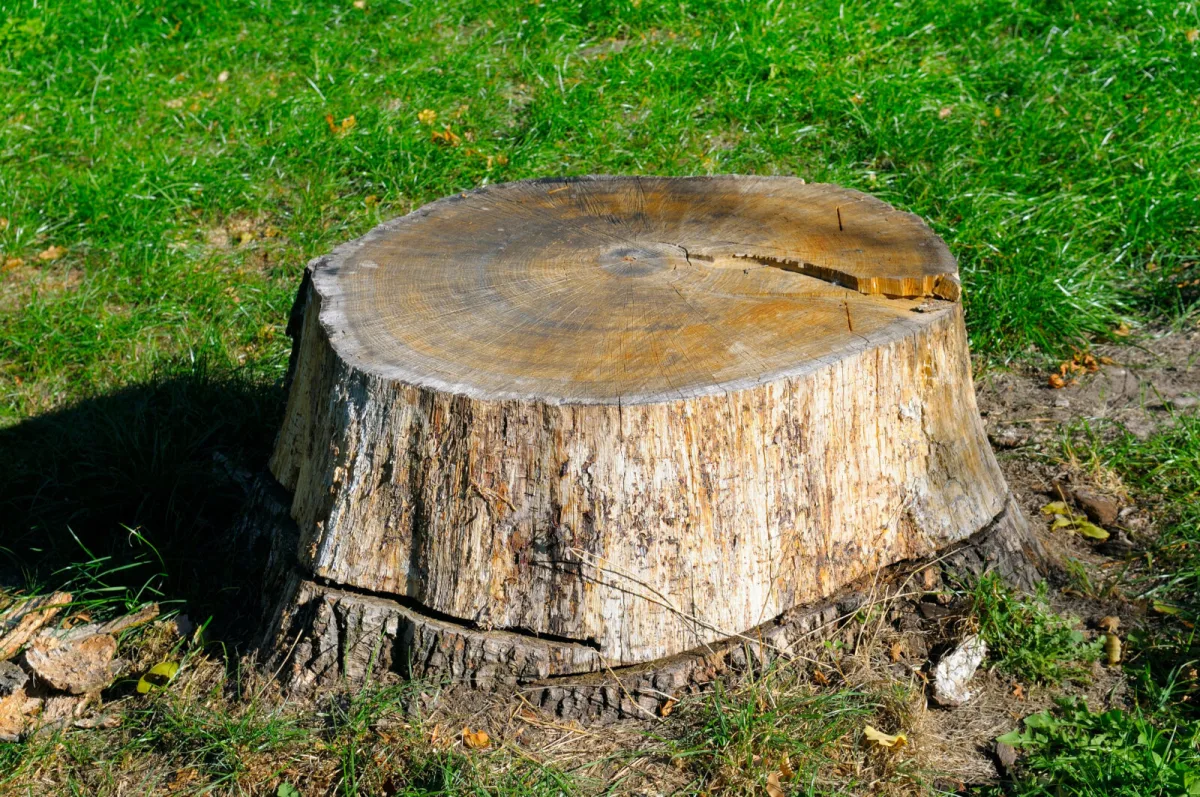
After felling an old apple, plum or pear tree, you’re often left with a stump that’s notoriously hard to get out of the garden. Hand digging is exhausting, especially when the roots run deep and are firmly anchored in the soil. And not everyone has machinery on hand to speed the job up. But there is a gentler option that doesn’t require an axe, a tractor, or hours of grueling digging.
If you don’t mind that the result won’t be instant, you can take advantage of the natural decomposition of wood. The stump will gradually break down as mycelium works through it, weakening the wood from the inside. It’s a simple principle, you just need to allow time and have a bit of patience.
How stump removal with mycelium works
One option is to use fungi that feed on dead wood. A good helper can be, for example, oyster mushroom mycelium intended for growing on logs. It’s introduced directly into the stump, where it gradually spreads and disrupts the wood’s structure. Over time the wood softens, begins to crumble, and removing what’s left becomes much easier.
This method is especially appealing for gardeners who don’t want to unnecessarily disturb the surrounding soil and aren’t looking for an immediate fix at any cost. It’s not a quick intervention, but a natural process that can ultimately be far more comfortable than physically demanding digging.
A simple step-by-step method
First, drill several holes into the old stump. They should be roughly 5 to 10 centimeters deep so the mycelium can get into the wood. Then place the mycelium spawn into the prepared holes according to the manufacturer’s instructions. It’s a good idea to seal the holes with damp sawdust or wooden plugs to help retain moisture inside.
It’s important that the stump doesn’t dry out too much, especially during warm, dry spells. Adequate moisture is what helps the mycelium develop and the wood decompose evenly. Once the process gets going, the stump will gradually lose its strength and, after some time, can be broken apart or mechanically removed with far less effort.
How long it takes for a stump to break down
It’s worth keeping in mind that this isn’t a solution that works in a few days or weeks. The rate of decomposition depends on the size of the stump, the type of wood, and how much moisture is available. For some stumps the whole process can take several years. This method is best suited to older stumps of broadleaf trees, whose wood tends to decompose more readily than that of some other species.
That’s why this approach is better where the stump isn’t in the way of immediate use of the space. If you’re planning new planting, building work, or ground levelling in the same spot soon, you may need a faster solution.
When you need the space cleared sooner
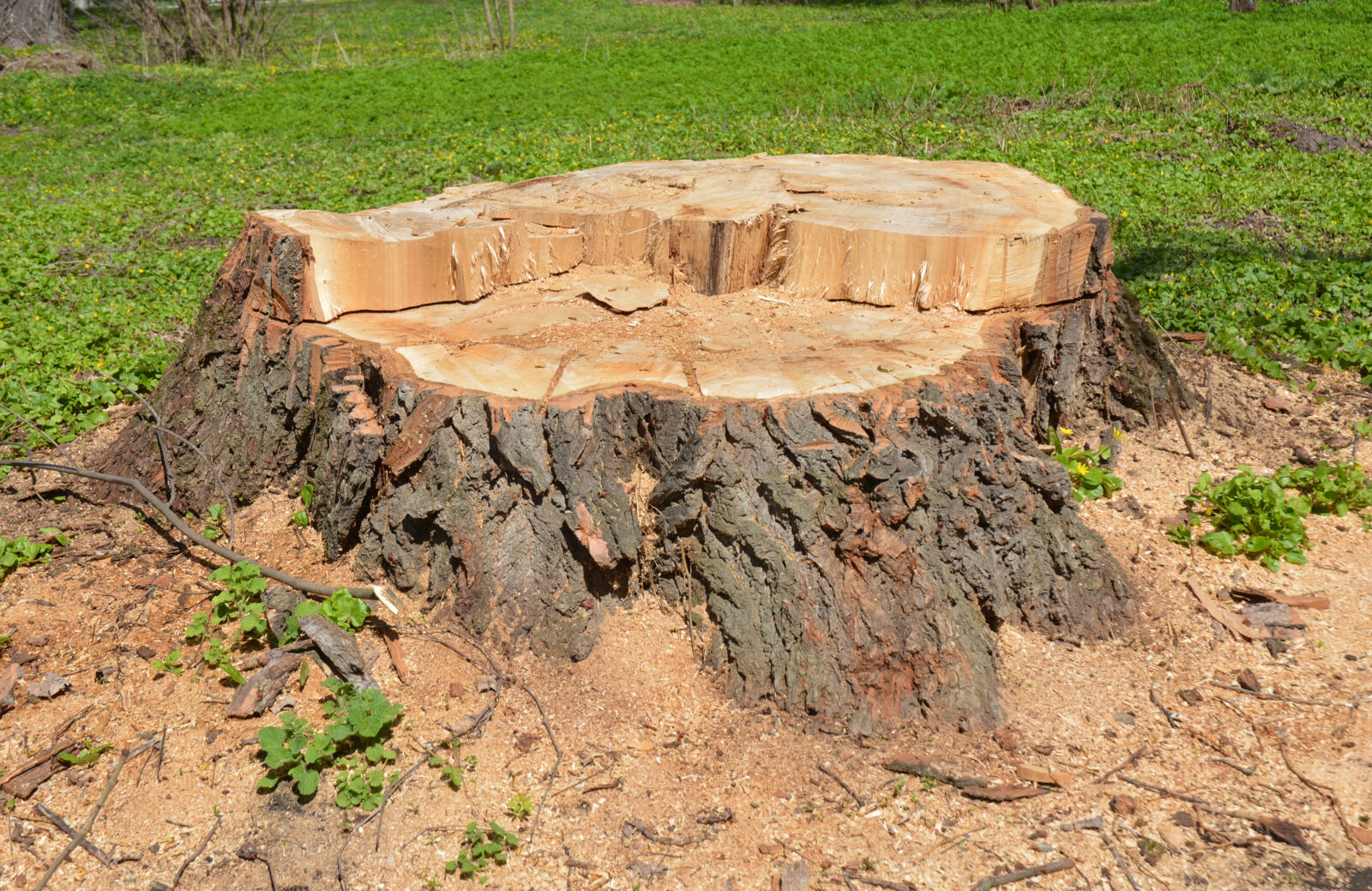
In cases where the stump needs to go without a long wait, a specialist stump grinder can help. It chips the above-ground wood into fine mulch and makes it much easier to finish off the area. The advantage is that you don’t have to dig out the entire root system, which is often the hardest part of the whole job.
Grinding is quicker than natural decomposition, but it’s a technical solution that requires the right equipment or professional help. Everyone can choose based on whether they value time and simplicity, or speed.
What to avoid
When it comes to stump removal, you’ll sometimes hear advice that can do more harm than good. Pouring on petrol, burying the area under a large amount of salt, or burning out the roots are all poor choices. These methods can ruin the soil, damage nearby plants, and in the case of fire create a serious safety hazard.
A gentler approach is to let the wood break down naturally, without aggressive chemicals and without dangerous interventions in the surrounding area.
An important check before you start
Before you put mushroom spawn into the stump, it’s sensible to find out why the tree died in the first place. If it was affected by disease or a wood-rotting fungus, caution is warranted. Some organisms that colonise dead wood can also pose a risk to healthy trees nearby. In that situation, it’s better to identify the cause first and only then choose the most appropriate removal method.
So an old stump doesn’t always have to disappear only through heavy physical labour. If you don’t mind a slower approach, using mycelium can be a simple, garden-friendly way to gradually get rid of an unsightly leftover stump.
Source: To je nápad, Gardening Know How, Pestrazahrada.cz

A lover of nature, gardens, and everything that moves, blooms, or grows. He literally grows everything, from herbs to rare species, and he enjoys caring for animals just as much. In his work, he connects modern technology with tried-and-tested grandmotherly methods and is happy when both paths lead to the same goal.
Related articles
How to prune an apple tree in autumn for a heavy crop next year
If your apple tree crops heavily one year and then disappoints the next, an overly dense canopy is often to blame. A well-timed autumn prune improves light and airflow, supports healthy growth, and sets the tree up for better-quality fruit.
A Garden Shed Can End in a Fine or Even Demolition Many People Make a Mistake Without Realising It
Building a garden shed isn’t just about putting up walls. Smart planning, a level base and checking local rules early can save you costly fixes, fines or even an order to remove the shed.
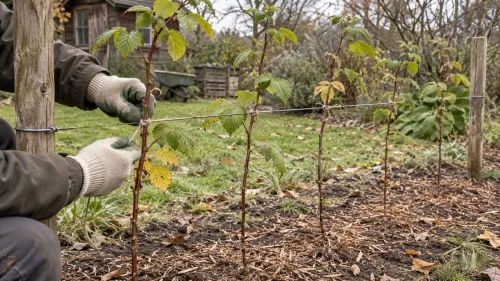
Pruning raspberries in November, experienced gardeners leave only a few canes and harvest more next year
Autumn raspberry pruning helps keep canes strong, reduces disease pressure, and sets you up for a bigger crop next season. Once the leaves drop, thin and cut back correctly based on whether your variety fruits once or is everbearing.
Comments (0)
Be the first to comment.