
 English
  Polski
  Deutsch
  Nederlands
  Svenska
  Norsk
Norsk  Dansk
Dansk  Français
  Italiano
  Español
  Português
  Slovenčina
  Suomi
Suomi  Gaeilge
 Is It Worth Pruning Willow in Autumn If You Missed Spring
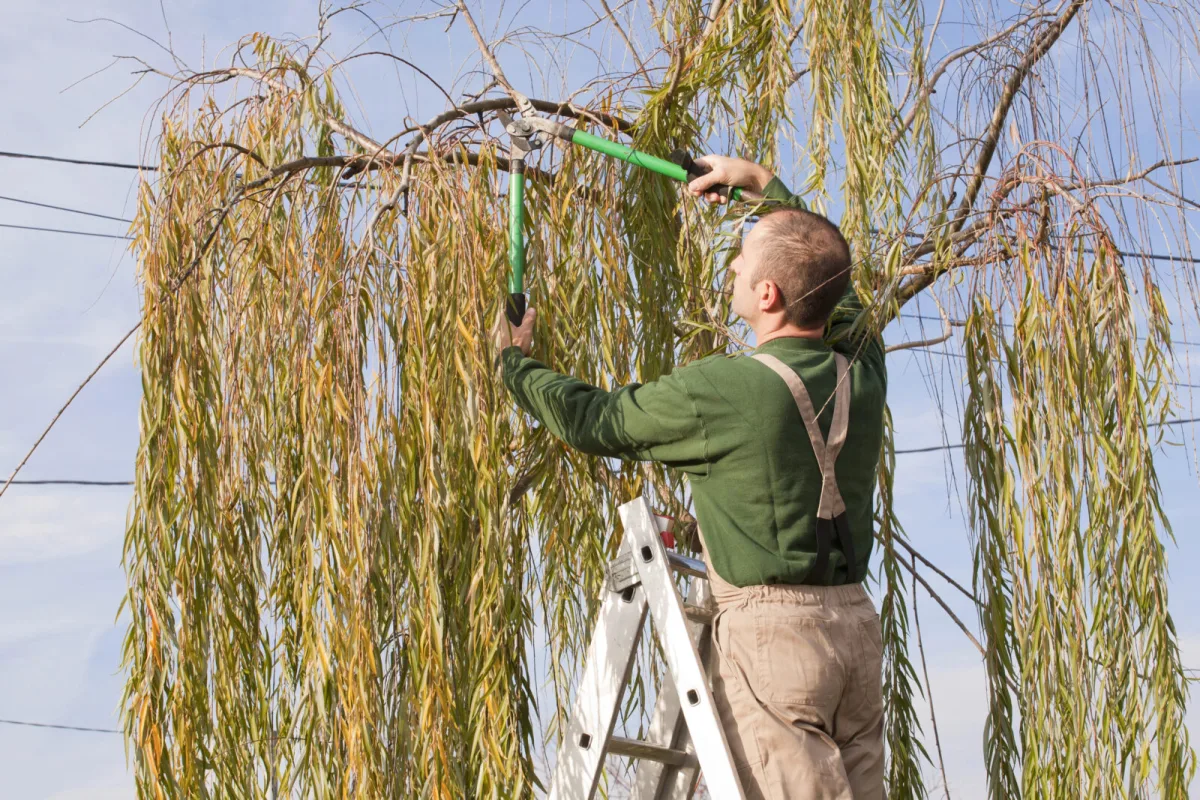
The question of whether you can prune a willow in autumn comes up most often among gardeners who didn’t manage their regular spring cut. With willows, though, a lot depends on your goal. If you grow willow mainly for the spring catkins, an aggressive autumn prune can deprive you of them. Flower buds are formed on shoots already on the plant, and if you remove them in autumn, there will be nothing left to bloom in spring.
That’s why with goat willow, often referred to as pussy willow (Salix caprea), it’s recommended to wait with the main shortening until after flowering. Only then is it worth stepping in—quite decisively if needed—because this species tolerates hard pruning very well and usually resprouts quickly.
When autumn pruning makes sense and when it’s better to wait
Autumn pruning can be useful for willows grown for rods, for pollarded willows, or in willow beds where the goal is harvesting one-year rods rather than flowers. Rods are traditionally harvested during dormancy, after leaf fall. Most often this is done from November to March, depending on how winter develops and local conditions.
By contrast, with ornamental willows where you want the best possible spring display, caution applies. An autumn cut can encourage soft new shoots that won’t have time to ripen and are easily damaged by frost. The result is often dieback at the shoot tips and a weaker start to the next season.
Harvesting rods in winter and why cutting technique matters
In a willow bed, you usually harvest all one-year shoots growing from the stool—the low “head” or stump that the willow regularly resprouts from. In young plantings this may be only one or two rods, which are often less useful for finer basketry work because they can be uneven or too thin.
Cuts are made close to the ground so the stool isn’t damaged. A smooth, short, angled cut is important, because ragged wounds heal more poorly and can become an entry point for disease. If you cut the rods higher up, you create unnecessarily long stubs that over time turn into unsightly, prematurely raised heads and also increase the area where pests can overwinter.
Rods are traditionally harvested during dormancy after leaf fall, most often from November to March, and cut as low as possible with a smooth angled cut.
What happens to rods after harvest and why they must be stored properly
Rods intended for further processing are often boiled—usually for several hours—and then cooled. After that, the rods are peeled and adjusted as needed. In practice this means finishing the drying and storing them so the material doesn’t mould. Good airflow helps, and rods should be laid on wooden slats roughly a few dozen centimetres above the floor so air can move under the bundles.
Occasionally, rods are harvested during the growing season as well. The reason is usually that the rods have grown too thick and the grower wants to encourage the production of slimmer, finer rods the following year for a particular type of work.
The ornamental willow Hakuro Nishiki and why it needs regular pruning
With ornamental willows such as the dappled willow Salix integra Hakuro Nishiki, pruning is crucial mainly for appearance. The prettiest pink and white colouring appears on young shoots. If the shrub isn’t pruned for several years, the crown thins out, the colourful leaves shift only to the ends of long branches, and old wood starts to dominate inside. Regular shortening encourages a dense, compact shape and more young growth, which is what makes this shrub so attractive.
It’s also a fast-growing woody plant with higher demands for moisture and nutrients. If it’s dry after pruning or the soil is poor over the long term, the plant often survives, but regrowth is slower and the colouring tends to be less intense.
The best pruning times during the year and why autumn is often avoided
The main shaping prune is usually planned for late winter and early spring, before the buds fully open. At this time the plant is dormant, the intervention stresses it less, and energy can then be directed into fresh spring growth. A later, hard spring prune often removes new shoots the willow has already invested energy in, unnecessarily delaying the best display.
In summer, only light maintenance is usually done, such as removing damaged branches or those growing in the wrong direction. Autumn pruning is generally not recommended for ornamental willows because it can provoke late, soft growth that is sensitive to the first frosts. The exception is when you are removing clearly diseased or broken branches—then it’s sensible at any time.
How to recognise the right moment by the buds
Relying only on the calendar doesn’t always work, because every area has a different climate. It’s better to watch the buds. As long as they are firm, small and tightly closed, the willow is still in deeper dormancy. Once the buds start to swell noticeably and soften, you’re approaching the time when pruning tends to have the best effect. Ideally, do the shortening right as the buds are plumping up but before they open into leaves.
A pruning approach to thicken the shrub and help it recover well
Start by checking the whole plant and first remove dead, damaged, or suspicious branches. Next, cut out shoots that cross and rub, because they thicken the crown unnecessarily and reduce airflow. With ornamental willows it’s common to shorten a portion of last year’s growth so the shrub thickens and produces more young branches.
If the willow is overgrown or has been neglected for a long time, you can opt for a deeper cut. Many willows tolerate this very well and can resprout even after a hard rejuvenation prune. It’s important to make the cut angled and clean, just above a bud—ideally above a bud pointing outward from the crown so the new shoot doesn’t grow inward.
Tools, hygiene, and common pruning mistakes
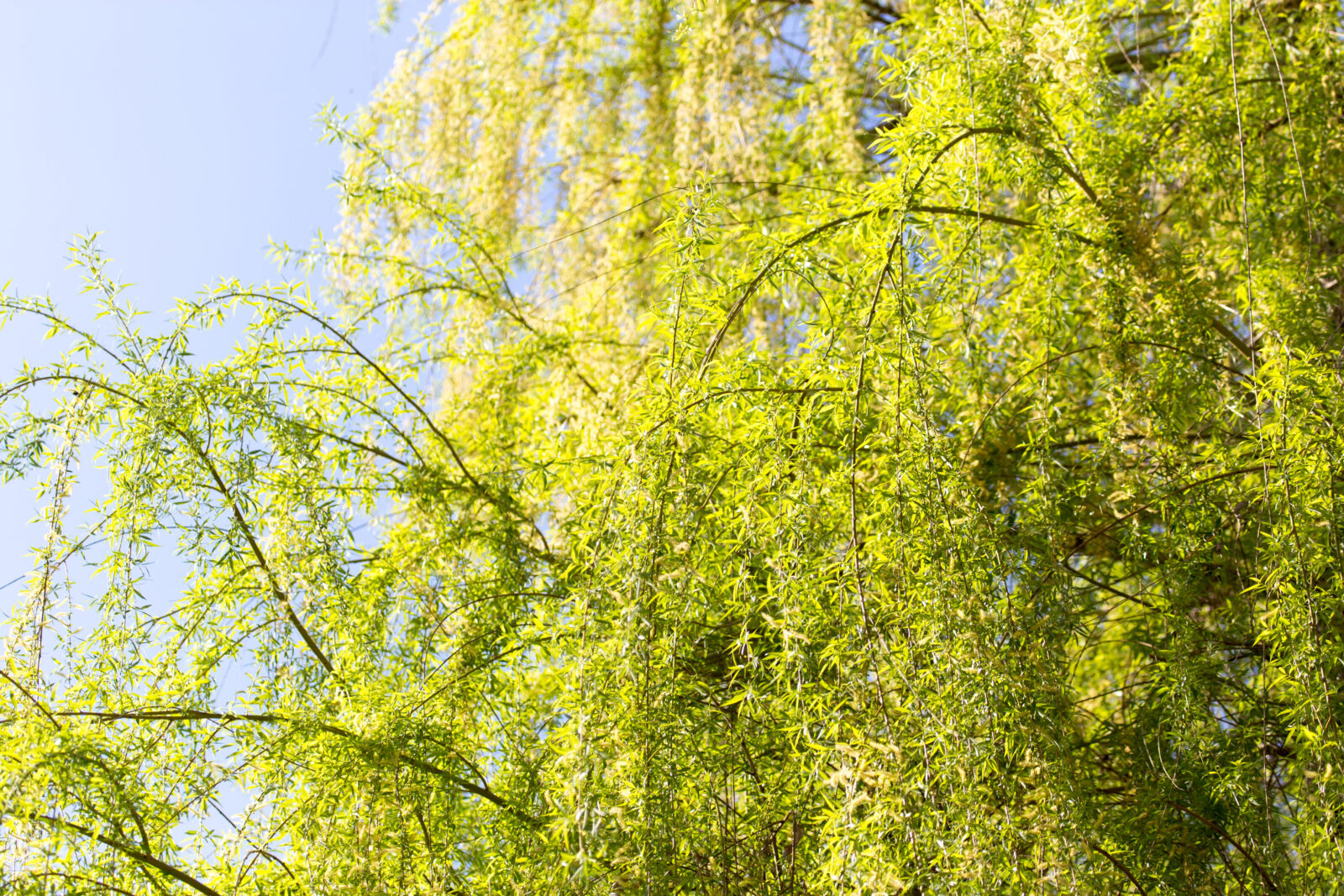
The basics are sharp secateurs that make a clean cut without crushing the tissues. For thicker branches, loppers are useful, and for genuinely old wood a pruning saw. If you’re removing diseased parts, it pays to clean the blades regularly with a disinfectant so the problem isn’t spread further.
Common mistakes include cutting with a blunt tool, leaving long stubs when harvesting rods, doing a hard shortening too late in spring, and autumn pruning of ornamental willows that triggers unsuitable late growth. With standard (top-grafted) plants, it’s also necessary to regularly remove suckers and shoots growing from the lower part, because they take strength from the crown and spoil the shape.
What to expect after pruning and how to encourage quick regrowth
After a more substantial cut, the willow may look bare, but that’s normal. If the pruning was done in time, new buds will appear within a few weeks, followed by fresh leaves. Moisture and nutrition strongly influence how quickly it recovers. Willows love evenly moist soil, and after pruning they usually appreciate a thorough watering, especially if it’s not raining.
If growth doesn’t get going, the culprit is usually drought, poor soil, or badly chosen timing. In practice, it pays to treat pruning and soil care as one whole, because shortening alone without follow-up support often won’t deliver the dense, colourful effect you expect from willows.
Autumn summary for catkins, rods, and ornamental willows
If you want pussy willow catkins in spring, plan the main prune of goat willow for after flowering, otherwise you’ll lose the blooms. If you’re after rods, harvest is done during dormancy after leaf fall, cutting as low and cleanly as possible. And with variegated ornamental willows, the key period is late winter and early spring, while autumn shaping is best limited to the necessary removal of damaged or diseased branches.
Source: Záhrada, Tree Works, Ferber, Pestrazahrada.cz

A lover of nature, gardens, and everything that moves, blooms, or grows. He literally grows everything, from herbs to rare species, and he enjoys caring for animals just as much. In his work, he connects modern technology with tried-and-tested grandmotherly methods and is happy when both paths lead to the same goal.
Related articles
Summer raspberries hide next year’s crop where most people cut it off
Before you prune raspberries, you must know whether you grow summer-fruiting canes or autumn-fruiting (primocane) types. The wrong cut in autumn can remove next year’s harvest, while the right approach keeps plants healthier and far more productive.

Why Early Autumn Is Ideal for Adding Eggshells to Garden Beds
Once the last crops are lifted, early autumn is the perfect time to improve soil for next season. Eggshells add calcium, help soil structure, and can even deter certain pests when used correctly.
Comments (0)
Be the first to comment.