
 English
  Polski
  Deutsch
  Nederlands
  Svenska
  Norsk
Norsk  Dansk
Dansk  Français
  Italiano
  Español
  Português
  Slovenčina
  Suomi
Suomi  Gaeilge
 How to Plant in Odd and Even Numbers for a Beautiful Garden
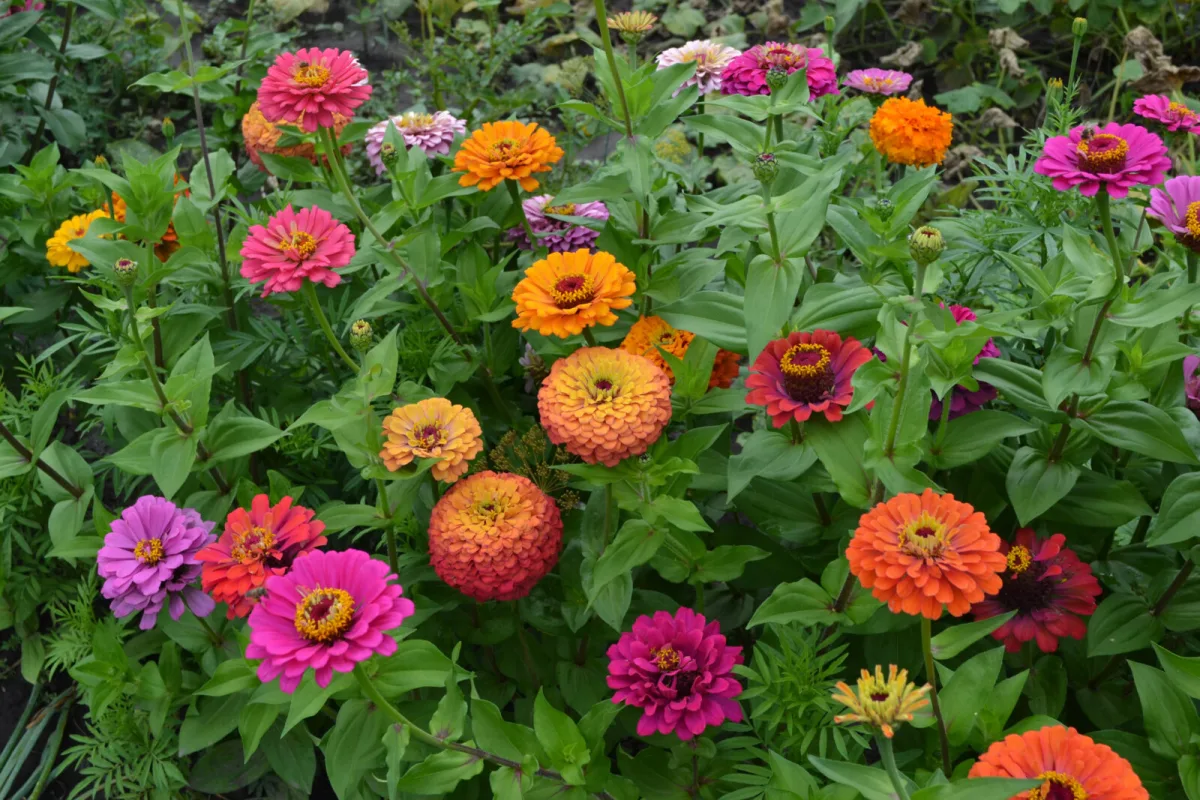
When you love gardening, it’s easy to fall into the habit of buying one plant of every variety that catches your eye. Plants indoors and out should bring you joy, but without a thought-out intention, a border can quickly look bitty and maintenance becomes unnecessarily complicated. It’s far better to have a simple plan, whether it comes from a garden designer or from your own observation and inspiration. It will help you choose fewer types, but use them in a way that feels cohesive, natural, and easy to look after.
Odd numbers and why they most often work best
In garden design, the rule of three is used again and again. An odd number of elements usually looks more appealing because the eye doesn’t automatically split the planting into two equal halves. A group of three or five plants can create rhythm and encourage the gaze to travel through the bed naturally. Picture a larger border where the same plant repeats in three spots, roughly forming a triangle. One might sit nearer the edge, another in the middle, and the third further back, or they might be placed from left to right.
You can achieve an interesting effect even by placing one of these plants in a container, giving it a different height while it still belongs to the same composition. For a natural look, you don’t need to measure anything precisely. What matters more is keeping spacing so the repetition is easy to notice and the whole doesn’t read as a random mix.
Repeating in threes creates order without feeling dull
It’s that balanced level of repetition that gives a garden visual strength. When the same motif appears three times, it feels unified but not monotonous. A trio is also an easy tool for beginners, because it quickly tells you how many to buy and roughly where to place them.
Odd groups don’t have to be the same plants
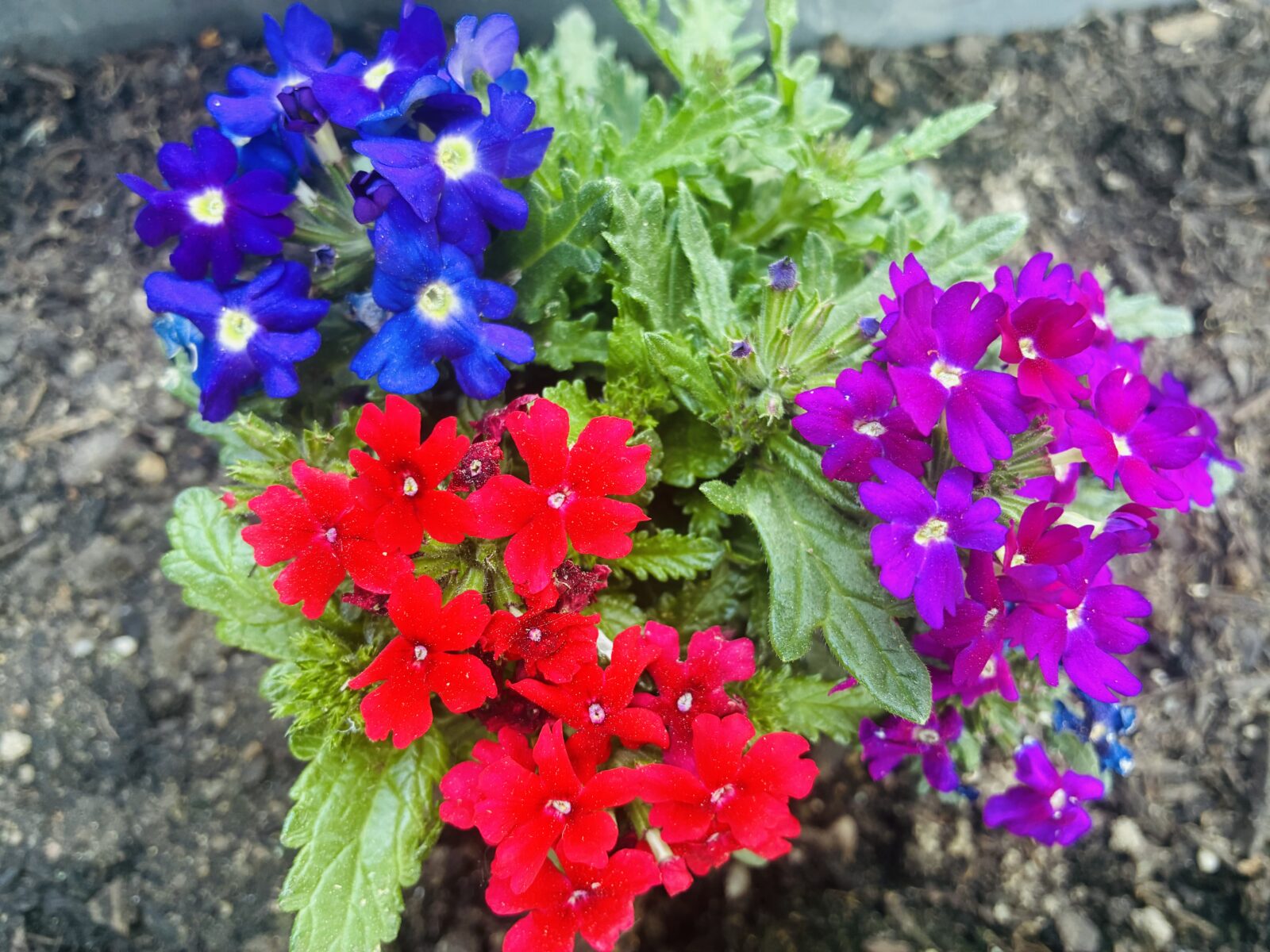
You don’t have to create the odd-number effect only by repeating one species. Working with flower colour can be just as effective, even if the plants vary slightly in height or leaf texture. Unless you’re aiming for a meadow-style planting, too many colours in a small space can start to look cluttered and disorganised. A strong impact, on the other hand, comes from a monochrome approach: combining different plants in the same colour. Three or five plants with pink flowers planted together can create a bold focal point, which you can enhance with a container or a stronger decorative feature.
Height can also be a unifying element. If you place three taller plants of the same height across a border, they link the space and make it easier to read. Treat three as a dependable helper, but depending on the size of the area you can work similarly with five or seven plants. Once you move to higher numbers, you’re shifting into mass planting, which is ideal for larger areas and works especially well with low, ground-covering species.
Design tip: five identical containers lined up in a row can look very elegant, even if you repeat the same plant in each one.
When even numbers make sense
Planting in even numbers isn’t a mistake; it simply creates a different feel. It often suits a more formal style or a romantic cottage garden where symmetry is welcome. Pairs of plants work beautifully at entrances, along steps, or beside paths—one container or shrub on each side framing the space. For this purpose, evergreen shrubs are a great choice: they look good year-round and help keep a tidy appearance even out of season.
Even numbers are also often used with trees if you want to create shade while adding height to the garden, or with edible plants that need a second plant for pollination and fruit set. A pair can also be useful in specific spots where you want to highlight something, support other planting, or partially screen a utility feature or a less attractive part of the garden.
What to watch out for with even-numbered groups
The problem arises when you repeat lots of pairs across the garden, especially if you plant them in a straight line at equal spacing. Instead of elegant symmetry, you can end up with a “polka-dot” effect that feels more distracting than deliberate. If you’re working with even numbers, try to bring the composition to life by varying distances, mixing in other groupings, or keeping symmetry to clearly defined places where it genuinely makes sense.
When one plant is enough as a specimen
Sometimes the best choice is a single standout plant. Some shrubs and ornamental woody plants have such strong character that they work as a specimen—an anchor feature that draws attention all on its own. Likewise, a tree often looks best when it has space around it rather than being crowded among other bold plants.
A single statement plant is ideal when you want to add something you truly love and that looks good outside the flowering period too—ideally for most of the year. It also works brilliantly set against a stone or boulder, where the flowers or foliage stand out even more. A specimen shrub can also be practical for screening an air-conditioning unit, pool controls, or other equipment you’d rather not look at. Individual plants can be used as colour or texture accents as well; the key is not to add too many different specimens, otherwise the garden will break up into disconnected parts again.
The same rules apply to containers and pots
The principles of odd and even numbers work not only in borders, but also when arranging containers on a patio, by the front door, or indoors. A group of three pots often feels natural and welcoming, while a pair can create a crisp, formal frame. Most important, though, is not to stress about counting. First decide what style you want, then choose plants you can realistically care for—and that will keep giving you pleasure for years to come.
Source: Plant Addicts, RHS, Pestrazahrada.cz

A lover of nature, gardens, and everything that moves, blooms, or grows. He literally grows everything, from herbs to rare species, and he enjoys caring for animals just as much. In his work, he connects modern technology with tried-and-tested grandmotherly methods and is happy when both paths lead to the same goal.
Related articles
The Christmas Amaryllis That Can Bloom for Years but Most People Throw It Away After Flowering
Hippeastrum is a spectacular winter-blooming bulb that, with the right care, will flower again year after year. Learn how to plant it correctly, look after it after flowering, and bring it into dormancy so it reliably reblooms.
How to Grow Winter Garlic for a Much Bigger Harvest
Autumn planting is the key to strong, healthy winter garlic, but the details make all the difference. With the right timing, bed choice, seed-clove treatment and a simple bicarbonate trick, you can noticeably boost yield.

A tree or shrub planted properly in autumn can outpace spring stock and improve fruiting
Many fruit trees and soft-fruit shrubs establish better when planted in autumn, because roots keep growing while the top is dormant. Done well, this head start means stronger spring growth, less watering, and a healthier first year.
Comments (0)
Be the first to comment.