
 English
  Polski
  Deutsch
  Nederlands
  Svenska
  Norsk
Norsk  Dansk
Dansk  Français
  Italiano
  Español
  Português
  Slovenčina
  Suomi
Suomi  Gaeilge
 How to plan a border that flowers from the first days of spring to late autumn
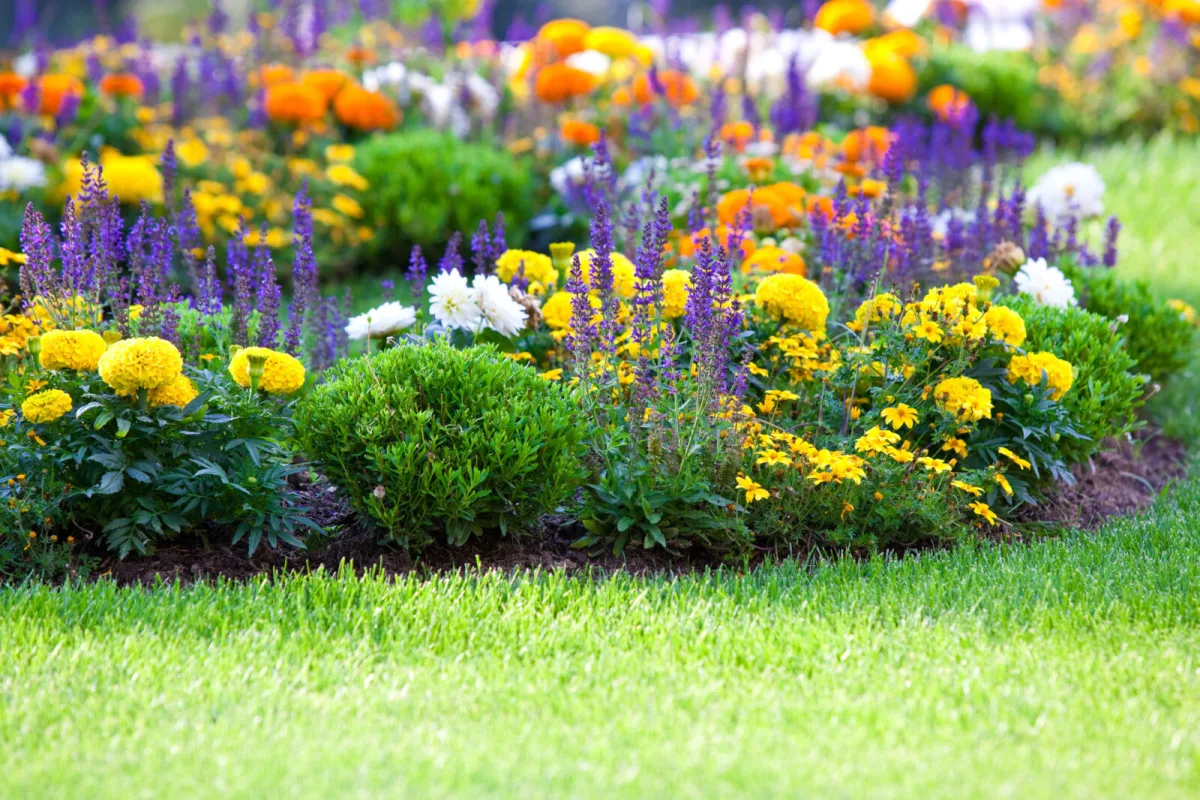
A border that stays colourful from the first warm days through to autumn mists doesn’t happen by accident. The principle is simple: allow for the fact that every plant has its peak, and between those peaks you get “flowering gaps”. Once you know where the gaps will be, you can bridge them easily with the right combination of bulbs, perennials and annuals. The result won’t feel like a one-off show in June, but a flowing season where something is always happening.
It also helps to remember that beauty isn’t made by flowers alone. Structure does a lot of the work: foliage, form, dried flowerheads and seedheads. Plants that look good even after flowering are what hold a border “together” when the main stars are swapping places.
The backbone of the border: perennials and repeat flowering
Start by building a solid framework: a few reliable perennials that flower for a long time, or that will flower again after being cut back. These plants act as a backdrop for seasonal colour and cover much of summer, when the pressure for continuous flowering is at its highest.
For sunny borders, tried-and-tested choices include coneflowers (Echinacea), black-eyed Susans and Rudbeckias, yarrow, catmint, stonecrop (Hylotelephium), spiked speedwell and bee balm (Monarda). In part shade, hardy geraniums, some bellflowers and selected paniculata phloxes work well. With many perennials you can extend the season by cutting back spent stems in good time, then watering and giving a light feed.
“A garden is a journey, not a destination. When you learn to notice what flowers when, you’ll naturally start filling in the missing colours.”
Spring starts in autumn: bulbs and cold-hardy blooms
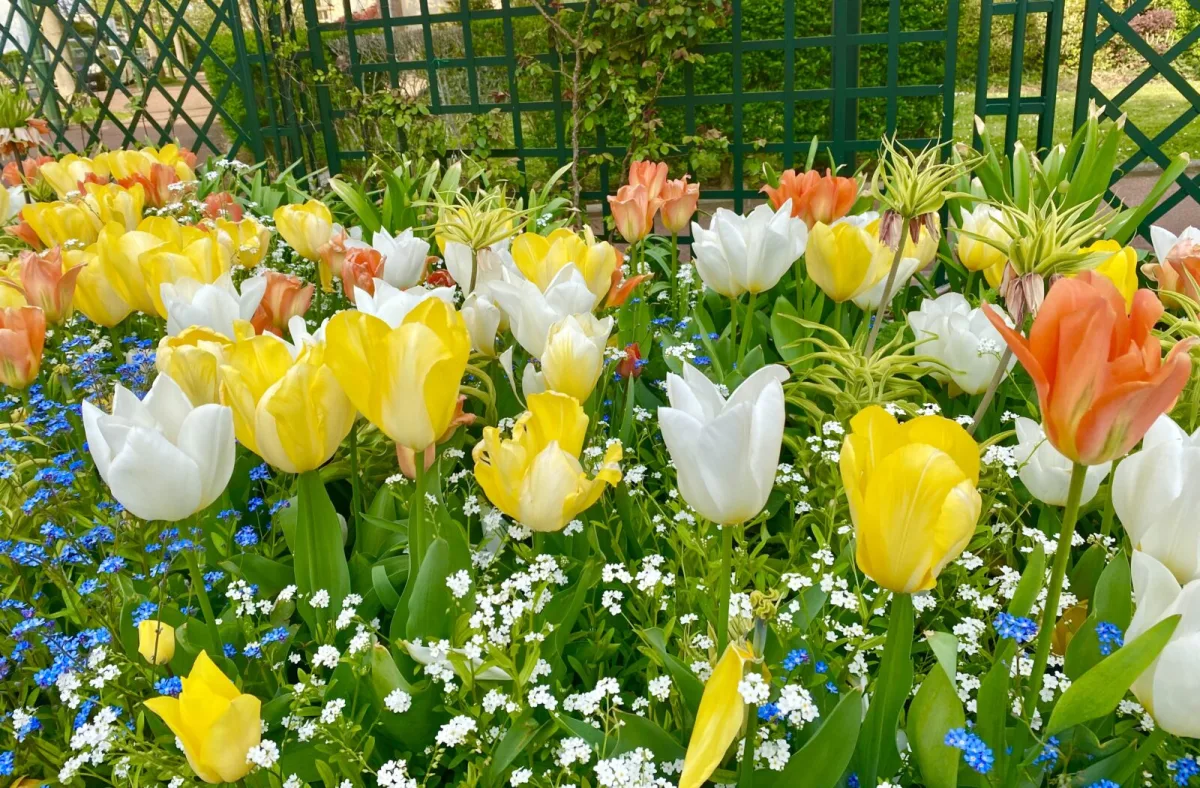
The earliest colour is usually provided by bulbs planted in autumn. Daffodils and tulips are among the most rewarding, because they bloom when the rest of the border is only just waking up. To avoid a “lonely” effect, plant bulbs in drifts and repeat them in several spots. Choosing a mix of early and late varieties also makes a big difference, stretching the spring display.
Spring is also the time for tough annuals and short-lived plants that can handle cooler weather. Snapdragons, started early under cover, can flower surprisingly soon and often keep going into summer. Love-in-a-mist (Nigella) brings delicate blooms and, afterwards, decorative seed pods that also look great when dried. Spring is also the ideal moment to spot empty patches and plan top-ups, because small shortcomings are harder to fix once summer is in full swing.
Summer is about stamina: annuals as colourful bridges
Once temperatures rise and the soil has warmed, annuals take over. In a well-designed border they don’t just work as “fillers” but as colourful bridges between the flowering waves of perennials. They also let you change the mood of the border every year without major upheaval.
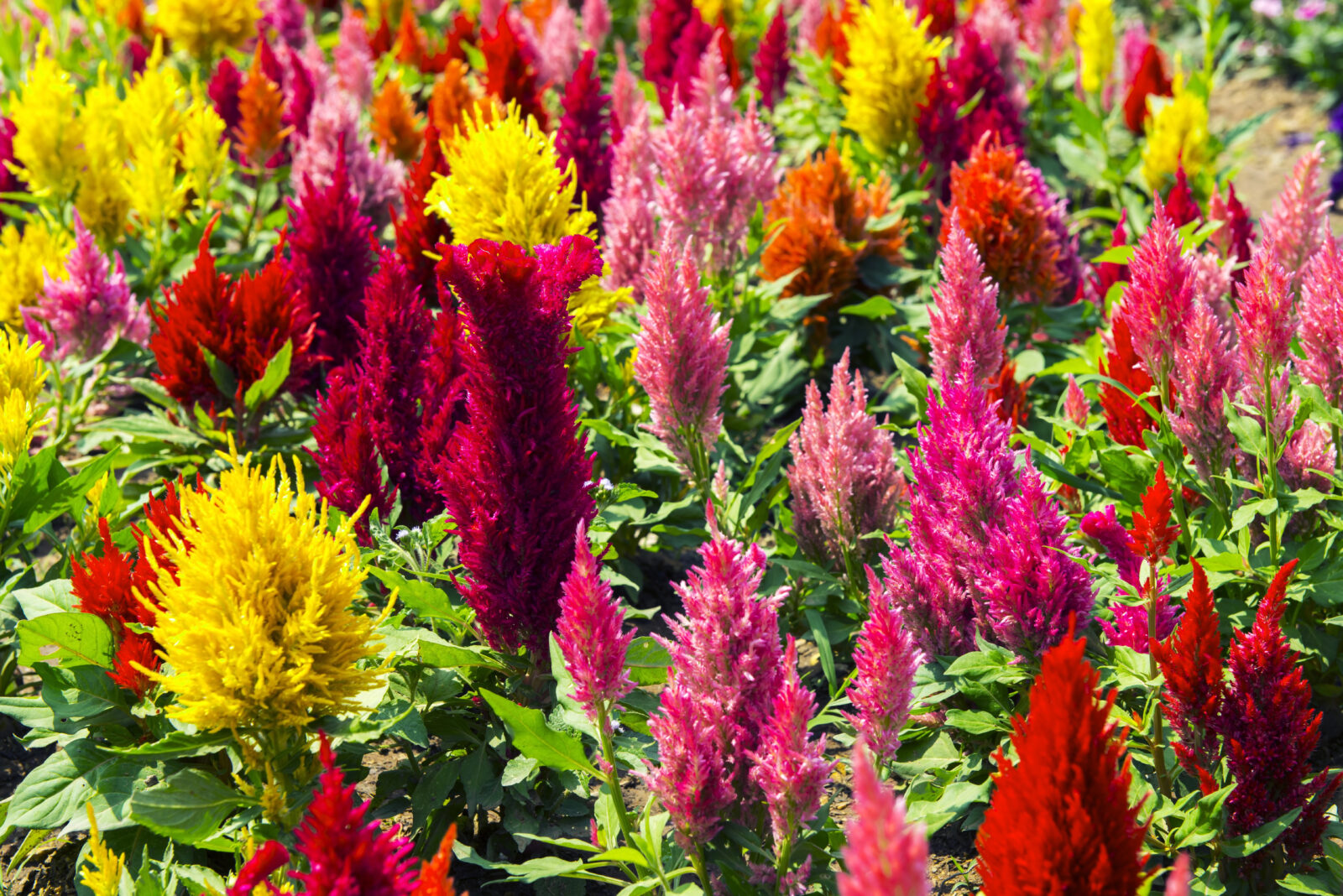
For sunny spots, zinnias are exceptionally reliable: they grow fast, flower generously, and with regular deadheading will keep going almost continuously. Cosmos adds lightness and movement, and if you pinch it out it branches more strongly. For hot positions, the less usual cockscomb (Celosia) with its bold, “velvety” flowerheads is also a great choice, lifting the border with colour when some perennials start to tire in midsummer.
With annuals the rule is simple: the more you pick or trim, the more they flower. If you want a border that still looks cared for in August, plan on ongoing maintenance. Sometimes five minutes a week is enough, as long as it’s regular.
Autumn finale: asters, stonecrop and late colour
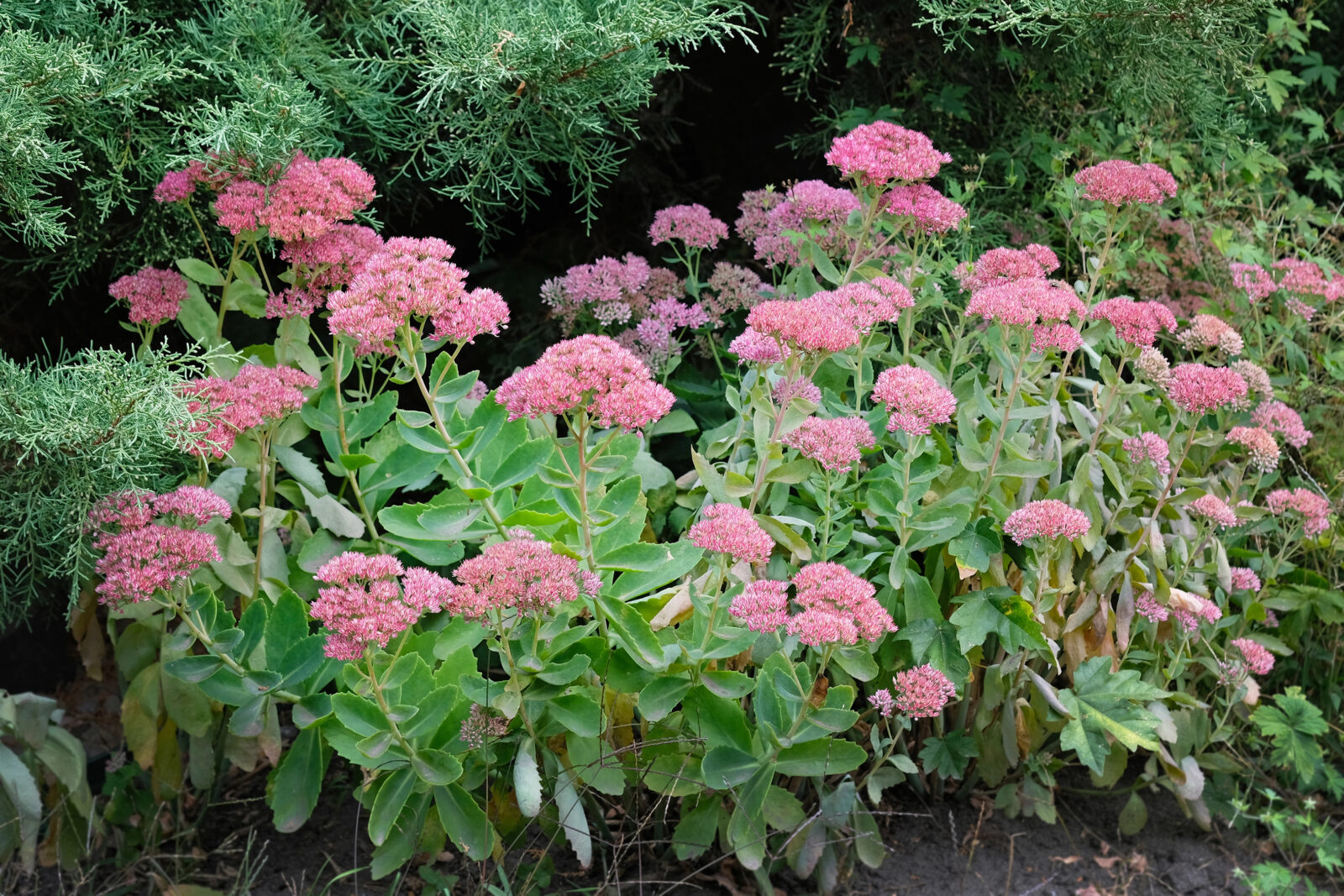
In autumn, gardens often suffer because they’re simply worn out after summer. Yet it only takes a few plants whose peak starts in late August. Autumn asters and “Michaelmas daisies” are classics that fill the gap when many plants are finishing. Stonecrop (Hylotelephium) adds big flowerheads and also has a beautiful bud stage, so it stays ornamental for a long time. Coneflowers and Rudbeckias also work brilliantly because their seedheads remain attractive and draw in birds.
Don’t forget late sunflowers either, ideally branching types. If you sow or plant them in succession, they can hold colour right up to the first frosts. And it’s the combination of flowers and post-bloom structure that keeps a border from looking “empty”, even as temperatures drop.
How to work with colour so the border feels intentional
You can build colour schemes to match a mood. A monochrome planting (for example, pink in different shades) looks calm and elegant, especially if you combine different flower forms. High-contrast pairings (yellow with purple, orange with blue) add energy and are perfect where you want the border to “light up” from a distance. An analogous palette (colours next to each other on the colour wheel, such as yellow–orange–red) feels natural and soft.
Repetition is key: even if you grow lots of different plants, aim to repeat certain colours or shapes throughout the border. It will feel more cohesive, while still looking rich and varied.
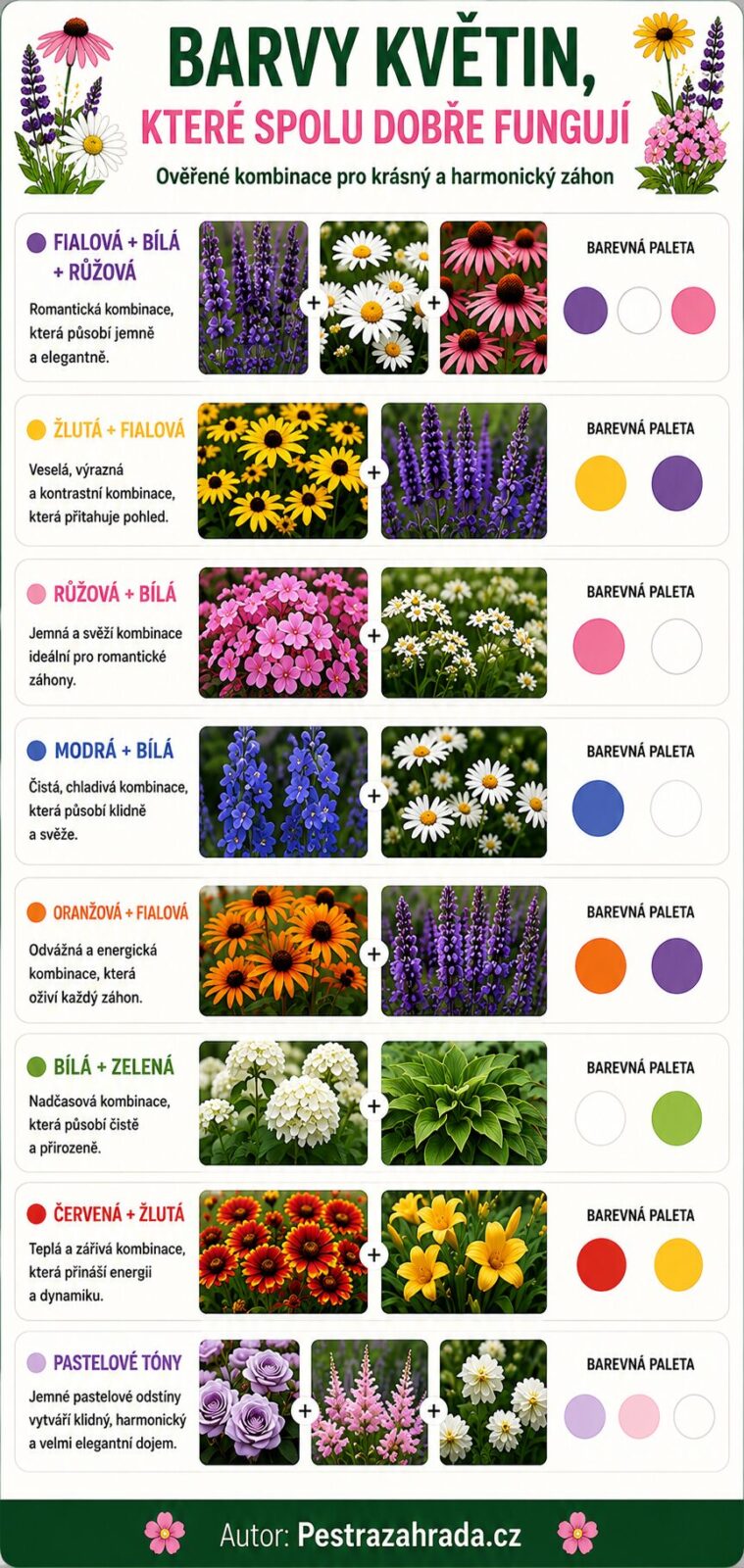
A simple planting calendar: when to do what
If you want flowers from spring to autumn without stress, write down your timings. In autumn, plant bulbs and ideally some perennials too, so in spring you only need to add seasonal plants. In early spring you can start or sow hardy types, then after the frosts plant out warmth-loving annuals. And through summer, leave yourself room for container top-ups: one well-placed pot tucked among perennials can rescue those moments when different flowering waves are changing over.
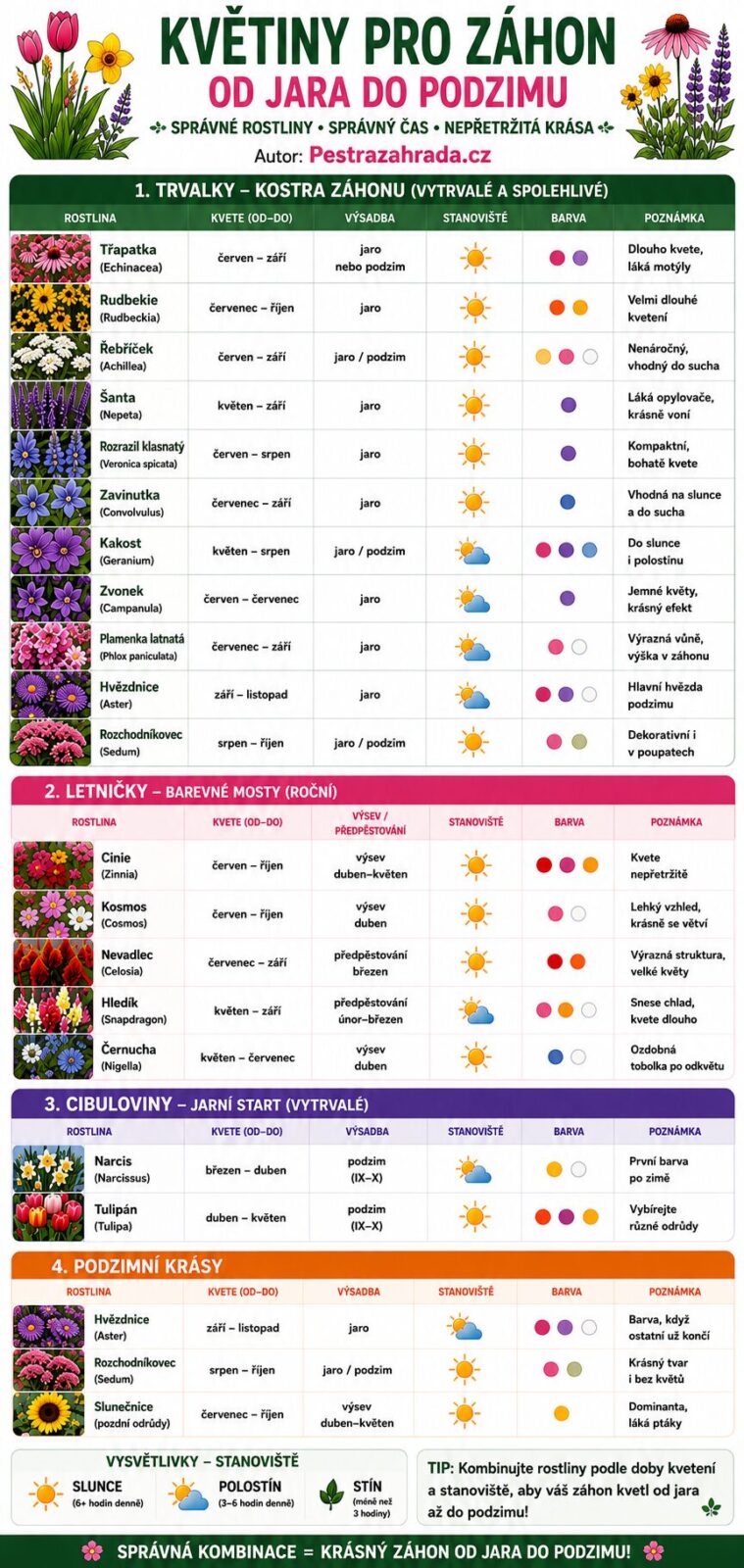
Care that can extend flowering by weeks
The biggest difference comes from deadheading. With many perennials and annuals it triggers another flush of buds. The second key is water: irregular watering in hot weather shortens flowering time and reduces flower size. The third is modest feeding, especially for annuals that flower continuously and quickly use up nutrients.
If you divide the border into a “spring”, “summer” and “autumn” role, giving each its main plants plus a few bridging species, you’ll get a composition that changes but never loses colour. And that’s the magic of a garden from spring to autumn: an unfolding story instead of a short performance.
Source: The Spruce, Almanac, Naše krásná zahrada , Pestrazahrada.cz
Related articles
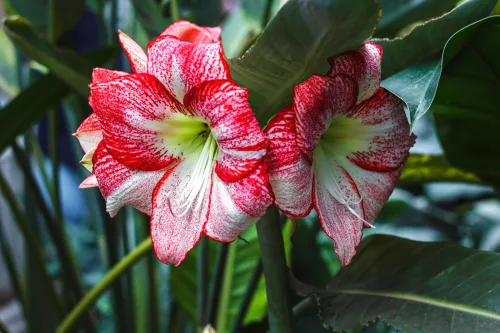
The Christmas Amaryllis That Can Bloom for Years but Most People Throw It Away After Flowering
Hippeastrum is a spectacular winter-blooming bulb that, with the right care, will flower again year after year. Learn how to plant it correctly, look after it after flowering, and bring it into dormancy so it reliably reblooms.
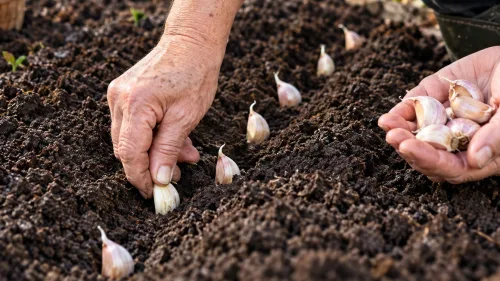
How to Grow Winter Garlic for a Much Bigger Harvest
Autumn planting is the key to strong, healthy winter garlic, but the details make all the difference. With the right timing, bed choice, seed-clove treatment and a simple bicarbonate trick, you can noticeably boost yield.
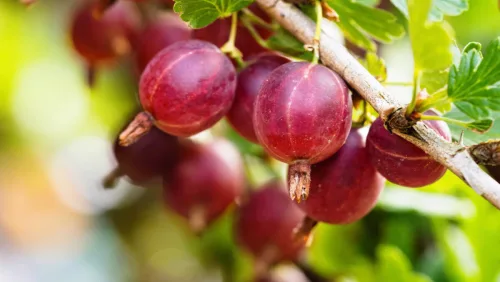
A tree or shrub planted properly in autumn can outpace spring stock and improve fruiting
Many fruit trees and soft-fruit shrubs establish better when planted in autumn, because roots keep growing while the top is dormant. Done well, this head start means stronger spring growth, less watering, and a healthier first year.
Comments (0)
Be the first to comment.