
 English
  Polski
  Deutsch
  Nederlands
  Svenska
  Norsk
Norsk  Dansk
Dansk  Français
  Italiano
  Español
  Português
  Slovenčina
  Suomi
Suomi  Gaeilge
 How to Keep Quick Fermented Cucumbers Crisp and Firm Even in Hot Summer Weather
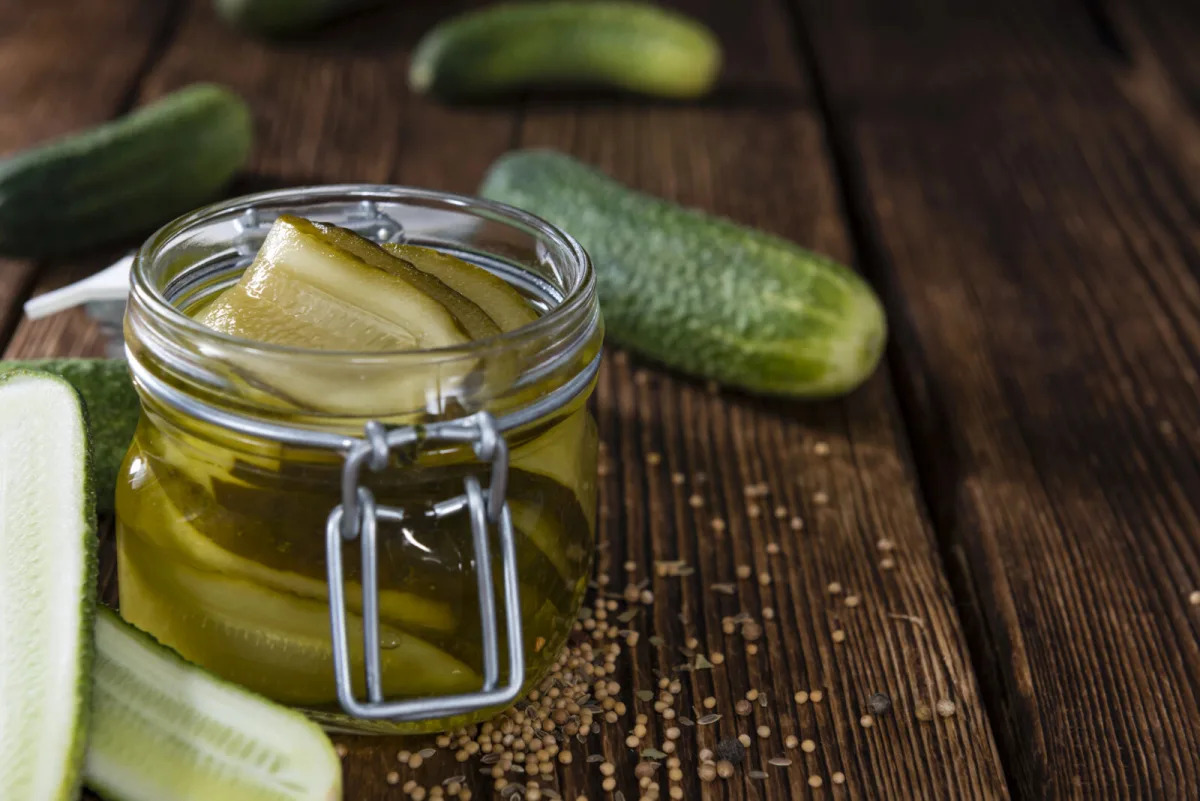
On sweltering days, few things are as satisfying as quick fermented cucumbers, chilled in the fridge. They don’t need canning, they’re usually ready within a few days, and for many people they taste even better than traditional pickles. Still, sometimes the batch doesn’t turn out and the cucumbers soften before you can finish them. In most cases, the problem isn’t the recipe so much as small details that decide whether they stay firm and give that satisfying crunch.
Choosing the right cucumbers is the foundation
Not every cucumber is suitable for quick fermentation. The best choice is small pickling cucumbers that are fresh, hard, with thinner skins and no signs of overripeness. Smaller pieces tend to have denser flesh, less developed seeds, and a firmer structure, so they hold their shape and crunch better during fermentation. Overgrown cucumbers, on the other hand, are often watery and soften more easily after fermenting.
Ideally, process cucumbers as soon as possible after harvest. The longer they sit, the more natural firmness they lose—and the brine can only do so much to bring it back.
You can recognize a good cucumber without overthinking it. It feels firm to the touch, the ends aren’t soft, the skin is taut, with no yellow patches, and it isn’t oversized.
The biggest enemy of crunch is too much heat
A common mistake is leaving the jar on the kitchen counter for too long, thinking the longer it stays warm, the better. Fermentation does need a suitable temperature to get going, but heat also speeds up the breakdown of pectins that keep cucumber cell walls firm. When pectins break down quickly, cucumbers go soft.
If you’re making quick ferments meant for the fridge, leave them at room temperature usually only 1 to 3 days, depending on how warm your home is. As soon as the first signs of fermentation appear, it’s time to move the jar somewhere cool. In the refrigerator the process will continue more slowly, but the cucumbers will keep their freshness and crunch much better.
Salt isn’t just for flavor—it controls fermentation
The right salt concentration creates an environment that favors lactic acid bacteria while discouraging unwanted microorganisms. In practice, about 20 g of salt per liter of water works best, with a maximum around 25 g. Too little salt and the fermentation can go wrong. Too much salt slows the whole process and the final flavor ends up unnecessarily salty.
It’s worth using plain rock salt or sea salt without anti-caking agents. With quick fermented cucumbers, simplicity is an advantage and the brine behaves more predictably.
Dill is classic, but leaves help with crunch too
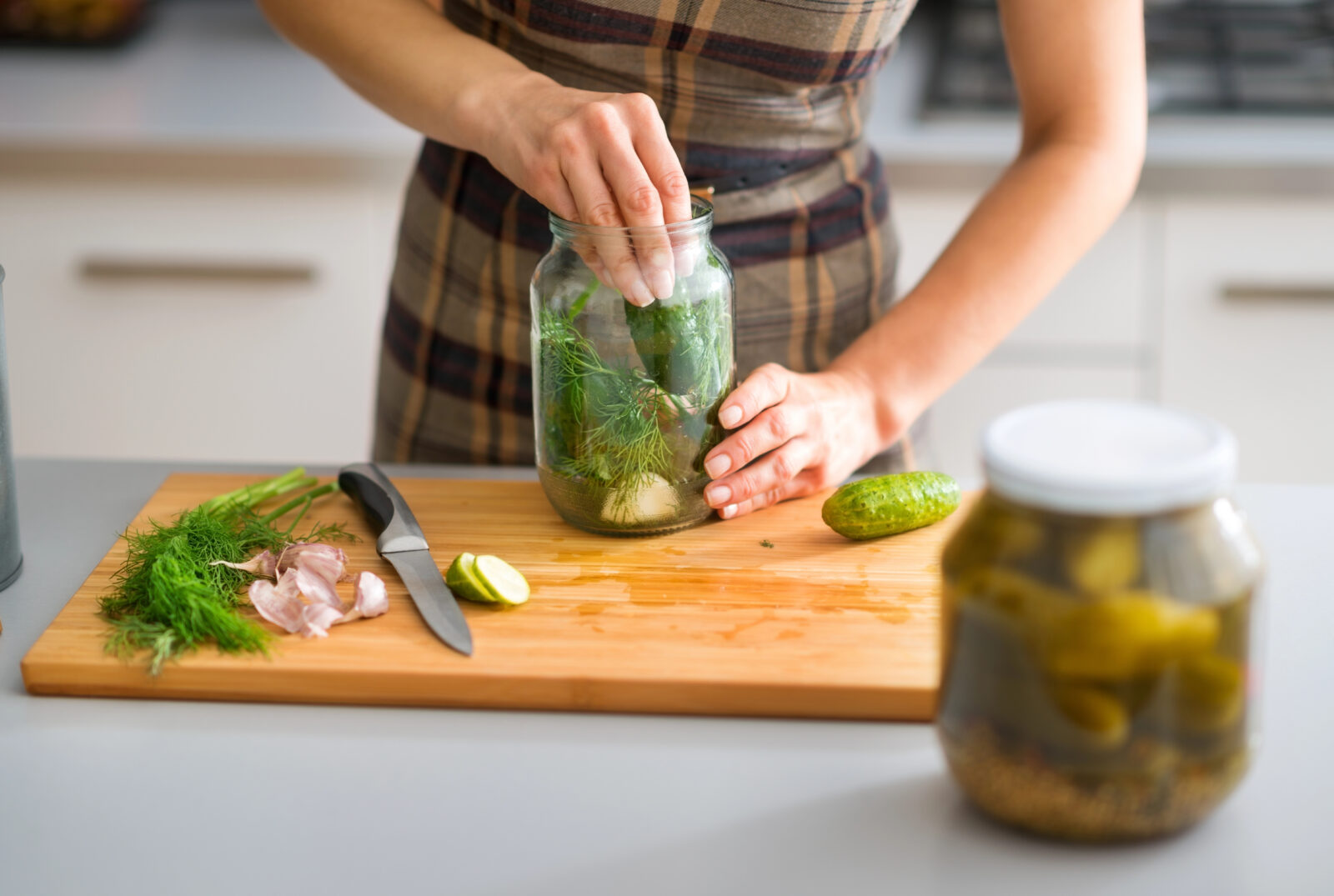
Dill gives cucumbers that unmistakable summer aroma, but it’s not the only ingredient that can improve the result. A time-tested trick is to add one or two healthy leaves of grapevine, blackcurrant, sour cherry, or oak to the jar. It’s not superstition—these leaves contain tannins that slow the breakdown of pectins and help keep the vegetables firm even after several days of fermenting.
Our grandmothers’ trick: Grapevine, oak, or blackcurrant leaves contain natural tannins. They strengthen plant tissues and slow their breakdown during fermentation. If you don’t have them, that’s fine—you can still make great quick fermented cucumbers without them.
Garlic, yes—but in moderation
Garlic belongs in quick ferments: it boosts flavor and contains compounds with naturally antimicrobial effects. But there’s no need to overdo it, because it can easily overpower both the dill and the cucumbers themselves. For a 1-liter jar, two to three cloves are usually enough, depending on how bold you want the flavor.
How to tell fermentation is going the right way
After just one to two days, small bubbles often appear, the brine may turn slightly cloudy, and the aroma becomes pleasantly tangy. In the first days you may also see a light foam on the surface. All of this is a normal part of lactic acid fermentation, which preserves cucumbers naturally.
Speed depends mainly on temperature. On hot days, cucumbers can be ready in as little as three days; in cooler weather the process takes longer. A taste test is more reliable than the calendar. As soon as the cucumbers are pleasantly sour and still firm, they belong in the fridge.
When it’s better not to eat them and to throw the jar away
Safety comes first. If mold appears, the brine smells unpleasant, or the cucumbers are slimy, don’t taste them—dispose of them instead. Properly fermented cucumbers smell fresh and tangy and shouldn’t be off-putting in appearance or texture.
Source: Záhrada, Jidlo.cz, Pestrazahrada.cz

A lover of nature, gardens, and everything that moves, blooms, or grows. He literally grows everything, from herbs to rare species, and he enjoys caring for animals just as much. In his work, he connects modern technology with tried-and-tested grandmotherly methods and is happy when both paths lead to the same goal.
Related articles

Time for the final rose prune, do it now and overwinter properly for a June flush of blooms
Roses look their best when they’re properly prepared for winter. A timely autumn prune, health check and sensible frost protection will set plants up for vigorous spring growth and a strong June display.
An Unkillable ZZ Plant Is Dying in Homes Because of a Mistake That Looks Like Care
The ZZ plant is famous for coping with neglect, but one well-meaning habit can slowly ruin it. Learn the light, soil and watering routine that keeps it thriving, plus how to use banana peel feed safely.
When autumn liming of soil makes sense and how it helps vegetable beds in the garden
Autumn soil liming can markedly improve soil structure and balance pH for healthier vegetables next season. It’s most worthwhile on heavy or overly acidic soils where nutrient uptake and disease resistance suffer.
Comments (0)
Be the first to comment.