
 English
 Polski
 Deutsch
 Nederlands
 Svenska
 Norsk
 Dansk
 Français
 Italiano
 Español
 Português
 Slovenčina
 Suomi
 Gaeilge
Hedge Drying Out Inside Before You Reach for the Shears Find Out Why It’s Normal
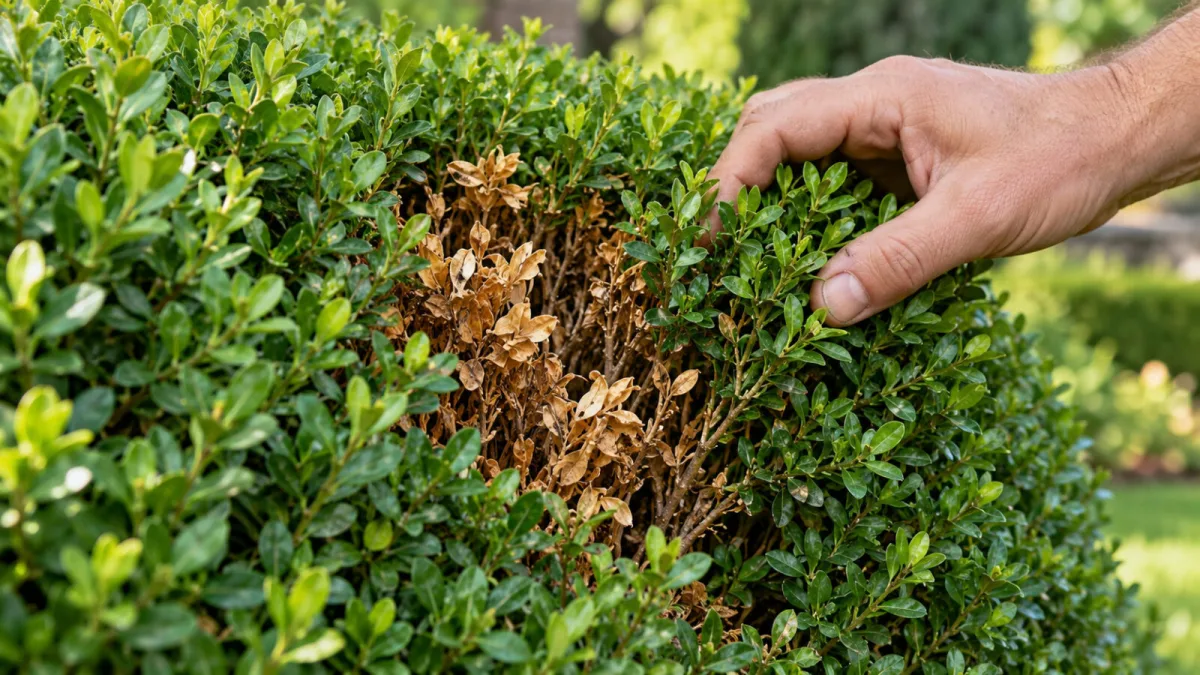
At first glance, dry leaves or dead twigs inside a hedge can look like a sign of disease, pests, or poor care. But if most of the hedge is healthy, the outer foliage has good colour, and the plants are generally thriving, the explanation is often much simpler. In older hedges, it is very often a natural process that requires no intervention.
This applies, for example, to box (boxwood) and privet, but other woody plants grown in a dense row can behave the same way. As a hedge thickens and becomes denser over the years, less and less light reaches its centre. A lack of light is usually the main reason the inner leaves gradually dry out.
The plant keeps only what benefits it
A leaf that receives too little light can no longer photosynthesise effectively. For the plant, it stops being useful because it consumes energy without giving enough back. The shrub or tree therefore reduces its supply, and such a leaf, or even an entire small twig, will dry up over time.
So it is not automatically a sign that the whole plant is weakening. On the contrary, it is a sign of its natural functioning. The hedge keeps mainly the outer shell active, where there is enough light and where it fulfils its main role, namely creating a dense green wall.
Inside is often bare, while outside everything looks fine
When part of an older hedge is removed, it becomes clear how this principle works. The outer section forms a continuous layer of healthy foliage, while inside there are often almost no living leaves. The centre of the hedge can be largely bare without indicating any serious problem.
For everyday growing, what matters most is whether the hedge looks good from the outside and whether it serves its screening and ornamental purpose. If it does, there is no reason to panic or to make unnecessary interventions. Dry parts inside an older, dense hedge are normal under these circumstances.
When there’s no need to do anything at all
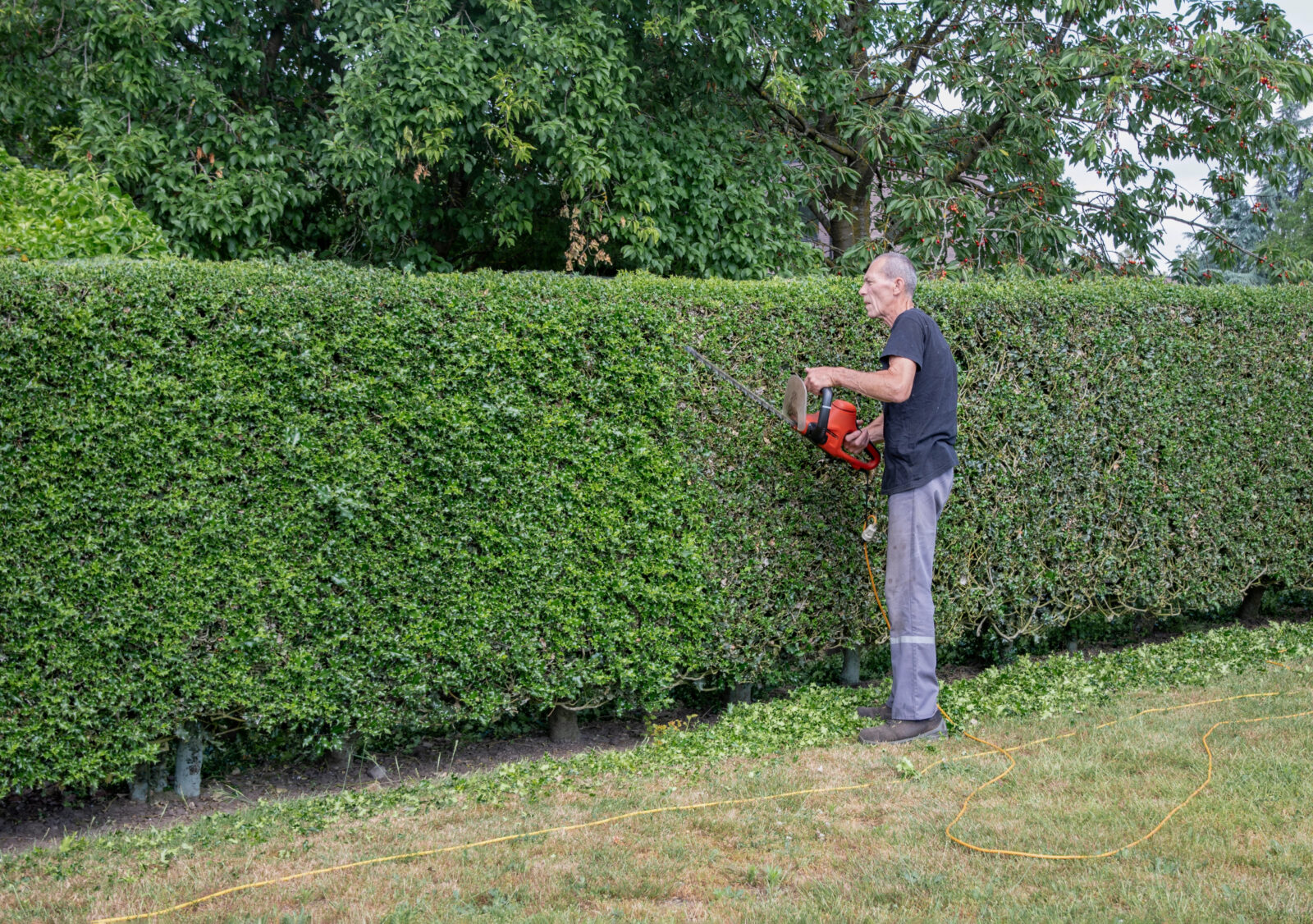
If there are no signs of pests, spotting, deformation, heavy leaf drop on the surface, or overall decline, there is no need to treat the plants with chemicals or to cut them back hard. The dry leaves inside can occasionally just be gently shaken out to clear the growth. That usually ends all the care that’s needed.
Overly enthusiastic intervention can actually do more harm than good. Cutting deeply into the interior often spoils the hedge’s compact look and doesn’t help the plants. All that makes sense is routine checking to ensure pests or other obvious problems haven’t appeared inside after all.
The right shape helps improve light levels
Still, there is one important recommendation that can improve the hedge’s appearance and density in the long term. When trimming, it helps to shape the profile so it narrows slightly toward the top. In other words, the cross-section should at least roughly resemble the letter A.
This allows more light to reach the lower sections as well. Light is usually scarcest at the base, and if that area is also shaded by a wider top, the lower part will gradually become bare. A slightly wider base and a narrower top help keep the hedge dense from bottom to top.
What to avoid when trimming
Less suitable is trimming the hedge into the opposite shape, meaning narrower at the bottom and wider at the top. This profile resembles the letter V and may be easier to create because it follows the natural upward growth of many shrubs, but it is not ideal for the health of the lower parts.
In that case, the upper sections shade the bottom even more and the difference in light becomes greater. The result can be an increasingly thin, bare base while the top remains green and dense. On older hedges, the side faces can be almost vertical, but it’s better to avoid widening toward the top.
In this case, leaving it alone is often the best solution
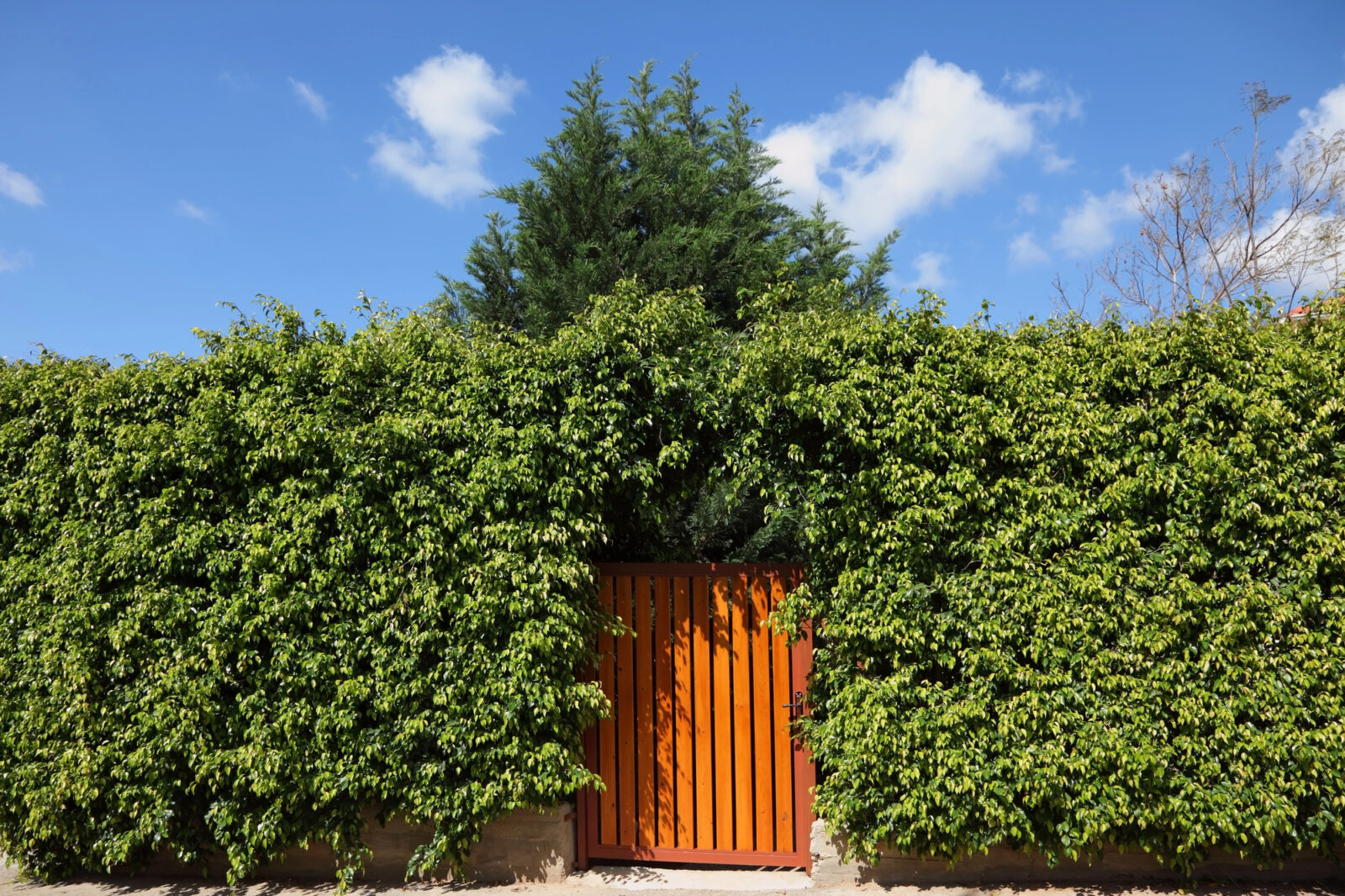
Dry leaves and small dry twigs inside an older hedge therefore often aren’t a fault, but a natural consequence of age, dense planting, and limited access to light. If the hedge looks healthy on the outside, there is no need to look for a problem where there isn’t one.
The most important thing is to keep care sensible, check plant health regularly, and, when trimming, keep good light penetration to the lower sections in mind. In many cases, it really is true that the best intervention is no intervention.
Source: SpadeShire, Záhrada, The Spruce, Pestrazahrada.cz

A lover of nature, gardens, and everything that moves, blooms, or grows. He literally grows everything, from herbs to rare species, and he enjoys caring for animals just as much. In his work, he connects modern technology with tried-and-tested grandmotherly methods and is happy when both paths lead to the same goal.
Related articles
Pumpkin Isn’t a Vegetable Most People Are Mistaken as Botanists Put It in a Different Category
Pumpkin is usually treated as a classic autumn vegetable, but botanically it is a fruit. The key is that it develops from a flower and contains seeds.
Shiny or Dull Side of Aluminium Foil The Answer May Surprise You
With standard kitchen foil, it doesn’t matter whether the shiny or dull side faces the food. What matters far more is what you’re wrapping, especially acidic or very salty foods, and whether you’re using non-stick foil.
Cutting Down Thuja in Your Own Garden May Not Pay Off Without a Permit You Could Face a Fine of Tens of Thousands
Many homeowners assume they can remove trees and mature thuja on their own land freely, but Czech rules can still require official consent. Getting it wrong can mean a substantial fine.
Comments (0)
Be the first to comment.